
We live in a time where bodies are on display and nervous systems are in collapse.
Our feeds are full of abs, jawlines, before–and–afters, and trending body goals. We see an increasing trend where people overtrain, inject, cleanse, and punish themselves to look a certain way on the outside, while quietly breaking on the inside. The methods are extreme, unsustainable, and shallow. The weight or fat loss they chase so aggressively often leaves them sicker, more inflamed, and more exhausted than when they began.
You see it everywhere.
Skipping meals all day, bingeing late at night.
Sleeping at wee hours, scrolling to numb emotions.
Stress reduction yoga in the morning, back-to-back deadlines, and zero boundaries in between.
Eating on time one day, living on coffee the next.
Living in constant comparison.
Underneath the macros and workout plans, most people today are running on fumes: overworked, overstimulated, wired but tired, emotionally eating or not eating at all, living with low self-worth and chronic self-criticism. Our generation is sick without even realising it, because on the surface the labs look “normal,” the selfies look fine, and the likes keep coming.
But biology doesn’t care about optics.
It responds to foundations.
Poor sleep.
Chaotic meal timings.
Chronic stress.
Inflammation.
Broken circadian rhythm.
A nervous system that never feels safe.
That is where stubborn fat, visceral fat, hormonal chaos, metabolic slowdown, and lifestyle disease truly begin. Not in the plate alone, not in the gym alone, but in the foundations you live by every single day. The same foundations decide whether your weight swings for no reason, whether obesity becomes your baseline, and whether any fat-loss effort actually works or backfires.
This is why we needed a different lens.
Foundational Medicine takes us back to the root of it all, our basics.
Respecting the Basics: The Core of Foundational Medicine
We see it every day with patients. Normal reports for years, then suddenly cholesterol shoots up. Sleep collapses. Weight piles around the belly. Blood pressure climbs. Sugar swings. Anxiety, brain fog, and fatigue become the new normal. One expert may say that your age could be a factor. Another expert may ask you to check your hormonal balance. Social media blames carbs. You’re left blaming yourself.
In that confusion, you start adding more.
More tests. More pills. More superfoods. More gadgets to track your sleep. More rules about what to eat and what to avoid. Yet your body still doesn’t respond.
In moments like these, the real question is not “What more should I do?” but “What is happening beneath the surface?”
Here’s the hard truth: no system of medicine – allopathy, Ayurveda, homeopathy, naturopathy, functional medicine – can work the way it should if the basics are broken. If you are sleeping poorly, eating at irregular hours, living in constant stress, scrolling at midnight, inhaling polluted air, and suppressing emotions, the most advanced treatment will be fighting against your biology.
Foundational Medicine is not another protocol. It is the simple, non-negotiable recognition that before you manipulate hormones, cleansing pathways, or micronutrients, you first respect the importance of sleep for health, the way you breathe, how you move, what you think, how and when you eat, and the rhythm your life runs on. When these foundations are restored, every other treatment you choose – including your approach to abnormal weight, obesity, and fat loss – finally has a chance to work.

Understanding Obesity: Beyond Calories and Willpower
Obesity is no longer a rare complication of age; it is becoming the baseline across cities, towns, and even in children and teenagers. We are seeing belly fat, fatty liver, irregular blood sugar levels, and breathlessness show up in school-going kids and young professionals, patterns that earlier appeared much later in life. This isn’t only about overeating or lack of discipline. It is the result of how we now live: long sitting hours, ultra-processed food, constant snacking, late nights, emotional eating, and overstimulation from screens and social media.
Our grandparents did not live perfect lives, but their foundations looked very different. There was hardly any junk food. Meals were simpler, cooked at home, with balance and moderation. Movement was built into daily life. There was no endless content scroll, no constant comparison, and no 24/7 news cycle keeping the nervous system on alert. There was space for prayer, hobbies, real conversations, physical work, rest, and routine.
At the same time, we cannot pretend we live in the same world they did.
Today:
- The air is more polluted.
- Water often carries heavy metals and contaminants.
- Food is exposed to additives, preservatives, pesticides, and adulteration.
- Animal products may be treated with hormones and antibiotics.
- Stress is chronic, not occasional.
- The world became smaller with the internet and smartphones, but people feel lonelier and more disconnected than ever.
Put together, this creates the perfect internal environment for obesity: chronic low-grade inflammation, hormonal disruption, poor sleep, emotional dysregulation, and a nervous system that never fully powers down. Over time, this doesn’t just change how you look; it changes how your metabolism, liver, heart, pancreas, and hormones function.
That is why obesity is best understood as a metabolic, inflammatory, and hormonal state, not just irregular weight gain. It is strongly associated with:
- Hypertension and Cardiovascular Health: Excess fat tissue increases vascular inflammation, which narrows and stiffens blood vessels. This is how obesity causes hypertension — the heart must work harder to push blood through inflamed vessels. Insulin resistance further damages the endothelium, raising cardiovascular risk even more.
- Diabetes and Blood Sugar Dysregulation: Obesity leads to chronic insulin overload. Over time, the cells stop responding to insulin, the pancreas struggles, and blood sugar rises. Inflammation worsens this cycle, creating a direct pathway to type 2 diabetes.
- Other Linked Conditions: Fatty liver, Polycystic Ovary Syndrome (PCOS), infertility, sleep apnea, and even certain cancers have strong associations with long-term metabolic dysfunction.
Underneath all of this is a simple, uncomfortable truth: we drifted away from our foundations. Foundational Medicine exists to bring that back intentionally, so obesity, abnormal weight gain, and fat loss are addressed at the level where they actually begin.
To really understand why fat becomes so hard to lose, and why it keeps coming back, we now need to look inside the body. This is where inflammation, hormones, sleep, and emotional stress quietly lock fat in, no matter how hard you diet or train.
Obesity as a Metabolic and Inflammatory Disorder
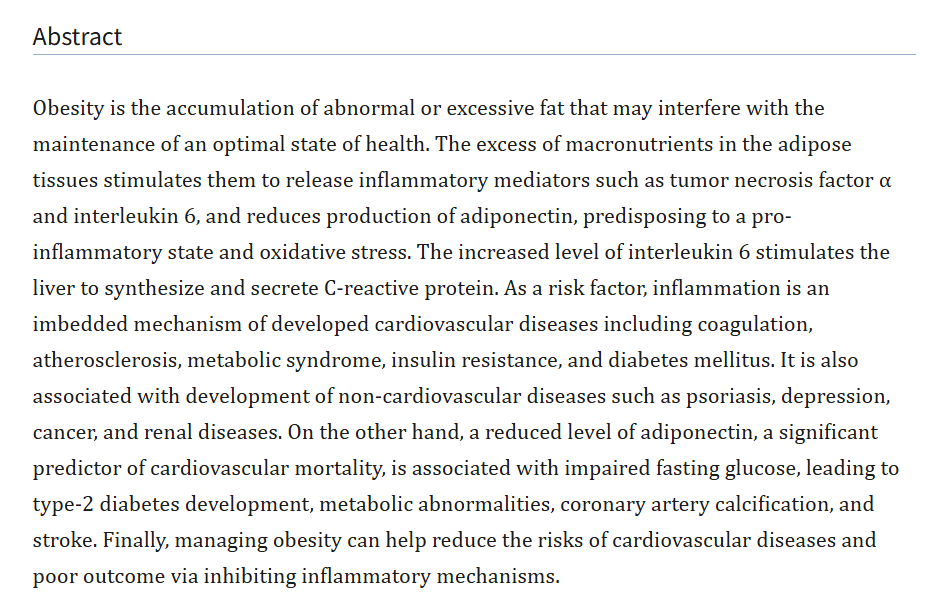
Research today shows a strong link between obesity and inflammation. Chronic low-grade inflammation is like a silent alarm that never switches off.
- Ultra-processed foods, poor-quality fats, lack of movement, polluted air, and sleep loss keep the immune system mildly activated.
- Over time, this slows metabolism and disrupts how cells use glucose and fat.
- The body starts storing more, burning less, and defending fat as if it were a buffer against ongoing stress.
| Chronic and uncontrolled inflammation → cells stop responding efficiently to insulin → more sugar and fat stay in the blood → more gets stored as visceral and liver fat. |
The Role of Stress and Hormones
The body is designed to survive stress, not social media, deadlines, and unresolved emotions 24/7.
- When stress is constant, cortisol stays elevated.
- Cortisol tells the liver to release more glucose (as if you’re running from danger), which then forces insulin to rise.
- High cortisol also encourages fat storage around the abdomen and breaks down muscle, which further lowers metabolic rate.
You can be ‘on a plan’ and still gain fat if your life is running on panic mode.
| Chronic stress → high cortisol → more glucose + more insulin → more belly fat and less muscle. |
Sleep Deprivation: The Fastest Way to Break Metabolism
Most people underestimate the importance of sleep for health. One bad night is manageable. Years of poor or irregular sleep are not.
- Too little sleep or sleeping at odd hours disrupts ghrelin and leptin, the hormones that control hunger and fullness.
- Ghrelin (hunger hormone) goes up, leptin (satiety hormone) goes down. Cravings rise, especially for sugar and refined carbs.
- At the same time, the body becomes more insulin-resistant, which means more fat storage from the same food.
| Less deep sleep → more cravings + poorer appetite control → more overeating + more fat storage → slower metabolism, even with the same calories. |
This is why no lifestyle practice as medicine is complete without fixing your sleep quality first.
Emotional Load and Nervous System Overdrive
Unprocessed emotions are one of the most underestimated drivers of weight gain.
- Loneliness, resentment, grief, anxiety, and chronic self-criticism keep the nervous system in a state of alert.
- The brain reaches for quick dopamine: sugar, junk food, late-night snacking, scrolling, as well as alcohol and substance overuse.
- Emotional eating becomes a coping mechanism, not a lack of willpower.
| Unprocessed emotion → nervous system on edge → emotional eating + poor sleep → more cortisol + more inflammation → more stored fat. |
Until emotions are acknowledged and healthier coping tools are in place, the body will keep using food as a sedative.
What the Numbers Tell Us
- Over 650 million adults worldwide live with obesity (The World Health Organization, WHO).
- India has seen a rapid rise in childhood and adult obesity in the last two decades due to sedentary lifestyles and high-stress urban rhythms.
- People with obesity have a significantly higher risk of diabetes, hypertension, fatty liver, Polycystic Ovary Syndrome (PCOS), sleep apnea, and certain cancers.
Obesity is not about appearance. It is a condition that affects metabolism, hormones, inflammation, and long-term disease risk.
Quick Fixes, Shortcuts, and the Ozempic Obsession
It’s no surprise that fat loss has become the latest casualty of this mindset.
The new use of Ozempic, Wegovy, and Glucagon-Like Peptide-1 (GLP-1) injections has taken the world by storm. Weight loss, simplified. Appetite, suppressed. Scale, dropping.
But here’s the question we must ask:
What happens when the injection stops?
We’ve had multiple clients come to us after being on these drugs. Many saw initial results. But just as many began to notice:
- Rebound weight gain
- Muscle loss
- Sluggish digestion
- Anxiety, mood shifts
- Hair thinning
- Nutritional deficiencies
- Gut issues
- Emotional eating is returning with more intensity
To be clear, these drugs have a place. For medically-indicated cases, under the guidance of a doctor, they can be part of a plan.
But they are not a replacement for lifestyle. They are not a foundation. They are a tool — and a tool is only as good as the environment it’s used in.
Without foundational repair, you’re just suppressing symptoms.
The moment shortcuts stop, the weight and the problem return.
Using GLP-1 or Ozempic? Support Your Body the Right Way
If you’re using GLP-1 medications like Ozempic or Wegovy, you deserve support beyond the medication. We don’t judge, we guide. If you’re choosing this path, do it responsibly, with medical supervision and the right lifestyle support to:
- Protect muscle mass
- Avoid rebound weight gain
- Reduce nutritional deficiencies
- Rebuild digestion, energy, and gut health
Our Muscle Up Protocol was designed exactly for this.
Explore how our Muscle Up Protocol helps you stay strong, supported, and metabolically stable, even while on medication.
Support your body through GLP-1 safely. Try the Muscle Up Protocol today.
Disclaimer: GLP-1 receptor agonists (such as Ozempic, Wegovy, and Mounjaro) are prescription medications intended for specific clinical conditions, including Type 2 diabetes, Polycystic Ovary Syndrome (PCOS), and morbid obesity. They must only be taken under the supervision of a qualified medical professional after a thorough assessment of your health status.
Whether it is extreme dieting, back-to-back trending detoxes, or GLP-1 injections, the logic is the same: push the body harder from the outside, without checking if it has the internal capacity to respond. That’s where most fat-loss journeys start to backfire, which is why we need to address calorie restriction.
Why Calorie Restriction Alone Fails
Before we single out calories, it helps to see the pattern. If your foundations are weak (chronic stress, poor sleep, hormonal imbalance, inflammation), the body is not in fat-burning mode; it is in protection mode
When you suddenly cut calories in this state, the body does not see it as a smart fat-loss plan. It reads it as a threat.
This is what begins to happen inside:
- Metabolism slows down to conserve energy.
- The body defends fat and breaks down muscle.
- Hunger hormones become more chaotic, driving cravings and binges.
- Stress hormones stay elevated, worsening belly fat and insulin resistance.
So you eat less, suffer more, and still don’t see the shift you were promised.
That’s why so many people say, “I’m doing everything right. Why is nothing changing?”
Because the real problem is not only how much you eat, but what state your system is in when you eat less. Until sleep, stress, inflammation, and rhythm are addressed, aggressive calorie restriction will feel like a fight against your own biology.
This is exactly where Foundational Medicine steps in. It rebuilds the internal conditions first, so that any nutrition plan, exercise routine, or medical treatment you choose can finally start working with your body, not against it.
How to Apply Foundational Medicine In Your Journey Today
Before we talk about strategies, we want you to pause for a moment and be honest with yourself.
We hear versions of this every single day. And the pattern is almost always the same: people are not failing because they lack discipline. They are struggling because their foundations are weak. The basics are broken.
Foundational Medicine is about repairing those basics, so fat loss is not a fight but a biological outcome of a healthier system.
How to Apply Foundational Medicine Today: The Non-negotiable Six Pillars
Each pillar measurably influences metabolism. When they work together, fat loss stops being a short-term project and starts becoming a side-effect of living well.
1. Food Science & Nutrient Synergy
Food is not just fuel; it is instruction for your hormones, inflammation, and fat cells.
How it affects fat loss
- Balanced plates with protein, fibre, and healthy fats stabilise blood sugar and insulin, which reduces fat storage and cravings.
- Whole, minimally processed foods lower inflammatory load, helping cells respond better to insulin and leptin.
- The right combinations, for example, healthy fats with fat-soluble vitamins, or vitamin C with iron, improve nutrient absorption, energy, and recovery.
Simple actions
- Build most meals like this: half plate vegetables, one quarter protein, one quarter smart carbs, plus good fats.
- Add fibre and protein to your first meal of the day to prevent mid-morning crashes.
- Crowd out ultra-processed foods by planning at least one fully home-cooked, unprocessed meal daily.
- Adequate Holistic Movement
Movement is one of the fastest ways to signal your body to burn, not store.
How it affects fat loss:
- Walking after meals improves post-meal blood sugar and insulin, which directly influences belly fat.
- Strength training protects and builds muscle, and muscle is a metabolic organ; the more you have, the more calories you burn at rest.
- Gentle, regular movement keeps lymph flowing, helping waste removal and reducing inflammatory stagnation.
Simple actions
- Walk 10–15 minutes after one or two main meals every day.
- Do 2–3 short strength sessions a week (even bodyweight: squats, push-ups on the wall, glute bridges).
- If you sit for long hours, set a 45–60 minute timer to stand, stretch, or walk for 2–3 minutes.
- Deep Sleep
Sleep is not a reward after a long day; it is one of the most powerful fat-loss tools you have.
How it affects fat loss:
- Short or poor-quality sleep increases ghrelin (hunger) and lowers leptin (satiety), driving late-night and next-day cravings.
- Irregular sleep disrupts insulin sensitivity and keeps cortisol higher, nudging the body to store, not burn, fat.
- Deep sleep is when repair, hormone reset, and cellular clean-up actually happen
Simple actions
- Fix a realistic sleep window and protect it 5 nights a week (for example, 11 pm to 6 am).
- Shut down screens at least 45–60 minutes before bed; dim lights and keep the room cool and dark.
- If sleep is broken, start with a wind-down routine: light stretching, reading, or 4–7–8 or box breathing in bed.

- Emotional Wellness
If emotions stay unprocessed, they will usually show up on the plate or on the scale.
How it affects fat loss:
- Loneliness, resentment, anxiety, and chronic stress push the brain toward quick dopamine: sugar, junk food, alcohol, and late-night snacking.
- Emotional eating is often an attempt to regulate the nervous system, not a lack of discipline.
- When the nervous system feels safer, cravings reduce, and decision-making improves.
Simple actions
- Before eating, ask once a day: Am I physically hungry or emotionally triggered?
- Keep one non-food coping tool ready: journaling, a short walk, breathwork, a call to someone safe.
- Schedule a 10–15 minute “emotional check-in” once or twice a week to write down what is bothering you instead of carrying it into your meals and nights.
- Nature, Environment, and Light Exposure
Your internal environment mirrors the external one you live in.
How it affects fat loss:
- Morning daylight anchors the circadian rhythm, which regulates cortisol, melatonin, insulin, and appetite.
- Constant artificial light at night, poor air, and indoor stagnation confuse the body’s timekeeping, increasing fatigue, cravings, and fat storage.
- A calmer, cleaner environment reduces background stress, which indirectly lowers inflammatory load.
Simple actions
- Get 10–20 minutes of natural morning light on your skin and eyes (without sunglasses if possible).
- Open windows when air quality allows; bring in a little movement – fan, plants, fresh air – to avoid stale, stagnant rooms.
- Set a ‘digital sunset’: choose a time when bright overhead lights and harsh screens go off, and softer lighting takes over.
- Spirit & Breathwork
Breath and a sense of inner anchor decide how quickly you can move from stress to safety.
How it affects fat loss:
- Slow, regulated breathing activates the parasympathetic system, which lowers cortisol and allows fat-burning pathways to switch on.
- Feeling anchored – to your values, faith, purpose, or inner compass – reduces the need to self-soothe through food and extremes.
- Calm, not intensity, is what makes lifestyle change sustainable.
Simple actions
- Practice one minute of intentional breathing 2 to 3 times a day: inhale for 4, hold for 7, exhale for 8.
- Attach breath to habits you already have: before meals, before opening social media, before sleep.
- Keep one small daily ritual that grounds you – journaling, prayer, gratitude, or quiet sitting – and treat it as non-negotiable as brushing your teeth.
You don’t need a perfect blueprint to start. Each of these small steps supports one or more pillars. Each one improves metabolism naturally. Each one is a step away from quick-fix culture and closer to the kind of fat loss and improved health that’s sustainable.
For the self-starters, here’s a short exercise that can nudge you in the right direction.
Want personalised guidance to achieve sustainable fat loss and overall wellness?
👉 Explore our Wellness Program for expert-led lifestyle support.
Your Foundational Fat-Loss Blueprint: A 6‑Pillar Self‑Check
Before you leave this page, take a moment for yourself. Not to judge, not to score, but to understand where your foundations stand.
Fat loss becomes easier when you know exactly which part of the soil needs nourishment.
Read each pillar slowly. Notice what feels strong, what feels weak, and what needs attention. Even one honest insight can change the way your body responds.
| 1. Food Science & Nutrient Synergy
☐ Do my meals contain real, unprocessed foods at least once a day? |
| 2. Adequate Holistic Movement
☐ Am I moving my body daily, even if gently? |
| 3. Deep Sleep
☐ Is my sleep-wake cycle consistent? |
| 4. Emotional Wellness
☐ Do I recognise when my eating is emotional rather than physical hunger? |
| 5. Nature/ Internal & External Environment
☐ Do I get morning sunlight or natural light exposure each day? |
| 6. Spirit & Breathwork
☐ Do I take even one minute a day to breathe, reflect, or pause? |
If You Checked Only Two or Three Boxes…
That’s perfectly okay.
This is not a test. It’s a mirror.
Foundations are not built in a day; they are rebuilt gently, layer by layer.
Even one shift — one walk, one night of proper sleep, one honest breath — can begin to improve metabolism naturally and create an internal world where fat loss finally feels possible again.

Final Word: Your Body Is Not the Enemy
As we close this conversation, we want you to remember something essential.
Your body has never tried to punish you. It has only tried to protect you — from exhaustion, from inflammation, from emotional overload, from metabolic stress.
Weight does not come from weakness. It comes from an overwhelmed system doing the best it can with the signals it receives.
You do not have to do everything today.
You just have to begin with one thing, and your body will thank you for it.
And if you need support building your foundation, we’re here for you.
Ready to Take the Sustainable Route to Weight Management?
Together, we can help your body find its way back to balance — gently, wisely, sustainably.
Our Wellness Program supports you with sustainable, root-cause solutions across nutrition, sleep, movement, gut repair, and emotional health. Because real fat loss is more than a number — it’s a return to rhythm.
Book a one-on-one consultation with our Team of Foundational Medicine Experts to understand how your unique body, lifestyle, and emotional health fit into this equation — and how to build lasting change alongside any medical decision.
Write to us at: consults@lukecoutinho.com
Call our toll-free number: 1800 102 0253
Disclaimer
This blog is for educational purposes only and should not be taken as medical advice. Always consult your doctor before starting, changing, or discontinuing any medication, supplement, or exercise routine. The information shared here is meant to support—not replace—professional medical guidance.

Start Your Wellness Journey
Feeling inspired to take the next step in your wellness journey? Connect with us to explore how our tailored programs can support your health journey. Your transformation is just a conversation away.