No products in the cart.
[the_ad id=”169827″]
Looking for Protein-Rich Vegetarian Breakfasts? Try This Today
It’s not just about what you eat. It’s about when and how you start your day. Every morning, millions of Indians reach for chai, toast, biscuits, or sugary cereals to “wake up” their systems. It feels comforting, quick, and familiar.
But here’s the truth:
Starting your day with sugar — whether from white bread, chai with sugar, biscuits, or processed cereals — sends your body on a rollercoaster ride.
🚀 It begins with a spike in blood sugar, giving you that “quick energy” high.
🧪 Your pancreas rushes to produce insulin to clear the sugar from your blood.
📉 And within an hour or two, you crash — physically, mentally, and emotionally.
This isn’t just a temporary dip. Over time, this cycle can:
• Disrupt your hormones like insulin and cortisol
• Increase cravings and mid-morning hunger
• Worsen mood swings, anxiety, and fatigue
• Contribute to fat storage and weight gain
• Impair focus, memory, and even long-term metabolic health
And here’s the hardest part to digest:
We’re feeding the same cycle to our children.
That seemingly innocent bowl of sugary cereal or bread before school?
It’s impacting them by affecting their:
🎓 Attention span
🎯 Learning capacity
😔 Emotional regulation
🍭 Cravings throughout the day
Science backs this.
📚 NCBI studies show that high-glycemic breakfasts (like refined carbs) increase hunger, reduce satiety, and negatively affect cognition.
🧠 In contrast, protein + healthy fat-rich meals lead to more stable energy, better mood, improved memory, and longer-lasting fullness.
So what’s the solution?
Start your day — and your child’s day — with protein and good fats.
Think nuts, seeds, eggs, lentils, sprouts, ghee, nut butter, or A2 quality paneer. These foods digest slowly, support metabolism, balance hormones, and fuel the brain for success.
To make this easier for you, Team Luke has put together 3 delicious, vegetarian, protein-packed Indian breakfast recipes that are:
• Simple to make
• Loved by kids
• Designed to nourish, not just fill
And yes — they’re completely FREE.
Protein-Rich Vegetarian Breakfast #1 – Amaranth Moong Dal Chilla with Amla Chutney
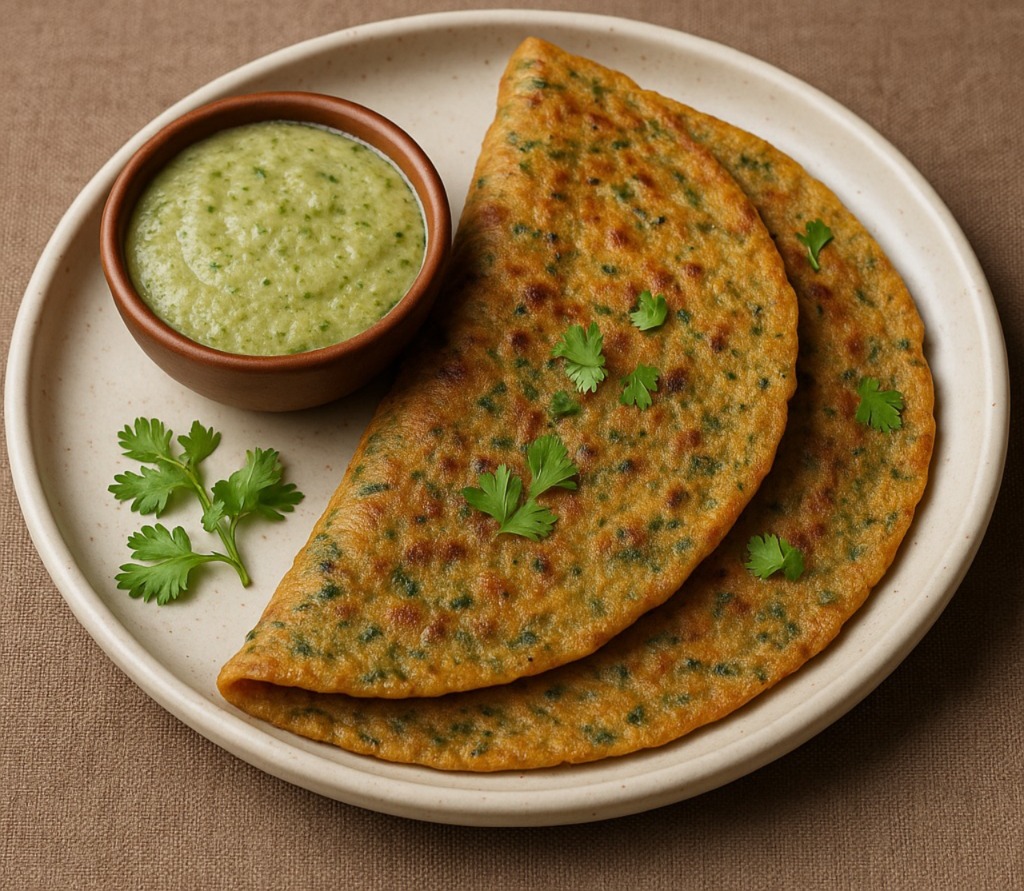
AI-generated representational image. For illustrative purposes only.
- Serves: 2
- Total Time: 30 minutes (excluding 8-hour soaking time)
- Prep Time: 15 minutes
- Cook Time: 15 minutes
For the Chilla
Ingredients:
- ½ cup moong dal, soaked for 8 hours
- ¼ cup amaranth flour (or jowar/ragi flour)
- 1 small onion, finely chopped
- 1 green chili, finely chopped (optional)
- ¼ tsp turmeric powder
- ½ tsp cumin seeds
- Salt to taste
- 2 tbsp chopped coriander leaves
- A2 ghee, for cooking
Instructions:
- Drain the soaked moong dal and blend with ¼ cup water into a smooth batter.
- Transfer to a bowl. Add amaranth flour, turmeric powder, cumin seeds, salt, onion, green chili (if using), and coriander leaves. Mix well to form a pourable pancake batter.
- Heat a cast-iron tawa over medium heat and lightly grease with A2 ghee.
- Pour a ladleful of batter and spread it into a thin 5–6 inch circle.
- Cook for 2–3 minutes on each side until golden and crisp. Repeat with the remaining batter.
For the Amla Chutney
Ingredients:
- 3 fresh amla (Indian gooseberries), deseeded and chopped
- 1 green chili (optional)
- ½-inch piece of ginger
- 1 tbsp roasted chana dal
- 1 tsp organic jaggery powder
- Salt to taste
- 1 tsp mustard seeds
- ¼ tsp cold-pressed coconut oil
Instructions:
- Blend amla, green chili (if using), ginger, roasted chana dal, jaggery powder, and salt with 2 tbsp water into a smooth paste.
- Heat coconut oil in a small pan, add mustard seeds, and let them splutter.
- Pour the tempering over the chutney. Mix well and serve fresh with chillas.
Nutritional Info (per serving: 2 chillas + 2 tbsp chutney)
- Protein Content: 15g
- Calories: 300 kcal
Variations1. Spinach-Paneer Chilla
- Add ½ cup pureed spinach and ¼ cup crumbled A2 paneer to the batter.
- Benefits: Boosts protein to 17g; adds iron and creaminess. (Tip: Add lemon juice to the batter for better iron absorption.)
2. Pumpkin-Moong Chilla
- Add ½ cup pureed pumpkin to the batter; replace cumin seeds with ¼ tsp black pepper.
- Benefits: Increases fiber, adds natural sweetness, protein ~16g.
Tips & Notes
- No Amla? Use 1 tbsp tamarind paste + 1 tsp lemon juice as a tangy chutney alternative.
- Kids’ Version: Omit green chili and add ½ tsp jaggery to the batter for mild sweetness.
- Plan Ahead: Soak moong dal overnight. Prepare the chutney paste and refrigerate; temper just before serving.
- Cooking: Use a well-seasoned cast-iron pan for easy flipping. Avoid resting the batter too long to maintain freshness.
- Tiffin-Friendly: Chillas remain soft and pair well with chutney, making them ideal for school or office lunch boxes.
- Low-Calorie: A nutrient-dense meal with moderate calories—great for a wholesome breakfast.
Gut Sensitivity Notes
- Moong Dal: Generally easy to digest but may cause bloating if not soaked or cooked well. Soak for 8 hours and cook thoroughly.
- Spices: Green chili can irritate sensitive stomachs. Omit or replace with roasted cumin or ajwain for better digestion.
- Raw Veggies: Onions may cause discomfort. Lightly sauté before adding to the batter or substitute with mashed cooked vegetables like lauki, carrots, or peas.
- Tip: Pair with probiotic-rich curd or chaas to support gut health.
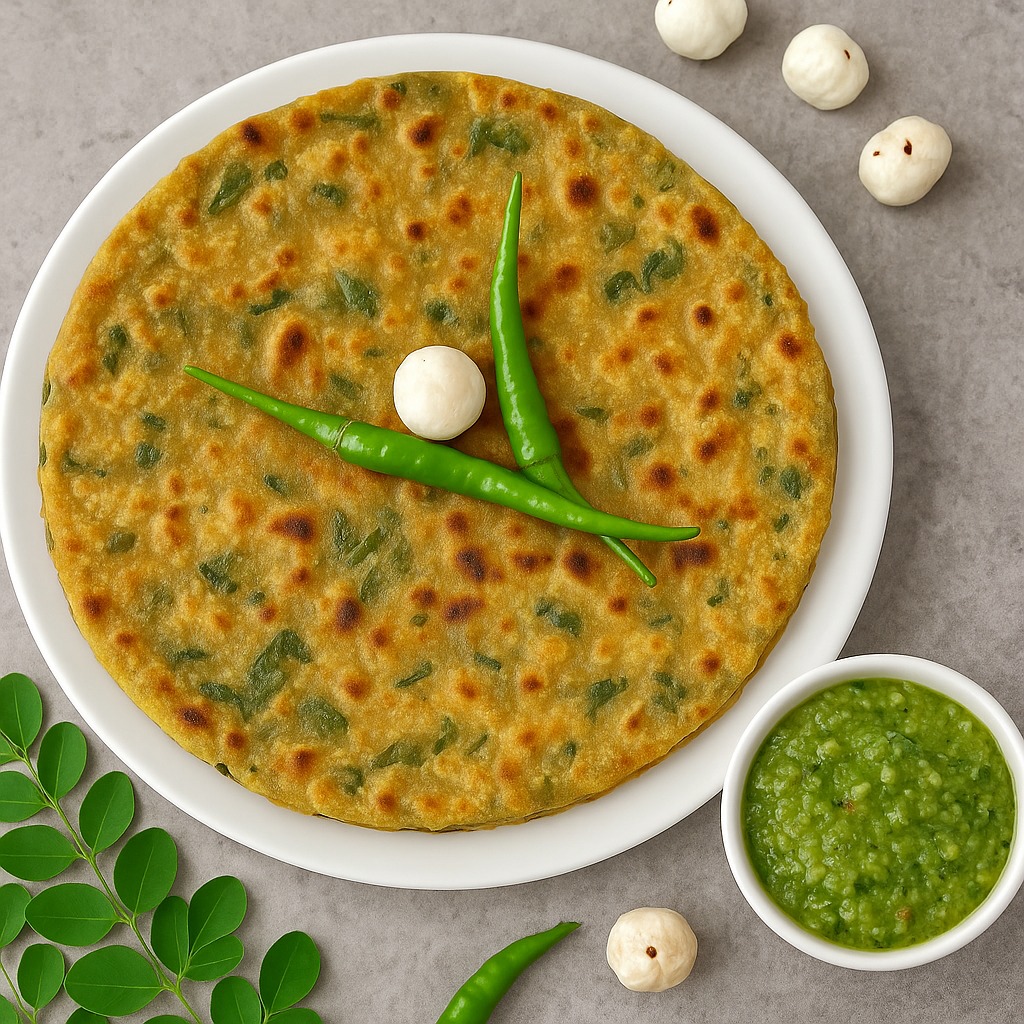
Protein-Rich Vegetarian Breakfast #2 – Moringa, Makhana, and Dal Paratha with Raw Mango Chutney

AI-generated representational image. For illustrative purposes only.
- Serves: 2
- Total Time: 40 minutes (excluding 8-hour soaking time)
- Prep Time: 20 minutes
- Cook Time: 20 minutes
For the ParathaIngredients:
- ½ cup chana dal, soaked for 8 hours and boiled
- ¼ cup roasted makhana, coarsely crushed
- 1 tsp dried moringa powder (or 2 tbsp fresh moringa leaves, finely chopped)
- 1 cup khapli wheat flour (or jowar flour for a gluten-free option)
- ½ tsp cumin powder
- ¼ tsp red chili powder (optional)
- Salt to taste
- ½ tsp A2 ghee (for dough)
- Water, as needed, for kneading
- A2 ghee, for cooking
Instructions:
- Knead khapli wheat flour with water and ½ tsp A2 ghee into a soft dough. Rest for 15 minutes.
- Mash the boiled chana dal and mix with crushed makhana, moringa powder, cumin powder, red chili powder (if using), and salt to prepare the filling.
- Divide the dough into 4 balls. Roll out one ball slightly, place 2 tbsp of the filling in the center, seal the edges, and gently roll into a 6-inch paratha.
- Heat a tawa over medium heat. Cook the paratha using A2 ghee, flipping until golden on both sides. Repeat with the remaining dough and filling.
For the Raw Mango ChutneyIngredients:
- 1 small raw mango, peeled and chopped
- 1 tbsp roasted chana dal
- 1 green chili (optional)
- 1 tsp organic jaggery powder
- ½ tsp cumin seeds
- Salt to taste
- ¼ tsp cold-pressed coconut oil
- ½ tsp mustard seeds
Instructions:
- Blend raw mango, roasted chana dal, green chili (if using), jaggery, cumin seeds, and salt with 2 tbsp water into a smooth paste.
- Heat coconut oil in a small pan, add mustard seeds, and allow them to splutter.
- Pour the tempering over the chutney, mix well, and serve fresh with parathas.
Nutritional Info (per serving: 2 parathas + 2 tbsp chutney)
- Protein Content: 16g
- Calories: 300 kcal
Variations1. Egg-Moringa Paratha
- Add 1 scrambled egg to the filling for an extra protein boost.
- Benefits: Increases protein to 18g; adds richness and depth of flavor.
2. Yellow Moong Dal Paratha
- Replace chana dal with boiled yellow moong dal.
- Benefits: Easier to digest; protein ~15g.
Tips & Notes
- No Makhana? Substitute with ¼ cup roasted peanuts or almonds, coarsely crushed, for similar crunch and added protein.
- Kids’ Version: Omit red chili and add 1 tsp jaggery to the filling for a mild, kid-friendly flavor.
- Plan Ahead: Prepare the filling and chutney paste a day in advance and refrigerate. Knead the dough fresh for the best texture.
- Tiffin-Friendly: These parathas stay soft and go well with chutney—perfect for school or office lunch boxes.
- Low-Calorie: A nutrient-dense, wholesome meal with moderate calories.
Gut Sensitivity Notes
- Chana Dal: May cause bloating in some individuals. Soak for 8 hours and boil well. Substitute with yellow moong dal for better digestibility.
- Moringa: High in fiber—use minimal quantities (1 tsp powder or 2 tbsp fresh leaves). Fresh leaves are generally gentler on the gut than powder.
- Spices: Red chili and raw mango may irritate sensitive stomachs. Skip chili and use roasted cumin instead.
- Raw Mango: Introduce in small amounts to check for tolerance.
- Tip: Serve with probiotic-rich curd or chaas to support digestion and gut health.
Protein-Rich Vegetarian Breakfast #3 – Sprouts and Rice Flour Pancakes with Pumpkin Seeds Chutney
AI-generated representational image. For illustrative purposes only.
- Serves: 2
- Total Time: 30 minutes
- Prep Time: 15 minutes
- Cook Time: 15 minutes
For the PancakesIngredients:
- 1 cup mixed sprouts (moong, chana, or moth), pre-soaked, steamed, and coarsely ground
- ½ cup rice flour
- ¼ cup grated carrot
- 1 small tomato, finely chopped
- 1 green chili, finely chopped (optional; omit for kids or gut sensitivity)
- ½ tsp ajwain (carom seeds)
- Salt to taste
- 1 tbsp chopped curry leaves
- A2 ghee, for cooking
Instructions:
- In a large bowl, combine steamed and coarsely ground sprouts with rice flour and ~½ cup water to form a thick batter.
- Add grated carrot, chopped tomato, green chili (if using), ajwain, salt, and curry leaves. Mix well. Adjust water for a spreadable consistency.
- Heat a cast-iron tawa over medium heat and lightly grease with A2 ghee.
- Pour a ladleful of batter and gently spread into a 5–6 inch pancake.
- Cook for 3–4 minutes on each side until golden and crisp. Repeat with the remaining batter.
For the Pumpkin Seeds ChutneyIngredients:
- ¼ cup roasted pumpkin seeds
- ½ cup grated fresh coconut
- 1 green chili (optional)
- ½-inch piece of ginger
- 1 tbsp roasted peanuts
- Salt to taste
- 1 tsp mustard seeds
- 1 tsp urad dal
- ¼ tsp cold-pressed coconut oil
Instructions:
- In a blender, combine roasted pumpkin seeds, coconut, green chili (if using), ginger, peanuts, and salt with 3 tbsp water. Blend into a coarse paste.
- Heat coconut oil in a small pan. Add mustard seeds and urad dal, and let them splutter.
- Pour the tempering over the chutney. Mix well and serve fresh alongside pancakes.
Nutritional Info (per serving: 2 pancakes + 2 tbsp chutney)
- Protein Content: 14g
Calories:
300 kcal
Variations
1. Besan-Sprouts Pancake
- Replace ¼ cup rice flour with besan (chickpea flour).
- Add ¼ tsp red chili powder and 1 tbsp chopped methi leaves.
- Benefits: Boosts protein to ~16g; adds a nutty flavor.
2. Mushroom-Sprouts Pancake
- Add ¼ cup finely chopped sautéed mushrooms to the batter.
- Benefits: Enhances umami flavor; protein ~15g.
Tips & Notes
- No Coconut? Replace with 1 tbsp roasted sesame seeds + 1 tbsp curd for a creamy chutney texture.
- Kids’ Version: Omit green chili and reduce ajwain to ¼ tsp. Add 1 tbsp grated paneer to the batter for extra protein.
- Plan Ahead: Keep sprouts ready and prepare the chutney paste a day in advance; refrigerate. Temper the chutney fresh before serving.
- Cooking: Use a well-seasoned cast-iron pan for easy flipping.
- Tiffin-Friendly: Pancakes remain soft and go well with chutney, making them ideal for school or office lunch boxes.
- Low-Calorie: A nutrient-dense, wholesome meal with moderate calories.
Gut Sensitivity Notes
- Sprouts: Raw or undercooked sprouts may cause bloating. Always steam them thoroughly to improve digestibility.
- Spices: Green chili and ajwain may irritate sensitive stomachs. Omit or replace ajwain with cumin seeds for a gentler alternative.
- Raw Veggies: Tomatoes may trigger discomfort. Lightly sauté them before adding, or replace with cooked vegetables like lauki or carrots.
- Besan (Variation): Chickpea flour may be hard to digest for those with IBS or legume sensitivity. Test in small portions or stick to rice flour.
- Tip: Pair with probiotic-rich curd or chaas to support gut health.
Disclaimer:The information provided in this article is for general educational purposes only and is not intended as a substitute for professional medical advice, diagnosis, or treatment. Individuals with specific health conditions, dietary restrictions, or those taking medications are strongly advised to consult a qualified healthcare professional before making any significant dietary or lifestyle changes.
This small switch can create a ripple effect — not just in your body, but in your mood, your energy, your focus, your family’s health…and the health of our nation. 🇮🇳
Let’s stop letting sugar control our mornings.
Let’s wake up with intention.
Let’s nourish Young Bharat — one meal at a time.
– Team Luke
[the_ad id=”169827″]
Visit out holistic recipe corner for more such delicious recipes.