No products in the cart.
Science connects your child’s microbiome to focus, impulse control, and emotional regulation, and what you can actually do about it.
Every parent of a child with Attention deficit hyperactivity disorder (ADHD) knows this pattern all too well. The school calls. There are meltdowns. Evenings feel like a constant battle, and mornings don’t start any easier. You’ve tried what you were told would help, yet something still feels off. Something deeper than just behaviour or attention.
And that instinct isn’t wrong.
Over the past decade, modern neuroscience has been quietly uncovering a powerful piece of this puzzle, something that rarely gets the attention it deserves in a short pediatric consultation. It has to do with your child’s gut.
Now, let’s be very clear. The gut does not cause ADHD. ADHD is a neurodevelopmental condition shaped by genetics, brain chemistry, and environmental factors. This is not about blaming a meal or a snack choice.
But here’s where it gets interesting.
Emerging research shows that the gut can influence how intensely ADHD symptoms show up day to day. The hyperactivity. The emotional swings. The focus struggles. Not the root cause, but the amplifier.
And that distinction matters. Because while you may not be able to change the diagnosis, you can influence how your child experiences it.
The gut-brain axis: more than a metaphor
Your child’s gut contains trillions of bacteria, collectively called the microbiome. For a long time, we thought of gut bacteria as simply assisting with digestion. We now know they are doing far more than that. These bacteria are metabolically active. They produce compounds. They send signals. And some of those signals travel directly to the brain.
The gut and brain communicate through several pathways: the vagus nerve, which acts as a direct communication highway; hormonal signals; immune system messengers called cytokines; and bacterial metabolites including a group of compounds known as short-chain fatty acids (SCFAs). SCFAs, particularly when gut bacteria ferment dietary fiber, play a central role in maintaining the blood-brain barrier, the protective layer that shields the brain from inflammatory agents circulating in the bloodstream.
When fiber intake drops, SCFA production drops. When SCFA production drops, that protective barrier becomes more permeable to inflammatory signals. And the brain, particularly a developing child’s brain, is exquisitely sensitive to those signals.
Even mild, chronic immune activation can subtly shift dopamine signaling and impair executive function in children whose nervous systems are already working harder to regulate attention and behavior.
Children with ADHD have been found in research to frequently show differences in microbial diversity and elevated markers of low-grade inflammation compared to neurotypical peers. This doesn’t mean their diet caused their ADHD. It means their gut environment may be amplifying the very symptoms that are already making life difficult.
Diversity is the goal, not perfection
The single most powerful thing you can do for your child’s microbiome isn’t buying an expensive probiotic. It’s feeding the good bacteria that are already there. Gut bacteria thrive on prebiotic fibre, which comes from a diverse range of plant foods: vegetables, seasonal fruits, lentils, legumes, seeds, and whole grains.
The key word is diversity. Research consistently shows that greater microbial diversity correlates with greater neurological and immunological resilience. A child eating the same five foods every week is limiting their microbial range. A child eating 25 to 30 different plant foods across the week, even in small amounts is building a much richer internal ecosystem.
We know what you’re thinking. My child doesn’t eat vegetables. My child won’t touch lentils. That’s a real challenge, and we’re not dismissing it. But the goal doesn’t have to be dramatic. A sprinkle of flaxseeds in a smoothie, a small portion of roasted chickpeas, a colorful fruit alongside breakfast: these are low-resistance entry points. Over time, they matter.
Probiotics: what the research actually says
Probiotic supplements have generated enormous enthusiasm, and some of it is warranted, but a lot of it isn’t. The nuance here matters, and we want to give it to you straight.
Specific strains, particularly within the Lactobacillus family, have been studied for their potential to modulate stress responses and support anxiety regulation. Some of this research points to these strains’ ability to influence Gamma-Aminobutyric Acid (GABA) pathways. GABA is the brain’s primary calming neurotransmitter, the one that helps the nervous system downshift. There is also emerging, preliminary research on how microbiome balance may indirectly influence dopamine regulation.
But here is what too many probiotic marketing campaigns don’t tell you: probiotics are strain-specific. A general “broad spectrum” probiotic with ten unidentified strains doesn’t automatically deliver these benefits. More bacteria is not better. Overconsumption of the wrong strains can actually be counterproductive. If you’re considering a probiotic for your child, work with a practitioner who can point you toward the specific strains that have actual research behind them for your specific concern.
We ask families to think of probiotics as one instrument in a very large orchestra. They support the ecosystem. They do not replace it.
The gut lining and why it matters more than you think
The gut lining is remarkably thin, just a single layer of cells. When this barrier is compromised through poor diet, chronic stress, overuse of certain medications, or lack of sleep, immune signaling increases. The body releases more inflammatory cytokines. And those cytokines don’t stay in the gut. They circulate.
In a developing child whose nervous system is already stretched, small increases in inflammatory signaling can produce meaningful changes in behavior, mood stability, and the ability to concentrate. This is not theoretical. This is basic immunology applied to pediatric brain health.
Nutrients that support gut lining integrity include:
- Omega-3 fatty acids — anti-inflammatory and found in fatty fish, flaxseed, and walnuts
- Zinc — essential for immune regulation and gut barrier repair, found in meat, seeds, and nuts
- Adequate good-quality protein — necessary for tissue repair throughout the digestive tract
- Polyphenols — found in colorful fruits and vegetables, these compounds feed beneficial bacteria and reduce inflammatory load
The other side of this equation is reduction. Ultra-processed foods and synthetic additives are among the most consistent dietary contributors to gut inflammation. We’re not running a fear campaign against birthday cake. We’re asking you to recognize that a daily diet heavy in processed snacks, artificial colors, and refined starches creates a biological environment that makes self-regulation harder for every child — and especially hard for children who are already working against a more sensitive system. The goal is intelligent, consistent nourishment, not elimination-based anxiety.
Blood Sugar: the overlooked variable
We want to address the sugar question directly, because it comes up in almost every conversation we have with parents and it gets misrepresented on both sides.
Sugar does not cause ADHD. But blood sugar instability, rapid spikes followed by crashes — can meaningfully worsen ADHD symptoms in a child who already has a dysregulated nervous system. Here’s the mechanism:
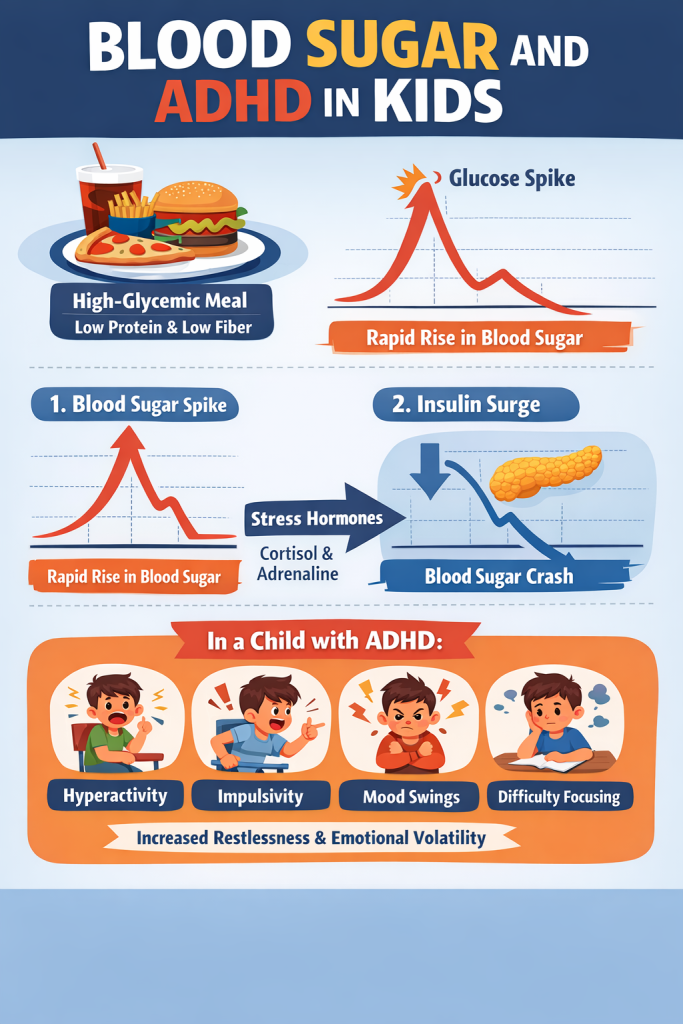 When a child eats a high-glycemic meal without adequate protein or fiber, blood glucose rises sharply. The body responds with an insulin surge, which drives glucose down. That crash triggers the release of stress hormones: cortisol and adrenaline. In a child without ADHD, this might produce mild irritability. In a child with ADHD, it can manifest as visible restlessness, intensified impulsivity, emotional volatility, and difficulty returning to focus.
The intervention is practical and not particularly radical. Protein at every meal, especially breakfast. Fiber alongside carbohydrates. Balanced snacks that don’t rely on refined sugar as the primary fuel source. These changes stabilize blood glucose and, by extension, stabilize the hormonal and neurological environment in which your child’s brain is operating.
Stable blood sugar doesn’t just fuel the body. In a child with ADHD, it contributes directly to a more stable mood, better self-regulation, and greater capacity for sustained attention.
Sleep, the circadian system, and the gut
This is one of the connections we find ourselves explaining most often, because it surprises people. The gut, the brain, and the circadian system are not operating in separate silos. They are deeply interconnected.
Sleep deprivation doesn’t just make children tired. It measurably increases inflammatory markers and reduces dopamine receptor sensitivity — two things that directly affect ADHD symptom severity. Melatonin, the hormone that regulates sleep onset, also plays a role in gut motility and immune balance. Chronic suppression of melatonin through late-night screens doesn’t just disrupt sleep. It disrupts the gut-brain relationship simultaneously.
Supporting a consistent circadian rhythm for your child involves morning sunlight exposure — even 10 to 15 minutes of outdoor light before 9am matters — a consistent and reasonably early bedtime, and a wind-down routine that genuinely reduces stimulation. We know these things sound simple. We also know that in a household managing ADHD, simple is not always easy. But these are foundational, not supplementary.
Quick reference: gut-brain support at a glance
| Factor | Why it matters | Practical starting point |
| Diverse plant fiber | Feeds beneficial bacteria, supports SCFA production and blood-brain barrier integrity | Aim for 15+ different plant foods per week |
| Omega-3 fatty acids | Anti-inflammatory, supports gut lining and brain function | Fatty fish 2x/week, flaxseed or walnuts daily |
| Protein at every meal | Supports tissue repair and blood sugar stability | Eggs, legumes, or lean protein at breakfast |
| Zinc-rich foods | Immune regulation and gut barrier support | Pumpkin seeds, meat, legumes |
| Polyphenols | Feed beneficial bacteria, reduce inflammatory load | Berries, dark leafy greens, colorful vegetables |
| Blood sugar management | Prevents stress hormone spikes that worsen impulsivity and mood | Pair carbohydrates with protein and fiber at every meal |
| Sleep and circadian rhythm | Supports microbiome, dopamine sensitivity, and melatonin balance | Consistent bedtime, morning light, screens off 60 min before bed |
| Reducing ultra-processed foods | Lowers gut inflammation and additive exposure | Focus on whole food swaps, not elimination |
The shift that changes everything
The most important reframe we can offer you is this: stop asking “How do I stop my child’s symptoms?” and start asking “How do I strengthen my child’s internal ecosystem so their brain has a better environment to operate in?”
These are fundamentally different questions, and they lead to fundamentally different actions.
Nutrition will not cure ADHD. We believe in honesty over hope-selling. Gut health support is not a replacement for behavioral therapy, for specialized education support, or for medication when it is clinically indicated and chosen thoughtfully. Anyone who tells you otherwise is oversimplifying a complex condition in ways that can genuinely harm families.
What we are saying, and what the science supports, is that optimizing the gut environment — through microbial diversity, short-chain fatty acid production, blood sugar stability, inflammatory load reduction, and gut lining integrity — can meaningfully shift the biological terrain in which the ADHD brain is working. When that terrain improves, many children show gradual but real improvements in resilience, emotional regulation, and the consistency of their attention.
These changes don’t happen overnight. They are not dramatic announcements. They are quiet, cumulative, measurable improvements in a child’s capacity to handle their days. That is absolutely worth working toward.
The brain does not operate in isolation. It listens to the body’s internal environment constantly. And sometimes, the path toward a calmer mind genuinely does begin in the gut.
A Deeper Look at ADHD & Gut Health
A grounded, science-backed conversation on what could be influencing your child beyond the obvious.
Disclaimer
This article is intended for general informational and educational purposes only. It does not constitute medical advice, a clinical diagnosis, or a treatment recommendation. ADHD is a complex neurodevelopmental condition that requires proper evaluation and care from qualified healthcare professionals. The nutritional and lifestyle strategies discussed here are supportive in nature and are not a substitute for medical treatment, behavioral therapy, or any intervention recommended by your child’s doctor or specialist. Always consult a licensed healthcare provider before making changes to your child’s diet, supplement regimen, or any aspect of their care plan. Individual results vary and no outcomes are guaranteed.
Balanced Nutrition for Children Program
If you’re looking for structured, personalised support to improve your child’s eating habits, digestion, sleep, and overall nutrition, our Balanced Nutrition for Children Program is designed to help.
This is not a generic meal plan. It focuses on building sustainable food habits, improving dietary balance, and supporting your child’s day-to-day well-being through practical, family-friendly guidance.
We work closely with you to make nutrition simpler, more consistent, and easier to follow at home.
Learn more about the Balanced Nutrition for Children Program →