
We’re overstimulated, always on, always scrolling, always thinking.
Our nervous systems are frayed, our sleep is shallow, digestion sluggish, moods irritable. We’re holding frustration, insecurity, and anxiety — often without realizing it. And amidst all this noise, we’ve lost something important: grounding.
Most of us walk every day. But how often do we feel the earth beneath our feet? We spend hours in shoes, on concrete, detached from one of the simplest forms of connection available to us — the ground itself.
This isn’t spiritual fluff. It’s science. Barefoot walking, or earthing, is a powerful practice backed by research showing its ability to reduce inflammation, improve sleep, stabilize mood, and even recalibrate hormonal and metabolic rhythm.
Yes, ancient cultures knew this. But now, so do modern researchers.
And so do thousands of people we’ve worked with.
Let’s explore how walking barefoot — just a few mindful steps a day — can realign your body and mind in ways you may have forgotten were possible.
What Is Barefoot Walking — and Why Does It Matter?
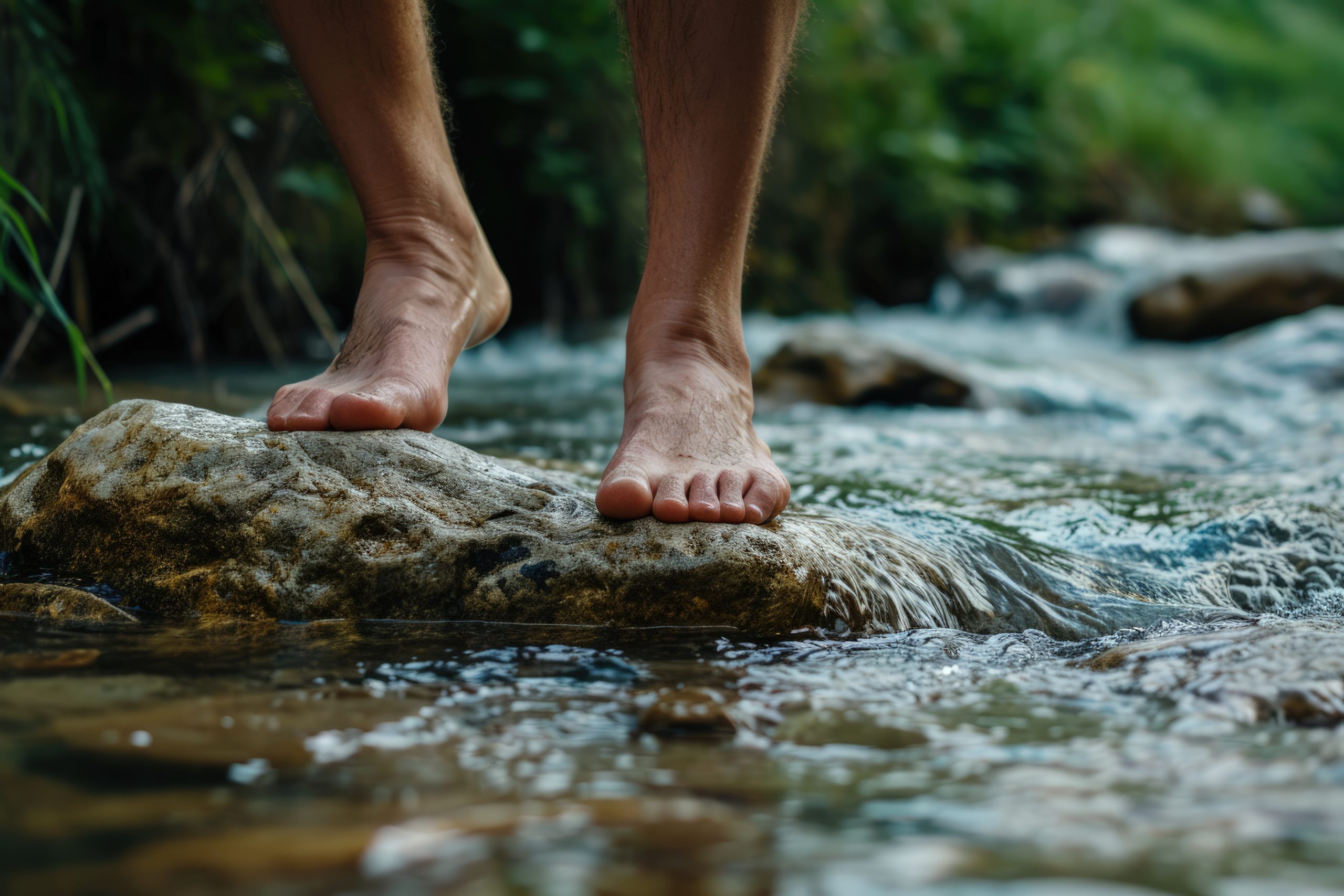
Barefoot walking is exactly what it sounds like — walking without shoes, ideally on natural surfaces like grass, soil, mud, sand, or stone. But it’s more than a lifestyle experiment. It’s biology.
|
Did You Know? Your feet carry over 200,000 nerve endings and 100+ muscles, many of which stay underutilized inside tight, padded shoes. We were designed to walk, feel, and connect with the earth — but modern footwear often disconnects us from that natural intelligence. |
When you walk barefoot, your body remembers. Your posture resets. Your nervous system relaxes. And your feet begin to do what they were always meant to: ground, stabilise, and energise.
Shoes aren’t bad — but constant use prevents natural gait, weakens foot muscles, and disrupts grounding. Barefoot walking re-teaches the body what it already knows.
Whether it’s early morning grass, soft mud after rain, or the sandy beach, the surface you walk on matters.
Cultural Wisdom: We’ve Been Doing This for Centuries
Long before science gave it a name, barefoot walking was part of daily life — and spiritual practice.
In India, walking barefoot in temples, sacred groves, or along riverbanks isn’t just tradition. It’s a ritual of humility, connection, and respect — to the Earth and to one’s own inner grounding. Ayurveda teaches that padabhyanga (foot massage and care) stimulates vital marma points, calming the nervous system and energizing organs.
Japanese forest bathing (shinrin-yoku), African earth-walking rituals, and Native American grounding practices all point to the same truth: bare feet on natural earth restore balance.
We may have lost touch with this wisdom. But the body remembers — and reconnecting can bring remarkable shifts in health and emotional well-being.
The Science Behind Barefoot Walking
We walk every day, but rarely think about how deeply the ground impacts our body — unless we intentionally connect with it.
Barefoot walking isn’t some woo-woo wellness trend. It’s physiology. Your feet are designed to connect with the Earth. When they do, healing starts at multiple levels.
Physical Benefits
Modern footwear may look sleek, but it often limits foot movement, weakens muscles, and distorts posture.
A 2015 study in the Journal of Foot and Ankle Research found that barefoot walking improves foot biomechanics, strengthens intrinsic muscles, and even reduces joint pain.
When you walk without shoes — especially on uneven surfaces — your proprioception (body’s awareness of position) improves dramatically. This is key for injury recovery, fall prevention, and overall balance, especially in older adults.
It also boosts blood circulation, especially to the extremities — a quiet game-changer for people with sedentary lifestyles, cold feet, or diabetes.
Mental & Emotional Benefits
There’s a reason barefoot walking feels calming. A study from the University of California, Irvine showed that direct contact with the Earth helps regulate cortisol, the body’s stress hormone.
Another 2007 study in the Journal of Alternative and Complementary Medicine found earthing improved sleep, likely by restoring circadian cortisol rhythm.
Walking barefoot also lowers sympathetic nervous activity, nudging the body into rest, digest, and repair mode.
Cellular & Inflammatory Support
Clinical trials by researchers Gaétan Chevalier and James Oschman suggest the Earth’s negative ions may act as natural antioxidants — reducing chronic inflammation and enhancing immunity.
Some researchers also believe barefoot grounding may neutralize EMFs (electromagnetic frequencies) — though this remains under study.
Note: References curated from peer-reviewed literature in exercise physiology, integrative health, and environmental medicine. These are cited to support the physiological and psychological benefits of barefoot walking.
Are You Ready to Go Barefoot? Take This Quiz
Take this 5-question quiz to assess your Barefoot Readiness:
- Do you often walk barefoot at home?
- Do you have foot pain, flat feet, or plantar fasciitis?
- Can you stand barefoot on grass for 5 minutes without discomfort?
- How often do you walk in nature (parks, beaches, gardens)?
- Do you feel connected or disconnected from your body during walks?
Scoring:
- 4–5 “Yes”: Great! Start incorporating grass walks daily.
- 2–3 “Yes”: Begin with short durations and soft surfaces.
- 0–1 “Yes”: Consult a physiotherapist before long barefoot sessions.
Why Walking Barefoot on Grass Makes It Even Better
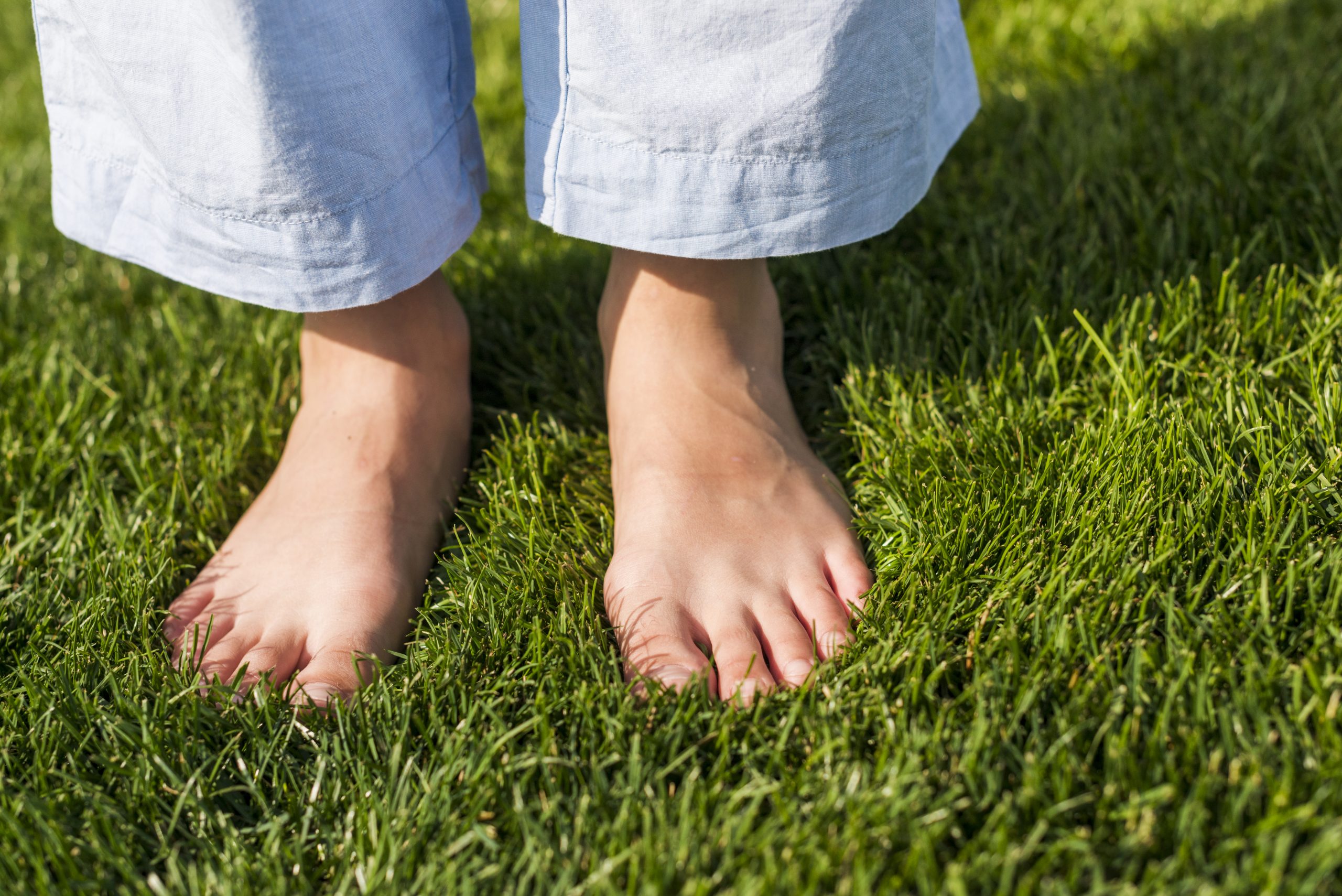
Walking barefoot on grass isn’t just nostalgic, it’s therapeutic.
The soft resistance of natural grass stimulates over 7,000 nerve endings in each foot, activating reflexology points connected to internal organs, the spine, and the brain. Morning dew enhances the experience by adding hydration and exposure to negative ions, which may help regulate the nervous system and support energy levels.
Even the color green matters; it’s been shown to promote alpha brain wave activity, inducing calm and mental clarity.
Pair this with intentional breath, and you have a free, daily reset for your nervous system.
Sensory focus tip: Notice how the earth feels under each toe. This improves mindfulness and re-grounding.
Disclaimer: Please practice barefoot walking mindfully. Avoid walking with open wounds, infections, or if you have neuropathy or sensitive health conditions — always consult your doctor first. Refrain from walking barefoot on wet grass in chemically treated areas or places with unsafe weeds, pests, or broken glass. Also, avoid spaces where there may be weeds or debris. Always practice this with safety. Trust your instinct and environment.
How to Walk Barefoot (Safely and Mindfully)
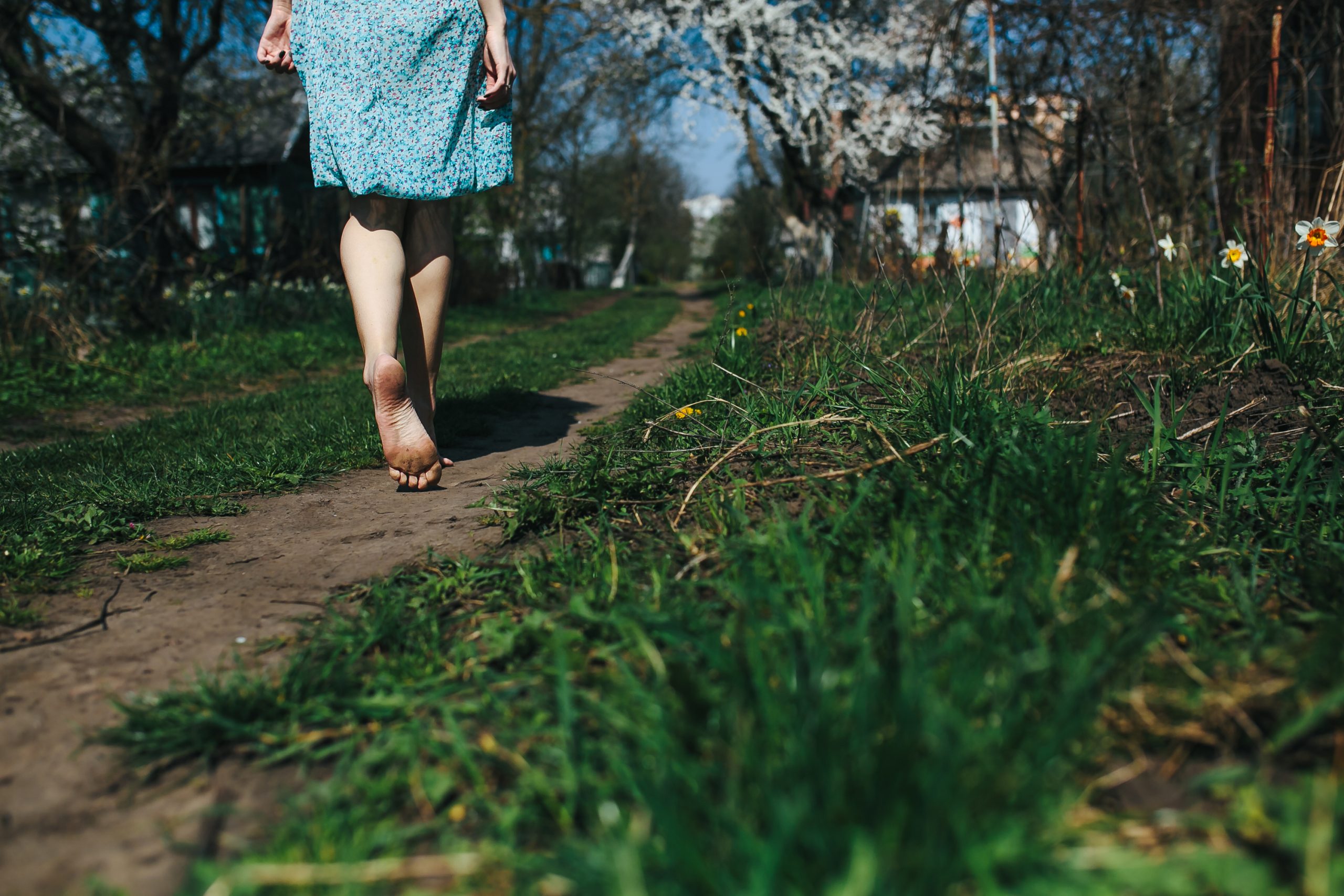
Barefoot walking isn’t just about ditching your shoes — it’s about reconnecting with your body, one conscious step at a time. To truly experience the benefits of barefoot walking, start small and stay consistent.
- Best Time for Barefoot Walking: Early morning is ideal. Walking on dewy grass has added benefits for grounding and hydration. Plus, it’s cooler and quieter, helping reduce distractions.
- Choose the right surface: Begin on safe, natural grounds like early morning grass, clean soil, stone pathways, or sand. Avoid areas with sharp gravel, wet moss, industrial grass, or hidden debris.
- Start slow: Walk for 5–10 minutes a day, focusing on posture, breath, and how your foot makes contact with the ground — heel, arch, then toes.
- Breathwork Pairing: Try pairing your walk with slow belly breathing or box breathing (4-4-4-4). This activates the parasympathetic nervous system and helps the nervous system relax.
- Listen to your body: A little tingling is normal. But sharp pain, numbness, or cramping means stop, reset, and reassess.
If you’re new to barefoot walking, start slow and listen to your body. This isn’t a fitness challenge — it’s a reconnection with something your body already knows how to do.
Disclaimer: People with diabetes, foot injuries, neuropathy, or compromised immunity must consult a doctor first before trying barefoot walking. Safety always comes first — connection doesn’t have to come at the cost of caution.
Over time, walking barefoot improves posture, stimulates reflex zones, calms the nervous system, and supports emotional regulation — all while strengthening your feet naturally.
Walk with awareness. The earth has a lot to give if you slow down enough to receive it.
Who Should Try It vs. Who Should Avoid It
| Ideal For | Avoid or Proceed With Caution |
| People with sedentary lifestyles looking to improve circulation and posture | Those with open wounds, skin infections, or cuts on their feet |
| Individuals seeking natural stress relief and nervous system regulation | People with diabetes-related neuropathy or reduced foot sensation |
| Elderly (under supervision) to enhance balance and proprioception | Anyone with foot deformities, heel spurs, or arch instability, unless guided |
| Children and teens for foot development and coordination | Individuals with weakened immunity (e.g., post-chemotherapy or post-surgery) |
| Athletes for recovery, grounding, and muscle feedback | If you’re walking on wet, slippery, or chemically treated grass |
| Anyone dealing with emotional burnout, anxiety, or poor sleep | Pregnant women in their third trimester (if balance is affected — check with your doctor) |
Please Note: If you’re unsure, start with short sessions indoors (like on a clean yoga mat or untreated balcony floor) before moving outdoors. Build trust with your body one step at a time.
Luke’s Perspective: A Forgotten Form of Medicine
Over the years, I’ve seen how a simple barefoot walk — just 10 minutes on natural ground — can change lives. Clients have reported deeper sleep, lower anxiety, lighter moods, better posture, and even reduced inflammation. This isn’t mystical. It’s science-backed and rooted in how our nervous system functions best: in rhythm with nature.
When someone feels overwhelmed or wired, this is one of the first “prescriptions” I offer. It’s gentle, accessible, and deeply effective — because the barefoot walk benefits the body and mind at a foundational level. No side effects. Just real, grounded healing.
7-Day Barefoot Walk Tracker
Use this tracker to log your barefoot walking journey over the next 7 days. It’s a tool for self-awareness — helping you tune into your body’s signals before and after walking barefoot.
Journal or log these daily reflection questions to track your barefoot walking experience. You can journal your answers or simply pause and notice.
- What surface did I walk on today? (e.g., grass, soil, sand)
- How long did I walk barefoot?
- How did my body feel before the walk? (Tension, fatigue, restlessness?)
- What changed after the walk — physically or emotionally?
- Did I feel more grounded, calmer, or lighter?
- What thoughts or emotions came up while walking?
- Did I pair it with breathwork or silence? How did that feel?
- Did I sleep better or feel more focused afterward?
- Is anything becoming easier — mood, digestion, energy?
- Would I like to continue this practice tomorrow? Why or why not?
The benefits of barefoot walking on grass compound over time. Don’t judge each day — just notice. Awareness is progress.
Final Word: The Ground Beneath Your Healing
Most of us are looking for something to calm us, to steady us, to make life feel a little less overwhelming.
Sometimes, the solution isn’t another pill or productivity hack — it’s something far simpler. Something as ancient as the earth itself.
Barefoot walking may sound too simple to matter, but I’ve seen its impact over and over again — in people who sleep better, breathe deeper, walk straighter, and feel lighter in their body and mind. It connects us back to a rhythm we’ve long forgotten.
If you’ve been feeling off, ungrounded, wired, or anxious… this may be your sign to take your shoes off and return to the earth — slowly, intentionally, safely.
Start small. Stay consistent. Let your body lead.
Because the benefits of barefoot walking on grass aren’t just physical — they’re a quiet reminder that healing doesn’t always have to be hard. Sometimes, it’s just one mindful step away.
Frequently Asked Questions
1. Is barefoot walking scientifically backed or just a wellness trend?
Yes, barefoot walking is backed by both ancient tradition and modern science. Studies from journals like Journal of Environmental and Public Health and The Journal of Alternative and Complementary Medicine confirm its potential benefits — from better sleep and reduced cortisol to improved posture and inflammation control. It’s not woo — it’s biology.
- What are the specific health benefits of walking barefoot on grass?
The benefits of barefoot walking on grass include nervous system relaxation, better grounding (earthing), reduced inflammation, improved balance, and emotional calm. Morning dew and green visuals enhance the effect by activating parasympathetic response and alpha brainwaves — a natural mood and energy booster.
- How long should I walk barefoot to see results?
Even 5–10 minutes daily of barefoot walking on safe, natural surfaces like grass or sand can start making a difference. Consistency matters more than duration. Pair it with deep breathing or gentle sun exposure for maximum benefits.
- Can everyone try barefoot walking?
Most people can benefit from barefoot walking. However, those with diabetes, neuropathy, open wounds, or foot injuries should consult a healthcare provider first. Choose clean, safe surfaces and avoid sharp gravel, wet weeds, or polluted areas.
- How is barefoot walking different from walking in minimalist shoes?
While minimalist shoes offer more foot flexibility than standard footwear, barefoot walking allows direct contact with the earth. This enables grounding, activates nerve endings, and stimulates reflexology points that minimalist soles may still block. For full barefoot walk benefits, the skin-to-earth connection is key. For those hesitant to go fully barefoot, minimalist shoes can be a gentle intermediary step — allowing more natural gait while still offering protection. But to experience the full grounding benefits, skin-to-earth contact is key.
Ready to Begin? We’re Walking With You
Try barefoot walking for 7 days — just a few minutes a day, safely and mindfully.
Want help pairing it with a change in lifestyle habits?
Join our Wellness Program.
Our Integrative Experts are here to guide you.
📞 Call us at 1800 102 0253
📧 Or write to consults@lukecoutinho.com
We’ll help you find a way — with guidance that’s personal, practical, and aligned with your life.
Disclaimer: Please Read Before You Step
This blog is for educational purposes only and not a substitute for medical advice. If you have diabetes, neuropathy, foot injuries, or any chronic condition, please consult your healthcare provider before walking barefoot, especially outdoors. Never walk barefoot on unsafe terrain, near broken glass, open wounds, or toxic weeds. Use discernment and respect your body’s cues at all times.
Rescources:
- Posture & Alignment — Foot biomechanics, Lieberman, D. E. (2010). What we can learn about running from barefoot running: An evolutionary medical perspective. Exercise and Sport Sciences Reviews, 38(2), 61–67. https://doi.org/10.1097/JES.0b013e3181df4526
Note: While the 2015 Journal of Foot and Ankle Research study isn’t open access, this review supports similar claims and is peer-reviewed. - Balance & Proprioception, Robbins, S. E., & Hanna, A. M. (1987). Running-related injury prevention through barefoot adaptations. Medicine and Science in Sports and Exercise, 19(2), 148–156. https://doi.org/10.1249/00005768-198704000-00002
- Stress Relief — Cortisol Regulation (Earthing Study), Ghaly, M., & Teplitz, D. (2004). The biologic effects of grounding the human body during sleep as measured by cortisol levels and subjective reporting of sleep, pain, and stress. The Journal of Alternative and Complementary Medicine, 10(5), 767–776. https://doi.org/10.1089/acm.2004.10.767
- Sleep Improvement (Earthing + Cortisol Rhythm), Chevalier, G., Sinatra, S. T., Oschman, J. L., Delany, R. M., & Menigoz, W. (2012). Earthing (Grounding) the Human Body Reduces Blood Viscosity—a Major Factor in Cardiovascular Disease. The Journal of Alternative and Complementary Medicine, 19(2), 102–110. https://doi.org/10.1089/acm.2011.0820
Note: This paper also touches on improved sleep, reduced inflammation, and cardiovascular health via grounding. - Inflammation Reduction — Ground Contact, Chevalier, G., Mori, K., Oschman, J. L., & Sokal, K. (2013). Earthing: Health implications of reconnecting the human body to the Earth’s surface electrons. Journal of Environmental and Public Health, 2012, Article ID 291541. https://doi.org/10.1155/2012/291541

Start Your Wellness Journey
Feeling inspired to take the next step in your wellness journey? Connect with us to explore how our tailored programs can support your health journey. Your transformation is just a conversation away.