
What is your nervous system feeling right now?
Some of you are genuinely happy. Some are just exhausted and counting the days until they can finally switch off. Some are anxious about a health report, a financial responsibility, a relationship that feels uncertain, or a diagnosis that has changed how they look at the future.
I see this every day in my work. I have seen it in busy parents, young professionals, CEOs, and even in royal families who seem to have everything figured out from the outside. No one is spared from overwhelm. The nervous system does not understand status; it only understands whether it feels safe or threatened.
For many people, the toughest moment is not in the middle of the day, it is those first few minutes after waking up. The eyes open, and before the feet touch the floor, the mind is already scrolling through emails, notifications, and silent worst-case scenarios.
Over the last 14 years, I have learned that calm rarely comes from trying to rearrange every problem outside of us. It begins with two simple inner practices: acceptance, and reframing your morning mindset during the hypnopompic window.
Before we get into these practices, I want to tell you a short story about a family I once worked with, and how a simple shift helped them move from fear to focus. That is where we will begin.
A few days ago, I was working with a woman who had just conceived after a long fertility journey. Instead of feeling only joy, her mind was racing ahead: the next nine months, the delivery, her weight, her career, her health. Her words, “I am already living the next one year in my head, and I am exhausted.”
For many people, this is the real struggle. Not what is happening today, but what the mind is already rehearsing for tomorrow.
Resistance. A constant battle many of us wage against ourselves. But why?
Why We Resist, Even When Life Is Good
Before we get into practice, I want you to notice something about your own mind.
Think of the last time you knew a difficult week was coming. Maybe you had scans scheduled, performance reviews, travel, tough conversations. Did you find yourself thinking: This is too much, this should not be happening, I cannot handle this?
That inner commentary is resistance. It is the mind trying to bargain with reality, instead of meeting it as it is.
Now think of the opposite. A time when life was actually going well. Health was stable, work was flowing, relationships felt peaceful. How long did it take before another thought crept in: What if this does not last? What if something goes wrong now?
It is almost as if many of us are uncomfortable with both struggle and ease. When things are hard, we resist. When things are good, we fear losing them. This constant internal conflict exhausts the nervous system before the day has even begun.

From a biological point of view, your brain is always scanning for threats. From a psychological point of view, many of us have learned to expect the worst to feel prepared. In reality, this habit rarely protects us. It simply drains us. We spend so much energy wrestling with what might happen that we have very little left to respond to what is actually happening.
This is why acceptance matters. Not as a spiritual slogan, but as a practical reset. When you move from Why is this happening to me to This is happening, how do I want to meet it, you stop fighting yourself and start working with yourself.
The first exercise I am about to share, the night-before acceptance ritual, is designed to help you make exactly that shift.
Exercise One to Calm Overwhelm: The Night-Before Acceptance Ritual
Remember the woman I mentioned earlier, already anxious about the next nine to twelve months of her life? Let’s come back to her for a moment.
When I sat with her, I did not give her a hack or a breathing technique first. I asked her to do something that sounds almost too simple: accept what the next months would actually look like.
Not in a negative way, not as resignation, but as reality.
Most of us enter a difficult week in resistance:
- This is too much
- Why is this happening now
- I cannot handle this
That resistance keeps the nervous system in fight or flight. In that state, the mind chases shortcuts, worst case scenarios, and constant what ifs. Clarity goes down, fear goes up.
Acceptance is not giving up. Acceptance is saying:
This is my current reality. I may not control every outcome, but I can control how I show up inside it.
The moment you do this, something shifts. The emotional storm does not disappear, but your prefrontal cortex, the part of the brain that plans, starts to come back online. You move from Why is this happening to me to Given that this is happening, what is still in my circle of influence?
This is exactly what I asked her to do. To stop negotiating with the next few months in her head, and instead:
- Acknowledge what would be demanding
- Accept what she could not change
- Choose a few things she could still influence, like sleep, simple meals, and asking for support
You can do the same tonight, in a few minutes.
The Night-Before Acceptance Ritual (3–5 minutes)
Before you sleep, sit quietly and:
- Name what is coming
A tough week at work, medical treatment, travel, exams, family events, a sensitive conversation. - State your acceptance
For the next few days or months, this is my reality. I accept it. - Reclaim your influence
I may not control the outcome, but I can control how I sleep, what I eat, how I speak to myself, and the support I ask for. - End with one small action for tomorrow
One walk, one better meal, one honest question for your doctor, one boundary, one call to someone who supports you.
Do this at night, especially before hard weeks. You are not changing the situation, you are changing the state in which you meet it.
As you practice this night-before acceptance ritual, something subtle begins to shift. You are no longer going to bed braced for battle. You are going to bed knowing what is on your plate, owning what you can influence, and loosening your grip on what you cannot.
That is important, because the way you sleep sets the tone for how you wake up. And this early-morning state of how you wake up shapes your entire day.
Let’s understand what this golden window signifies.
The Hypnopompic Window: Your Brain’s Most Powerful 5 Minutes
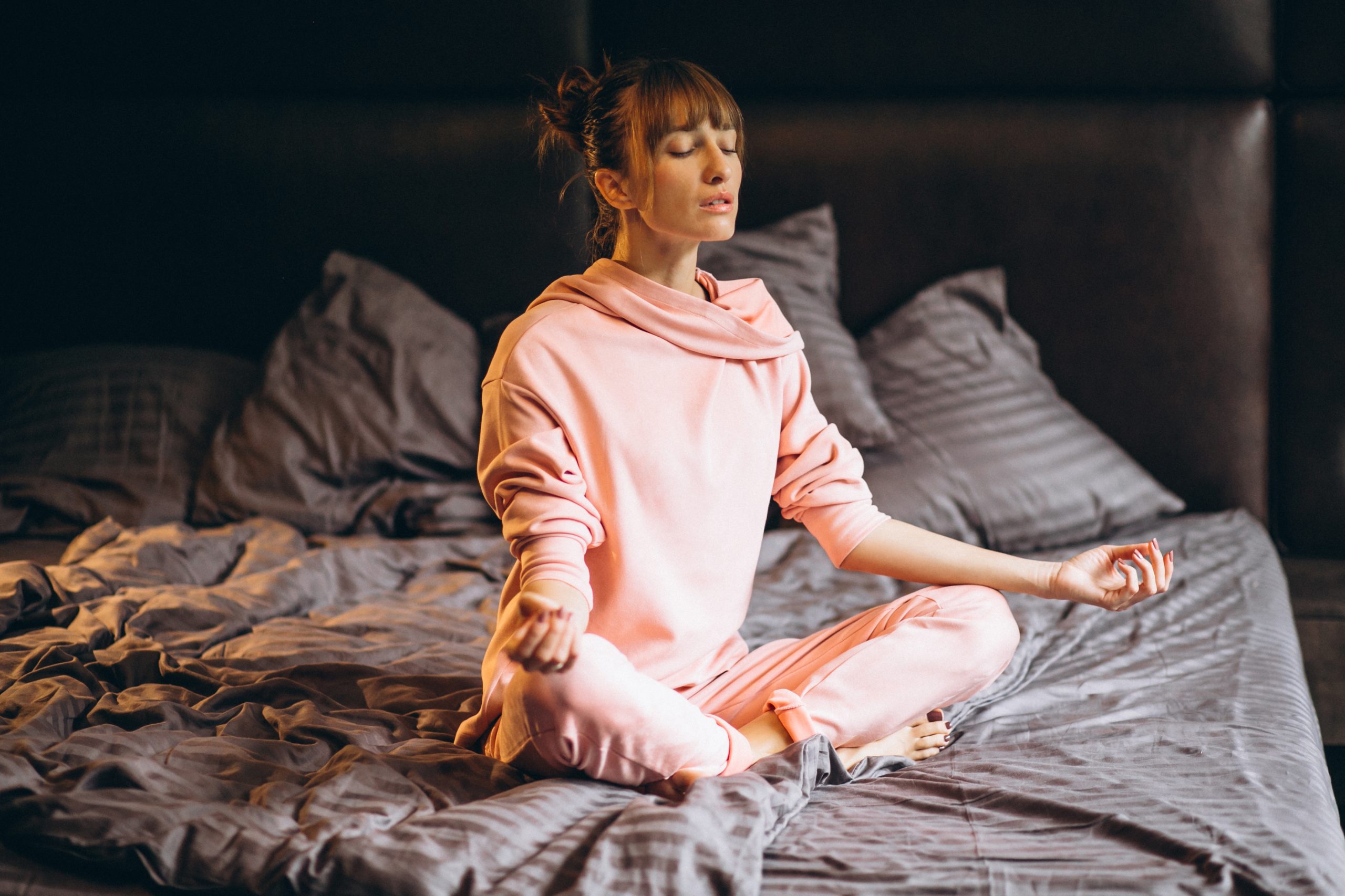
There is a small but powerful window that most of us waste every single morning. It is the first few minutes after you open your eyes.
As you move out of sleep, your brain slowly shifts from the deeper waves of sleep (delta and theta) into the more alert alpha and beta states. In between, there is a transition phase called the hypnopompic state. This usually lasts around five to ten minutes.
In this state, the subconscious mind behaves like a sponge. The thoughts, words, and emotions you feed it sink in more deeply and can shape how your nervous system responds for the rest of the day. If the first thing you tell yourself is, I cannot do this week, I am already behind, your body listens. Your stress hormones, heart rate, and breath will often follow that script.
This is one reason why so many spiritual and religious traditions place importance on early morning practice. Prayer, chanting, gratitude, or silence at dawn are not random rituals. They are ways of offering the mind a gentle, grounding script at the exact time it is most open to suggestion.
Today, many of us do the opposite.
We open our eyes and reach for the phone. The first light that hits our eyes is not natural morning light, it is blue light from a screen. The first input our brain receives is a flood of messages, news, and other people’s lives. Without realising it, we feed our most sensitive state with comparison, urgency, and fear.
Calm days rarely start with notifications.
They start with a few intentional moments where you decide what enters your mind first.
Now, let’s walk through a simple five-minute morning practice I use myself, and with my clients, to make that window work for you instead of against you.
Ready to feel calmer, clearer, and more in control of your day?
👉 Explore the Wellness Program
Exercise Two to Ground Yourself: “Who Do I Want to Be Today?”
This is the practice I ask my clients to do while they are still in bed, before they touch their phone, check messages, or even sit up fully. It uses that sensitive hypnopompic window to set the tone for your nervous system and your day.
Start simple.
Take one or two slow, deep belly breaths. Feel the bed under your body. Notice that, in this moment, you are safe.
Then, in your mind or softly out loud, repeat a few I am statements that speak to how you want to be, not what you want to achieve:
- I am safe.
- I am guided.
- I am protected.
- I am healing.
- I am calm.
- I am supported.
- I am clear.
Choose four or five that feel real for you and stay with them. You are not forcing yourself to believe something fake. You are giving your brain a direction.
If you are living with a health condition, you can gently add:
- Today, my body receives what it needs.
- My cells are repairing in the best way they can.
- My treatment and my body are working together.
If your stress is around work or relationships, try:
- Today I respond, instead of reacting.
- Today I speak from a place of respect, even when I disagree.
- Today I choose one step over perfection.
Research shows that from a neuroscience point of view, repetition in this early state helps strengthen new neural pathways. The brain is more suggestible, which means the thoughts you repeat here are more likely to shape your emotional tone, focus, and choices through the day.
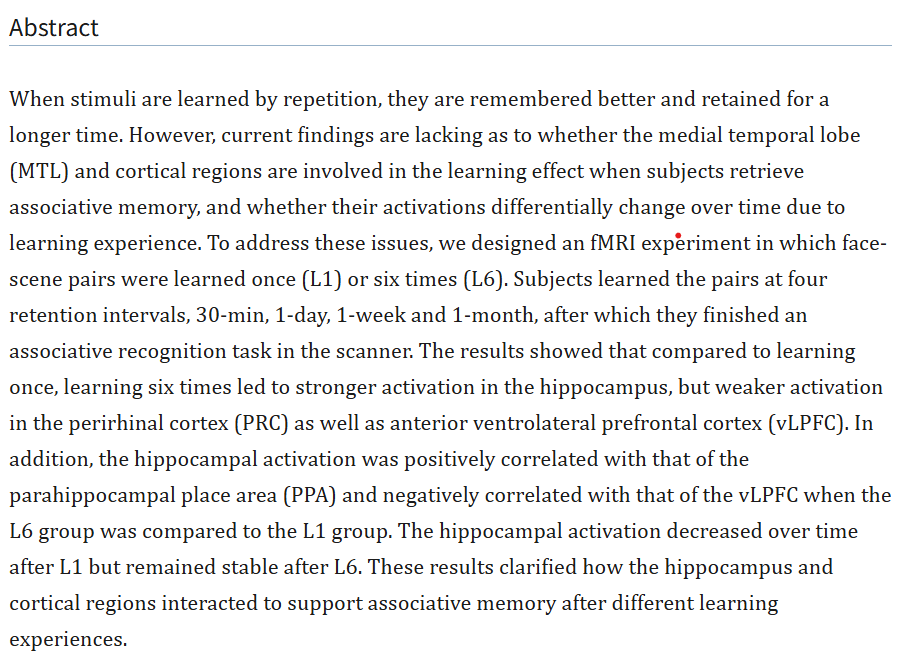
Psychology calls this your locus of control. You cannot fully control how the day unfolds, but you can decide where you stand within it. External events will do what they do. In those first moments, you are choosing your inner position: fearful and scattered, or calm and centred.
You may not be able to choose every situation you walk into today. But you can choose who walks into it. Here’s an illustration to help you understand better.
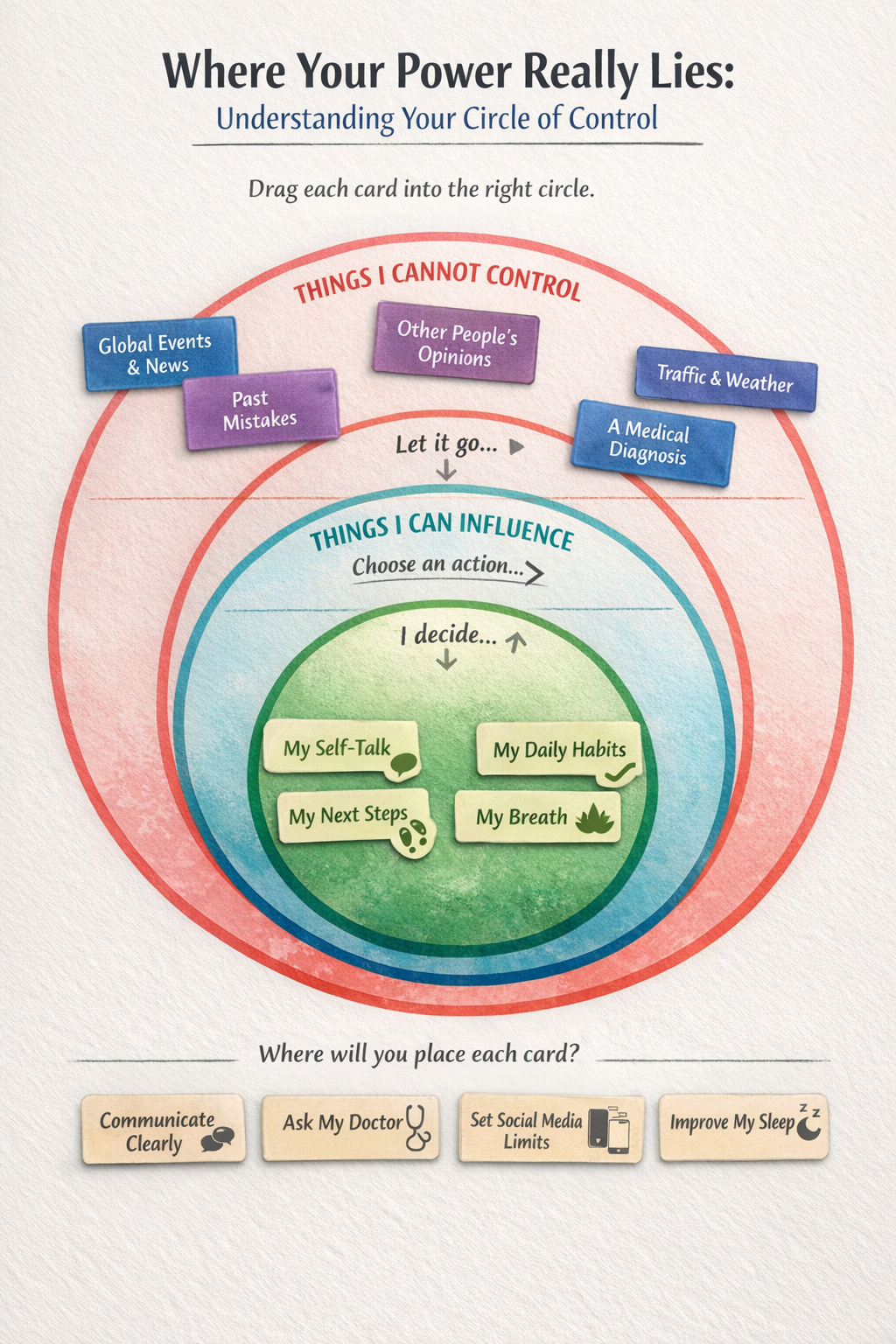
From Thought to Physiology: Why Calm Choices Matter
When you practice the night-before acceptance ritual and the morning Who do I want to be today? practice, you are not just “thinking positive.” You are quite literally changing the chemistry that flows through your body.
Every time you stay in resistance, your brain keeps sounding an internal alarm. Adrenaline and cortisol stay higher than they need to be, your muscles stay tight, digestion slows down, blood sugar becomes more erratic, and the immune system is either overactive or exhausted. Live like this long enough and the body forgets what safety feels like.
Acceptance softens that alarm.
When your mind says, This is my reality for now, I accept it, and I will focus on what I can influence, your nervous system begins to shift from constant fight-or-flight into a steadier state. That calm state is where better sleep, stronger digestion, more stable glucose levels, and wiser immunity become possible.
The same happens in the hypnopompic window. Those first five minutes after waking are like wet cement. The thoughts you pour in harden into your emotional tone for the day. When you fill that space with I am safe, I am healing, I am calm, I am supported, I am clear, you are training your brain to look for safety cues, not only threats. Over time, this repetition rewires pathways linked to attention, fear, and self-talk.
This is why I keep reminding my community: Be educated, not influenced. Do not do these exercises because they sound trendy or because someone on social media called them a “manifestation hack.” Understand what they are doing to your brain, hormones, sleep, gut, and immunity. When you know that a five-minute practice can lower your stress chemistry, support your deep cellular nutrition, improve quality sleep, and help your five intelligent defense systems do their job more efficiently, you are more likely to show up for it consistently.
Calm is not the absence of problems. It is a physiological state that allows your body and mind to meet those problems with clarity, action, and grace. These two exercises are simple, but if you stay with them, they can quietly become part of the way you heal.
Serenity, Science, and Something Bigger Than Us
When I teach these two practices, many people tell me it reminds them of a prayer they grew up with. One of the most well-known is often called the Serenity Prayer:
“Grant me the serenity to accept the things I cannot change,
the courage to change the things I can,
and the wisdom to know the difference.”
For me, this is not about any particular religion. It is about a simple, universal truth:
- There are things we cannot control.
- There are things we can influence.
- Peace comes when we stop fighting reality and start working with it.
You see the same wisdom repeated across paths and cultures:
- In the Bhagavad Gita, when Krishna encourages Arjuna to focus on right action, not on controlling every outcome.
- In Buddhist teachings, the concept of reducing suffering involves letting go of attachment to how things should be and accepting life as it is.
Here are more instances where every faith refers to the same virtues:
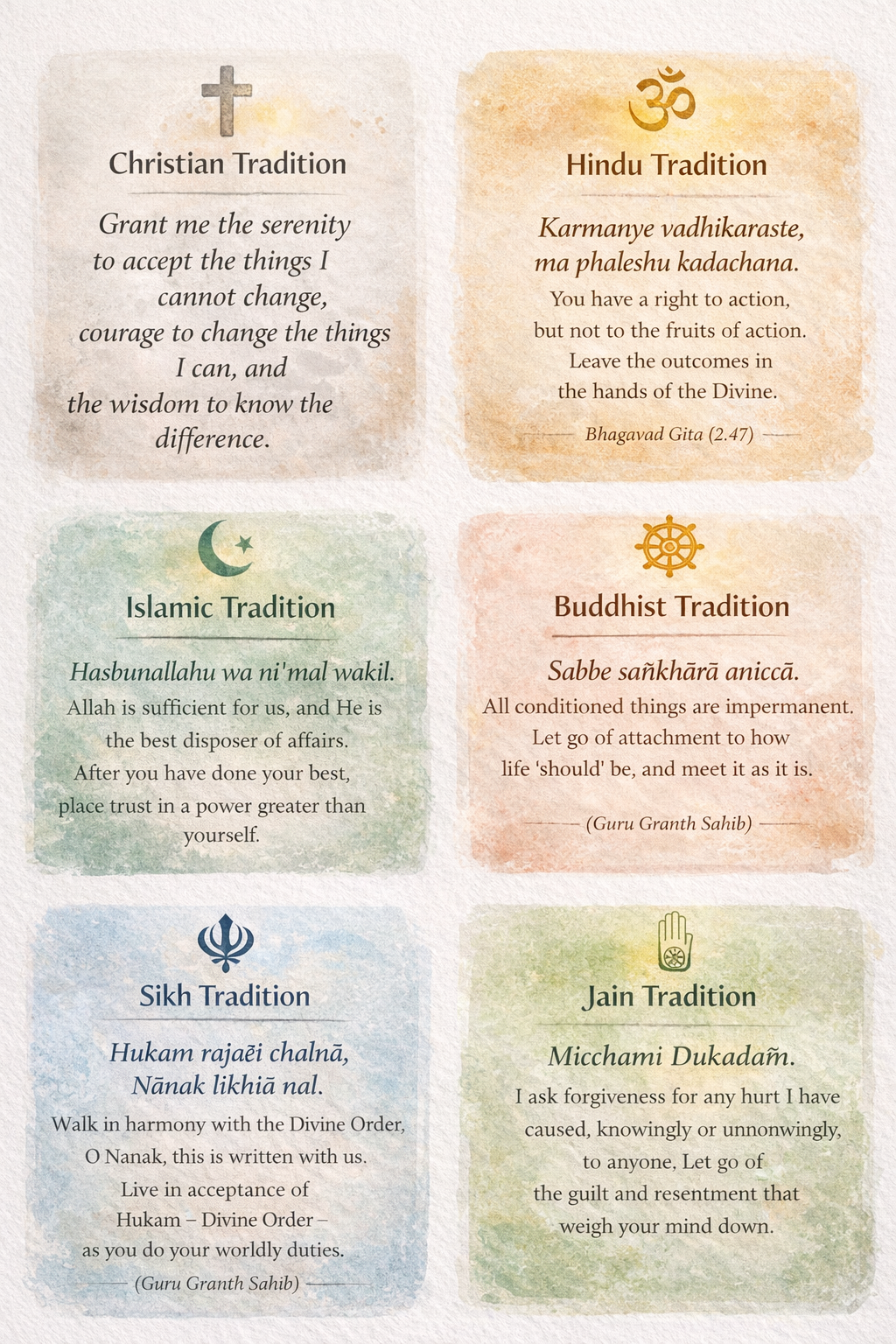
Different words, same message: acceptance, wise effort, and trust.
When you practise the night-before acceptance ritual, you are living this wisdom. You are not giving up. You are simply saying:
I accept that this is what my week looks like.
I may not control the outcome, but I can choose how I show up.
That one shift lowers resistance, lowers adrenaline, and frees mental space for better decisions.
When you use the first five minutes after waking to ask, Who do I want to be today?, you are doing the same. You are moving your focus from fear of the future to the part of life that still belongs to you today: your attitude, your breath, your next choice, your next conversation.
For those who believe in God, Source, or a higher power, these two practices can sit beautifully alongside prayer. You can still ask for help, guidance, and strength. At the same time, you are doing your part to calm your nervous system, balance your hormones, and create the internal environment where healing is more likely.
For those who do not identify as spiritual or religious, these tools still work at the level of pure biology and psychology. Acceptance reduces chronic stress signals. Clear intentions in the hypnopompic window help stabilize focus, behaviour, and emotional responses during the day.
Whichever path you follow, my invitation is the same:
Do not follow a technique just because it is trending. Understand what it is doing for your mind, your hormones, and your cells. Then practise it with intention.
You may not be able to control how the year ends or what 2025 brings. But tonight, you can choose acceptance over resistance. Tomorrow morning, you can choose how you want to show up.
That is where real power lives: not in controlling life, but in meeting it with a calmer mind and a steadier heart.
Final Word: Two Small Anchors In A Noisy World
At the end of the day, most of us are not looking for a perfect life. We are simply looking for a way to feel a little less afraid, a little more steady, and a little more in charge of how we move through our day.
That is what these two practices give you.
Over time, these are not just mindset shifts. They change how your body holds stress, how you sleep, digest, heal, and show up for the people you love. You will still have difficult days. But you do not have to meet them with the same level of chaos inside.
Tonight, try the acceptance ritual. Tomorrow morning, try the five-minute “Who do I want to be today?” practice. Notice, gently, how your inner world begins to change.
Ready to Make Your Health a Priority?
Start your journey with one positive action today.
Check Out Our Wellness Program.
Looking for personalized advice? Our experts are ready to help you thrive.
Reach Out to Our Team of Foundational Medicine and Lifestyle Experts!
Book a one-on-one with our team: 1800 102 0253 or write to us at consults@lukecoutinho.com.
Disclaimer: This article is for education and general guidance only. It is not a substitute for personal medical advice, diagnosis, or treatment. If you are currently living with a medical or mental health condition, use these practices as supportive tools alongside your doctor’s advice, not in place of it. Always make an informed choice. Keep your healthcare provider in the loop before trying anything new. If you ever experience very low moods, thoughts of self-harm, or feel unable to cope, seek immediate help from a trusted professional, local emergency service, or crisis helpline in your country.

Start Your Wellness Journey
Feeling inspired to take the next step in your wellness journey? Connect with us to explore how our tailored programs can support your health journey. Your transformation is just a conversation away.