
December 31 has a unique energy. For many people, it feels like a deadline. A quiet pressure to reset, fix, undo, or compensate for everything the year brought with it. Especially after a festive season filled with food, late nights, travel, and celebration. We see this every year, and we want to say this upfront: There is nothing to feel guilty about.
One indulgent meal, one indulgent week, even a season of celebration, does not undo your health. Guilt serves no purpose in healing. Awareness does. And awareness gently nudges us toward the right action, without panic or punishment.
Just a few days ago, a client told us, “I feel like I’ve fallen off track completely. I don’t even want to weigh myself or start anything new until Monday.” We smiled, because we’ve heard this sentence countless times over the last 14 years. Our response was simple: You haven’t fallen off track. You’ve just paused. And pauses are part of life. What matters is not the pause, but how calmly and consistently you return.
This is where many people go wrong. They turn a pause into self-criticism. They overcorrect. They promise extreme discipline in January, only to feel exhausted, frustrated, and stuck by February. In fact, one of the most important lessons we’ve learned over the years is this:
Being health-obsessed is often what makes people sicker, more fatigued, and more disconnected from their bodies.
Not because they lack discipline, but because obsession keeps the nervous system braced. When health becomes a constant mental project, the body stays in stress mode, and in that state, regulation, repair, and even wise hunger cues become harder to access.
As we step into a powerful New Year 2026, the goal is not to control your body harder. It is to listen better. To simplify. To enjoy food, movement, rest, and life—without losing your rhythm or your peace. This is not about a fresh start. It’s about a gentle return to what already works.

When Health Starts Feeling Like a Full-Time Job
Here is something we’ve been seeing more and more, especially around year-end.
People are not struggling because they do not know what to do. They are struggling because they know too much.
Too many rules. Too many ‘perfect plans.’ Too many voices. Too much tracking. Too many comparisons. Too much pressure to do it all, and do it flawlessly.
Let’s pause and ask a simple question.
When did health stop feeling supportive and start feeling heavy?
A client said something to us recently that stayed with us:
“I’m doing everything right, but I’m thinking about health all day. I’m tired even before the day begins.”
This is where obsession quietly replaces discipline.
Discipline feels calm. It has rhythm. It leaves space for life.
Obsession feels urgent. It is loud. It is fear-driven. It creates a nervous system that is constantly braced.
From a biology point of view, that matters.
When the brain perceives stress, it signals the body to prioritise survival. Cortisol rises, digestion slows, sleep becomes lighter, hunger cues get confused, cravings spike, glucose regulation becomes more erratic, and recovery gets harder. Not because you are weak, but because your body is doing its job: protecting you.
Health cannot improve in a body that feels threatened.
That is why we keep coming back to one truth, year after year.
If your health routine feels joyless, rigid, or anxiety-driven, the answer is rarely to push harder.
It is to simplify.
The Real Festive ‘Damage’ Is Not Food
Let’s be honest. Most of us do not just eat during festivals. We think while we eat.
We calculate. We judge. We bargain. We panic. We promise compensation. We eat the sweet, but we are already rehearsing the punishment.
And that internal state matters more than most people realise.
Because the body is not only responding to food. It is also responding to the chemistry of your thoughts and emotions. When you eat with guilt, you are not just digesting a heavy meal. You are digesting stress.
This is why the festive season feels harder for many people than it needs to.
Instead of gratitude, presence, joy, and connection, we enter it with apprehension:
What will happen to my weight?
What will happen to my sleep?
What will happen to my schedule?
What will happen to my discipline?
And yes, sometimes routines do get disrupted. That is part of life. That is part of family, travel, celebrations, and being human.
The issue begins after the festivities.
The most common mistakes we make after indulgence
- We treat the body like it needs punishment.
We restrict aggressively, skip meals, overtrain, or go into a cleanse mindset. - We stop listening to hunger and fullness.
We start eating by the clock, or not eating as revenge. - We confuse ‘reset’ with ‘extreme.’
We forget the body recalibrates faster with calm signals than with harsh ones.
What you do once that phase is over matters. Not because you need to fix yourself, but because your body responds beautifully to the right cues.
The body is always communicating. The problem begins when we stop listening.
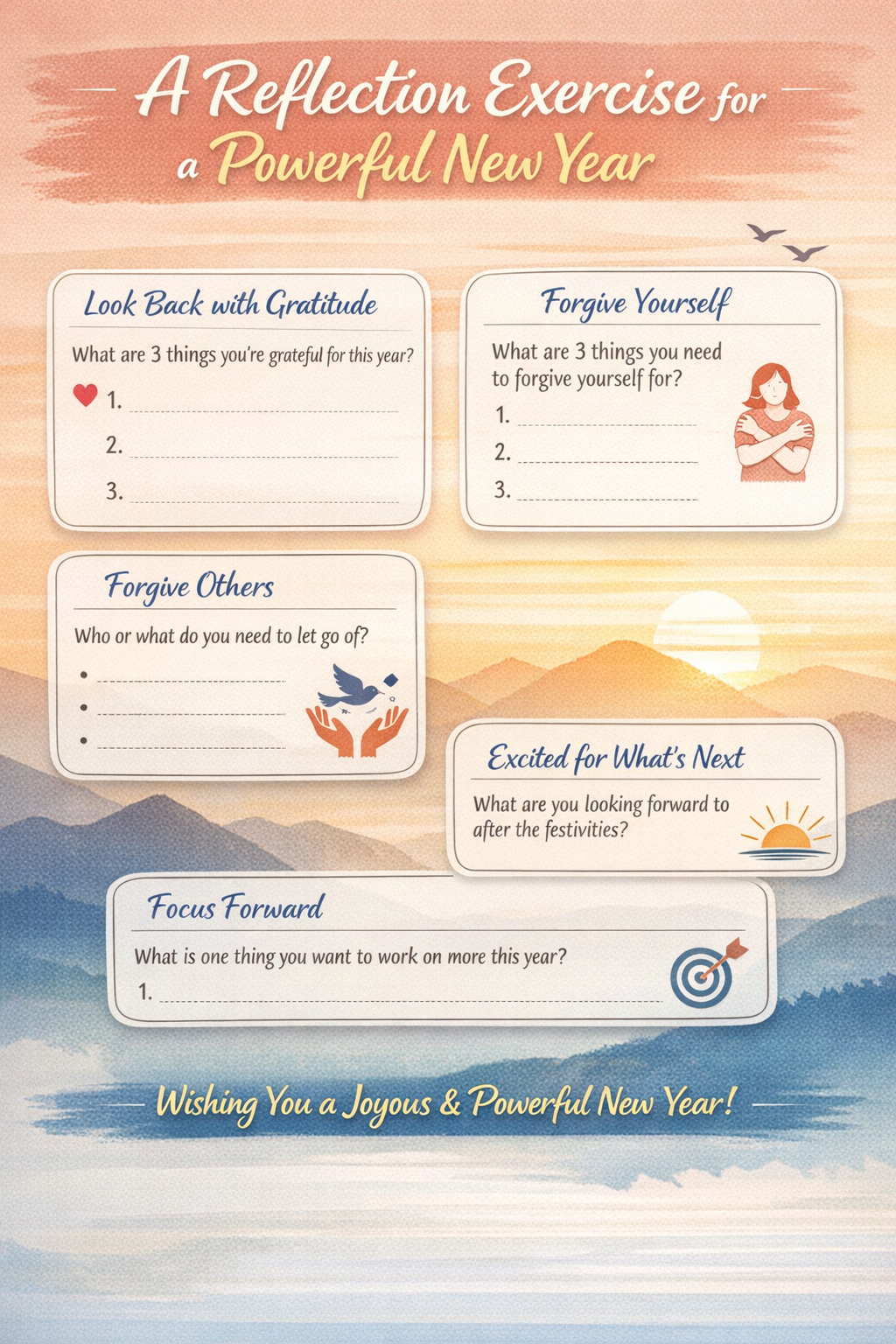
Before we step into the reset, we want you to pause for a minute.
Not to analyse your year, not to judge your choices, but to meet yourself with a little honesty and a little kindness. Because when you reflect first, you stop reacting, and you start responding.
So take a pen and paper. If you do not have that handy, open your phone’s memos or voice recorder. Let this be messy and real. You don’t need perfect answers, just truthful ones.
The Day-After Reset: A Gentle Re-Entry Ritual
The day after the celebrations is not the day to become intense. It is the day to become kind and structured.
Think of it like this. If a child has had a loud, exciting day, you do not shout at them to calm down. You guide them back into rhythm. The nervous system works the same way.
Here is the flow we use ourselves, and with clients, because it signals safety first. Once safety returns, everything else becomes easier.
A gentle re-entry flow for the next morning
- Wake up and do nothing for a minute.
No phone. No news. No mental sprint. Just one quiet pause. - Bring in gratitude or prayer.
Not performance. Not forcing positivity. Just presence. Even one line is enough. - Two to five deep breaths, then gentle movement.
Stretch, mobility, a slow walk inside the house. You are telling the body: we are safe. - Freshen up, hydrate, honour elimination.
Rushing the body creates stress. Supporting rhythm creates regulation. - Step outdoors for a simple walk.
Even ten minutes helps digestion, glucose response, lymphatic movement, and mood. - Let natural light hit your eyes early.
This anchors the circadian rhythm, which influences appetite signals and sleep later that night. - Set one intention for the day.
Not ten goals. One steady action you will actually keep. - The phone comes after the body.
When the mind leads first, the day becomes noisy. When the body leads first, the day stays stable
This is not a morning routine.
It is a nervous system reset.

Getting Back on Track After Indulgence Without Drama
One heavy meal is not a setback. It is a moment.
The setback is when we turn one moment into a story:
I’ve ruined everything.
I’ve lost control.
Now I have to be strict.
Now I need to compensate.
That story creates stress. Stress disrupts regulation. And then we blame the food.
Here is a calmer approach that works far better.
- If you ate heavy, take a light 15–20 minute walk.
Not to burn calories. To support digestion, mood, and glucose regulation. - Let your next meal be guided by physical hunger.
Not guilt. Not the clock. Not fear. Hunger is your body’s signal that it is ready. - Do not punish. Do not restrict aggressively.
The body does not respond well to threats. It responds well to steadiness.
Bio-individuality matters. Some people need a lighter next meal. Some people need time. Some people need hydration and sleep more than anything else.
And this is the line we want you to remember as you enter a powerful New Year 2026:
Consistency is not what you do perfectly. It is what you return to repeatedly.
When the Festivities Fade, Reality Gets Loud Again
There is a moment that comes every year that many people speak about.
The music slows down. The guests leave. The family WhatsApp group goes quiet. The last piece of mithai is sitting in the fridge, now less exciting and more… suspicious.

And suddenly, you are alone with yourself again.
That is when a lot of people feel it.
Not the weight gain. Not the sugar. Not the late nights.
The void.
Because when the festivities are on, life feels full. There is noise, plans, people, food, distractions, and constant movement. But once it fades, many of us are left with the same things we were avoiding all year:
- The health report we have not followed up on
- The relationship that feels strained
- The job that feels draining
- The exhaustion we normalised
- The loneliness we tried to drown in celebration
Let’s pause and ask something real.
How are you feeling now that the year is ending?
Not the version you post. The version you live with when you switch off the lights.
Some of you feel grateful. Some feel proud. Some feel relieved.
Some feel like you survived, and you are not even sure how.
And if you are feeling a little heavy right now, emotionally, you are not alone. Many people do.
This is also why we see people swing into extreme health mode in January. Not because they suddenly want abs. Because they want control. They want certainty. They want to feel like they are doing something right.
But health was never meant to be a punishment for being human.
A Year-End Reflection That Actually Helps, Not Hurts
Before we plan the new year, we need to do something most people skip.
We need to look back without self-attack.
Because a lot of people confuse reflection with regret.
Reflection is honest. Regret is cruel.
So let’s do this gently. Give yourself five minutes. No phone. No distractions. Just you and a glass of water. Ask yourself:
The questions we avoid, but need
- What did I do this year that genuinely helped my health?
Even if it was small. Even if it was inconsistent. Name it. - Where did I show up for myself more than I used to?
Maybe you slept earlier. Maybe you walked more. Maybe you finally got your blood work done. - What did I survive this year that nobody knows about?
This matters. Give it the respect it deserves. - What did I keep postponing?
The appointment, the boundary, the conversation, the habit. - What did I learn about my patterns?
Do you go off track when you are stressed, lonely, bored, or overwhelmed? - If my body could speak to me like a best friend, what would it say right now?
Not in anger. In care.
Now, we want you to do something that will make you smile, and maybe tear up.

The ‘Plot Twist’ Prompt
If your year were a movie, what would the plot twist be?
- The year you thought would break you made you stronger.
- The setback you hated taught you discipline.
- The person who disappointed you showed you what you will never tolerate again.
- The body that felt like it was failing you was actually asking for help.
Life has a strange way of doing that.
And yes, you will have regrets. We all do. But regret is only useful if it turns into learning.
What is one lesson you want to carry forward, without carrying the pain with it?
Why Most People Lose Steam by February
Let’s talk about something predictable.
January starts with rigor and energy.
February starts with reality.
The reason many people lose steam is not laziness. It is a poor strategy.
Here are the patterns we see every single year:
The February Collapse Triggers
- People try to change everything at once.
Food, workout, sleep, supplements, meditation, journaling, hydration, ten thousand steps, and cold showers. By day five, they are living like a wellness influencer with a full-time team, while also doing a full-time job. - They start with intensity, not identity.
They chase motivation instead of building a rhythm. - They turn one ‘off day’ into a falling off.
And then the mind goes: Might as well give up. - They do it alone.
No support, no accountability, no environment changes, no plan for travel or stress. Just willpower.
Let’s be clear.
Willpower is a terrible long-term strategy.
It works in emergencies.
It fails in real life.
The goal is not to be strict. The goal is to be consistent.
And consistency is built when you choose habits that fit your life, not punish your life.

A Valuable Read: 92% of Resolutions Fail by February. Here’s the Truth No One Tells You.
The Powerful New Year 2026 Plan: Simple Enough to Keep
We are going to give you a plan you can actually do.
Not because it is easy, but because it is realistic.
Think of this as your January foundation. You can build from here, but you do not skip this.
Step One: Choose Your Non-Negotiables
Pick one from each pillar. Keep it embarrassingly doable.
1) Deep Cellular Nutrition
- Add one nourishing thing daily, before removing anything.
- A protein-rich breakfast, a bowl of vegetables, soaked nuts, a mindful plate.
Question: What is one food choice that consistently makes you feel better within 24 hours?
2) Adequate Movement
- Walk after one meal daily, even for 10 minutes.
- Stretch for five minutes before bed.
Question: What movement feels like support, not punishment?
3) Quality Sleep
- Fix one sleep anchor: dinner timing, screen cut-off, or bedtime.
- Remember the 3-4 hour gap between your last meal and sleep when possible.
Question: What is stealing your sleep more, food or your phone?
4) Emotional Wellness
- One daily release: journaling, breathwork, silence, a hard conversation, a boundary.
Question: What emotion are you carrying that your body is tired of holding?
5) Spirit
- Two minutes of stillness. A prayer. Gratitude. Nature. Kindness.
- Not religion, just inner connection.
Question: When was the last time you felt truly grounded? What helped?
6) Breath
- Box breathing 4-4-4-4, or 4-7-8 before sleep.
- Even three rounds can shift your state.
Question: Do you breathe like someone who feels safe?
Step Two: Build a “Plan for the Bad Days”
Most plans fail because they only work on good days.
So decide this now:
When life gets messy, what is the minimum I will still do?
Your minimum could be:
- one walk
- one nourishing meal
- one early night
- one breathing practice
- one kind decision
That minimum is what keeps the identity intact.

The Two-Minute Night Ritual That Protects Your January
Before bed, ask yourself:
- What did I do today that supported my health?
- What drained me today?
- What will I do tomorrow that is small, but meaningful?
No guilt. No judgement. Just data.
This takes two minutes, and it changes everything because it keeps you conscious.
This is also where the Small Wins approach matters.
We do not change health through big promises, dramatic cleanses, or perfect Mondays. We change it through small, repeatable actions that are simple enough to do even on your worst day.
That is exactly what we wrote about in our book, Small Wins Every Day.
One walk after a heavy meal. One earlier night. One nourishing plate. One pause before you react. These may feel too small to count, but they compound fast.
Closing: Let This Be the Year You Stop Starting Over
A powerful New Year 2026 is not built on dramatic resolutions.
It is built on quiet returns.
Some of you will begin this year carrying pride. Some will carry grief. Some will carry disappointment. Some will carry hope. All of it is valid.
If the festivities have left you feeling alone, remember this: loneliness is not solved by noise. It is solved by connection, rhythm, and self-respect.
You do not need to become a new person overnight.
You just need to come back to yourself, one small win at a time.
So here is our invitation to you, for today.
Pick one small change. Do it today, not tomorrow.
Not because the year is ending, but because you are choosing to show up.
And if you slip again, do not spiral. Return again.
That is what consistency really is.
Ready to Level Up Your Life, Health, and Well-being?
If you want structure, accountability, and a plan built around your bio-individuality, this is exactly what we do with our clients.
Begin with one choice: Explore our wellness programs, and let Team Luke guide you back into rhythm in a way that fits your real life.
If you are navigating chronic stress, burnout, or a health condition and want personalised guidance, you do not have to walk that journey alone.
Start your journey with our Wellness Program, built on Foundational Medicine and nervous system balance.
For personalised support, book a one-on-one consultation with Team Luke to create a plan that respects your reality, your energy, and your healing pace.
📞 Call us at 1800 102 0253
📧 Or write to us at consults@lukecoutinho.com
Disclaimer: This article is for educational and informational purposes only. It is not a substitute for medical advice, diagnosis, or treatment. Always consult your healthcare provider before making changes to your nutrition, lifestyle, or healthcare regimen, especially if you have existing medical conditions or are taking prescribed medications.

Start Your Wellness Journey
Feeling inspired to take the next step in your wellness journey? Connect with us to explore how our tailored programs can support your health journey. Your transformation is just a conversation away.