No products in the cart.
What if the very thing keeping you alive — your breath — was silently harming you?
If you’ve been waking up with a heavier chest, feeling unusually breathless on the stairs, or sensing a kind of fatigue that sleep doesn’t fix — it may not be your stamina or lifestyle. It may be the air you’re breathing.
Across India, winter smog has settled over our cities like an unwanted season of its own. Post-rainfall moisture in metros like Delhi, Mumbai, Lucknow, and Bengaluru is trapping pollutants closer to the ground, creating dense pockets of toxic air we cannot escape from. AQI levels surge overnight, and many of us step out each morning unaware that we’re inhaling air classified by the World Health Organization and IARC as a Group 1 carcinogen — the same category as tobacco and asbestos.
This isn’t about an alarm. It’s about awareness.
Because clean air isn’t a privilege reserved for a few — it is a biological necessity and a constitutional right. Every organ in your body depends on it, especially your lungs.
And when the air itself becomes hazardous, the earliest signs often show up silently — a lingering cough, unusual tiredness, reduced stamina, or a breath that feels heavier than it should. Most people brush these off, but your lungs never lie. They always speak first.
Today, we’re living through an environmental shift where the very act of breathing needs protection, intention, and informed choices. This conversation isn’t about fear; it’s about reclaiming agency — one breath, one habit, and one informed step at a time.
The New Normal No One Anticipated
India is now home to 14 of the world’s 20 most polluted cities. AQI (Air Quality Index) levels regularly cross 400 in metros, while humidity and cold traps pollutants near ground level, making every breath more toxic.
The World Health Organization classifies ambient air pollution as a Group 1 carcinogen — the same group as tobacco and asbestos. And according to a Harvard study, long-term exposure to PM2.5 can increase lung cancer mortality by up to 36%, even in non-smokers.
What we’re breathing today is not a seasonal inconvenience — it’s a dense chemical mix of PM2.5, nitrogen oxides, heavy metals, and industrial emissions trapped by cold air, moisture, and stagnant wind patterns.
Sadly, this is what’s happening in real-time:
- In New Delhi, the Air Quality Index (AQI) recently reached 445 US (PM2.5 ~297 µg/m³, PM10 ~389 µg/m³) and was categorised as Hazardous.
- According to IQAir’s global ranking, Delhi was labelled among the world’s most polluted cities, with an AQI significantly higher than most major urban centres.
- On the national level, India’s real-time AQI reached around 267 (US), with PM2.5 ~159 µg/m³ and PM10 ~219 µg/m³ — placing large areas in the Severe category.
The Pollution–Lung Cancer Connection
Lung cancer is no longer just a smoker’s disease. We now see it in people who’ve never picked up a cigarette — and the air we breathe could be one of the reasons why.
One of the biggest culprits is PM2.5, short for fine particulate matter that’s about 30 times smaller than the width of a human hair. Because of its size, it bypasses the body’s natural filters and travels deep into the lungs — sometimes even entering the bloodstream.
Once inside, these particles can trigger oxidative stress, cause chronic inflammation, and over time, damage our DNA. This creates the perfect environment for abnormal cells to form and multiply.
Globally, multiple studies are pointing to this connection. An internal 2022 meta-analysis, Air Pollution Crisis and Its Effects on Public Health in India: A Comprehensive Study, of over 88 million people found a significant association between PM2.5 exposure and both lung cancer incidence and mortality.
The International Agency for Research on Cancer (IARC) now classifies outdoor air pollution — especially PM2.5 — as a Group 1 carcinogen, placing it in the same risk category as tobacco and asbestos.
Source: Irtaqa Arif, Matthew D. Adams, Marc T.J. Johnson, A meta-analysis of the carcinogenic effects of particulate matter and polycyclic aromatic hydrocarbons, Environmental Pollution, Volume 351, 2024, 123941, ISSN 0269-7491, https://doi.org/10.1016/j.envpol.2024.123941
And yet, we inhale it daily, often without a choice.
India-specific data backs this up, too. A 2023 predictive model showed a strong correlation between high AQI and lung cancer mortality, especially linked to PM2.5. Another large cohort from the US noted stronger effects in men, older adults, and low-income groups — many of which overlap with India’s demographic vulnerability. In North China (Study 4), PM2.5 combined with smoking significantly increased cancer risk.
Source: Assessing the Global Impact of Ambient Air Pollution on Cancer Incidence and Mortality: A Comprehensive Meta-Analysis; Shubhra Singh, PhD1; Stany Mathew, MPH1; Thilagavathi Ramamoorthy, MSc1; Anita Nath, MD1; Samvedana Sheela, MD1; Gurpreet Kaur, MSc1; Krishnan Sathishkumar, MSc1; and Prashant Mathur, PhD, DNB1; Apourv Pant, PhD1, DOI https://doi.org/10.1200/GO.23.00427
And we’re seeing this first-hand.
Source: Assessing the Global Impact of Ambient Air Pollution on Cancer Incidence and Mortality: A Comprehensive Meta-Analysis; Shubhra Singh, PhD1; Stany Mathew, MPH1 Thilagavathi Ramamoorthy, MSc1; Anita Nath, MD1 Samvedana Sheela, MD1; Gurpreet Kaur, MSc1; Krishnan Sathishkumar, MSc1; and Prashant Mathur, PhD, DNB1; Apourv Pant, PhD1, DOI https://doi.org/10.1200/GO.23.00427
The science is clear. The patterns are repeating. And they’re happening right here, in our homes, our cities, and our bodies.
How Polluted Air Affects Your Lungs and Why It Matters
The body is incredibly intelligent. But when it’s exposed to low levels of toxicity every single day, it eventually has to adapt.
That’s what happens when we breathe in polluted air over time. Even without visible symptoms, the lungs are quietly working harder — filtering, repairing, protecting. But chronic exposure can tip the balance. Inflammation, usually a protective response, becomes constant. Cells that are meant to heal start operating under stress. Over the years, this can create the conditions for mutations to form — and in some cases, for cancer to develop.

image by Freepik
It doesn’t happen overnight. And it doesn’t happen to everyone. But the risk is real.
One of our largest studies, Assessing the Global Impact of Ambient Air Pollution on Cancer Incidence and Mortality: A Comprehensive Meta-Analysis, spanning 88 million people, showed that 5 to 7 years of exposure to poor-quality air was linked to a 30–40% increased risk of lung cancer — even among non-smokers.
Source: Assessing the Global Impact of Ambient Air Pollution on Cancer Incidence and Mortality: A Comprehensive Meta-Analysis ;Shubhra Singh, PhD1; Stany Mathew, MPH1 Thilagavathi Ramamoorthy, MSc1; Anita Nath, MD1 Samvedana Sheela, MD1; Gurpreet Kaur, MSc1; Krishnan Sathishkumar, MSc1; and Prashant Mathur, PhD, DNB1 ;Apourv Pant, PhD1, DOI https://doi.org/10.1200/GO.23.00427
This doesn’t mean we’re helpless. Quite the opposite. Early awareness gives us time to support our lungs, reduce internal inflammation, and take preventive action.
Your breath is not just an automatic function. It’s your body’s life force. And it deserves protection — gently, consistently, and consciously.
The Invisible Fallout of Urban Living
It’s not just outdoor pollution that harms your lungs — it’s a constant mix of everyday urban exposures we rarely think about:
- Industrial emissions: Factories and power plants releasing sulfur dioxide, nitrogen oxides, and heavy metals into the air.
- Vehicular pollution: Micro-particles from exhaust fumes, brake dust, and tyre wear that stay suspended at breathing height.
- Construction debris: Cement dust, silica, and fine particulate matter from ongoing urban development.
- Crop-burning drift: Seasonal smoke travelling hundreds of kilometres and settling over cities for weeks.
- Indoor pollutants: Incense, room fresheners, cleaning sprays, aerosol deodorants, and poorly ventilated cooking fumes.
Who’s Most at Risk? It May Not Be Who You Think
Not everyone is affected in the same way. Some lungs cope. Others struggle quietly.
From what we’ve seen in our clinics and commissioned research, the following groups need to be especially mindful:
- Children and teens, whose lungs are still developing
- Elders, whose immunity may be naturally lower
- People with asthma, COPD, or autoimmune conditions
- Non-smokers living in metro cities — yes, even if you eat well and exercise
- Smokers or ex-smokers exposed to compounded air toxicity
Symptoms You Should Never Ignore (And What They Really Mean)
Because early clarity can save years of silent lung damage.
1. Pollution Cough vs Viral Cough
- Pollution cough: Dry, persistent, worsens outdoors, improves slightly in purified/indoor environments. No fever.
- Viral cough: Often accompanied by fever, body aches, sore throat, fatigue. Improves within 5–7 days.
2. Morning Breathlessness (winter red flag)
During winter, cold air + morning smog compress pollutants at ground level. If you wake up gasping, tight-chested, or breathless only during winter mornings, this can signal irritation of the lower airways — especially if you live in a high-AQI zone.
3. When You Should See a Pulmonologist
Seek a specialist if you experience any of the following for more than 2–3 weeks:
- Persistent dry cough
- Breathlessness during routine activity
- Wheezing or noisy breathing
- Chest tightness or heaviness
- Recurrent throat clearing
- Unexplained fatigue
4. Simple Tests You Can Request
These are not invasive and help establish lung baseline:
- Spirometry: Measures lung capacity & airflow obstruction.
- Chest X-ray: Screens for infection, inflammation, or abnormalities.
- HRCT (only if clinically advised): Detailed imaging of lung tissue.
- FeNO Test (Fractional Exhaled Nitric Oxide): Measures airway inflammation related to pollution or asthma.
Note:
Early testing is not panic — it is proactive lung literacy. The sooner you understand what your lungs are telling you, the sooner you can take charge with clarity and calm.
The Silent Triggers You Don’t Associate With Air Pollution
Why it matters: |
Disclaimer: Symptoms can vary. Not everyone with lung inflammation will experience all of these. But if something feels off — especially if you live in a high-pollution zone — it’s worth checking in. A timely consultation with your healthcare provider can make all the difference. Prevention, when done early, is the most compassionate form of care.
If you’ve been experiencing any of these symptoms for more than three weeks, especially during high-pollution months, don’t brush it off.
Book a consult with our Integrative Experts; early clarity can change everything.
Image by Freepik
What We’re Doing as a Collective: The Clean Air PILOn 6th November, 2025, Luke Coutinho and our legal partners filed a Public Interest Litigation (PIL) in the Supreme Court of India to address the air pollution crisis. The PIL seeks various actions, including a formal declaration of the emergency, a national action plan, and other steps like:
|
What You Can Do Today to Protect Your Lungs
While large-scale environmental change requires policy, legal action, and collective responsibility, you still have agency over how your lungs cope today. These practical steps are simple, science-backed, and deeply aligned with our integrative approach.
Your Home Environment: Make Your Indoor Air Safer
- Choose the right HEPA air purifier
Look for:
- True HEPA H13 or H14 filter
- CADR (Clean Air Delivery Rate) that is suitable for your room size
- Activated carbon layer (for gases & VOCs)
This matters because most of us spend 80–90% of our time indoors.
- Ventilation timing
- Ventilate only when AQI < 150
- Prefer afternoons (12 pm – 3 pm) when pollution typically dips
- Keep doors and windows closed during early mornings, late nights, and smoggy days
- Use purifying indoor plants (non-gimmicky, NASA-validated)
- Spider plant
- Areca palm
- Snake plant
They support micro-air filtration but do not replace a purifier.
- Avoid incense, dhoop, candles & aerosol sprays
These release additional particulate matter — especially harmful on high-AQI days.
Personal Lung Support (Science-Backed & Gentle)
- Nasal breathing over mouth breathing
Your nose filters, humidifies, and warms air — your mouth does not.
If you walk outdoors, keep your mouth closed as far as possible. - Steam inhalation (2–3 times/week)
Helps loosen mucus and soothe irritated airways. - Salt-water gargles
Reduces throat irritation, supports mucosal immunity, and clears pollutants lodged in the upper airway. - Lung physiotherapy positions
- Pursed-lip breathing to increase oxygen efficiency
- Child’s pose or supported forward bend to expand the lungs gently
- Side-lying drainage post-smog exposure (only for adults without cardiac concerns)
Public Exposure Protocol (If AQI > 300)
- Masking
- Use N95 or N99. Cloth masks offer negligible protection against PM2.5.
- Post-exposure rinse
- Rinse your face, eyes, and hairline
- Steam or saline nasal rinse
- Shower if you’ve been outdoors for long
- Avoid outdoor workouts
Especially between 5–10 am, when pollutants hover near ground level. - Hydration formula
Helps thin mucus & support cleansing:
- 1 litre water + pinch of pink salt + few drops of lemon. Sip through the day.
The Magic Lung Tea (Team Luke’s Signature Respiratory Support Brew)
This gentle, anti-inflammatory blend helps clear congestion, soothe irritated airways, and support lung function during high-pollution months.
Ingredients
- 1-inch fresh ginger (or 1 tsp dried)
- 1 Ceylon cinnamon stick (or ¼ tsp powder)
- ½ tsp tulsi (fresh/dried)
- 1 tsp oregano
- 3 black peppercorns
- 2 crushed green cardamom pods
- ¼ tsp fennel seeds (saunf)
- A pinch of ajwain
- ¼ tsp cumin seeds
- 1–2 crushed garlic cloves (optional)
- 2 cups water
- Honey or jaggery (optional)
Instructions
- Boil all ingredients in 2 cups of water for 10 minutes.
- Let it simmer for another 2–3 minutes.
- Strain and sip warm.
Recommended Use
Once or twice daily, especially if:
- You live in a high-pollution zone
- You experience congestion, breathlessness, or persistent throat irritation
Magic Lung Cleanse (A Free Downloadable Guide)
We’ve created a simple, actionable, lifestyle-based lung cleanse — including breathwork, immunity support, foods, hydration routines, and post-AQI protocols.
📄 Download the Magic Lung Cleanse Booklet.
Disclaimers: This remedy and guide are supportive and not a replacement for medical care. If you have asthma, COPD, chronic cough, or ongoing respiratory symptoms, please consult a pulmonologist or qualified healthcare professional. These practices work best when paired with personalized lifestyle changes. If you are on medication, immunotherapy, or have lung conditions, always check with your doctor before adding new herbs or breath practices.
Healing Isn’t Just Physical — It’s Emotional and Energetic Too
Breathing polluted air daily isn’t just a physical burden. It wears down your energy, your mood, your spirit.
And yet — even in this heaviness, there’s room to breathe better.
Clients who’ve adopted simple daily practices — forgiveness, deep breathwork, meditation, stillness — often report more than emotional relief. We’ve seen improved lung function, fewer flare-ups, and even lighter moods. It’s not magic. It’s the body responding to what nourishes it beyond food.
Because healing isn’t just about lungs. It’s about creating inner space for repair.
“Your breath is your life force. Protect it. Respect it.”
– Luke Coutinho
Final Word: Your Health is Worth Fighting For, One Step at a Time
Lung cancer isn’t always about smoking. Sometimes, it’s about the air we breathe, the stress we carry, the inflammation we allow to build unchecked.
But it’s not all bleak.
So much of this is preventable. So much can be slowed, supported, even reversed — through awareness, intention, and consistent care.
One breath. One meal. One shift in routine. That’s how healing begins.
Because clean air should not be a luxury.
It’s your right. And so is health.
Let’s protect it — for ourselves, for our families, and for the generations who haven’t yet taken their first breath.
Be educated, not influenced.
Take Action — For Yourself and Your Loved Ones
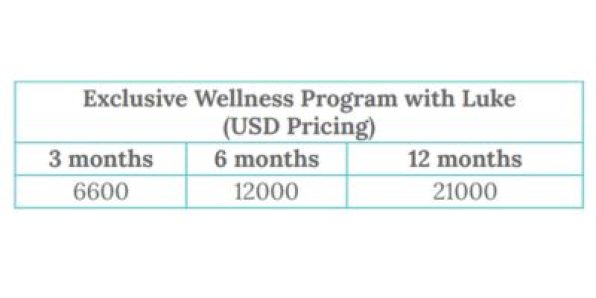
Join our Wellness Program.
And if you’re already noticing signs — breathlessness, persistent cough, or just a feeling that something’s off — don’t wait for it to get worse.
Book a Consult with our team of Integrative Experts.
Call 1800 102 0253 or write to [email protected]
Action doesn’t have to be loud. It just has to begin.
We help you find a way.
Disclaimer:
This blog is intended for informational purposes only and does not substitute medical advice, diagnosis, or treatment. If you are experiencing persistent symptoms like breathlessness, chronic cough, or fatigue, please consult a qualified healthcare practitioner. Every individual is unique — always speak with your doctor or a member of our team before making lifestyle, supplement, or treatment changes.