No products in the cart.
For years, we’ve been told the same thing.
“Read the label.”
“Check the ingredients.”
“Be aware of what you eat.”
And yes, that advice helped. It created a generation of slightly more conscious shoppers. But here’s the uncomfortable truth nobody wants to say out loud:
The food industry evolved faster than your awareness.
And while you were busy learning to read labels, they were busy learning to hide better.
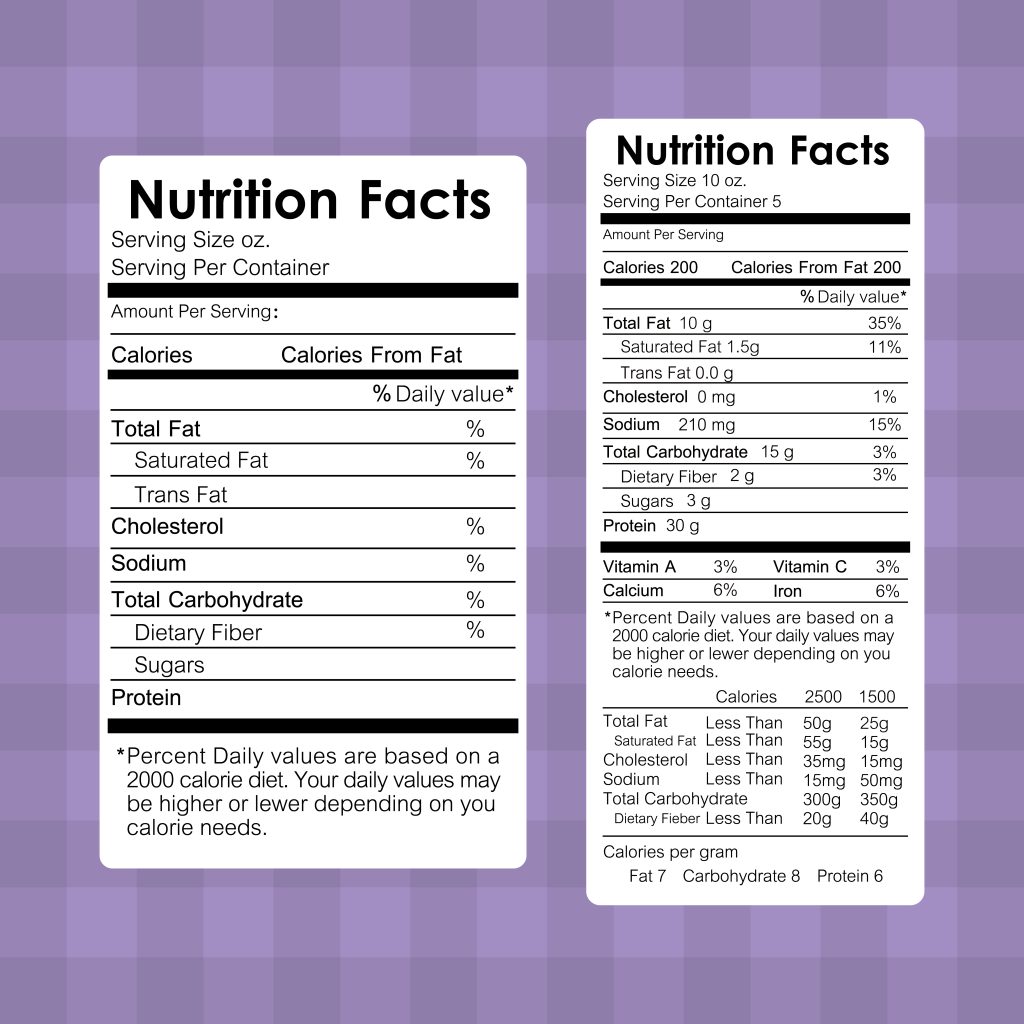
Image Credits: Magnific
The Game Changed. Did You?
You learned to spot sugar. So they renamed it.
Today, sugar alone appears under more than 50 different names on food labels, including dextrose, maltose, barley malt, evaporated cane juice, and rice syrup, among others. By the time you find one, three more have already snuck in.
You learned to avoid “junk food.” So they rebranded it.
Words like “natural,” “lite,” “low-fat,” “multigrain,” and “no added sugar” became marketing strategies, not nutritional facts.
A product can legally carry the word “healthy” on its packaging while being loaded with refined carbohydrates, seed oils, and synthetic additives.
The result?
- More confusion
- More overthinking
- More false choices
And in the middle of all that noise, people are still buying the same ultra-processed foods, just now with a side of guilt and a long ingredient list they don’t fully understand.
What Are Ultra-Processed Foods, Really?
Let’s keep this simple.
Ultra-processed foods are products that go through multiple industrial stages of processing, typically contain five or more ingredients, and include additives you would never find in a home kitchen, things like emulsifiers, artificial flavors, colorants, and preservatives.
Think: packaged chips, instant noodles, flavored yogurts, breakfast cereals, energy drinks, biscuits, ready-to-eat meals, and most “health” snacks you find at the billing counter.
Here’s what matters: these foods are not designed for your health.
They are engineered for three things:
| Designed For | Not Designed For |
| Shelf life | Your gut |
| Addiction | Your hormones |
| Profit | Your immunity |
A landmark study found that participants on an ultra-processed diet consumed, on average, 500 more calories per day compared to those eating minimally processed foods, even when both diets were matched for sugar, fat, fiber, and nutrients. They also gained weight faster. The food wasn’t more caloric on paper. It was engineered to make you eat more.
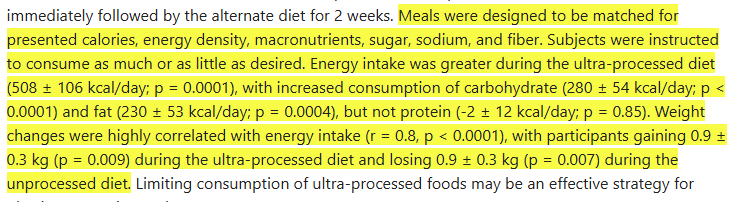
Source: Hall KD, Ayuketah A, Brychta R, et al. Ultra-Processed Diets Cause Excess Calorie Intake and Weight Gain: An Inpatient Randomized Controlled Trial of Ad Libitum Food Intake. Cell Metab. 2019 Jul 2;30(1):67-77.e3. doi: 10.1016/j.cmet.2019.05.008.
That’s not a coincidence. That’s design.
The Problem With “Just Read the Label”
Here’s an honest reality check.
Most people do not have the time, the patience, or the food science background to:
- Decode chemical compound names
- Understand what E-numbers and emulsifiers do to gut bacteria
- Cross-check 30 ingredients against a database
- Repeat this process for every product in their cart
And even if they do, the system keeps shifting. Regulations change. Names change. Formulations change.
So we keep asking people to run faster on a treadmill that keeps speeding up.
There has to be a better way.
The Simpler Filter That Actually Works
Forget the ingredient list for a moment.
Ask yourself just one question:
“Is this ultra-processed? Yes or No.”
That’s it. That’s the entire framework.
If the answer is yes, it was made for a shelf, not for your body. You don’t need to decode it. You just need to decide.
This is not about perfection. It is not about never eating a biscuit again. It is about having a clear, honest filter that cuts through the marketing noise and puts you back in control.
You already know the products. You do not need a label to tell you.
You know what packets look like. You know what instant, crunchy, sugary, and artificially flavored things are. Knowledge was never the missing piece.
The decision was.

AI-generated image
What the Science Is Saying
If you still need convincing, here’s what researchers have found:
- A major 2026 study: Advances found that people consuming around nine servings of ultra-processed foods per day had a 67% higher risk of heart attack, stroke, or death from coronary heart disease. Critically, every single additional serving per day was linked to a more than 5% increase in cardiovascular risk. (American College of Cariology, March 17, 2026)
- Harvard Health reports that increasing ultra-processed food intake by just 10% was linked to significantly greater risk of cognitive impairment and stroke.
- A BMJ study found that men who consumed ultra-processed foods regularly had a higher risk of colorectal cancer. (BMJ 2022;378:e068921)
- Research confirms that ultra-processed food patterns are now globally replacing traditional whole-food diets and are associated with chronic inflammation, hormonal disruption, and reduced intake of health-protective compounds. (PMID: 41270766)
And this is especially important for Indians.
South Asians carry a higher predisposition to insulin resistance, visceral fat accumulation, and inflammation.
- Research has consistently shown that Indians develop heart disease younger and more severely than most other populations. This means the same amount of ultra-processed food may hit an Indian body harder than global study averages suggest.
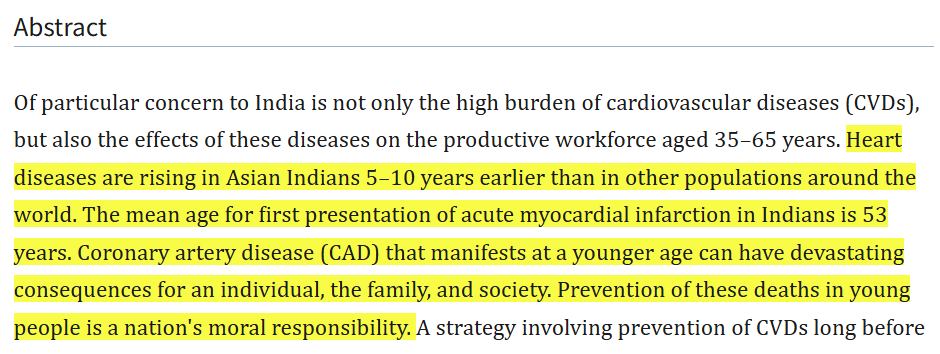
Source: Sharma, M., & Ganguly, N. K. (2005). Premature coronary artery disease in Indians and its associated risk factors. Vascular health and risk management, 1(3), 217–225.
This is not meant to scare you. It is meant to create urgency.
Because the real foods that protected your grandparents, dal, sabzi, curd, seasonal fruit, roti made from scratch, are still available to you. The question is whether you are choosing them.
A Forgotten Idea: The Power of Collective Choice
There was a time in India when people came together around a shared decision.
No social media campaigns. No outrage. No noise.
Just a quiet, collective action: “We will not buy what harms us.”
And it worked. It shifted markets.
What if we did that again?
Not dramatically. Not emotionally. Just consciously.
Think about this:
If even 20% of Indian consumers stopped buying ultra-processed junk food regularly, that would not be a wellness trend. That would be a market shift.
- Companies do not change because of awareness campaigns. They change because of falling revenue.
- When sales drop, formulations change.
- When demand shifts, ingredients improve. When consumers reject a product, brands are forced to rethink it.
Right now, they do not need to change. Because you are still buying.
Flip the Power Back to Yourself
Stop asking: “Is this healthy?”
Start asking: “Do I support this system?”
These are very different questions. The first keeps you stuck in the label-reading loop. The second reminds you that every purchase is a vote. And when millions of people cast the same vote, it sends a message no marketing budget can counter.
This is not a restriction.
This is not punishment.
This is not about being perfect or becoming a nutritionist overnight.
This is alignment. With your body. With your health. With the future you want.
What Clean Eating Actually Looks Like (Without the Complicated Rules)
Clean eating habits do not require an expensive nutritionist or a 30-step plan. Here’s what Luke and Team Luke always come back to:
- Build meals around single-ingredient foods. An egg looks like an egg. A lentil looks like a lentil. A carrot looks like a carrot. If your food looks like what it is, you are probably on the right track.
- Replace your most frequent ultra-processed habit, not all of them at once. Is it the packet of chips at 4 PM? A flavored health drink in the morning? Start there.
- Cook more. Assemble less. A bowl of dal rice with ghee and a vegetable is more powerful than any fortified snack bar or protein shake.
- Use the one-question filter. Ultra-processed? Yes or No. That is enough.
Want to make healthy food choices and learn more about food labels, watch this insightful podcast:
The Real Decision
You do not need:
- More labels
- More apps
- More confusion
- More education about food chemistry
You need one thing.
A decision.
And here is the beautiful part: when millions of people make that same decision, the industry has no choice but to follow. That is how consumer food awareness becomes real change. Not through petitions or awareness months. Through the power of what you put in your cart and what you leave on the shelf.
Your body is keeping count, even when you are not.
Start counting with it.
Disclaimer: The information provided here is for educational and informational purposes only. It is not intended as a substitute for professional medical advice, diagnosis, or treatment. Always consult your healthcare provider before making changes to your nutrition, lifestyle, or healthcare regimen, especially if you have existing medical conditions or are taking prescribed medications.
Want support making this shift in a way that works for your body, lifestyle, and health condition?
We help you find a way.
Set up a one-on-one consultation with our foundational medicine team or explore our Wellness Programs to optimize your lifestyle goals.
Reach out to us at 1800 102 0253 or write to us at [email protected].