No products in the cart.
Every day, women walk into clinics confused, scared, and overwhelmed.
Some have been told they absolutely must start hormone replacement therapy. Others have been told to avoid it at all costs.
Here’s the uncomfortable truth: both of those are incomplete stories.
And incomplete stories lead to fear. Fear leads to bad decisions. Bad decisions affect your health, your quality of life, and your future.
So let’s have an honest, grounded conversation about HRT, what the science actually says, and more importantly, what your body actually needs.

Image Credits: Magnific
What Is Hormone Replacement Therapy, Really?
Hormone replacement therapy (HRT) is a medical treatment that replenishes hormones, primarily estrogen and progesterone, that naturally decline during menopause.
Menopause symptoms can range from mildly inconvenient to genuinely life-disrupting. We’re talking about:
- Hot flashes and night sweats
- Disrupted sleep
- Mood swings and anxiety
- Brain fog
- Vaginal dryness and low libido
- Bone density loss
- Joint pain and fatigue
For many women, these are not just “part of aging.” They are real physiological changes driven by shifting hormone levels, and they deserve real medical attention.
HRT, when used correctly, can address many of these symptoms effectively. But here’s where the conversation needs to get more nuanced.
Does HRT Cause Cancer? The Honest Answer
This is the question almost every woman asks. And it deserves a straight answer, not a dismissal.
Yes, HRT can increase certain risks IF:
- It is used incorrectly
- It is not properly monitored
- It is taken for the wrong reasons
- It is continued without regular review
- The wrong type or dose is prescribed for your body
The concern around breast cancer, in particular, stems from a large study called the Women’s Health Initiative (WHI), published in 2002.
- That study raised alarm bells about combined estrogen-progestogen therapy. What often gets left out is that the study used synthetic hormones, had an older average participant age, and the findings have since been significantly reinterpreted by the medical community.

Source: Writing Group for the Women’s Health Initiative Investigators. Risks and Benefits of Estrogen Plus Progestin in Healthy Postmenopausal Women: Principal Results From the Women’s Health Initiative Randomized Controlled Trial. JAMA. 2002;288(3):321–333. doi:10.1001/jama.288.3.321
More recent research, including findings from the Million Women Study and updated analyses, suggests that the risk profile varies considerably depending on the type of HRT, the dose, the duration of use, the age at which it is started, and the individual woman’s health history. (The Lancet, 362, 419-427)
The takeaway?
The fear is not entirely unfounded. But blanket statements like “HRT causes cancer” are not backed by nuanced science.
When prescribed appropriately, for the right person, at the right dose, with regular follow-ups, HRT can be safe and genuinely beneficial.
The Part Most People Skip: Your Foundation Comes First
Here’s something that does not get talked about enough in the HRT conversation.
HRT is a medical tool. It is not a shortcut. It is not a magic fix. And it works best when it is built on a strong foundation.
Think of it like this: you would not build a house on sand and expect it to stand. The same logic applies to your health.
HRT does not replace:
- Good nutrition
- Strength training and regular movement
- Quality sleep
- Stress management
- Emotional wellbeing
It builds on them.
We have seen women told, “Come back in 3 to 6 months and we will start HRT.” In those months, they focused on sleep, nutrition, movement, and stress. When they returned, their doctor said: “You may not need HRT anymore.”
We have also seen the opposite: women on HRT but completely ignoring their lifestyle. The result? No real improvement. Frustration. Blaming the therapy.
The therapy was never the problem. The foundation was missing.

Image Credits: Magnific
Some Women Need HRT. Some Need Lifestyle Changes. Some Need Both.
This is not a one-size-fits-all conversation.
| Women Who May Benefit From HRT | Women Who May Not Need HRT |
| Severe menopause symptoms affecting daily life | Mild symptoms manageable with lifestyle |
| Early menopause or surgical menopause | Strong nutrition, sleep, and movement routine |
| Significant bone density loss | Hormonal balance improving with foundational care |
| Symptoms unresponsive to lifestyle changes | Short-term or transitional menopause phase |
The goal is never “HRT or no HRT.” The goal is: what does YOUR body need right now?
HRT Is Not Something You Start and Forget
This is where a lot of women go wrong, often not by choice, but because the system fails them.
One of the most common things we hear:
“My doctor asked me to come back in 6 months.” They went back after 1.5 years.
This is not okay.
HRT requires:
- Regular check-ins (at minimum every 6 months)
- Dose adjustments as your body changes
- Ongoing evaluation of risks and benefits
- Open communication with your doctor about what you are experiencing
Your body is not static. Your plan should not be either.
What Happens When You Stop HRT?
Another common fear, and one worth addressing.
When women stop HRT, some experience a return of symptoms. Others do not. This depends on:
- Where you are in your hormonal journey
- How long you were on HRT
- The strength of your lifestyle foundation
- Your individual hormonal stage and health
Stopping HRT is not a crisis if it is done correctly, gradually, with medical guidance, and with a strong lifestyle support system already in place.
This is exactly why the foundation matters so much. Women who have built solid nutrition, sleep, and stress management habits tend to transition off HRT with far fewer difficulties.
HRT Side Effects: What to Know
Like any medication, HRT comes with potential side effects, especially in the early weeks of starting treatment. These can include:
- Bloating and breast tenderness
- Headaches
- Mood changes
- Nausea
- Spotting or light bleeding (for those on combined therapy)
Most of these settle within 3 months. However, if they persist or worsen, that is a signal to go back to your doctor, not to simply stop cold turkey.
The HRT benefits and risks equation looks different for every woman. Age, personal health history, family history, type of HRT, and delivery method (patch, gel, pill, IUD) all affect the equation.
Before you try HRT, read this:
The Real Science Behind Hormonal Replacement Therapy
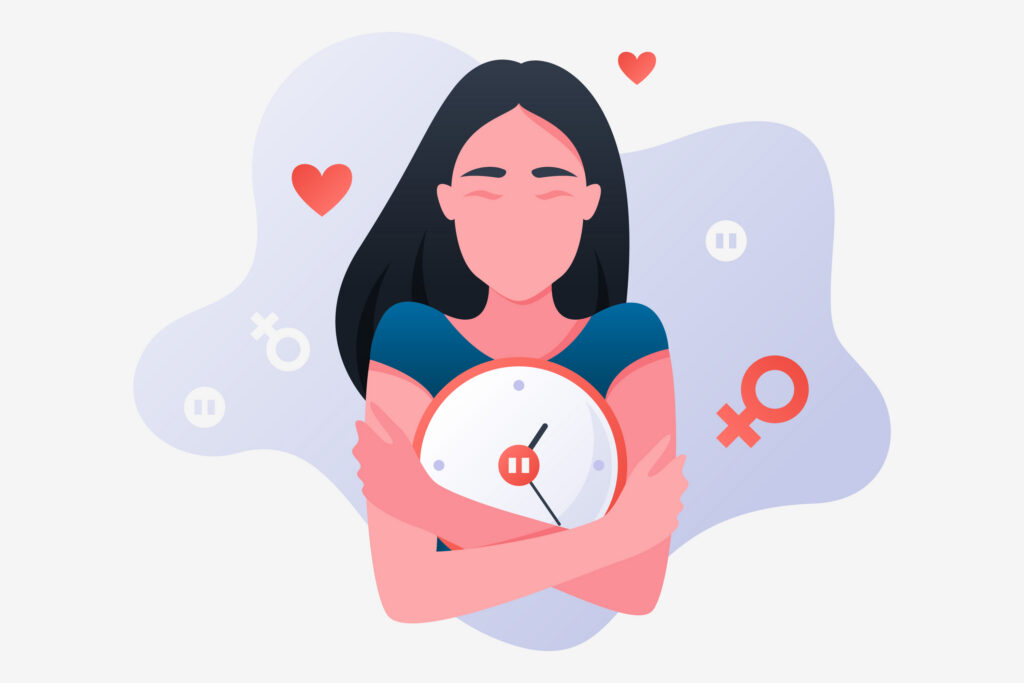
Image Credits: Magnific
The Smartest Approach to Menopause and Hormone Balance
Here is what an informed, thoughtful approach to menopause management actually looks like:
Step 1: Work on your foundation first. Sleep, nutrition, movement, and stress management are non-negotiable. These are not optional add-ons. They are the base.
Step 2: Get proper medical guidance. Find a doctor who will actually listen, run the right tests, review your full health history, and tailor a plan to you. Not a rushed 10-minute consultation.
Step 3: If HRT is recommended, use it responsibly. Understand what you are taking, why, and what the monitoring plan looks like.
Step 4: Stay consistent with follow-ups. Do not disappear for 18 months. Your plan needs regular review.
Step 5: Keep evaluating. How is your body responding? Are symptoms improving? Are side effects manageable? Is your lifestyle supporting the therapy?
Natural Menopause Support: What the Research Says
For women looking at natural menopause support alongside or instead of HRT, here is what has genuine evidence behind it:
- Phytoestrogens (found in flaxseeds, soy, and legumes) may have mild estrogen-like effects and can help with hot flash frequency in some women
- Magnesium supports sleep quality and can help with muscle tension and mood
- Resistance training is one of the most powerful interventions for bone density, metabolism, and mood during menopause
- Mindfulness and breathwork have shown measurable impact on hot flash intensity and anxiety
- Vitamin D and calcium are critical for bone health, especially as estrogen declines
These are not replacements for medical care. But they are powerful tools that work with your body, whether or not HRT is part of your plan.
The Last Word
HRT is not the enemy.
Misinformation is.
Fear-based decisions are.
Ignoring your lifestyle and expecting a pill or patch to fix everything is.
The women who do best, with or without HRT, are the ones who take a complete, informed, personalized approach to their health. They ask questions. They stay consistent. They work on their foundation every single day.
You do not need to panic about menopause.
You need the right plan, the right support, and the right information.
Your foundation determines your results. Always.
Disclaimer: The information provided here is for educational and informational purposes only. It is not intended as a substitute for professional medical advice, diagnosis, or treatment. Always consult your healthcare provider before making changes to your lifestyle or healthcare regimen, especially if you have existing medical conditions or are taking prescribed medications.
Looking for support to manage your hormonal issues?
We help you find a way.
Set up a one-on-one consultation with our foundational medicine team or explore our Hormonal Care Program to optimize your lifestyle goals.
Reach out to us at 1800 102 0253 or write to us at [email protected].