No products in the cart.
These questions deserve more than a scroll. Download your free PDF here and keep them forever.
We were taught how to fall in love.
Poems, movies, songs, they all celebrate the feeling. But no one taught us how to build a life. And then we wonder why stress becomes chronic, sleep breaks down, anxiety creeps in, and healing just doesn’t happen the way it should.
In over 14 years of working with thousands of patients across the world, one pattern stands out above everything else; the body does not just respond to food and exercise. It responds to your relationships.

Image Credits: Magnific
And one foundational truth remains non-negotiable:
You cannot heal in an environment that constantly hurts you.
Here, we will not tell you who to commit. That decision belongs entirely to you. What we will do is give you the questions, the awareness, and the science to make that decision with your eyes open, not just your heart.
What Your Body Already Knows
We’ll repeat: The body does not just respond to food and exercise. It responds to your relationships.
And this is not spiritual wisdom dressed up as science. This is measurable, documented, physiological reality.
A chronically unhealthy relationship is a chronic stressor. And chronic stress, as we now know with absolute certainty, is one of the most destructive forces on human health. Here is what the research and clinical experience consistently shows:
| Cortisol stays elevated. |
|
| Your gut pays the price. |
|
| Immunity takes a hit. |
|
| Hormones fall out of balance. |
|
| Inflammation becomes systemic. |
|
| Mental health erodes quietly. |
|
No diet, no supplement, no wellness protocol can fully compensate for a relationship that is chronically wounding you.
The most powerful health intervention available to any human being is the quality of their closest relationships. We just never talk about it that way.
Why We Still Get It Wrong
If the stakes are this high, why do so many intelligent, well-meaning people still choose partners poorly? Because we are working with the wrong tools.
We enter commitment based on:
- Attraction — they looked right, felt right, made our heart race
- Timing — the age felt right, the circumstances aligned
- Pressure — family expectations, social comparison, biological urgency
- Hope — “we love each other, we will figure it out”
- Familiarity — they feel like home, even when “home” was complicated
None of these are wrong in themselves. Attraction matters. Timing matters. But none of them, not one, tells you whether this person has the emotional maturity to navigate conflict with you.
Whether your values are genuinely aligned. Whether you want the same kind of life. Whether you will feel respected ten years from now.
We make the biggest financial, emotional, and physical commitment of our lives based on how someone makes us feel during the best possible version of ourselves, the dating phase, which is, by design, a heavily curated performance.
And then we wonder why reality feels like a shock.
The Honeymoon Phase: Beautiful, Temporary, and Slightly Misleading
Here is what is actually happening neurologically when you fall in love.
- Dopamine, the brain’s reward chemical, floods your system. Everything about this person feels exciting, novel, and wonderful.
- Oxytocin, the bonding hormone, creates a powerful sense of closeness and trust.
- Cortisol actually spikes in early love, which is why new relationships feel thrilling and slightly anxious at the same time.
- Serotonin drops, which is why you cannot stop thinking about them.
In this state, the brain’s prefrontal cortex, responsible for rational judgement, long-term thinking, and risk assessment, is partially suppressed.
You are, quite literally, not thinking straight. And that is not a flaw.
It is biology doing exactly what it evolved to do: bond two people together strongly enough to build a life.
The problem is that we make permanent decisions during a temporary neurological state.
The honeymoon phase lasts, on average, between six months and two years.
When it begins to settle, and it always does, what remains is the actual relationship. The actual person. The actual patterns.
This is where:
- Expectations that were never spoken begin to clash loudly
- Childhood wounds and family conditioning surface in how you fight, love, and shut down
- In-law dynamics and family loyalties reveal themselves in full
- Financial habits, the real ones, not the dating ones, become visible
- The roles each of you assumed the other would play become a source of growing resentment
This is not a failure of love. It is the beginning of real love, conscious, chosen, daily love.
But you can only navigate it well if you enter with your eyes open. And that requires asking the questions most people are too afraid, too romantic, or simply too unprepared to ask.

Image Credits: Magnific
The Questions: A Framework for Conscious Choosing
What follows are not tests. They are not traps. They are not meant to be fired across a dinner table like a cross-examination.
They are meant to be conversations. Slow ones. Revisited more than once.
Ask them slowly. Listen without reacting. Notice what is said, and what is carefully avoided.
❤️ Values & Life Vision
- What does a “happy life” look like to you in 10–20 years?
- What matters more: family, career, freedom, stability, or growth?
- What are your non-negotiables in life?
- What are you absolutely unwilling to compromise on?
Why this matters: Two people can love each other deeply and still want fundamentally different lives. Discovering this early is not a deal-breaker; ignoring it is.
🧠 Emotional Maturity & Conflict
- How do you behave when you are angry or deeply hurt?
- Do you shut down, react aggressively, or communicate?
- How were conflicts handled in your home growing up?
- Are you open to therapy or counseling if the relationship needs it?
Why this matters: You will not agree on everything. Ever. The question is not whether conflict will happen; it is whether both of you have the tools to navigate it without damage.
👨👩👧 Family & In-Laws (Critical in India)
- What role will your parents play in our marriage?
- Will we live in a joint family or nuclear setup?
- If there is conflict between your partner and your parents, how will you handle it?
- Are healthy boundaries with family important to you?
Why this matters: In the Indian context especially, you are not just marrying a person, you are entering a family system. Unspoken assumptions here are the number one source of long-term conflict.
💰 Money & Finances
- How do you view money: saving vs spending?
- Will finances be shared, separate, or a combination?
- Are there debts or financial responsibilities I should know about?
- What are your expectations around lifestyle and standard of living?
Why this matters: Money disagreements are consistently among the top reasons relationships break down. Not because of the money itself, but because of the values and control that money represents.
👩💼 Career & Gender Roles
- Do you expect both partners to work?
- If children arrive, who adjusts career or how do we decide together?
- Are you genuinely comfortable if your partner earns significantly more?
- What does “supporting each other’s career” look like in practice?
Why this matters: Unexamined assumptions about gender roles are silent relationship killers. They don’t surface during dating. They surface during the first year of commitment.
🏡 Daily Life Realities
- Who handles cooking, cleaning, and household responsibilities?
- Are you comfortable with domestic help?
- What does a normal weekday and weekend look like for you?
Why this matters: Romance lives on the weekends. Life lives on Tuesdays. If your daily rhythms are fundamentally incompatible, that becomes exhausting, fast.
🔥 Intimacy & Sex
- What does intimacy mean to you beyond physical connection?
- How important is physical intimacy in your ideal relationship?
- How do you navigate mismatched needs or desires?
Why this matters: Physical and emotional intimacy are core to a healthy relationship. Mismatched expectations here, left unspoken, breed resentment, disconnection, and loneliness within a relationship.
🧒 Children
- Do you want children, and when?
- How do you envision raising them, values, schooling, discipline?
- Where do you stand on freedom vs structure in parenting?
Why this matters: Disagreements on whether to have children, or how to raise them, are among the most painful to navigate after marriage. This conversation cannot wait.
🧘 Health & Lifestyle
- What does health mean to you in everyday life?
- Are you open to lifestyle changes if health requires it?
- Do you believe in preventive health and wellness?
Why this matters: Your partner’s relationship with their own body and health will directly affect yours. Shared health values build shared longevity.
🛑 Boundaries & Respect
- What does respect mean to you in a day-to-day relationship?
- What behaviors are completely unacceptable to you?
- Is emotional safety a priority for you?
Why this matters: Respect is not just about big moments. It lives in how someone speaks to you when they are stressed, tired, or angry. Know their baseline before you commit.
🌪️ Hard Truths
- What are your biggest fears about commitment?
- What flaws or patterns do you have that I should know about?
- What kinds of situations bring out the worst in you?
Why this matters: Everyone has shadows. A partner who can name their own is infinitely safer to build a life with than one who claims to have none.
🧭 Growth & Evolution
- Do you genuinely believe people can grow and change?
- Are you willing to evolve together or do you expect things to remain static?
Why this matters: The person you commit at 28 will not be the same person at 45. If one partner grows and the other resists, the gap becomes a canyon.
These questions are just the start, join Luke’s masterclass and get real answers.

Gender-Specific Questions: Go Even Deeper
Beyond the universal questions above, certain conversations carry extra weight depending on your context. These are not meant to be adversarial; they are meant to surface the expectations that often go completely unspoken until they become sources of real pain.
👩 Questions Women Should Ask Men
- If your parents and I disagree, how will you handle it?
- Do you expect me to live with your family?
- Will I be allowed to work after marriage?
- After children, do you expect me to stop working?
- What does a “good wife” look like to you?
- Are you comfortable with me earning more than you?
- How do you handle anger?
- Do you believe in equal partnership or traditional roles?
- Are you okay with household help?
- What are your expectations around cooking?
- How important is intimacy to you?
- What are your financial responsibilities toward your family?
- Do you believe in therapy or working on yourself?
- What are your deal-breakers in a relationship?
- How do you show respect during conflict?
👨 Questions Men Should Ask Women
- What does a “good husband” mean to you?
- What are your expectations from me emotionally?
- Are you open to living with my family or prefer nuclear?
- What are your career goals after marriage?
- After children, what would you prefer: work, home, or balance?
- What role should I play in household responsibilities?
- How do you handle conflict?
- What does respect look like to you?
- How important is intimacy to you?
- What are your expectations from my involvement with your family?
- Are you financially independent or expect shared responsibility?
- What are your lifestyle expectations?
- How do you deal with stress and emotional triggers?
- What are your non-negotiables?
- What kind of environment helps you feel safe and loved?
The Most Important Meta-Question of All
“Are you answering honestly or saying what sounds right right now?”
This is the question that sits underneath every other question on this list. And it may be the most important one of all.
Here is the uncomfortable truth: most people do not lie to their partners before commitment. They lie to themselves.
- They tell themselves that the red flag they noticed is “not a big deal.”
- That the value difference they felt is “something we can work out.”
- That the discomfort they felt when they saw how their partner treated a family member is “just nerves.”
- That the thing that bothered them three times will somehow disappear after the wedding.
It will not disappear. Commitment does not fix people. It reveals them, more fully, more consistently, and under far more pressure than dating ever did.
Revisit these questions more than once. Ask them in different moods. Notice if the answers shift. Notice if the willingness to engage shifts. Both are information.

Image Credits: Magnific
What These Questions Actually Give You
These questions will not guarantee a perfect relationship. Nothing can, and anyone who promises you that is selling something. But what they will give you is something far more valuable and far more real:
- Clarity over confusion. You will stop projecting who you hope this person is and start seeing who they actually are, not the version that shows up on dates, but the version that will show up at 2am when the baby is sick, when money is tight, when grief arrives, when life gets unglamorous.
- Alignment over assumption. Most relationship conflict does not come from cruelty or incompatibility. It comes from the gap between what one person assumed and what the other expected, two people walking into the same relationship with entirely different blueprints, neither of which was ever shown to the other.
- Emotional safety as a foundation. When both partners feel safe to be fully honest, to name their needs, their fears, their flaws, the relationship becomes a healing environment rather than a source of chronic stress. This is not a small thing. This is everything.
- Respect that lasts beyond romance. Attraction fades and returns in waves. Romance has seasons. But mutual respect, the kind that is built through honest, difficult conversations, compounds over time. It is the thing that keeps two people choosing each other, not just staying with each other.
- Years back. The single most valuable gift this kind of awareness can give you is time. Time not spent in a slowly deteriorating relationship. Time not spent recovering from a painful separation. Time not spent unlearning patterns that could have been understood before they were built in.
One conversation before a commitment can genuinely save years of suffering. Not because it is magic, but because awareness, when acted upon, is the most powerful thing there is.
The Last Word
Love is a feeling. Commitment is a responsibility. And relationships are ecosystems.
If the ecosystem is toxic, nothing thrives, not your mind, not your body, not your future. The goal is not to find a perfect person. The goal is to choose a compatible partner with open eyes, honest conversations, and genuine alignment on what matters most.
- Choose consciously — not just emotionally.
- Ask deeply — even the questions that feel risky.
- Listen honestly — to their answers, and to yourself.
Because the quality of your relationship will eventually become the quality of your health.
Ready to go further? Join Luke’s exclusive masterclass and get the full picture. 👇

Disclaimer: This guide is for educational and awareness purposes. It does not substitute professional medical, mental health, or legal advice. If you are navigating a difficult relationship, please seek support from a qualified professional.
Want personalized guidance on managing your relationships? We help you find a way.
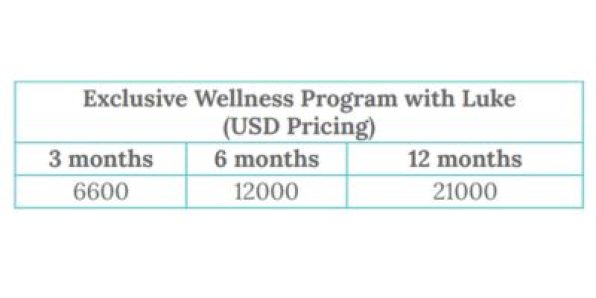
Set up a one-on-one consultation with our foundational medicine team or explore our Wellness Programs to optimize your relationship goals.
Reach out to us at 1800 102 0253 or write to us at [email protected].