No products in the cart.
This is a question I’m asked almost every day: Do I need supplements? Are supplements necessary for good health?
And I get it. With the wellness industry booming and your social feeds filled with people showing off their supplement stacks, it’s easy to feel like you’re missing out on something crucial if you’re not popping pills every morning.

Image Credits: Freepik
Here’s my honest take: Supplements are not magic pills.
They’re not meant to replace your lifestyle. But they can become powerful tools—if used the right way, with the right intention, and most importantly, at the right time. I’ve seen this firsthand in our work with patients.
I’ve also listened to some of the top global voices in this space, such as Lucas Aoun, one of Australia’s leading experts in biohacking supplements. His approach is grounded in experimentation, personalization, and scientific principles. What he shares aligns beautifully with our philosophy—food and lifestyle first, supplements only when truly needed.
So, I’m here to guide you through:
- Whether or not you really need supplements
- The best supplements for longevity, backed by science and experience
- And how the timing of supplements can make a real difference in how they work
We’ll also break down when to take supplements for better absorption, and how to avoid falling for the ‘more is better’ trap.
Let’s simplify the noise.
Do You Really Need Supplements for Longevity?
Before you reach out for that multivitamin or a greens powder that claims to do it all, pause for a moment and ask yourself:
“Am I covering my basics through food?”
This is where it always begins.
In my practice, I say this often: Your nutrition begins on your plate, not in a pill. Your body is intelligent. Give it real food, and it knows exactly what to do with it. You see, nature designed food to work synergistically—vitamins, minerals, fiber, enzymes, and phytonutrients all working together to nourish your cells.
No supplement—no matter how expensive—can mimic that complexity.
So, when people ask me, “Luke, do you think supplements are necessary?”—I tell them, not always. But sometimes, yes.
Supplements Are Additions, Not Replacements
Think of supplements like spare bricks in a construction project.
If your foundation is shaky—your food, sleep, exercise, and emotional health—then no amount of bricks can hold that structure up. But if the foundation is strong, these bricks can support and reinforce the system beautifully.
When Are Supplements Truly Needed?
There are certain situations where your body might genuinely benefit from that extra support:
- Nutrient gaps: If your nutrition is missing key nutrients—like Vitamin B12 for vegetarians, or iron for menstruating women—then yes, supplementing makes sense.
- Life stages: During pregnancy, childhood, aging, or menopause, your body’s requirements shift. You might need more of certain nutrients to meet the demands of your biology.
- Environmental and lifestyle stress: We’re dealing with more pollution, poor soil quality, fast-paced lifestyles, late nights, and screen exposure than ever before. These factors can deplete nutrient stores or impair absorption.
- Gut issues and chronic stress: If your gut isn’t functioning optimally—or if you’re constantly in fight-or-flight mode—then you may not be absorbing nutrients properly from food.
This is where targeted supplementation can really help.
But remember: Just because supplements for longevity exist doesn’t mean everyone needs them. And just because something worked for your friend doesn’t mean it’s right for you.
Ask Yourself This:
- Am I using supplements to avoid making real lifestyle changes?
- Or am I using them intentionally to complement a balanced routine?
Supplements used wisely and in the right context can help you feel better, heal better, and even age better. But used mindlessly, they just become a costly band-aid.
So, are supplements necessary? Only when your body truly asks for them—and even then, it should be part of a bigger, personalized plan.
Biohacking and Supplements: What’s the Hype?
Now let’s talk about something that’s gained massive attention in recent years—biohacking.
You’ve probably heard the term on social media or podcasts. It sounds futuristic, almost like something out of a sci-fi movie.
But at its core, biohacking is simple—it’s the art (and science) of consciously optimizing your biology using nutrition, sleep, breathwork, data, mindset, and yes, supplements.
Now, I’m not someone who jumps onto trends easily. But I do believe in staying open-minded, especially when something aligns with nature, common sense, and science.
One of the most interesting voices in the biohacking space today is Lucas Aoun, a clinical naturopath and Australia’s top biohacker.
I had the chance to tune into his insights recently in my podcast, and what I loved was his balance. He’s not about taking 20 pills a day or blindly following fads. He talks about data-driven personalization—understanding what your body truly needs through testing, feedback, and alignment with your goals.
Why Biohackers Turn to Supplements
In the biohacking world, supplements for longevity are often used like precision tools—to tweak specific systems of the body for:
- Cognitive enhancement: Nootropics like L-theanine and Lion’s Mane mushroom are known to support focus, memory, and mental clarity.
- Faster recovery: Magnesium, omega-3s, and Coenzyme Q10 are commonly used to speed up muscle and cellular recovery. In fact, omega-3 fatty acids reduce inflammation and support muscle synthesis after exercise.
- Hormonal balance and sleep: Adaptogens like ashwagandha, rhodiola, and calming agents like gamma-aminobutyric acid (GABA) or magnesium glycinate are used to improve sleep quality and reduce cortisol, the stress hormone.
- Mitochondrial health: This is a big one in the anti-aging space. Biohackers often use compounds like pyrroloquinoline quinone (PQQ), nicotinamide adenine dinucleotide (NAD+), and alpha-lipoic acid to support mitochondrial function—the energy engines of your cells.
These are all promising areas. But, again, I repeat, just because a supplement is trending doesn’t mean it’s necessary.
Science vs. Hype
While some biohacking supplements have solid research behind them, many others are still in the grey zone. The marketing might be hyped, but the evidence might be weak. That’s where critical thinking comes in.
For example, some supplements show great results in animal models or in short-term studies, but we still don’t know their long-term effects in humans. That’s why you’ll never hear me recommending something just because it’s popular.
Grounding Biohacking in Nature
The most effective biohacks, in my opinion, are the free ones:
- Sunlight in the morning
- Deep breathing
- Circadian fasting
- Good sleep hygiene
- Real food from the earth
Supplements should never replace these fundamentals. But they can enhance your efforts when thoughtfully chosen and mindfully timed.
Biohacking Supplements for Longevity: What Works?
Now, if you’re someone who’s exploring biohacking supplements, chances are, your ultimate goal isn’t just to enhance energy or performance today. You want to feel better for longer. You want healthspan, not just lifespan.
And that brings us to an important question:
What are the best supplements for longevity?
To be honest, supplements alone won’t help you live longer. But when added to the pillars of good sleep, movement, emotional health, and clean eating, they can make a difference.
Let’s look at a few clinically supported supplements for longevity that we recommend often, when the body truly needs them.
Some of the Best Supplements for Longevity
| Supplement | Why It Matters |
| Omega-3 Fatty Acids (from fish oil, krill oil, or algae) | Supports heart health, reduces inflammation, and protects brain function. Also useful for joint health and skin elasticity as we age. |
| Vitamin D3 (especially with K2) | Essential for immune health, bone density, mood stability, and cellular repair. Many people are deficient, even in sunny countries. |
| Magnesium (Glycinate/Citrate) | Crucial for over 300 biochemical reactions—especially for sleep, nerve function, blood sugar control, and muscle recovery. |
| Polyphenols (from turmeric, green tea, berries) | Natural antioxidants that help reduce oxidative stress, combat inflammation, and support brain and cardiovascular health. |
| Probiotics (strain-specific) | A balanced gut microbiome can influence immunity, brain health, skin, and inflammation—all major factors in aging well. |
It’s Not About Taking Everything—It’s About Taking What You Need
The supplements above are what we commonly recommend after reviewing lifestyle, nutrition, blood work, and symptoms. But we don’t stop there. Sometimes, based on deeper assessments, we might suggest other longevity-supporting tools like:
- CoQ10 for mitochondrial energy and heart health
- PQQ for neuroprotection
Alpha-lipoic acid for insulin sensitivity and cellular cleansing - N-acetylcysteine (NAC) or glutathione for liver support and antioxidant defense
But again, not everyone needs these.
You shouldn’t be adding supplements to your cart just because a podcast or influencer said it helped them live longer. We all have unique bodies, genetics, stressors, and deficiencies.
A Gentle Disclaimer from Experience
I’ve seen people overdose on iron, take zinc long-term and upset their copper levels, or develop gut issues from the wrong probiotics. I’ve also seen people depend on supplements when what they really needed was better sleep, hydration, or to manage their stress.
So always remember:
- Get your blood work done regularly
- Work with a qualified professional
- Use supplements to support—not substitute—a healthy lifestyle
Longevity isn’t found in a bottle. It’s built day by day, choice by choice, breath by breath.
Timing Matters: How and When to Take Supplements
Now that we’ve explored what supplements might support your health, let’s talk about something most people overlook—when and how to take them.
I always tell my clients: it’s not just about what you take.
Timing and synergy matter just as much. You could be taking the most expensive, high-quality supplement, but if your body isn’t absorbing it, or if you’re combining it poorly, it could be doing more harm than good.
It’s not just “take this at 8 am and that at 9 pm.” Your timing must match your lifestyle, meal patterns, sleep cycles, and stress levels.
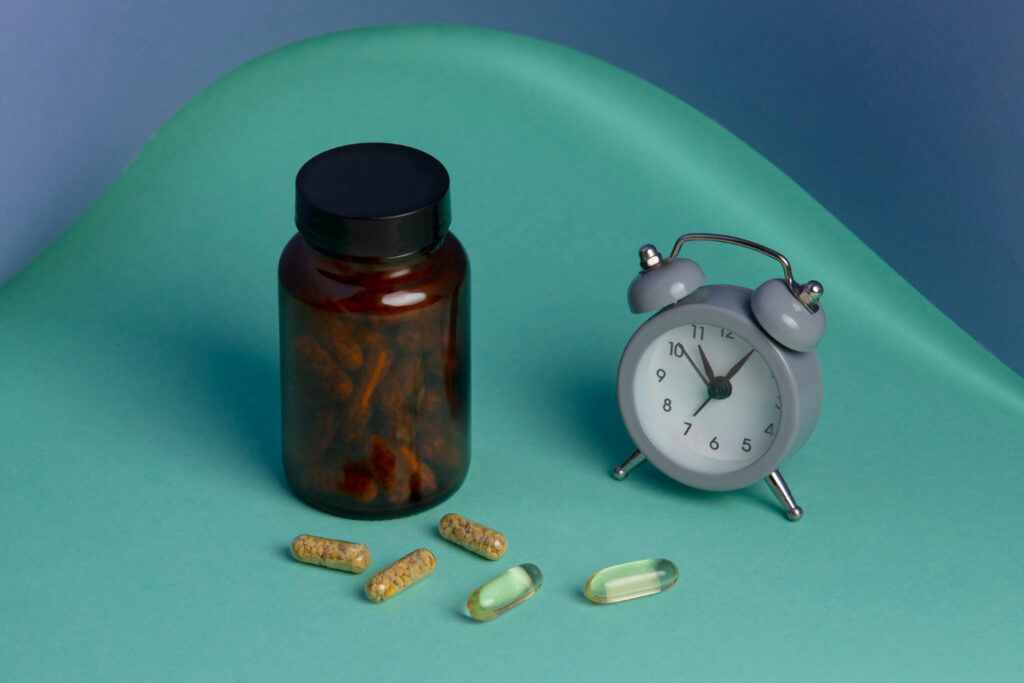
Image Credits: Freepik
Let’s simplify this…
- Supplements like Vitamin D or omega-3s often work better with food, especially meals that contain some good fat.
- Magnesium, on the other hand, might help with sleep and is often best taken before bed.
But even this varies from person to person. Some people may need magnesium in the morning to calm their nervous system and focus better at work. Others need it at night to relax and improve sleep quality.
That’s why I don’t believe in copy-paste advice.
Let me tell you a real story:
A year back, I had shared a story about my old friend Shabel from our St. Xavier’s weightlifting days in Goa. Over a nostalgic plate of poori bhaji, he told me he was struggling to fall asleep.
We looked into his lifestyle and blood work, and found his Vitamin D levels were critically low. He’d started supplementing but was taking it right before bed. That small timing error was likely suppressing his melatonin, the sleep hormone.
All I asked him to do was shift his dose to the morning with breakfast. Within a few days, his deep sleep returned.
Read the full story here.
No ‘one-size-fits-all’ rules.
Instead, tune in to your body. Again, I’ll repeat: Work with a qualified practitioner. Get the right blood work done. And understand your lifestyle:
- Are you skipping meals?
- Eating at erratic hours?
- Working night shifts?
- Exercising late in the evening?
- Having digestive issues?
All of these impact when and how your body will respond to supplements.
And let’s not forget—your body already has an internal clock. What we call the circadian rhythm. Disrupting it with supplements at the wrong time can throw things off further. We need to align with our biology, not against it.
The Last Word
At the end of the day, biohacking, supplements, tests, or even the most advanced tools are only as effective as your ability to listen to your body.
So don’t blindly follow what anyone says. Take what resonates. Question it. Try it mindfully. Track how you feel—not just physically, but mentally and emotionally too. Then decide.
The goal isn’t to be dependent on protocols forever. It’s to build a lifestyle that supports your energy, clarity, mood, and healing, naturally.
Let science guide you. Let nature ground you. And most importantly, let your own body lead the way.
Frequently Asked Questions
1. Do you need supplements if you eat healthy?
Even with healthy nutrition, factors like soil depletion, stress, and poor absorption can lead to deficiencies. Supplements can help fill those gaps. But always ask yourself: Do you need supplements? Get tested and work with an expert before adding anything to your routine.
2. Should you cycle supplements or take them daily?
It depends on the supplement. Some, like magnesium or omega-3, are safe daily, while others (like adaptogens or fat burners) may be better cycled. If you’re using supplements for longevity, listen to your body, track how you feel, and consult an expert for a bio-individual approach.
3. When is the best time to take supplements?
When to take supplements depends on their type and your body’s rhythm. Fat-soluble ones (like Vitamin D) are best with meals, while magnesium may help at night. But the timing of supplements should be personalized, not copied from trends. Get expert guidance to create your protocol.
4. What are the best supplements for longevity?
Some of the best supplements for longevity backed by science include omega-3 fatty acids, magnesium, probiotics, and polyphenols (from turmeric or green tea). These support inflammation reduction, gut health, and brain function—key pillars for a longer, healthier life.
5. Are biohacking supplements safe for everyone?
Biohacking supplements can offer benefits, but not all are safe or necessary for everyone. Your genes, lifestyle, and health conditions matter. What helps one person may harm another. Always consult a doctor or integrative expert before starting anything new, especially if you’re self-experimenting.
Disclaimer: This blog is meant for educational purposes only and is not a substitute for medical advice, diagnosis, or treatment. Supplements for longevity or any other health goals should always be chosen based on your unique needs, health conditions, and after consulting with your doctor or a qualified health practitioner.
Struggling to figure out which supplements are actually right for you?
We’re here to help YOU find a way.
Set up a one-on-one consultation with our integrative team for personalized solutions.
Reach out to us at 1800 102 0253 or write to us at [email protected].