No products in the cart.
You eat reasonably well.
You try to stay active.
Your weight hasn’t changed much over the years.
And yet… your doctor mentions rising blood sugar. Or borderline cholesterol. Or blood pressure that wasn’t an issue earlier.
This is where many people get confused. “If my weight is fine, what’s going wrong?”

Image Credits: Freepik
The truth is, health is not always visible on the outside.
At Team Luke, we often remind people of this simple fact: the body needs fat.
Fat is not the villain it’s been made out to be. In fact, the amount of fat a body carries can vary widely based on genetics, climate, lifestyle, age, and even the kind of work you do. Two people can eat the same food and live in very different metabolic realities.
The problem is not having fat. The problem is which fat you’re carrying.
This is where visceral fat enters the conversation.
Visceral fat is not the fat you can pinch or see in the mirror. It sits deep within the abdominal cavity, surrounding vital organs such as the liver, intestines, and stomach. And because it’s hidden, it often goes unnoticed, especially in people who appear thin, active, or ‘healthy’ by conventional standards.
This is also why simply looking at belly fat doesn’t always tell the full story.
So, here’s what we’ll explore together:
- What visceral fat really is, and how it differs from regular body fat
- The key differences between visceral fat vs. subcutaneous fat
- Why visceral fat increases long-term health risks, even in lean individuals
- The link between visceral fat and diabetes risk, blood pressure, and heart health
- Practical, lifestyle-based ways to understand how to lose visceral fat
- The role of exercise for visceral fat, food choices, stress, and sleep in reducing it
- Simple awareness tools doctors use to identify visceral fat early, before disease sets in
This is not about extremes.
This is not about quick fixes.
And it’s definitely not about chasing a certain body type.
It’s about understanding your body better, so you can support it in the way it truly needs.
What Exactly Is Visceral Fat?
Let’s break this down, because when it comes to fat, clarity matters more than complexity.
Not all fat in the body behaves the same way. Some fat is meant to be there. It protects, insulates, and supports normal bodily function. Visceral fat, however, is a very different kind of fat.
- Visceral fat is the fat stored deep inside the abdominal cavity.
- It sits around your most vital organs, the liver, intestines, stomach, and even close to major blood vessels.
In Luke’s words, visceral fat is sometimes called ‘active fat.’
Not because it helps you, but because it actively interferes with normal metabolic function.
- Unlike regular body fat, visceral fat is metabolically active.
- It releases inflammatory substances and signals that can disturb blood sugar control, hormone balance, and cardiovascular health.
In simple terms, it’s not just extra padding; it’s influencing how your body works on the inside.
This is why doctors and integrative health practitioners pay close attention to it when evaluating long-term visceral fat health risks.
Visceral Fat vs Subcutaneous Fat: What’s the Difference?
This distinction is crucial.
| Subcutaneous fat | Visceral fat |
|
|
This is why belly fat can be misleading.
- A soft belly doesn’t automatically mean high visceral fat, and a flat stomach doesn’t guarantee the absence of it. The body doesn’t always show you what’s happening on the inside.
One of the most important takeaways we want you to remember is this:
You cannot always see visceral fat, and thin people can have it too.
Why Doctors Worry About Visceral Fat
When doctors talk about visceral fat, it’s not about appearance. It’s about long-term well-being, especially because this type of fat behaves very differently inside the body compared to the fat you can see or pinch.
So let’s explore why medical professionals pay close attention to visceral fat, and why it figures so prominently in discussions about visceral fat health risks.
Insulin Resistance: The First Red Flag
One of the earliest and most important reasons doctors monitor visceral fat is its strong connection to insulin resistance, a condition where the body’s cells stop responding effectively to insulin, the hormone that helps regulate blood sugar.
- When this happens, blood glucose rises, and the pancreas has to work harder to keep up.
- Over time, this can lead to pre-diabetes and eventually type 2 diabetes if not addressed.
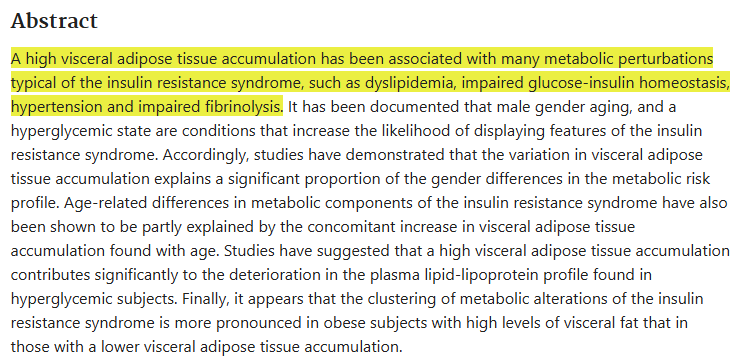
Source: Lemieux S. Contribution of visceral obesity to the insulin resistance syndrome. Can J Appl Physiol. 2001 Jun;26(3):273-90. doi: 10.1139/h01-018. PMID: 11441231.
This link between visceral fat and insulin resistance is why visceral fat plays a central role in discussions about visceral fat and diabetes risk.
Blood Pressure and Arterial Stress
Visceral fat not only impacts glucose metabolism, but it also affects blood vessels.
Research shows that when visceral fat increases, it can contribute to higher blood pressure and arterial stiffness. Some of this effect appears to be mediated through insulin resistance, compounding how these risks build together.
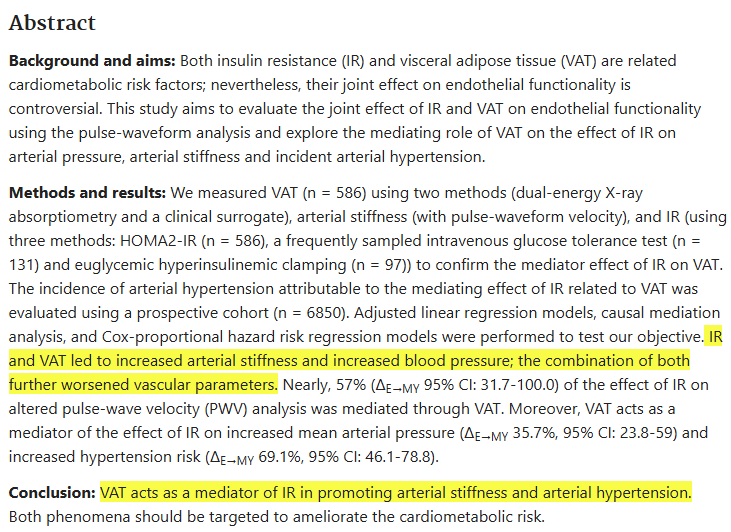
Source: Antonio-Villa NE, Bello-Chavolla OY, et al; Metabolic Syndrome Study Group. Increased visceral fat accumulation modifies the effect of insulin resistance on arterial stiffness and hypertension risk. Nutr Metab Cardiovasc Dis. 2021 Feb 8;31(2):506-517. doi: 10.1016/j.numecd.2020.09.031. Epub 2020 Oct 15. PMID: 33279372.
High blood pressure is not just a number; it’s a stressor on the heart, blood vessels, and organs over time.
Doctors know that visceral fat raises the likelihood of hypertension, which in turn is linked to heart attacks and strokes.
Heart Disease, Stroke, and Metabolic Syndrome
Visceral fat is also associated with broader metabolic dysfunction, a cluster of conditions doctors sometimes call ‘metabolic syndrome.’ This includes:
- High blood pressure
- Abnormal cholesterol levels
- Elevated blood sugar
- Excess visceral adiposity
When these factors combine, they significantly raise the risk of major chronic diseases like heart attacks and stroke.
Importantly, studies have shown that visceral adiposity predicts cardiovascular risk more reliably than general body weight or BMI.
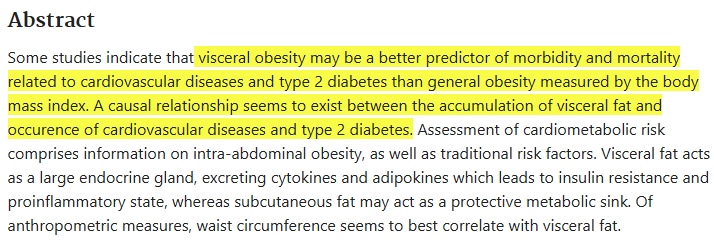
Source: Korsić M, Fister K, Ivanković D, Jelcić J. Visceralna debljina [Visceral obesity]. Lijec Vjesn. 2011 Jul-Aug;133(7-8):284-7. Croatian. PMID: 22165197.
Beyond the Heart: Links to Cancer and Brain Health
The impact of visceral fat doesn’t stop at metabolic disease.
Emerging evidence suggests that higher visceral fat is linked to increased risk for certain cancers, including colorectal and breast cancers, and may even play a role in cognitive decline and neurodegenerative conditions like Alzheimer’s.

Source: Silveira EA, Kliemann N, Noll M, Sarrafzadegan N, de Oliveira C. Visceral obesity and incident cancer and cardiovascular disease: An integrative review of the epidemiological evidence. Obes Rev. 2021 Jan;22(1):e13088. doi: 10.1111/obr.13088. Epub 2020 Jul 21. PMID: 32692447; PMCID: PMC7757158.

Source: Yang, Y.S., Han, K., Cheon, D.Y. et al. Abdominal obesity and the risk of young-onset dementia in women: a nationwide cohort study. Alz Res Therapy 17, 86 (2025). https://doi.org/10.1186/s13195-025-01738-2
These associations are complex and not fully explained by fat alone, but they do highlight that visceral fat is more than a cosmetic concern.
That’s why relying on the bathroom scale or how clothes fit isn’t enough. Healthcare providers look at markers like waist circumference, blood glucose, lipid panels, and blood pressure to understand a bigger metabolic risk.
How to Estimate Visceral Fat (Without Scans)
One of the most common questions we hear is: “How do I know if I have visceral fat?”
And it’s a fair question, because unlike other types of body fat, visceral fat doesn’t show itself easily.
From a medical standpoint, the most accurate way to measure visceral fat is through imaging tests like a CT scan or MRI.
- These scans can clearly show fat stored deep inside the abdominal cavity, around the organs.
- But let’s be honest, this isn’t practical or necessary for most people.
- These tests are expensive, time-consuming, and usually reserved for specific medical reasons.
So what do doctors and health practitioners do instead?
They rely on simple, evidence-based screening tools that give a fairly reliable picture of visceral fat risk, without scans.
Waist Circumference: A Simple but Powerful Indicator
Waist circumference is one of the most useful indicators of visceral fat accumulation.
Here are the commonly used benchmarks:
- Women: A waist measurement of 35 inches or more may indicate a higher risk associated with visceral fat.
- Men: A waist measurement of 40 inches or more may place you at increased metabolic risk.
These numbers don’t exist to label or alarm anyone. They’re simply early warning signals, a way to catch internal fat accumulation before it starts showing up as disease.
And remember, this isn’t about how you look. Two people with the same weight can have very different waist measurements and very different internal fat distribution.
The 10% Rule: Understanding Fat Distribution
On average, about 10% of your total body fat tends to be visceral fat.
So if you know your overall body fat percentage (from a gym or clinic assessment), you can get a rough idea of how much visceral fat you may be carrying. This is not an exact number, but it helps build awareness.
That’s why body fat analysis done at gyms, clinics, or diagnostic centers can be useful. These assessments don’t directly measure visceral fat, but they help estimate overall fat distribution and trends over time.
Screening, Not Diagnosis
This part is important.
These methods, waist measurements, body fat percentage, and routine blood work, are screening tools, not diagnostic tests.
They don’t ‘diagnose’ visceral fat, but they do help identify risk early, when lifestyle changes can make the biggest difference.
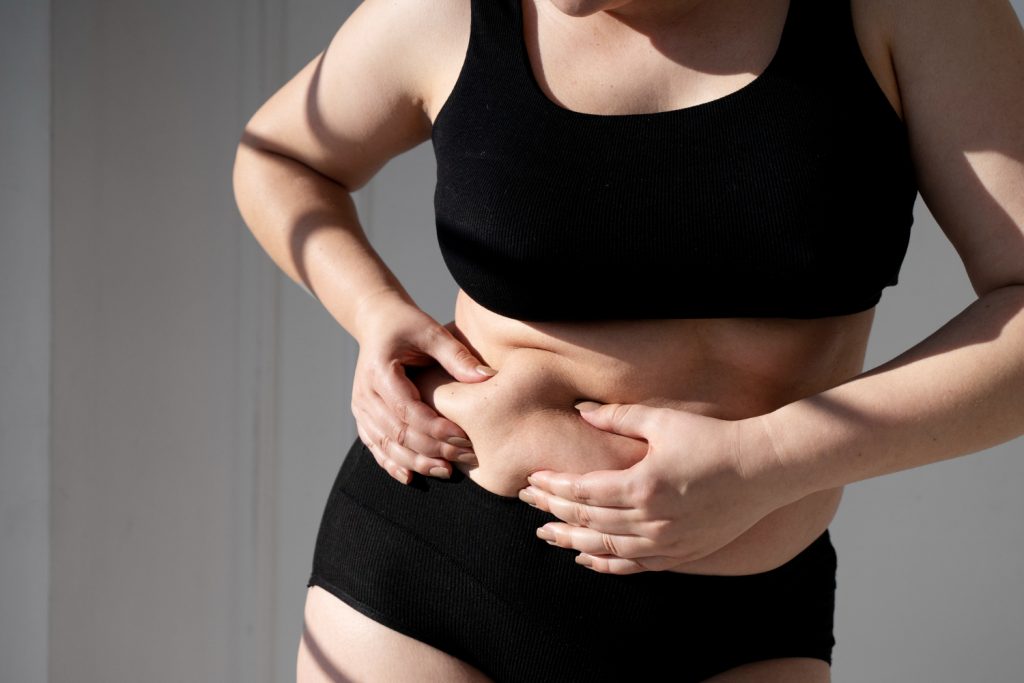
Image Credits: Freepik
Can You Reduce Visceral Fat? (Yes, With Lifestyle)
This is where we want to pause and reassure you.
Yes, visceral fat can be reduced.
And the reason it can be reduced is the same reason it developed in the first place.
Visceral fat doesn’t appear overnight. It builds up gradually when the body is exposed to:
- A sedentary lifestyle
- Poor or mismatched food choices
- Chronic stress
- Inadequate or disturbed sleep
And because lifestyle is the root cause, lifestyle becomes the solution.
No pill, injection, or shortcut selectively removes visceral fat. Even today, modern medicine does not offer an allopathic medication that directly targets visceral fat. What does work, consistently and sustainably, is changing the signals you give your body every day.
Nutrition That Targets Visceral Fat
Reducing visceral fat starts with clean, mindful eating.
Not complicated eating.
Not extreme eating.
Just intentional eating.
What this looks like in practice:
- Eating slowly and chewing your food well
- Avoiding constant snacking and overeating
- Removing foods that spike insulin repeatedly throughout the day
Foods to minimize:
- Processed and packaged foods
- Refined sugar
- Refined flour (white bread, maida-based products)
These foods keep insulin levels constantly high, making it extremely difficult for the body to access stored fat.
Foods to emphasize:
- Lean protein (to support muscle and satiety)
- Vegetables (for fiber, micronutrients, and volume)
- Fiber-rich foods (to stabilize blood sugar)
- Healthy fats from nuts, seeds, and cold-pressed oils
This approach directly supports those trying to understand how to lose visceral fat without damaging metabolism.
Carbohydrates & Fruits: Choosing Wisely
Carbohydrates are not the enemy, but excess and poor-quality carbohydrates are.
Low-GI fruits are better choices when reducing visceral fat:
- Berries
- Apples
- Pears
These fruits have a gentler effect on blood sugar and insulin.
Fruits to be cautious with (especially during fat loss phases):
- Banana
- Custard apple
- Chikoo
They’re nutritious, but higher in sugar, and best consumed occasionally.
Complex carbohydrates that support fat loss include:
- Lentils
- Legumes
- Beans
- Sweet potatoes (if tolerated)
When reducing carbs, the goal is not hunger. You compensate by increasing:
- Vegetables
- Protein
- Fiber
- Healthy fats
This keeps energy stable while encouraging fat loss.
Oils & Fats: Quality Over Quantity
Not all fats behave the same in the body.
| Fat Type | Examples | Role |
| Monounsaturated fats | Olive oil, avocado oil | Support metabolic health |
| Saturated fats (in balance) | Ghee, coconut oil | Hormonal support |
| Refined oils | Highly processed seed oils | Avoid inflammatory |
Refined oils are destructive to metabolic health and can worsen visceral fat accumulation.
Here’s how to choose the best cooking oil, a FREE 101 guide.
https://www.lukecoutinho.com/blogs/nutrition-en/best-cooking-oil-guide/
Thermogenic Foods That Support Fat Loss
Some foods require more energy to digest. These are called thermogenic foods, and they support fat burning naturally. Examples include:
- Good-quality dark chocolate
- Green tea
- Matcha
These foods are nutrient-dense and slightly increase metabolic effort, helping burn more energy even at rest. They complement, not replace, lifestyle changes.
Exercise That Actually Burns Visceral Fat
Fat loss, especially visceral fat loss, is deeply connected to insulin levels.
Fat cells open up and release stored fat when insulin is low and stable, not constantly elevated. This is why exercise timing and type matter.
Fasted Workouts (With Awareness)
Fasted workouts can be extremely effective, but must be done safely. A simple beginner approach:
- Wake up after an overnight fast
- Start with a one-hour walk on an empty stomach
- Blood sugar is already low
- Insulin drops further
- Fat cells open up for energy
As comfort improves:
- Add body-weight squats
- Push-ups
- Simple circuit training
- Progress gradually before heavy lifting
Disclaimer: Fasted workouts are not recommended if you have very low blood sugar, low blood pressure, or are doing intense weight training without guidance.
Cardio + Strength: The Winning Combination
For effective exercise for visceral fat, both are essential.
- Cardio (walking, cycling, running): helps burn calories
- Anaerobic/strength training: builds muscle tone
Why strength training matters:
- Muscle requires energy to maintain itself.
So the more muscle tone you build, the more calories you burn:
- While sitting
- While sleeping
- Even at rest
Yoga is wonderful for flexibility, stress reduction, and consistency, but it works best alongside cardio and strength training, not as a replacement.
Stress, Cortisol & Hidden Fat Gain
One of the most overlooked contributors to belly fat and visceral fat is chronic stress. Cortisol is not a bad hormone. It’s essential for survival.
But when cortisol remains elevated all day, due to work pressure, emotional stress, and lack of recovery, the body shifts into fat-storage mode.
The higher the cortisol:
- The more visceral fat accumulates
- The harder fat loss becomes
This is why someone may look thin, active, or ‘fit’ and still carry high visceral fat internally. Stress does not discriminate by body type.
Try this technique: Slump, Dump, and Pump by Luke, and move from stress to instant relaxation in under 3 minutes.
Sleep: The Missing Link in Fat Loss
Sleep is not optional when it comes to healing. Sleep deprivation is directly linked to:
- Increased inflammation
- Hormonal imbalance
- Loss of muscle mass
- Increased fat storage
When sleep is compromised:
- Testosterone drops
- Progesterone drops
- Muscle decreases
- Fat increases
Add to this the impact of blue light from screens, which suppresses melatonin production. Melatonin plays a role in metabolic regulation, and poor sleep directly contributes to visceral fat gain.
This is why we say, again and again, sleep is non-negotiable.
Want to wake up energized? Beat sleep deprivation in just 7 ways!
Prevention, Screening & Medical Check-ups
Early and regular screening is one of the most important lifestyle decisions you can make.
As a general guideline, once you cross the age of 30 to 35, annual health check-ups become essential, especially if:
- Your waist circumference is increasing
- You live a sedentary lifestyle
- You have a family history of diabetes, heart disease, or hypertension
- You’re dealing with chronic stress or poor sleep
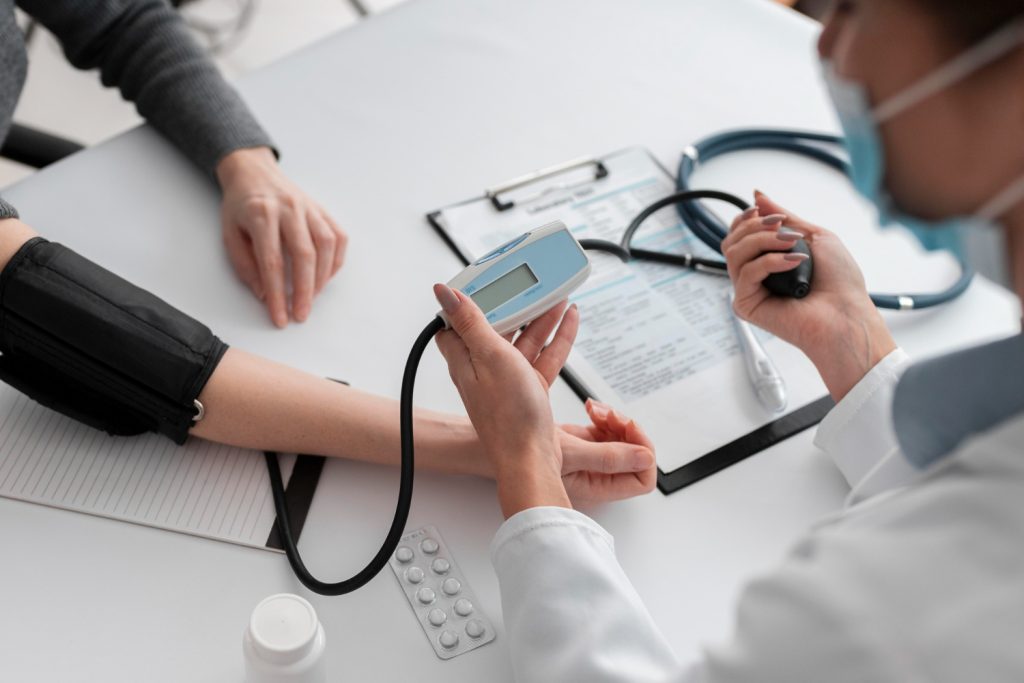
Image Credits: Freepik
Tests That Help Build the Bigger Picture
Doctors don’t rely on one test alone. They look at patterns. Some commonly recommended assessments include:
Blood markers such as:
- Fasting glucose
- Triglycerides
- HDL (good cholesterol)
Cardiac evaluations like:
- A 2D Echo
- A stress test, especially if weight, blood pressure, or family history is a concern
The earlier you listen, the easier it is for the body to heal.
The Last Word
No medication can selectively melt visceral fat. No shortcut. No magic pill. And that’s actually good news.
Because visceral fat responds best, not to extremes, but to consistent lifestyle alignment. The body doesn’t need punishment; it needs the right signals.
Better sleep.
Stable blood sugar.
Daily movement.
Stress regulation.
Nourishment that works with your physiology, not against it.
Small, repeatable changes done daily outperform dramatic interventions done occasionally. When the foundation improves, visceral fat reduces as a natural consequence.
Watch This Know More About Visceral Fat:
Disclaimer: This blog is intended for educational and informational purposes only and should not be used as a substitute for professional medical advice, diagnosis, or treatment. Always seek the guidance of your qualified healthcare provider before making any changes to your medications or lifestyle.
Looking for holistic and foundational guidance for fat loss?
We help you find a way.
Set up a one-on-one consultation with our foundational medicine and lifestyle experts or explore our Wellness Programs to optimize your lifestyle goals.
Reach out to us at 1800 102 0253 or write to us at [email protected].