No products in the cart.
Earlier, almost one in two patients who came to us was severely deficient in Vitamin B12. Today, it has become almost every patient—one in one.
And I’m not talking about borderline numbers. I’m talking about dangerously low levels—B12 values in the 100s, or children with levels as low as 6 or 7. That worries me—not just for their bones, but for their cognitive health, immune function, energy, and overall development.

Image Credits: Freepik
The truth is, Vitamin B12 deficiency has become a silent epidemic. Millions of people go through their day feeling fatigued, foggy-brained, low in energy, or struggling with poor concentration, and they rarely connect it to low B12 levels.
What makes this even trickier is that our bodies don’t produce B12. We need to source it from food or supplements. Vegetarians, vegans, the elderly, and people with digestive issues often struggle the most.
That’s why I want to take you through:
- The exact Vitamin B12 daily requirement for different age groups and lifestyles.
- The best natural sources for Vitamin B12—meats, seafood, dairy, and even eggs.
- The common B12 deficiency foods to avoid that can block absorption.
B12 deficiency is easy to overlook, but it’s also easy to fix if you know where to look and how to eat. And that’s exactly what we’ll explore today.
Vitamin B12 Daily Requirement – What Your Body Actually Needs
When it comes to Vitamin B12, most people assume that if their reports show they’re ‘within range,’ they’re fine.
But here’s the problem: the reference ranges in many labs are extremely broad. You could be sitting at the lowest number and still be considered ‘normal,’ yet your body may already be struggling. That’s why I always tell my patients—it’s not just about falling in range, it’s about being at an optimal level.
According to the National Institutes of Health (NIH), the Vitamin B12 daily requirement—also known as the Recommended Dietary Allowance (RDA)—differs by age and life stage:
| Age Group | Daily Requirement (mcg) |
| Infants (0–6 months) | 0.4 mcg Based on adequate intake (AI) |
| Infants (7–12 months) | 0.5 mcg |
| Children (1–3 years) | 0.9 mcg |
| Children (4–8 years) | 1.2 mcg |
| Children (9–13 years) | 1.8 mcg |
| Teens (14–18 years) | 2.4 mcg (Same as adults) |
| Adults (19+ years) | 2.4 mcg |
| Pregnant women | 2.6 mcg (Higher due to fetal needs) |
| Breastfeeding women | 2.8 mcg (Higher due to milk secretion) |
(Source: Vitamin B12, Fact Sheet for Health Professionals, National Institutes of Health (NIH) Office of Dietary Supplements (ODS), https://ods.od.nih.gov/factsheets/VitaminB12-HealthProfessional/)
Now, here’s where it gets interesting: while the RDA might look small—just micrograms—a lot depends on how much you actually absorb.
Vitamin B12 requires a protein called intrinsic factor (produced in the stomach) to be absorbed in the small intestine.
- If your gut health is compromised, or if you’re on medications like antacids, metformin, or proton pump inhibitors (PPIs), your absorption can drop drastically.
- In such cases, even if you’re consuming the right amount, your body may not be utilizing it.
That’s why, for some people, the practical intake needs to be higher than the textbook RDA.
- For example, vegetarians and vegans might need supplements because natural B12 is primarily found in animal sources.
- Seniors often need more because stomach acid and the intrinsic factor decline with age.
How do you know if you’re meeting your B12 needs?
- Signs you’re meeting them: Good energy levels, sharp memory, steady mood, healthy red blood cell counts, normal homocysteine and methylmalonic acid (MMA) levels on blood tests.
- Signs you’re falling short: Persistent fatigue, brain fog, tingling in hands and feet, pale skin, poor concentration, mood swings, or unexplained weakness.
This is why I always remind my patients: Don’t just rely on the ‘normal’ tag in your report. Aim for optimal B12 levels. Your brain, your energy, your immunity—literally every cell in your body—depends on it.
Natural Source for Vitamin B12 – Top Food Categories
When patients ask me, “Luke, what’s the most natural source for Vitamin B12?” My answer is simple: it mostly comes from animal-based foods.
Unlike Vitamin C or Vitamin D, which you can get from fruits, vegetables, or the sun, B12 is unique—it’s almost exclusively found in animal products. That’s why vegetarians and vegans are often at the highest risk of deficiency.
Here’s a breakdown of the top natural food sources and their approximate Vitamin B12 content:
| Food Category | Examples | Vitamin B12 Content (per serving) | Notes on Absorption |
| Organ meats | Beef liver, lamb liver | 70–80 mcg per 100g | One of the richest natural sources |
| Meat & poultry | Chicken, turkey, lamb, beef | 0.5–1.5 mcg per 100g | Highly bioavailable |
| Seafood & fish | Clams, sardines, salmon, tuna, mackerel | Clams: 84 mcg per 100g; Salmon: 4–5 mcg per fillet | Seafood, especially clams, are B12 powerhouses |
| Dairy products | Milk, yogurt, cheese | 0.9–1.2 mcg per cup or slice | Easy to add daily |
| Eggs | Whole egg | ~0.6 mcg per egg (yolk-rich) | Whites have negligible B12 |
Why does absorption differ?
Not all sources are equal. Animal-based B12 is more bioavailable—your body absorbs it more efficiently.
- Seafood like clams and sardines, or organ meats like beef liver, are incredibly potent.
Practical note for daily life
We often tell our patients:
- If you eat meat, try to include a small portion of fish, chicken, or lean red meat a few times a week.
- If you’re a vegetarian, rely on dairy and eggs consistently.
- If you’re vegan, supplements become non-negotiable.
Your B12 levels are not about just eating enough, they’re about absorbing enough. That’s why knowing the right natural sources of Vitamin B12—and combining them wisely—is so important.
Vitamin B12 in Eggs and Dairy Products
When we talk about Vitamin B12 in eggs and dairy products, many people underestimate just how much impact these everyday foods can have on their B12 status. Eggs and dairy are not just convenient—they’re also bioavailable sources that your body can absorb efficiently when eaten correctly.
Eggs – A Powerful B12 Source
Most of the Vitamin B12 in eggs is found in the yolk, not the whites.
- One large egg contains approximately 0.6 mcg of B12, which is about 25% of the adult daily requirement. That might not seem like much, but when combined with other foods throughout the day, eggs become a practical and nutrient-dense option.
| Egg Type / Preparation | Vitamin B12 Content (mcg) | Notes |
| Whole boiled egg | 0.6 mcg | Best preserves B12 |
| Scrambled or omelet | 0.5–0.6 mcg | Avoid high heat to prevent B12 degradation |
| Egg whites only | ~0 mcg | Virtually no B12, mostly protein |
Pro Tip: Cook eggs gently. High heat over long periods can degrade B12, so soft boiling, poaching, or light scrambling is ideal. Pair eggs with vegetables or whole grains to improve digestion and nutrient absorption.
Dairy – Milk, Cheese, and Yogurt
Dairy is another excellent source of B12, particularly for vegetarians who don’t consume meat or seafood. Here’s a quick reference:
| Dairy Product | Vitamin B12 Content (mcg) | Notes |
| Cow’s milk (1 cup) | 1.2 mcg | Rich in calcium & protein; easy to incorporate |
| Yogurt (1 cup) | 1 mcg | Choose plain yogurt to avoid excess sugar |
| Cheese (1 slice, Swiss or cheddar) | 0.9 mcg | Hard cheeses retain B12 well; pair with whole foods |
Pro Tip: Pairing dairy with other nutrient-dense foods like fruits, nuts, or whole grains not only improves digestion but also supports better absorption of B12 and other micronutrients.
Plant-Based and Vegetarian B12 Strategies
Now, if you’re plant-based or vegetarian, this is where I need you to pay extra attention. Unlike other vitamins, vitamin B12 is almost exclusively found in animal products. That means relying solely on fruits, vegetables, or whole grains will not meet your B12 needs.
If you are a vegetarian or vegan, please don’t depend solely on food sources. Natural vegan foods contain negligible B12 — even spirulina or seaweed are unreliable. This is why supplementation is often non-negotiable for plant-based individuals.
Top B12-Rich Foods You’ll Actually Enjoy Eating
When it comes to Vitamin B12, the key isn’t just knowing what foods contain it—it’s enjoying them! Focus on foods that are nutrient-dense, delicious, and easy to include daily.
Certain foods are exceptionally high in B12 and provide other benefits like omega-3s, protein, and iron—making them ideal for energy, brain health, and overall cellular function.
1. Fatty Fish
Salmon, tuna, sardines, and mackerel are all rich in B12 (3–5 mcg per 100g serving) and come with the added benefit of omega-3 fatty acids, which support brain and heart health.
- Meal idea: Wild salmon grilled with leafy greens and quinoa, drizzled with a little olive oil and lemon. Simple, delicious, and B12-packed.
2. Lean Meats
Chicken, turkey, and lean beef provide 0.5–1.5 mcg of B12 per 100g and are excellent for muscle repair, energy, and hemoglobin formation.
- Meal idea: Chicken stir-fry with colorful vegetables and brown rice, or grilled turkey with roasted sweet potatoes.
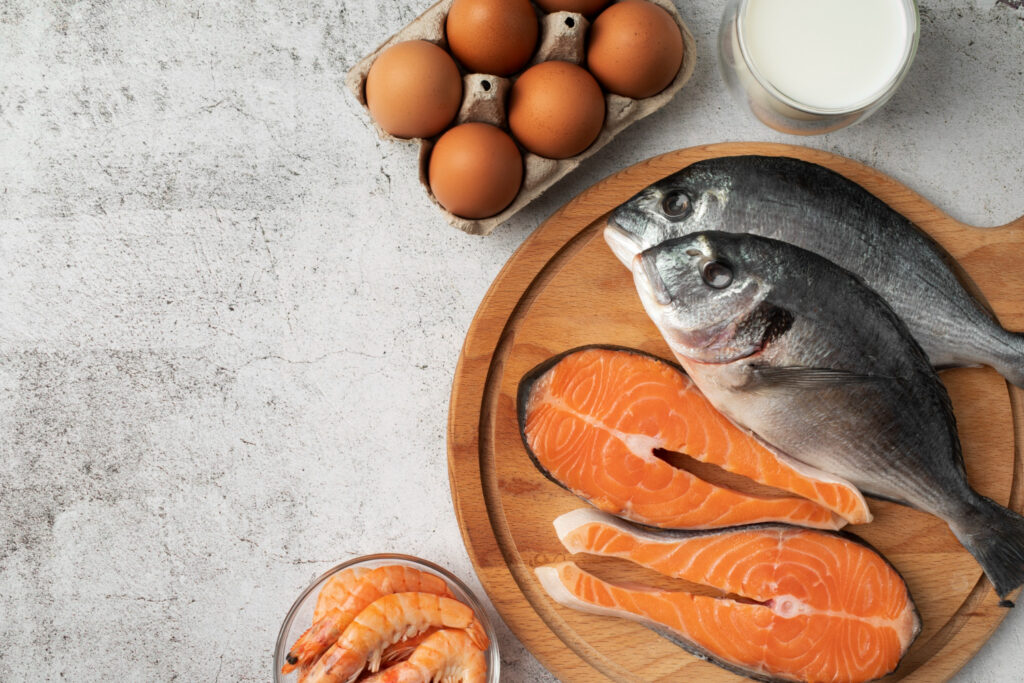
Image Credits: Freepik
3. Shellfish
Clams, mussels, and crabs are some of the highest natural sources of B12. For example, just 3 ounces of clams contain 84 mcg of B12—over 30 times the adult daily requirement!
- Meal idea: Steamed mussels with garlic and herbs or crab salad with avocado and leafy greens. These are easy to cook and nutrient-dense.
4. Other Practical Meal Ideas
- Egg bhurji with sautéed spinach and tomatoes – eggs + veggies for B12 and fiber
- Greek yogurt with flax seeds, berries, and a drizzle of honey – B12 in yogurt + omega-3s from flax.
- Tuna salad with cucumbers, bell peppers, and olive oil – quick, high-protein, and B12-rich.
Note: These meal ideas are for guidance only. Don’t rely solely on them to meet your B12 needs—consult a healthcare professional for personalized advice.
Consistency is more important than quantity in a single meal. Focus on small servings of B12-rich foods daily, combined with vegetables, healthy fats, and whole grains to maximize absorption and overall health.
B12 Deficiency Foods to Avoid – What Blocks Absorption
Let’s talk about the top B12 deficiency foods to avoid and lifestyle factors that can sabotage your B12 status.
1. Excess Alcohol
Alcohol interferes with both absorption and storage of Vitamin B12 in your liver.
- Chrzintrinsic factor production in your stomach, making it harder for your body to take in B12.
- Heavy drinking is strongly associated with B12 deficiency, even if nutritional intake is sufficient.
2. Highly Processed Foods
Foods high in refined sugars, preservatives, and artificial additives can deplete nutrient stores in the body.
- Packaged snacks, fast food, and sugary drinks not only crowd out nutrient-dense foods but may also increase B12 requirements, making it harder to maintain adequate levels.
3. Certain Medications
Some commonly used medications can reduce B12 absorption:
- Metformin – Often prescribed for diabetes
- Proton Pump Inhibitors (PPIs) – Reduce stomach acid needed for B12 release from food
- Long-term use of birth control pills – May slightly reduce B12 levels
If you’re on any of these medications, it’s crucial to monitor your B12 status and adjust your nutrition or supplementation accordingly.
4. Timing Matters
Even tea and coffee, when consumed immediately with B12-rich meals, can interfere with absorption.
- The polyphenols and caffeine may slightly inhibit uptake, so we usually recommend spacing beverages at least 30–60 minutes before or after your meal.
Avoiding these blockers doesn’t mean eliminating all enjoyment from your life—it’s about being strategic.
B12 Absorption and Supplementation
When it comes to vitamin B12 absorption, the ‘what’ you eat matters, but so does the ‘how’ and ‘when.’ Over the years, working with thousands of patients, we’ve noticed that optimizing absorption is just as important as consuming B12-rich foods.

Image Credits: Freepik
Optimal Timing
Taking B12-rich meals earlier in the day may support better energy metabolism and circadian rhythm alignment. Your body’s digestive enzymes and stomach acid tend to be more active in the first half of the day, which may improve B12 release from food proteins.
Natural Absorption Enhancers
Certain nutrients can synergize with B12 for improved absorption and function:
- Vitamin C – Helps maintain stomach acidity and enhances intrinsic factor function, aiding B12 uptake
- Folate & Iron – Work alongside B12 in red blood cell formation, preventing megaloblastic anemia.
- Omega-3 fatty acids – Though not directly impacting absorption, they complement B12’s role in nervous system health.
When Food Isn’t Enough
For many, food sources alone aren’t sufficient. In such cases, we always recommend medical testing (serum B12, methylmalonic acid, and homocysteine levels) before deciding on supplementation.
Supplementation Guidelines
Different forms of B12 supplements are available, and science backs specific uses:
- Methylcobalamin – The bioactive form supports neurological health and circadian rhythm regulation.
- Cyanocobalamin – The synthetic form, widely used and cost-effective, but requires conversion in the body.
- Hydroxocobalamin – Often used in injections, especially for individuals with absorption issues.
Test, don’t guess. Optimize absorption through smart timing and food synergy, and if needed, use supplements in the right form and dose under professional guidance.
The Last Word
Now, you’ve learned the foods to eat, the ones to avoid, and how plant-based individuals can still thrive with the right strategies. You’ve also understood the role of timing, absorption, and supplementation.
But here’s the key—never self-diagnose, never self-medicate. Always test, then act. A simple blood test can save you years of suffering and confusion.
My advice is simple: Eat clean, test smart, supplement if required, and most importantly, listen to your body. Because health isn’t about chasing trends—it’s about giving your trillions of cells the nourishment they need to function the way nature designed them to.
Take B12 seriously, respect your body, and watch how your energy, focus, and vitality transform.
Frequently Asked Questions
What is the Vitamin B12 daily requirement for adults?
The general Vitamin B12 daily requirement for healthy adults is about 2.4 micrograms. Pregnant and breastfeeding women may need slightly more. Since individual needs vary, it’s always best to consult your healthcare provider and confirm through regular blood tests to avoid deficiencies or excess.
What are the best natural sources for Vitamin B12?
The best natural sources for Vitamin B12 include animal-based foods like fish, chicken, eggs, dairy, and red meat. For vegetarians, dairy and eggs are reliable options, while vegans often need supplementation. Always choose clean, unprocessed sources for better absorption and overall health benefits.
How much Vitamin B12 is in eggs?
Eggs are a simple and healthy source of B12. Two large eggs contain about 1.1 micrograms of Vitamin B12, which is nearly half of the daily requirement for an adult. To maximize absorption, pair eggs with other nutrient-dense foods.
What foods should I avoid with B12 deficiency?
If you have a B12 deficiency, avoid excessive alcohol, processed foods, sugary snacks, and refined carbs, as they can impair absorption and damage gut health. A healthy gut is key for proper B12 uptake, so prioritize fresh, whole foods and avoid anything that weakens digestion.
Can vegetarians and vegans meet their Vitamin B12 needs naturally?
Vegetarians can rely on dairy and eggs as a natural source of Vitamin B12, while vegans often need supplementation. Since B12 is mostly found in animal products, regular blood tests and professional guidance are essential for plant-based individuals.
Disclaimer: This blog is intended for informational and educational purposes only and is not a substitute for professional medical advice, diagnosis, or treatment. Always consult your physician or a qualified healthcare provider before making any changes to your lifestyle or medication, especially if you have an existing medical condition.
Need personalized guidance to manage your Vitamin B12 levels?
We help you find a way.
Set up a one-on-one consultation with our integrative team or explore our Wellness Programs to optimize your lifestyle goals.
Reach out to us at 1800 102 0253 or write to us at [email protected].