No products in the cart.
Dinner ends. You lean back, and within minutes it begins: a burning chest after meals, a bitter taste rising in the throat, or those uncomfortable sour burps at night.
Sometimes it’s the constant bloating after meals that makes you feel heavy and uneasy.
For many people today, the response is almost automatic. Reach into the bag, pop a couple of antacids, and wait for the familiar calm to return. Within minutes, the burning settles. The discomfort fades. Problem solved, or so it seems.

Image Credits: Freepik
In fact, antacids have quietly become one of the most common quick fixes for heartburn relief and acid reflux. They’re easy to buy, easy to use, and often treated as harmless as chewing gum or mint tablets after a heavy meal.
But here’s the important question we rarely ask:
What if that quick relief is silently worsening the problem underneath?
Because in many cases, frequent antacid use doesn’t solve digestive issues, it simply masks them.
Before we get into Mahesh’s story, a client whose years of relying on antacids led to a surprising discovery about his gut, let’s first understand what actually happens inside your body every time you pop that antacid.
What Are Antacids and How Do They Work?
To understand why popping antacids regularly may not always be the best solution, we first need to understand what’s actually happening inside your stomach.
Your stomach is designed to produce a powerful digestive fluid called stomach acid, primarily made of hydrochloric acid (HCl). This acid plays several critical roles in digestive health:
- Breaking down proteins into amino acids
- Activating digestive enzymes like pepsin
- Killing harmful microbes entering through food
- Helping absorb nutrients like vitamin B12, iron, calcium, and magnesium
In other words, stomach acid isn’t the enemy. It’s essential for proper digestion.
What Happens During Acid Reflux?
Normally, stomach acid stays inside the stomach, where it belongs. But when the lower esophageal sphincter (the valve between the stomach and food pipe) relaxes or weakens, acid can travel upward into the esophagus.
This is what we call acid reflux.
The esophagus doesn’t have the same protective lining as the stomach. So when acid rises upward, it creates the familiar symptoms:
- Burning sensation in the chest (heartburn)
- Sour or bitter taste in the mouth
- Burping or regurgitation
- Bloating after meals
How Antacids Provide Quick Relief
This is where antacids come in.
Most over-the-counter antacids contain alkaline compounds such as:
- Calcium carbonate
- Magnesium hydroxide
- Aluminum hydroxide
- Sodium bicarbonate
These compounds act like chemical buffers.
- When they enter the stomach, they neutralize existing stomach acid through a simple acid-base reaction, raising the stomach’s pH and making it less acidic.
- This reduces irritation and provides rapid heartburn relief.
That’s why antacids often work within minutes, but the relief is usually temporary, lasting only a few hours.
Antacids vs Acid-Suppressing Drugs
Here’s where things get important. Not all medications for acidity work the same way.
Traditional OTC Antacids
- These simply neutralize the acid that is already present in the stomach.
- They act quickly but briefly.
- Examples include formulations containing calcium carbonate or magnesium hydroxide.
Proton Pump Inhibitors (PPIs)
A much stronger category of drugs is used for persistent acid reflux.
Common examples include:
- Pantoprazole
- Omeprazole
- Esomeprazole
Unlike antacids, proton pump inhibitors don’t just neutralize acid.
They actually block the stomach’s acid-producing machinery.
- Inside the stomach lining are specialized cells called parietal cells that contain an enzyme known as the proton pump (H⁺/K⁺ ATPase).
- This pump is responsible for releasing acid into the stomach.
- PPIs work by inhibiting this proton pump, significantly reducing the amount of acid your stomach produces.
This is why medications like pantoprazole are widely prescribed for:
- Gastroesophageal reflux disease (GERD)
- Stomach ulcers
- Severe acid reflux
- And sometimes H. pylori infection treatment
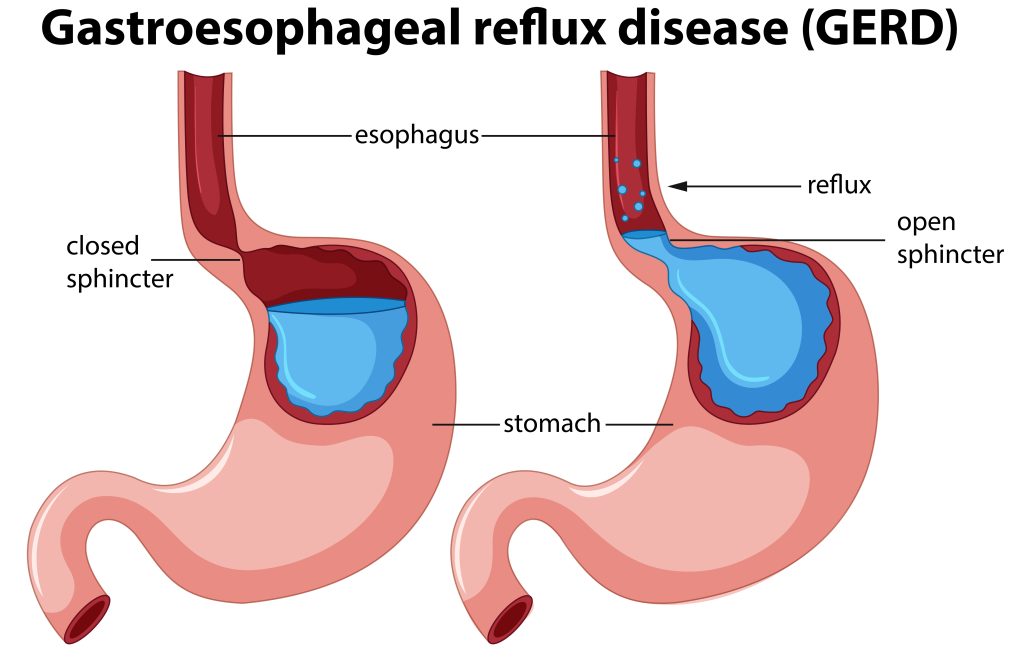
Image Credits: Freepik
The Important Thing Most People Don’t Realize
While these medications can provide relief, they don’t always address why the symptoms started in the first place.
They simply reduce or neutralize stomach acid to control symptoms.
And sometimes, not always, the real issue isn’t too much acid.
The Problem With Long-Term Antacid Use
Let’s be clear about one thing first.
Antacids and proton pump inhibitors can be extremely helpful when used appropriately and under medical supervision.
But the problem begins when these medications become a daily, long-term habit without addressing the root cause of acidity.
Prolonged suppression of stomach acid can interfere with several important digestive processes.
Here are some of the most important concerns linked with chronic use.
Reduced Nutrient Absorption
Your body relies on stomach acid to break down food and release essential nutrients.
When acid levels remain suppressed for long periods, it can affect the absorption of key nutrients such as:
- Vitamin B12
- Iron
- Magnesium
- Calcium
Studies have shown that long-term use of proton pump inhibitors may increase the risk of vitamin B12 deficiency and mineral imbalances because acid is required to separate these nutrients from food.

Source: Heidelbaugh JJ. Proton pump inhibitors and risk of vitamin and mineral deficiency: evidence and clinical implications. Ther Adv Drug Saf. 2013 Jun;4(3):125-33. doi: 10.1177/2042098613482484. PMID: 25083257; PMCID: PMC4110863.
Over time, this may contribute to fatigue, poor immunity, and even bone health issues.
Disruption of the Gut Microbiom
Your stomach’s acidity acts as a natural defense barrier.
It helps kill harmful microbes that enter the body through food and water.
- When stomach acid is chronically suppressed, this protective barrier weakens.
- This can lead to gut microbiome imbalance, allowing harmful bacteria to survive and travel further into the digestive tract.
This imbalance may contribute to:
- Digestive discomfort
- Gas and bloating after meals
- Small intestinal bacterial overgrowth (SIBO)
- Inflammation in the gut
Higher Susceptibility to Infections
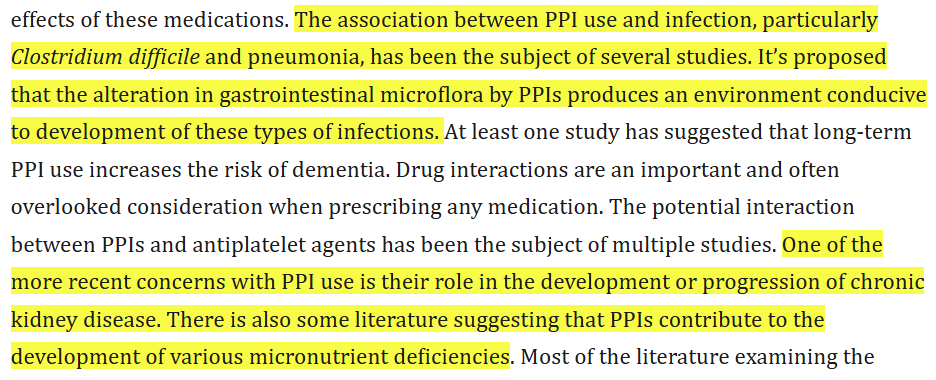
Low stomach acid creates a more welcoming environment for microbes that normally wouldn’t survive in a healthy stomach.
Studies have linked long-term use of acid-suppressing drugs with increased susceptibility to infections such as:
- Clostridium difficile infections
- H. pylori infection
- Certain gastrointestinal infections
Source: Jaynes M, Kumar AB. The risks of long-term use of proton pump inhibitors: a critical review. Ther Adv Drug Saf. 2018 Nov 19;10:2042098618809927. doi: 10.1177/2042098618809927. PMID: 31019676; PMCID: PMC6463334.
This happens because stomach acid normally acts as the body’s first line of defense against pathogens.
Poor Protein Digestion
Protein digestion begins in the stomach.
Hydrochloric acid activates an enzyme called pepsin, which helps break proteins into smaller amino acids.
When acid levels are suppressed:
- Protein digestion becomes inefficient
- Food stays longer in the stomach
- Fermentation can occur
This can lead to symptoms many people experience regularly:
- Heaviness after meals
- Excessive burping
- Bloating after meals
The Misunderstood Truth About Acidity
Here’s where things become interesting.
Many people assume their symptoms mean they have too much stomach acid.
But in many cases, testing reveals the opposite: low stomach acid, a condition known as hypochlorhydria.
When stomach acid is insufficient:
- Food isn’t broken down properly
- Bacteria can thrive in the stomach
- Fermentation and gas build-up
Ironically, this can create symptoms that feel exactly like acid reflux.
And if someone keeps suppressing acid with medications, the cycle may continue.
Taking an antacid before every spicy meal? You might want to watch this. A renowned doctor explains the hidden risks of long-term antacid overuse.
When Acidity Isn’t About “Too Much Acid” at All
If there’s one pattern we’ve repeatedly seen in clinical practice, it’s this: digestive symptoms are often misunderstood.
Many people assume their heartburn or acid reflux is caused by excessive stomach acid. But in reality, acidity symptoms can arise from multiple underlying factors affecting digestive health.
In other words, what you’re feeling may simply be a signal, not the actual problem.
Here are some of the most common factors that can disrupt digestion and trigger acidity-like symptoms.
Chronic Stress and a Sluggish Digestive Response
Digestion doesn’t begin in the stomach; it begins in the brain.
When you’re constantly stressed, rushing through meals, or working under pressure, your body stays in “fight or flight” mode. In this state, blood flow is diverted away from the digestive system.
This can lead to:
- Reduced digestive enzyme production
- Weaker stomach acid signaling
- Slower gastric emptying
- Fermentation of food in the gut
Over time, this may result in bloating, gas, and reflux-like symptoms.
Modern Eating Patterns That Disrupt Digestion
Our eating habits today are very different from what the digestive system evolved to handle.
Some common patterns that can disturb stomach function include:
- Late-night meals, which interfere with digestion and sleep cycles
- Frequent snacking that keeps the stomach constantly active
- High intake of ultra-processed foods
- Eating too quickly without chewing properly
- Excessive caffeine, alcohol, or very spicy foods
These habits can irritate the digestive tract and worsen acidity symptoms over time.
Long-Term Medication Use
Certain medications can also influence stomach acid production and gut health when used for extended periods.
These may include:
- Long-term proton pump inhibitors
- Certain antibiotics
- Anti-inflammatory medications
- Steroid-based drugs
Over time, this may contribute to gut microbiome imbalance and digestive discomfort.
One of the Most Overlooked Causes: H. pylori Infection
One of the most important, and often missed, root causes of acidity is H. pylori infection.
Helicobacter pylori is a spiral-shaped bacterium that colonizes the stomach lining. According to global research, more than half of the world’s population may carry it, with higher prevalence in developing regions.
- What makes this microbe particularly tricky is its ability to survive the stomach’s acidic environment.
- It does this by producing an enzyme called urease, which converts urea into ammonia.
- This reaction temporarily neutralizes stomach acid around the bacteria, allowing them to survive and multiply.
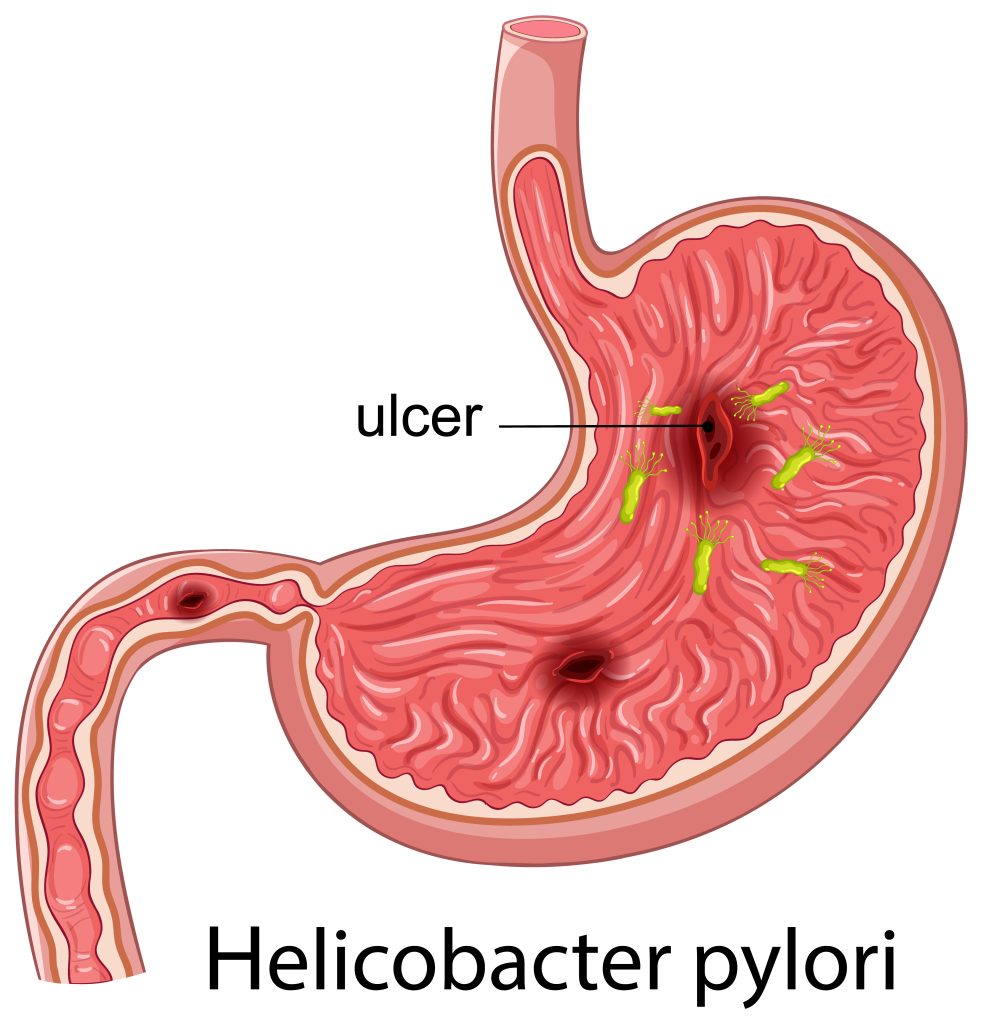
Image Credits: Freepik
Over time, this infection can:
- Irritate the stomach lining
- Disrupt acid production
- Contribute to inflammation and ulcers
- Alter the balance of the gut microbiome
In many people, this creates a confusing cycle where digestive symptoms persist despite taking antacids or acid-suppressing medications.
Understanding the true root cause of acidity is often the turning point in restoring long-term digestive health.
And this is exactly what happened in Mahesh’s case.
Mahesh’s Story: 15 Years of Antacids
Mahesh was 42 when he came to us.
A senior IT executive based in Mumbai, his life looked like what many would call “successful” on the outside. A demanding job, constant deadlines, frequent travel, and a schedule that rarely slowed down.
But his routine had quietly taken a toll on his digestive health.
Most of his days looked like this:
- Spicy street food between meetings
- Late-night biryani after work
- High stress and long hours on the laptop
- Very little time to eat slowly or mindfully
By his early 30s, Mahesh had started experiencing frequent heartburn. Soon came the other symptoms:
- Constant burping
- Bloating after meals
- A heavy feeling in the stomach
- Low energy throughout the day
Like many people dealing with acid reflux, Mahesh did what most of us would do: he reached for quick relief.
Doctors prescribed pantoprazole and other proton pump inhibitors to control his acidity. The medications worked quickly. The burning sensation reduced. The discomfort settled.
But the relief came at a cost.
Over the years, Mahesh started noticing new issues creeping in:
- Persistent fatigue
- Unexplained weight gain of nearly 12 kg
- Constant gut discomfort
- Poor recovery despite eating better
Still, he continued relying on antacids, assuming they were helping.
Then something unexpected happened.
When Mahesh finally decided to improve his fitness and started a structured routine with HIIT workouts, yoga, and increased protein intake, everything fell apart.
Instead of feeling stronger, he felt worse.
The Shocking Discovery: Low Stomach Acid
Mahesh had increased his protein intake to support muscle gain. But every meal left him feeling miserable.
Even a glass of water triggered:
- Intense burping
- Heaviness in the stomach
- Severe bloating after meals
This was a major red flag.
Protein requires strong stomach acid for proper digestion. When digestion fails at this stage, proteins begin to ferment instead of breaking down.
So we recommended deeper testing.
The results were surprising.
Mahesh’s Heidelberg capsule pH test, a diagnostic tool used to measure stomach acidity, revealed that he was suffering from hypochlorhydria.
But that wasn’t the full story.
Further tests, including a stool test and a urea breath test, revealed the real culprit: H. pylori infection.
In Mahesh’s case, years of relying on proton pump inhibitors had suppressed his acid levels even further.
The result? A vicious cycle.
Low stomach acid led to:
- Protein fermentation in the stomach
- Bacterial overgrowth
- Chronic bloating
- Worsening digestive dysfunction
And the already weakened stomach environment made it easier for H. pylori infection to thrive.
Mahesh didn’t have “too much acid” as he had believed for years.
He had too little acid.
The 90-Day Gut Reset
Once we identified the real issue, the goal was not simply to suppress symptoms again.
The focus was to restore Mahesh’s digestive health step by step.
His recovery followed a structured 90-day gut reset protocol built on three core pillars:
- Kill the bug.
- Restore acid.
- Rebuild the gut.
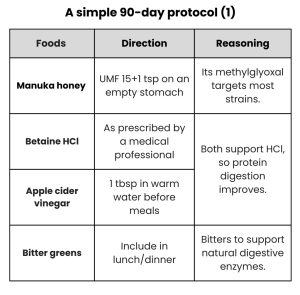
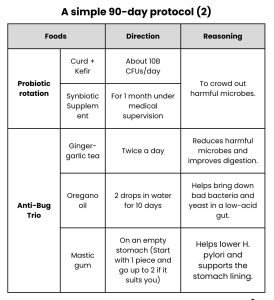
These strategies acted as natural remedies for acidity, but more importantly, they helped restore long-term digestive balance rather than simply suppress symptoms.
Other Practices That Supported His Recovery
Beyond diet and supplements, Mahesh also made several small but powerful lifestyle changes that significantly improved his digestion.
- Chew 20x: He slowed down his meals and focused on chewing food thoroughly before swallowing. Proper chewing mechanically breaks food down and prepares it for digestion.
- Protein pacing: Instead of loading large amounts of protein in one meal, Mahesh consumed about 30 grams per meal, sometimes using fermented protein sources like idli or tempeh that are easier to digest.
- Early dinner: Dinner was shifted to 7 PM, followed by a 12-hour overnight fasting window, allowing the digestive system to fully rest.
- Better sleep: His sleep improved from 6 hours to about 7.5 hours per night, which plays a crucial role in hormone balance and digestive repair.
- Stress detox: Every day included 10 minutes of gratitude practice to calm the nervous system.
- 4-7-8 breathing: Mahesh practiced this breathing technique for 5 minutes, three times a day, helping activate the body’s parasympathetic “rest and digest” state.
- Post-meal movement: A simple 10-minute walk after meals helped improve blood sugar control and digestion.
The Results
By day 45, the changes were already visible.
- His breath test for H. pylori infection turned negative
- The constant bloating after meals disappeared
- Energy levels improved significantly
- He had already lost 8 kg
- His HbA1c levels improved
By day 90, the transformation was remarkable.
With his doctor’s supervision, Mahesh was able to come off all medications, including proton pump inhibitors.
He experienced:
- Stronger workouts
- No gas or digestive discomfort
- Better satiety after meals
- Normalized stomach pH
- Improved gut microbiome markers, including a 40% rise in beneficial Bifidobacteria
And most importantly, H. pylori was completely cleared.
Disclaimer: The tools, foods, supplements, and the 90-day reset protocol mentioned in Mahesh’s case were personalized specifically for his body after proper testing and professional evaluation. These should not be treated as a one-size-fits-all solution. Always consult a qualified healthcare professional before making changes to your medication, diet, or supplement routine.
The Key Lesson
Mahesh’s case highlights something we see very often.
Antacids can sometimes do more harm than good when the real culprit behind indigestion is low stomach acid.
By continuously suppressing acid, they may inadvertently create an environment where microbes like H. pylori thrive.
This is why understanding the root cause of acidity is far more important than simply silencing the symptoms.
Sometimes the body isn’t asking for less acid.
It’s asking for better digestion.

Image Credits: Freepik
Important Safety Notes
- Never stop or start medication without consulting your doctor.
- Testing should guide decisions; guessing can do more harm than good.
- Certain foods, herbs, or supplements may trigger allergies or interact with medical conditions.
- Conditions like pregnancy, ulcers, anemia, autoimmune disease, kidney issues, or active infections require professional supervision.
The Last Word
Mahesh’s journey is a reminder that lasting digestive health rarely comes from a single pill. It comes from strengthening the foundations that support the body every day: how we eat, how we manage stress, how we sleep, and how we care for our gut.
Also, the goal is never to reject medicine. Modern medicine plays an essential role, especially in conditions like infections, ulcers, or severe digestive disorders, where medical treatment is necessary.
But true healing often happens when medicine and foundations work together, not against each other.
It’s about respectful integration, using medical care when needed while strengthening the body through better lifestyle choices.
Because ultimately, the body already knows how to heal.
Digestive symptoms are signals.
Listen early. Act intelligently.
Disclaimer: This blog is for informational purposes only and is not a substitute for medical advice, diagnosis, or treatment. Always consult with your doctor, healthcare practitioner, or a certified nutrition expert before making changes to your nutrition, lifestyle, or supplement routine, especially if you have a medical condition or are on medication.
Struggling with acidity, bloating, or any other digestive issues?
We’re here to support YOU every step of the way.
Set up a one-on-one consultation with our foundational medicine team or enroll in our specialized Gut Care Program for personalized solutions.
Reach out to us at 1800 102 0253 or write to us at [email protected].