No products in the cart.
👉 Click here to get the downloadable version of this Luke-Approved Home Lighting Protocol
Most people trying to sleep better are focused on the wrong things.
They’re buying melatonin supplements, downloading sleep tracking apps, or cutting out caffeine after noon. All of that matters.
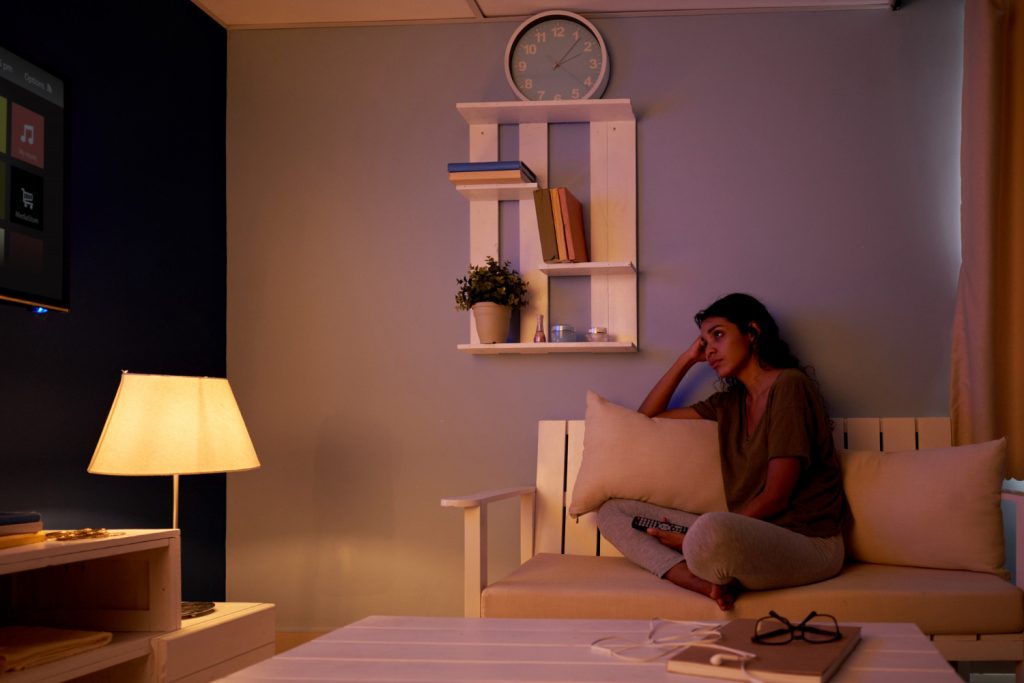
Image Credits: Magnific
But very few people are paying attention to something that’s happening every single evening right inside their homes.
Their lights.
And this is exactly what this Home Lighting Protocol is all about.
It’s not complicated. It doesn’t require an expensive setup. It’s about understanding that the type of light you expose yourself to at different times of day is one of the most powerful signals your body receives.
Get it right, and your sleep, hormones, and energy can shift in ways that surprise you.
The Problem: Junk Light Is Everywhere
We’ve normalized something that would have seemed completely unnatural to our ancestors.
After sunset, instead of winding down in dim, warm light, most of us are sitting under harsh white tube lights and bright LED panels as if it’s still noon.
We’re sending our brains a very clear message: stay awake, stay alert, don’t produce melatonin.
This type of light, which Luke calls ‘junk light,’ is disrupting three critical things:
- Your sleep (difficulty falling asleep or staying asleep)
- Your hormones (especially melatonin and cortisol)
- Your circadian rhythm (your body’s 24-hour internal clock)
Here’s a fact worth sitting with: research found that exposure to room light before bedtime suppresses melatonin onset by about 90 minutes and reduces melatonin duration by nearly 50%. That’s not a small disruption. That’s your sleep system being switched off.

Source: Gooley JJ, Chamberlain K, Smith KA, Khalsa SB, Rajaratnam SM, Van Reen E, Zeitzer JM, Czeisler CA, Lockley SW. Exposure to room light before bedtime suppresses melatonin onset and shortens melatonin duration in humans. J Clin Endocrinol Metab. 2011 Mar;96(3):E463-72. doi: 10.1210/jc.2010-2098. Epub 2010 Dec 30. PMID: 21193540; PMCID: PMC3047226.
Blue light and sleep are deeply connected.
- The blue spectrum light that bright white LEDs and tube lights emit signals your brain to stay awake, much the same way sunlight does.
- It’s not inherently bad during the day. But at night, it’s working directly against your body’s natural design
The Solution: Use Different Lighting for Different Times of Day
The key principle of the Luke Approved Home Lighting Protocol is simple:
Don’t eliminate light. Change the TYPE of light.
Your body was designed to respond to the natural light cycle of the sun. When you understand that, everything else follows logically. Here’s how it breaks down:
Morning and Day (4000 to 6500K): Bright White Light
During the day, bright white light is your friend. This is the range that mimics natural daylight, supports alertness, and helps your cortisol curve stay healthy.
- Use your ceiling lights freely. Let natural light in. If you work from home, position yourself near a window.
This is the foundation of good circadian rhythm lighting. Your body needs that strong morning and daytime light signal to set the internal clock correctly, so that when evening comes, the wind-down feels natural.
Interesting fact: People who get bright light exposure in the morning fall asleep faster at night. It’s all one connected cycle.
Evening (2700K): Warm Yellow Lighting
As the sun goes down, your lighting needs to shift too.
- Switch off the overhead harsh lights.
- Move to warm yellow lamps. Reduce the overall brightness in the room. This signals to your nervous system that the day is ending, and it’s time to start the process of slowing down.
- 2700K is the sweet spot for evening lighting setup. It’s warm enough to begin the melatonin cascade without being so dim that it’s impractical for daily activities like reading, cooking, or spending time with family.
Think of it this way: you’re mimicking what a fireplace or a candle would have done for our ancestors after sundown. Warm, low, and soothing.
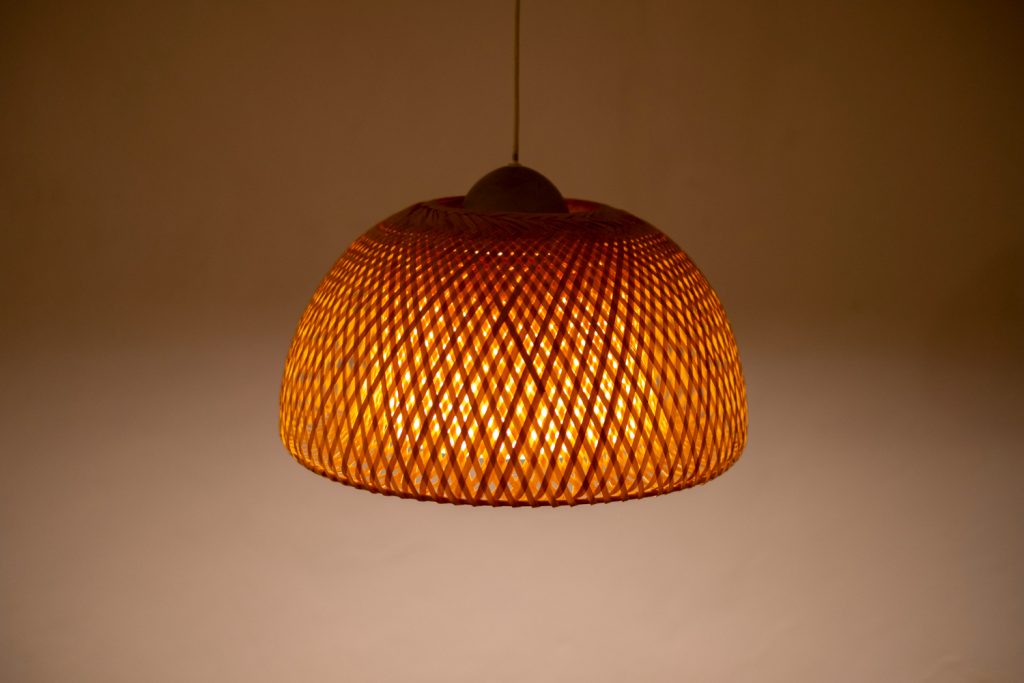
Image Credits: Magnific
Night (1800 to 2200K): Amber Lighting Only
This is where most people are getting it completely wrong.
- After dinner and heading toward bedtime, your environment should shift to amber lighting only. Not warm white. Amber.
- Amber light for sleep is one of the most underutilized tools in sleep hygiene. This range of light has minimal impact on melatonin production, allowing your body to do what it naturally wants to do after dark.
- Use floor lamps or bedside lamps. Turn off all ceiling lights. Keep the room dim and warm-toned.
The amber light benefits go beyond just sleep.
- When melatonin is allowed to rise naturally, it also supports immune function, cellular repair, and hormonal balance throughout the night. Sleep isn’t just rest. It’s your body’s most productive hours of healing.
The Best Bulbs Available in India (At Every Budget)
One of the best things about this protocol is that you don’t need to spend a lot of money to start. Here’s a quick guide:
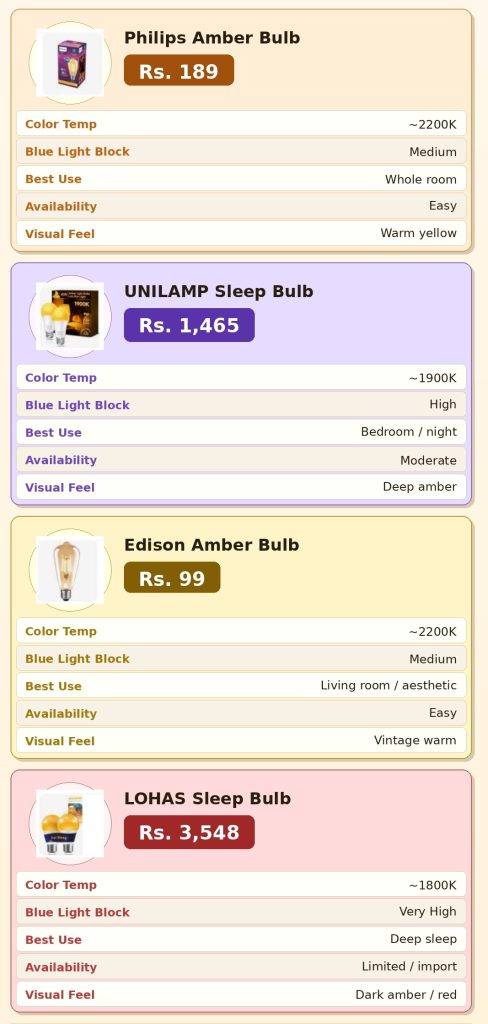
Start with the Philips Amber or an Edison filament bulb in your bedroom lamp. That one small change can make a noticeable difference within days.
How to Set Up Each Room
You don’t have to overhaul your entire home in one weekend. Start room by room.
Bedroom
This is the most important room to get right.
- At night, use only one or two amber lamps. No ceiling lights.
- The bedroom should feel like a cave after a certain hour, dim, warm, and quiet.
- Best bedroom lighting for sleep means no blue light sources at all, including your phone screen, which brings us to another point.
Bathroom
This is the one most people forget.
- If you have bright white bathroom lights and you’re visiting the bathroom at 2 AM, that light blast is enough to suppress melatonin significantly.
- Consider switching your bathroom bulb to a warmer option or using a small plug-in night light with amber tones.
Living Room
Skip the overhead lighting in the evenings.
- Move to floor lamps or table lamps positioned in corners. This creates a cozy, warm atmosphere that naturally encourages your body and mind to settle down.
- Evening lighting setup in your living room sets the emotional and biological tone for the rest of your night.
Bonus Sleep Hygiene Tips from Luke’s Protocol
A few additions that make this protocol even more effective:
- Use dimmers wherever possible. The ability to reduce brightness gradually through the evening is incredibly useful.
- Reduce brightness after sunset as a general rule, even before you officially switch to amber.
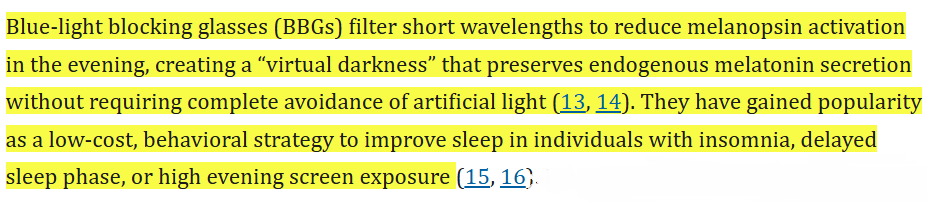
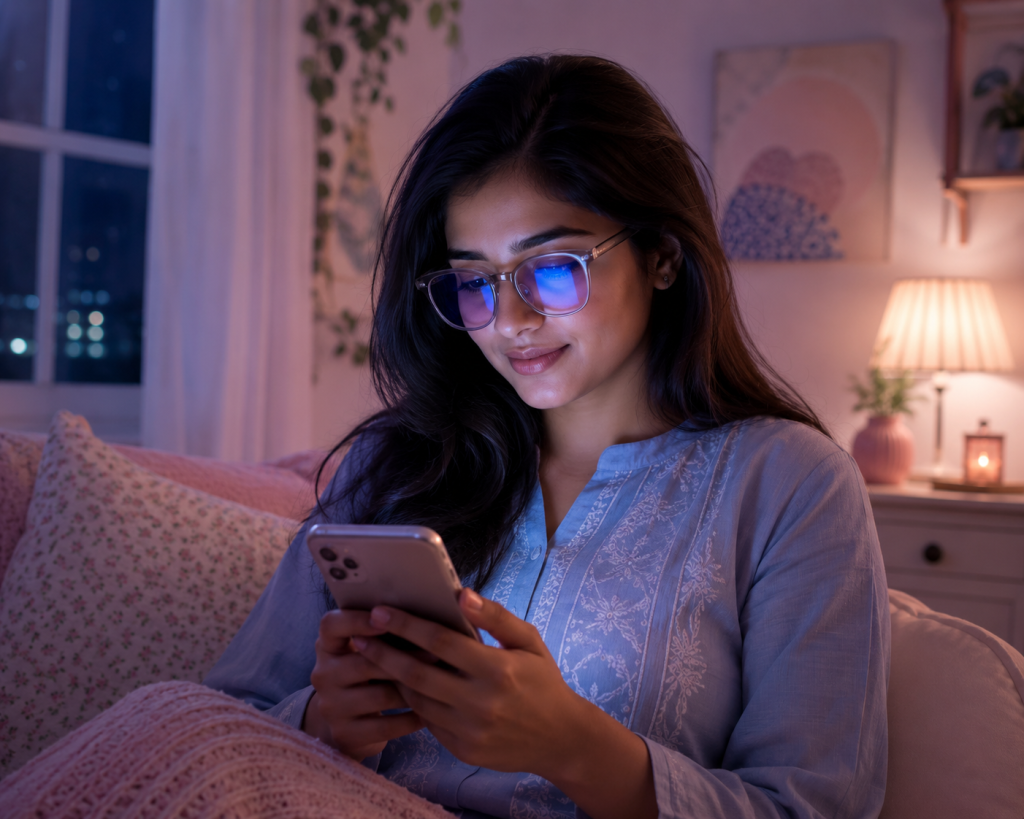
- Wear blue light-blocking glasses from around 7 PM onward if you’re using screens.
- Blue light-blocking glasses create an artificial amber filter over your visual field and can be surprisingly effective, especially on days when you can’t fully control your light environment.
Worth knowing: A 2021 study found that blue light-blocking glasses worn in the evening significantly improved sleep quality and next-day mood and alertness in participants who used screens regularly at night.
Source: Luna-Rangel, F. A., Gonzalez-Bedolla, B., Salazar-Ortega, M. J., Torres-Mancilla, X. M., & Martinez-Cadena, S. (2025). Efficacy of blue-light blocking glasses on actigraphic sleep outcomes: a systematic review and meta-analysis of randomized controlled crossover trials. Frontiers in neurology, 16, 1699303. https://doi.org/10.3389/fneur.2025.1699303
Why This Matters: The Foundational Medicine Lens
When it comes to foundational or lifestyle medicine, we always come back to one core idea: the body knows how to heal when you stop creating interference.
Light is not just about visibility. It is biological information.
Every photon that enters your eye sends a signal to your hypothalamus, which is the master regulator of your circadian clock. That clock governs not just sleep but immune function, hormone release, metabolism, mood, and cellular repair.
When we flood our homes with bright white, blue-spectrum light at 10 PM, we are essentially telling the body it’s still midday.
- The body then responds accordingly.
- Cortisol stays elevated.
- Melatonin doesn’t rise.
- Sleep is fragmented or delayed.
- Over time, this cascades into deeper imbalances.
How light affects sleep is one of the most well-researched areas in chronobiology. And yet, most people have never been told something as simple as: change your evening bulbs.
This is why the Luke-Approved Home Lighting Protocol is foundational. It costs almost nothing. It requires no prescription. And it works with your biology rather than against it.
AI-generated image
Simple Steps to Start Tonight
- You don’t need to wait. Here’s what you can do right now:
- Turn off your overhead lights after sunset tonight. Use only lamps.
- Order one Philips Amber LED or an Edison filament bulb for your bedroom.
- Put your phone face-down or on night mode after 8 PM.
- Notice how your eyes feel, how your body feels, and how easily you fall asleep.
The best lighting for sleep isn’t a product. It’s a practice.
And like all good foundational habits, it starts with one small, intentional change.
Disclaimer: This blog is intended for educational and informational purposes only and should not be used as a substitute for professional medical advice, diagnosis, or treatment. Always seek the guidance of your qualified healthcare provider before making any changes to your lifestyle.
Looking for support related to circadian alignment? You don’t have to figure it out alone.
We help you find a way.
Set up a one-on-one consultation with our foundational medicine experts or explore our Wellness Programs to optimize your lifestyle goals.
Reach out to us at 1800 102 0253 or write to us at [email protected].