No products in the cart.
You wake up on time.
You show up.
You do what needs to be done.
Your work is moving. Your responsibilities are handled. On the outside, life looks stable, maybe even successful.
And yet, somewhere between ticking off tasks and pushing through another busy day, there’s a quiet question you don’t say out loud:
“If everything is going right… Why do I still feel empty?”

Image Credits: Freepik
You tell yourself you’re fine, because technically, you are.
However, ‘fine’ isn’t the same as being fulfilled.
Many people experience this subtle emotional flatness without realizing it even has a name. In psychology, it’s sometimes referred to as anhedonia, a reduced ability to feel pleasure or emotional reward.
Not a crisis. Not a collapse. Just a quiet disconnection, where life keeps moving, but excitement, joy, or satisfaction feels distant.
In our podcast with Dr. Judith Joseph, a board-certified psychiatrist and researcher, we explored how this state often manifests in individuals who continue to function at a high level.
This is where conversations around high-functioning depression begin, not marked by an inability to work or cope, but by emotional numbness beneath outward productivity.
When life still looks ‘successful,’ these signals are easy to miss, brushed off as stress or fatigue rather than a gentle nudge to pause and reflect.
Here, we’ll explore:
- Why feeling ‘fine’ isn’t the same as feeling fulfilled
- The link between anhedonia and high-functioning depression
- How emotional numbness can exist even when life looks successful
- Common yet overlooked anhedonia symptoms
- The deeper root causes of anhedonia, including trauma and constant busyness
- How to understand anhedonia vs depression, and why the difference matters
When Life Looks Good on Paper, But Feels Empty Inside
Let’s first understand high-functioning depression (HFD).
Most people associate depression with visible struggle, low energy, inability to work, or withdrawal from daily life. But depression doesn’t always present that way.
Some people cope by doing the opposite.
- They keep functioning.
- They stay productive.
- They continue to show up.
This pattern is often described as high-functioning depression.
While it isn’t an official diagnosis in manuals like the Diagnostic and Statistical Manual of Mental Disorders (DSM)-5, the term is widely used in research and clinical settings to describe individuals who experience internal depressive symptoms while maintaining outward performance and responsibility.
Why High-Functioning Depression Often Goes Unnoticed
People with high-functioning depression often don’t identify as being depressed.
Here’s why:
- Daily responsibilities are still being met
- Work, caregiving, and routines continue
- There is no obvious loss of functioning
- Outward success masks internal distress
Because productivity remains intact, both individuals and clinicians may overlook what’s happening beneath the surface.

Image Credits: Freepik
How Productivity Becomes a Coping Mechanism
One of the studies by Dr. Judith and other experts suggests that many people with high-functioning depression cope by staying busy. (Joseph J F, Tural U, Joseph N D, et al. (February 12, 2025) Understanding High-Functioning Depression in Adults. Cureus 17(2): e78891. doi:10.7759/cureus.78891)
Work, caregiving, constant activity, and responsibility can unconsciously become ways to avoid uncomfortable inner states, such as:
- Persistent low mood
- Emotional flatness
- Reduced ability to feel pleasure
- A sense of inner emptiness
Over time, this coping style may lead to emotional numbness, where life continues, but emotional engagement feels distant.
Why It’s Missed, Even in Clinical Settings?
Because individuals with high-functioning depression continue to perform well, they are often not diagnosed in traditional clinical settings. Standard assessments tend to focus on impairment, and in this case, impairment isn’t obvious.
But research makes one thing clear:
Functioning well does not always mean feeling well.
Is High-Functioning Depression the Same as Burnout?
It’s also important to distinguish this from burnout.
- Burnout is typically work-related and leads to noticeable exhaustion, disengagement, and reduced performance
- High-functioning depression allows performance to continue, sometimes at a very high level, while emotional depletion remains hidden
So, no, they are not the same.
Anhedonia: When Joy Goes Quiet & What Emotional Numbness Really Feels Like
Anhedonia refers to a reduced ability to feel pleasure or emotional reward.
Research published in medical literature describes it as a core feature seen across different mood states, where the brain’s reward system doesn’t respond the way it used to. Life keeps happening, but the felt experience of joy, excitement, or satisfaction fades into the background.

Source: Wu C, Mu Q, Gao W, Lu S. The characteristics of anhedonia in depression: a review from a clinically oriented perspective. Transl Psychiatry. 2025 Mar 21;15(1):90. doi: 10.1038/s41398-025-03310-w. PMID: 40118858; PMCID: PMC11928558.
This is why anhedonia is often confused with stress or burnout, because there’s no dramatic emotional low. Just a subtle sense that joy has gone quiet.
What’s important to understand is that pleasure isn’t a single feeling; it’s a process.
Our experience of pleasure works through three connected phases:
- Wanting: The motivation or drive to pursue something
- Liking: The actual feeling of pleasure when we experience it
- Learning: How past experiences shape our expectations of future reward
Together, these phases form what researchers call the pleasure cycle, from anticipation to enjoyment to satisfaction.
In states like anhedonia, this cycle can become disrupted.
Common Anhedonia Symptoms
You might recognize anhedonia or emotional numbness if you relate to several of these:
- Feeling emotionally muted or ‘neutral’ most of the time
- Struggling to enjoy success, milestones, or positive moments
- Restlessness during downtime
- Using busyness to avoid stillness
- Feeling disconnected from people you care about
Importantly, anhedonia doesn’t always show up with visible distress. Many people experiencing these anhedonia symptoms continue to live highly structured, productive lives, which is why it often goes unnoticed.
The Role of Trauma: Why the Root Causes of Anhedonia Aren’t Always Obvious
When we hear the word trauma, we often think of extreme or life-altering events. But trauma doesn’t always come from something dramatic.
Sometimes, it comes from what was missing.
- Unresolved emotional experiences, especially over long periods, can quietly shape how we relate to pleasure, safety, and connection.
- Chronic stress and emotional neglect can influence the brain’s emotional and reward pathways, contributing to states like anhedonia.
In our podcast discussion, Dr. Judith highlighted that many high-functioning individuals grew up learning to prioritize performance over emotional expression.
Over time, this can create a disconnect between doing and feeling.
Some subtle but powerful contributors include:
- Childhood emotional neglect – When feelings weren’t acknowledged or supported
- Constant pressure to perform – Where worth becomes tied to achievement
- Conditional validation – Feeling valued only when you succeed, comply, or excel
These experiences don’t always register as trauma in the traditional sense. But over time, they can teach the nervous system that slowing down or feeling deeply isn’t safe or useful.
The key thing to understand is this:
Anhedonia isn’t about something being ‘wrong’ with you. It’s often about how your system learned to cope.
And what’s learned can be gently relearned.
Anhedonia vs High-Functioning Depression
This is one of the most common and painful questions people ask themselves:
“Why do I feel this way when I have so much to be grateful for?”
Let’s gently clear this up.
Research and clinical insights show that anhedonia and depression are related, but not the same. Understanding the difference can relieve a lot of unnecessary guilt and confusion.
A Simple Way to Understand the Difference
| Anhedonia | High-Functioning Depression |
| Primary experience is loss of pleasure or joy | Broader mood disturbance masked by functioning |
| Life may look “fine” externally | Life looks successful, productive, and stable |
| Motivation may exist, but pleasure is blunted | Motivation often driven by pressure or fear |
| Emotional numbness is central | Sadness may be subtle or suppressed |
| Often missed because performance remains high | Often missed because coping looks like competence |
| Linked to altered reward processing in the brain | Linked to chronic stress, overactivation, and burnout |
In simple terms:
- High-functioning depression tends to affect how you function
- Anhedonia tends to affect how you feel, even when life works
Many high-functioning individuals don’t resonate with the word ‘depression’ because they’re still coping, achieving, and showing up.
This means:
- You can experience anhedonia without being clinically depressed
- You can have depression without pronounced anhedonia
- And you can experience both together
Understanding anhedonia vs high-functioning depression isn’t about labels; it’s about clarity.
Why High Achievers Are Especially Vulnerable
Some of the people most affected by emotional numbness are the ones we least expect.
Doctors.
Entrepreneurs.
Athletes.
Leaders.
Caregivers.
- On the outside, they’re thriving. Responsible. Driven. Reliable
- On the inside, many feel strangely disconnected from joy.

Image Credits: Freepik
In the podcast, Dr. Judith spoke about an uncomfortable truth: success itself can become addictive.
- Achievements activate the brain’s reward system, but over time, the same wins stop delivering the same emotional payoff.
- What once felt exciting starts to feel neutral.
- So the solution becomes more: more goals, more work, more responsibility.
For many high achievers, work slowly shifts from purpose to protection.
Productivity becomes a way to:
- Avoid uncomfortable emotions
- Stay distracted from inner emptiness
- Feel valuable and in control
This is why stepping away can feel harder than pushing through.
Why Our Culture Normalizes Emotional Numbness
What makes this even harder is that our culture actively rewards emotional disconnection.
We live in a system that values output over inner well-being. Hustle culture glorifies long hours, constant availability, and pushing through, while rest is often framed as laziness or indulgence.
Research in occupational health and psychology shows that chronic busyness and prolonged stress can dull emotional responsiveness over time. Yet instead of questioning the system, we often internalize the problem.
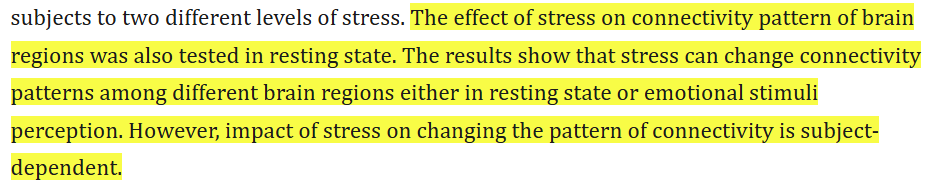
Source: Khosrowabadi R. Stress and Perception of Emotional Stimuli: Long-term Stress Rewiring the Brain. Basic Clin Neurosci. 2018 Mar-Apr;9(2):107-120. doi: 10.29252/NIRP.BCN.9.2.107. PMID: 29967670; PMCID: PMC6026093.
We tell ourselves:
- “This is just how life is.”
- “Everyone feels this way.”
- “I’ll rest once I’ve achieved more.”
Rest comes with guilt. Slowing down feels uncomfortable. Feeling numb starts to feel normal.
The result? A society that functions efficiently, but feels increasingly disconnected.
A Gentle Self-Check (Not a Diagnosis): Questions Worth Asking Yourself
It’s simply about noticing what’s been quietly happening inside.
Take a moment and ask yourself, without judgment:
- Do I feel emotionally flat even though, on paper, life looks “sorted”?
- Do I feel uneasy or restless when I slow down?
- Do achievements or milestones feel strangely underwhelming?
- Do I catch myself wondering why happiness feels distant or muted?
- Do relationships feel more like responsibilities than nourishment?
If some of these land close to home, it doesn’t mean something is broken.
It means your system might be asking for attention, not pressure.
Disclaimer: This self-check is not a medical or psychological diagnosis. It’s an invitation for reflection and awareness. If distress feels overwhelming or persistent, professional support is essential.
Why Catching This Early Matters
When early signs are ignored, the risk isn’t just emotional fatigue. Over time, it can lead to:
- Deeper disengagement from life and relationships
- Chronic stress and nervous system dysregulation
- Burnout that feels sudden, but was actually long in the making
- A harder path back to joy, motivation, and meaning
Catching this phase early allows for:
- Gentle course correction, not crisis intervention
- Preventive mental health support
- Rebuilding safety with rest, reflection, and emotional processing
- Addressing root causes before numbness deepens
This isn’t about fixing yourself. It’s about listening, before your system has to speak louder.
Relearning What Fulfillment Actually Means
Achievement alone doesn’t sustain emotional well-being. Over time, success without meaning can feel strangely empty.
We invite a gentler shift:
- From more → meaningful
- From busy → connected
- From impressive → nourishing
Fulfillment isn’t something you earn after ticking all the boxes. It’s something you practice through presence, purpose, and relationships.
Joy, in this sense, is not a reward at the finish line. It’s a way of living along the way.

Image Credits: Freepik
Reconnecting With What Brings You Alive
Instead of asking, “What should I be doing next?”
Try asking: “What truly brings me joy, and when did I stop making space for it?”
This isn’t about adding another task to your day.
It’s about remembering what your nervous system recognizes as safe, meaningful, and alive.
Often, joy doesn’t live in grand experiences. It shows up quietly in:
- Simplicity over stimulation
- Connection over constant availability
- Stillness over striving
- Contribution that feels aligned, not performative
Approach this with curiosity, not pressure. Joy returns more easily when it isn’t forced.
The Ripple Effect: Families, Children, and Leadership
Emotional numbness doesn’t stay contained within one person. It subtly spreads.
- In organizations, it shows up as disengaged leadership and burnout masked as efficiency.
- In families, it becomes emotional distance, mistaken for normalcy.
- In parenting, it often looks like children being over-scheduled for approval, not joy.
When adults are disconnected from their own emotional lives, children learn that performance matters more than presence.
What we model matters. Conscious leadership, at home or at work, isn’t about being perfect. It’s about being emotionally present.
When we reconnect with fulfillment, we don’t just change our own experience of life.
We create safer, more connected environments for those who depend on us, especially children.
And that may be the most meaningful legacy of all.
The Last Word
You don’t need to hit rock bottom to pause and reflect.
You don’t need a breakdown to realize something feels off.
If anything, experiences like anhedonia or high-functioning depression are often quiet invitations, not failures. Invitations to listen more closely to what your inner world has been trying to signal beneath productivity, responsibility, and routine.
Fulfillment isn’t found in doing more, fixing faster, or pushing harder.
It’s found in feeling again, in living honestly, creating space for emotional truth, and reconnecting intentionally with what nourishes you.
Feeling alive is not a luxury. It’s the real metric of well-being.
And noticing its absence may be the most powerful first step back to yourself.
To learn more about anhedonia and high-functioning depression, watch the full episode:
Disclaimer: The content provided in this blog is for educational purposes only and should not be considered as a substitute for professional medical or psychological advice. Always seek the advice of your physician or qualified healthcare provider with any questions you may have regarding any mental health concerns or conditions.
If you’re struggling with any emotional or mental health issue, don’t wait.
Schedule a consultation with our emotional wellness counsellors or life coaches,
or call us at 1800 102 0253,
or explore our Wellness Programs to optimize your health goals.