No products in the cart.
What if I told you that your thoughts and emotions might be more powerful than any pill?
Sounds unbelievable, right? But science—and real-life healing stories—are showing us exactly that.
I’ve seen it time and again in my practice. Someone works hard on their nutrition, sleep, fitness—everything looks good on paper. But they’re still stuck in their healing. And then they begin to address their emotions—whether it’s suppressed grief, heartbreak, fear, anger—and suddenly, the body starts to shift. Inflammation reduces. Immunity improves. Blood reports change.
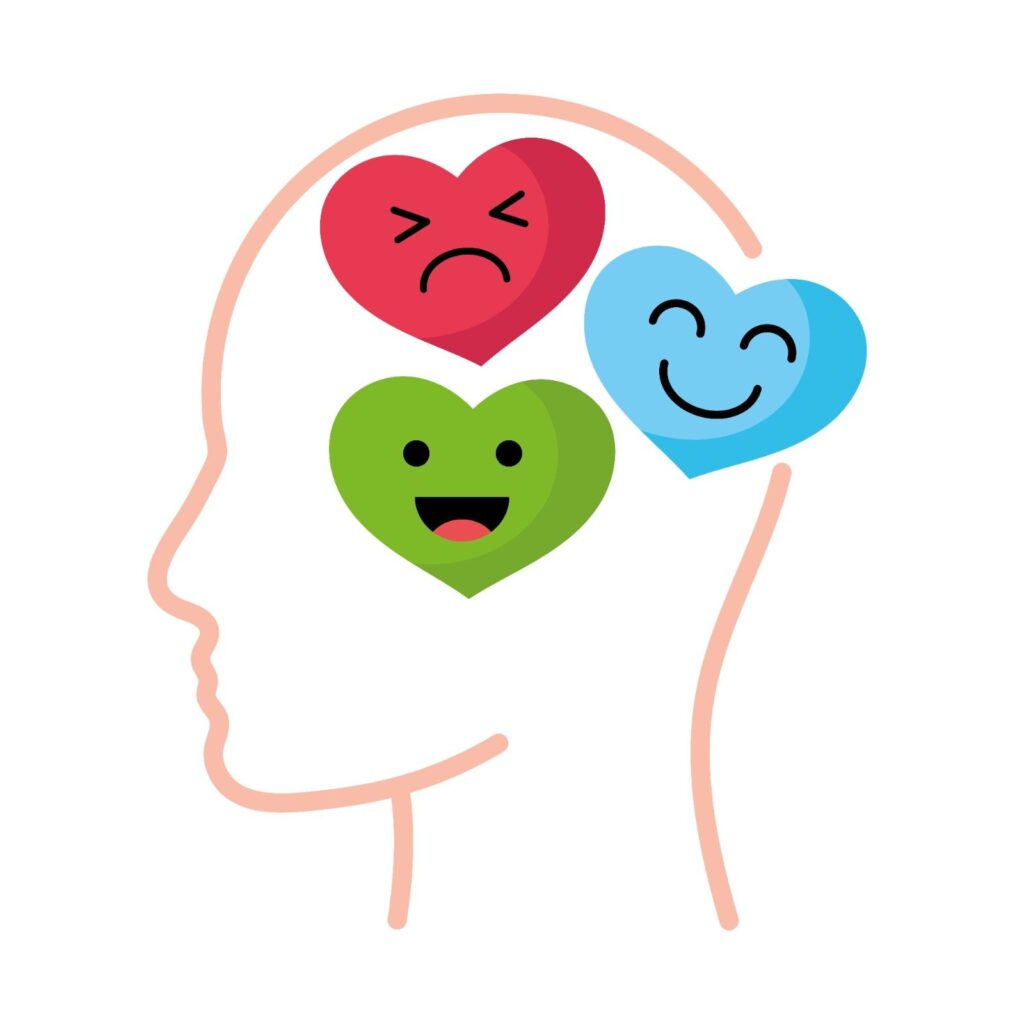
Image Source: Freepik
So, how do emotions affect the body?
My mentor, Dr. Bruce Lipton—a pioneer in cellular biology and epigenetics, helped the world understand something profound:
We are not victims of our genes. Through his work on epigenetics, he demonstrated that it’s not just our DNA that determines our health, but also the environment surrounding our cells.
And what shapes that environment? Our thoughts, beliefs, and emotions.
Even the late Louise Hay, in her beautiful book You Can Heal Your Life, spoke about how every disease has an emotional root. She believed that by changing our inner world, we can help the body heal. That’s the mind-body connection in healing.
This is not just about love in the romantic sense. It’s about how you feel about yourself, the stories you hold, and the way you see the world. It’s about using epigenetics and emotions to empower your healing journey.
Let’s explore.
The Science: How Emotions Affect the Body
Let’s get into the science now—but don’t worry, I’ll keep it simple.
One of the most powerful things I’ve learned from Dr. Bruce Lipton is this:
Your body is like a living Petri dish.
Just like cells grow in a lab dish depending on the nutrients around them, the 50 trillion cells in your body grow in your internal environment—your blood. And the chemistry of your blood is shaped by your emotions, thoughts, and beliefs.
So, think of your brain as a chemist. Based on what you think and feel, it adds chemicals to your bloodstream. If you think of love, gratitude, or joy, you get one kind of chemical mix. If you think fear, anger, or resentment, you get another.
I’ll break it down for you.
Positive Emotions = Healing Chemistry
When you feel love, gratitude, hope, or joy, your body produces:
- Dopamine – makes you feel good, increases motivation
- Oxytocin – the bonding hormone; creates connection and trust
- Serotonin – helps regulate your mood and calm your system
- Growth hormone – supports healing, repair, and cellular growth
This is why people say someone ‘glows’ when they’re in love or feeling truly happy. It’s real! It’s not magic—it’s chemistry.
Negative Emotions = Stress Chemistry
Now, on the flip side, when you’re stuck in fear, stress, anxiety, or anger, the brain produces:
- Cortisol and adrenaline – stress hormones that prepare the body for survival
- Increased inflammation, which can worsen or trigger chronic conditions
- Suppressed digestion, poor sleep, and lowered immunity
We’ve seen this too often—people living in chronic stress constantly battle fatigue, gut issues, hormonal imbalances, and frequent infections. This is exactly how emotions affect the body.
What about Suppressed Emotions?
Every human soul—regardless of age, gender, race, background—wants to express. It’s a need. It’s a force within us. It shows up as crying, anger, pain, silence, or even physical illness. Babies express it through tears. Children throw tantrums. Adults? We suppress it and call it maturity.
We’re taught to shut down. Don’t cry. Don’t feel. Don’t speak up. Hold it together. Stay strong.
But let me say this clearly: there is nothing strong about suppressing emotions until they manifest as disease.
We now have solid science—medical science and energy medicine—proving the link between suppressed emotions and chronic conditions.
Whether it’s autoimmune disease, heart issues, inflammatory disorders, gut problems, anxiety, or even certain cancers—there’s always a story beneath. A story that was never expressed.
- You can’t keep swallowing your sadness and expect your stomach to stay healthy.
- You can’t bury years of resentment and expect your heart to beat in peace.
- You can’t live in constant guilt or shame and expect your immune system to protect you fully.
This is how emotions affect the body. This is real.
Why Don’t We Express?
We all have our reasons:
- Cultural conditioning: “Don’t talk about it.”
- Fear of judgment: “What if I’m rejected?”
- Childhood wounds: “Be a good boy/girl. Don’t cry.”
- Trauma, abuse, grief, shame—never processed.
- Lack of safe space: “There’s no one I can trust.”
And so we cope.
Through addictions. Overworking. Emotional eating. Shopping. Scrolling. Numbing out.
But coping is not healing.
You can only suppress for so long. At some point, it will surface—through anxiety, through relationships, or through your body.
Know more here:
The Mind-Body Connection and Healing: Why Suppressed Emotions Cause Disease
Your body doesn’t forget. Every unspoken truth, every hidden tear, every forced smile—your cells hold that memory. This is epigenetics in action. We’ll learn more about this in the next part.
Our genes respond to the environment inside us. And your emotional state is your inner environment.
- Suppression increases cortisol and inflammation.
- Chronic stress changes your eating, sleeping, and healing patterns.
- Suppression weakens the immune system.
- Emotional repression can show up as chronic fatigue, migraines, gut issues, high blood pressure, hormonal imbalances.
It’s not in your head. It’s in your body. That’s the mind-body connection to healing—not just a buzzword, but a biological truth.
I’ve had patients on chemo, steroids, painkillers—and nothing helped until they started expressing their truth. I’ve seen pain disappear, energy return, and hope reignite… just by helping someone express something they’ve buried for decades.
And there’s real science behind this:
A study found that people who regularly experienced positive emotions had stronger immune responses to vaccines. In other words, love, joy, and gratitude literally make your immune system stronger.

Image Source: Madison AA, Shrout MR, et al. Psychological and Behavioral Predictors of Vaccine Efficacy: Considerations for COVID-19. Perspect Psychol Sci. 2021 Mar;16(2):191-203. doi: 10.1177/1745691621989243. Epub 2021 Jan 27. PMID: 33501900; PMCID: PMC7841255.
This is why I keep saying:
Mindfulness, gratitude, prayer, and meditation are not fluffy. They’re real prescriptions. They’re powerful tools for cellular healing.
Louise Hay’s Wisdom: Emotions as Roots of Disease
American bestselling author Louise Hay shared something powerful:
“The body, like everything else in life, is a mirror of our inner thoughts and beliefs.”
She mapped physical symptoms to emotional roots:
- Back pain? Maybe a lack of emotional support.
- Cancer? Often linked to long-term resentment.
- Indigestion or IBS? Could be ‘emotional indigestion’ from fear, worry, or suppressed emotions.
Want to dive deeper into this emotional healing approach?Enroll in our online educational course: Luke’s Guide to Overcoming Trauma, Suppressed, and Repressed Emotions.
It has helped so many people.
Epigenetics and Emotions: How Your Feelings Control Your Genes
Now let’s talk about something that many people fear—your genes.
For the longest time, we believed we were stuck with the genes we were born with. But science—especially the work of Dr. Lipton—says otherwise.
Let me break it down simply.
Your genes are like light switches. They can be turned on or off. And guess what flips those switches?
Your thoughts. Your beliefs. Your emotions. Your environment.
That’s what epigenetics is all about.
“The moment you change your perception is the moment you rewrite the chemistry of your body.”
I’ve seen this with so many clients. Blood sugar levels improving… inflammatory markers dropping… even tumor markers shifting—all because they worked on their emotional healing, breathwork, belief systems, and lifestyle.
- You’re not a prisoner of your DNA. You’re the author of your biology.
- We need to break free from this victim consciousness—that ‘it runs in my family’ mindset. Yes, you may inherit the genes, but you also inherit the power to change how they express themselves.
Here’s what epigenetics teaches us:
- Your thoughts and feelings send chemical signals to your cells.
- A stressful, fearful inner world activates disease-promoting genes.
- A peaceful, loving inner world activates healing genes.
It’s not just wishful thinking—it’s science.
We’ve seen it firsthand—when people shift from fear to faith, from stress to stillness, the body follows.
So if you’ve been told that you’re “stuck” with a diagnosis, or doomed by family history—pause, breathe, and remember this:
You are not your genes. You are your choices, your emotions, and your environment.
Take your power back. Healing begins the moment you shift your perception—from helpless to empowered.
Watch the powerful podcast with Dr. Bruce Lipton and unlock the power of epigenetics and reprogramming the mind:
The Honeymoon Effect: Why Falling in Love Makes You Glow
Here’s something really interesting that Dr. Lipton shared about love… and it just clicked.
He has beautifully explained it in his book, The Honeymoon Effect—and you’ve probably felt it too.
It’s that glow, that vitality, that high vibration we experience when we first fall in love.
Your skin looks better, your energy’s higher, and life feels effortless.
Why?
- Because in that state, you’re fully present, your heart is open, and your cells are literally bathing in feel-good chemicals.
- You’re not stressed about the past or anxious about the future. You’re here, now—with joy, acceptance, and connection.
That’s healing in its purest form.
Your biology changes when you’re in love. Your hormones shift, your immune system strengthens, and your nervous system calms down.
So maybe the glow you’re looking for isn’t in a cream or a pill.
Maybe it’s in how you feel, how you think, and who you choose to be every day.
Choose love. Your body will thank you.
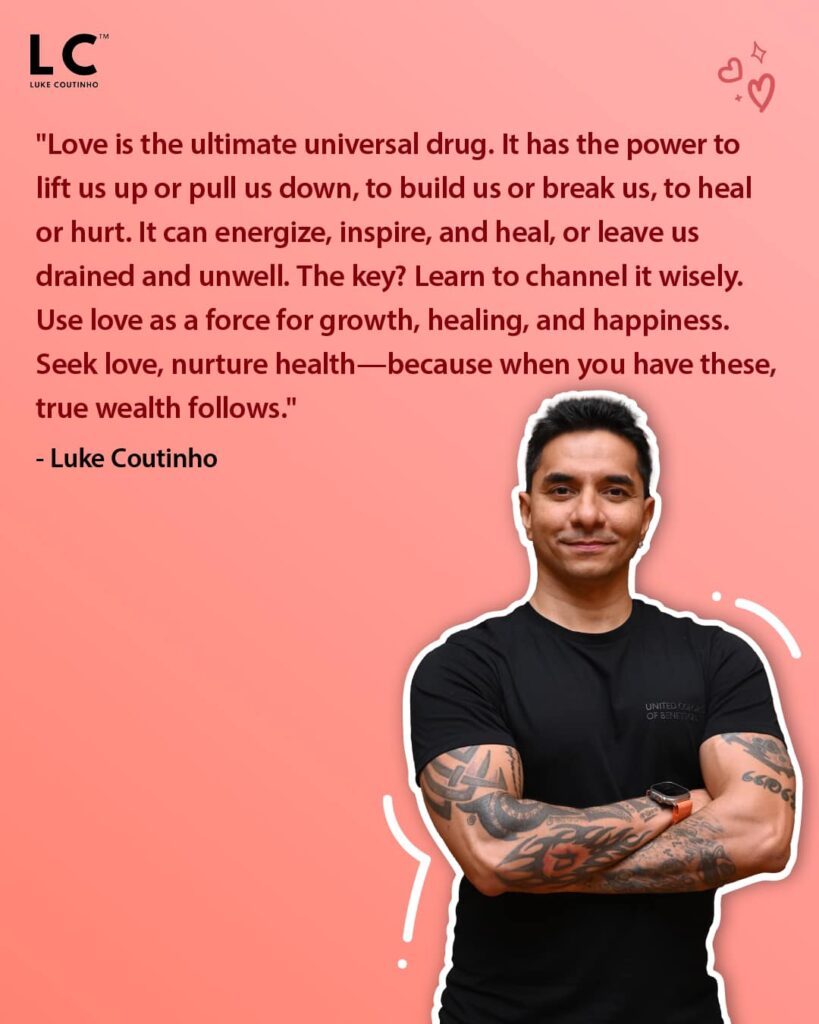
5-Step Love-Based Protocol for Emotional Well-Being
These are simple daily actions I’ve seen transform people’s healing journeys:
Morning Gratitude Ritual
Start your day by listing 3 things you’re grateful for.
- This small act triggers the release of serotonin and dopamine—your brain’s natural healing chemicals.
Positive Self-Talk & Affirmations
Like Louise Hay always said: “Words create your world.”
- Say it with feeling: “I am healthy. I am loved. I am safe.”
Nurture Healthy Relationships
Connection heals.
Oxytocin—the love hormone—flows through hugs, eye contact, kind words, and simply being present with others.
Mindfulness & Loving-Kindness Meditation
Even 10 minutes of loving-kindness meditation (Mettā meditation) can reduce inflammation and strengthen your vagus nerve—a vital marker of emotional resilience and physical health.
Know more about this, here:
https://www.lukecoutinho.com/blogs/emotional-wellness/5-minute-ancient-metta-meditation-can-transform-your-life/
Expression is Healing
This isn’t about ranting on social media or oversharing.
This is about releasing the weight you were never meant to carry.
- Sometimes it’s through talking to a therapist.
- Sometimes it’s journaling.
- Sometimes it’s music, painting, movement, or breathwork.
- Sometimes it’s a safe friend who listens with zero judgment.
- Sometimes it’s just you and God, no filters.
This is how you move stuck energy. This is how you start to heal—not just physically, but deeply, completely.
I’ve seen 92-year-old men cry for the first time and find peace. I’ve watched patients on the verge of giving up suddenly light up again—because they finally let go of something they’d held for decades.
Expression over suppression—always.
Holistic Pillars Applied to Emotional Healing
| Pillar | Application for Emotional Well-Being |
| Nutrition | Eat for mood—omega-3s, magnesium, B12, and gut-friendly foods. |
| Movement | Exercise daily—movement boosts endorphins and calms the mind. |
| Sleep | Deep rest resets emotional balance and repairs the nervous system |
| Emotional Well-being | Gratitude, breathwork, journaling, and energy healing practices. |
| Connection with the Spirit | Connect to something bigger—love, purpose, nature, God, divinity. |
| Conscious Breathing | Use your breath to shift out of stress and into presence. It’s your inner switch. |
How to Cultivate Love Daily—Even If You’re Not in a Relationship
You don’t need a partner to feel love. You just need to choose love—intentionally, every single day.
- Practice self-love: Be kind to yourself. Speak gently. You are worthy.
- Surround yourself with loving people: Energy is contagious. Choose the company of those who uplift you.
- Visualize love: Close your eyes and imagine being seen, held, valued. Your subconscious doesn’t know the difference—it responds to the emotion.
- Meditate on love: With each breath, send love to your body, your organs, your wounds… and even to those who hurt you.
- Heal unresolved hurt: Don’t carry heartbreak, betrayal, or resentment. These emotions become toxic if held too long. Let it go—not for them, but for you.
The Last Word
Here’s the bottom line—healing isn’t just about treatments or medications. It’s about understanding the deep connection between your mind, body, and emotions.
Your body is always listening. To your thoughts. Your words. Your emotions.
So whether you’re battling a disease, chronic stress, or simply feeling stuck in life—start here:
Heal your emotions. Tune into love. Change your story.
Because no matter what your genes say, your beliefs and inner environment get the final word.
Frequently Asked Questions
How do emotions affect the body physically?
Emotions trigger chemical reactions that affect every cell. Chronic stress, anger, or sadness can increase inflammation, disrupt digestion, weaken immunity, and imbalance hormones. Understanding how emotions affect the body is key to healing—your thoughts and feelings directly shape your internal environment and your body’s ability to thrive.
Can emotional healing reverse chronic illness?
Yes, many chronic illnesses improve when emotional baggage is released. Practices like breathwork, forgiveness, and gratitude activate the mind body connection for healing. They lower inflammation, improve immunity, and normalize sugar levels by working on emotional well-being, mindset, and nervous system regulation.
What is the role of epigenetics in healing?
Epigenetics shows that your DNA is not your destiny. Your environment, beliefs, and emotions send signals that switch genes on or off. The science of epigenetics and emotions proves that changing your perception and reducing stress can actually alter gene expression and activate your body’s healing potential.
How does falling in love improve health?
Dr. Bruce Lipton’s ‘Honeymoon Effect’ explains that love floods your body with healing chemistry—dopamine, oxytocin, and serotonin. You glow with energy, better immunity, and balanced hormones. This is another example of how emotions affect the body, showing how positive emotional states create cellular-level transformation.
Looking for holistic and integrative guidance on emotional well-being and mental health?
We help you find a way.
Set up a one-on-one consultation with our integrative team to optimize your lifestyle goals.
Reach out to us at 1800 102 0253 or write to us at [email protected].