No products in the cart.
Have you ever woken up in the morning, taken that very first step out of bed, and felt a sharp, stabbing pain shoot through your heel?
Or after sitting for a while, you stand up, and suddenly it feels almost impossible to walk across the room. That kind of heel and foot pain isn’t just frustrating; it can be a sign of plantar fasciitis.
Our feet are extraordinary structures, designed to absorb shock, support our weight, and propel us forward with every step. The plantar fascia, a strong, fibrous band of tissue running from the heel bone to the toes, acts like the body’s natural shock absorber. But when it becomes inflamed, the pain can be intense. Plantar fasciitis is one of the most common causes of persistent heel pain, affecting nearly 10% of the population at some point in their lives.
What makes this condition particularly challenging is not just the discomfort under the heel, but the way it silently alters posture, gait, and even spinal alignment. A neglected fascia can create a chain reaction of stress on the ankles, knees, hips, and lower back.
This isn’t about quick fixes or miracle cures. It’s about awareness, small daily practices, and the right lifestyle adjustments that support your fascia and, in turn, your overall mobility.
The good news?
Relief is possible, and it often begins with the simplest steps.
What is Plantar Fasciitis?
Now, in medical terms, whenever you hear a word ending with -itis, it points to inflammation. So, when we say plantar fasciitis, we’re simply talking about inflammation of this band of tissue. Think of the plantar fascia like a tightly strung elastic band.
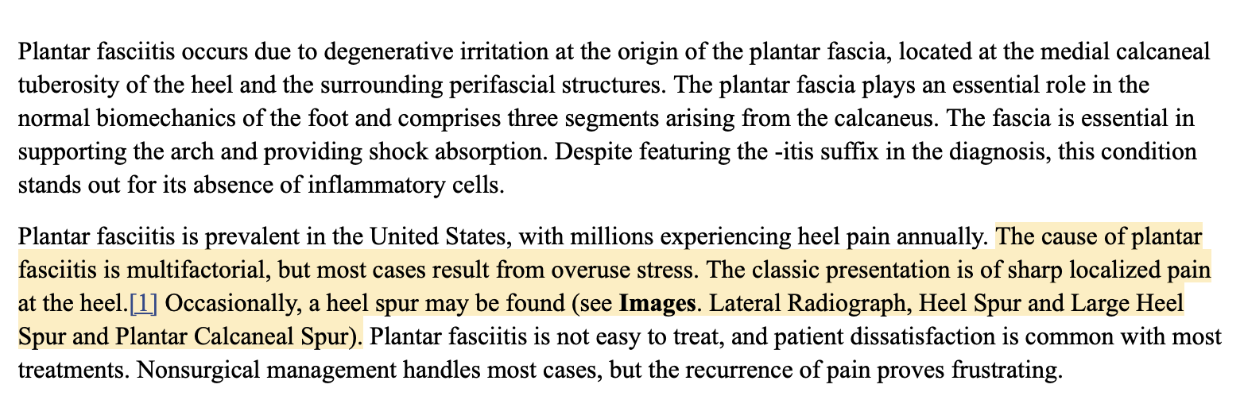
Source: Buchanan BK, Sina RE, Kushner D. Plantar Fasciitis. [Updated 2024 Jan 7]. In: StatPearls [Internet]. Treasure Island (FL): StatPearls Publishing; 2025 Jan-. Available from: https://www.ncbi.nlm.nih.gov/books/NBK431073/
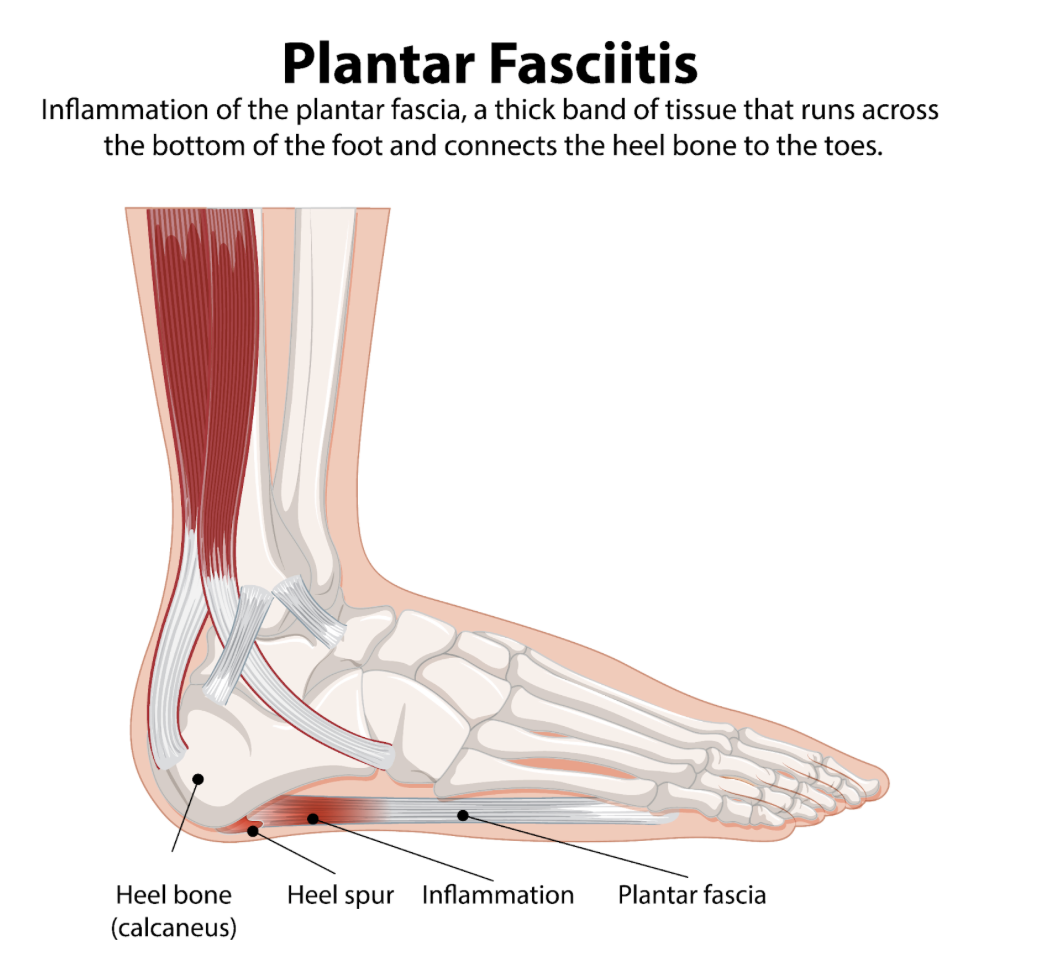
Image Credits: Freepik
What’s fascinating is how much science has uncovered about the role of the fascia. A review in The Journal of Anatomy (Stecco et al., 2013) emphasizes that fascia is not just passive tissue, it’s highly innervated, meaning it’s packed with nerve endings that make it sensitive to stress and strain. This is why pain in the plantar fascia can feel so disproportionate to its size, and why ignoring it can quickly interfere with walking and mobility.
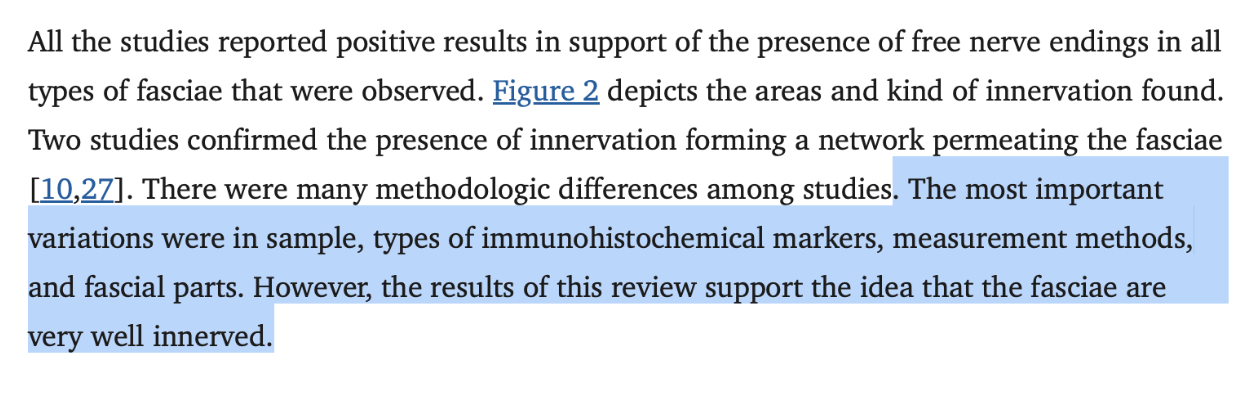
Source: Suarez-Rodriguez, V., Fede, C., Pirri, C., Petrelli, L., Loro-Ferrer, J. F., Rodriguez-Ruiz, D., De Caro, R., & Stecco, C. (2022). Fascial Innervation: A Systematic Review of the Literature. International journal of molecular sciences, 23(10), 5674. https://doi.org/10.3390/ijms23105674
Another clinical review confirms that plantar fasciitis remains one of the leading causes of heel and foot pain, particularly in adults between 40 and 60 years, though athletes and younger individuals are not exempt.
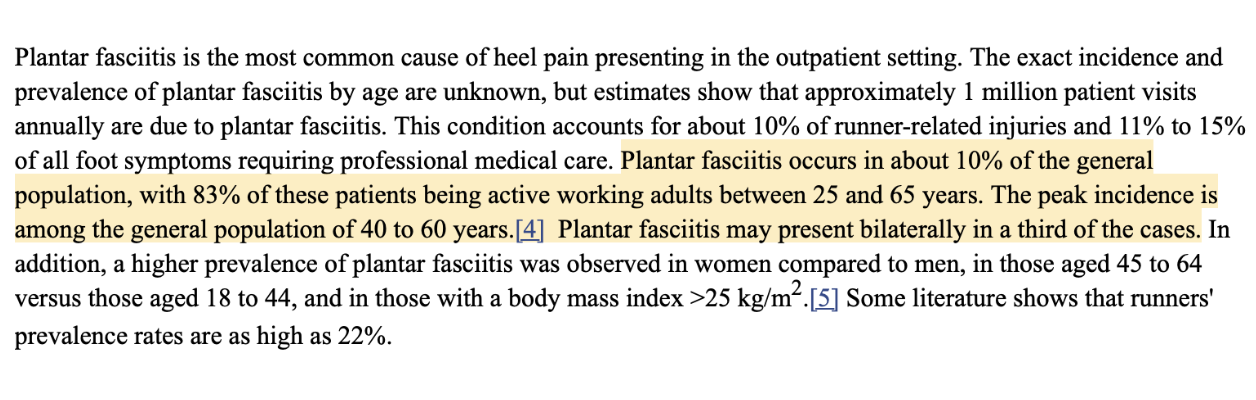
Source: Source: Buchanan BK, Sina RE, Kushner D. Plantar Fasciitis. [Updated 2024 Jan 7]. In: StatPearls [Internet]. Treasure Island (FL): StatPearls Publishing; 2025 Jan-. Available from: https://www.ncbi.nlm.nih.gov/books/NBK431073/
Plantar Fasciitis vs Heel Pain: What’s the Difference?
Heel pain is a broad term, it simply means discomfort anywhere around the heel. It can come from many reasons: standing too long, an injury, poor footwear, or even nerve irritation.
Plantar fasciitis, on the other hand, is one of the most common causes of heel pain.
| Parameters | Heel Pain | Plantar Fasciitis |
| Causes | Injury, stress fractures, Achilles tendon issues, arthritis, or plantar fasciitis. | Overuse, poor footwear, tight calf muscles, prolonged standing, or repetitive impact. |
| Location of Pain | Can be anywhere around the heel: back, sides, or bottom. | Typically at the bottom of the heel, near the arch. |
| Nature of Pain | Dull, sharp, or intermittent; may vary with activity. | Sharp, stabbing pain, especially with the first steps in the morning or after a long rest. |
| Pattern | Pain may come and go depending on activity levels. | Often improves slightly with movement but can worsen after prolonged standing or walking. |
| Specificity | Broad, not tied to a single condition. | Very specific: plantar fascia inflammation is the primary cause. |
In short: All plantar fasciitis is heel pain, but not all heel pain is plantar fasciitis.
Plantar Fasciitis Symptoms
So how do you know if it’s plantar fasciitis and not just an occasional heel ache?
Here are the most common plantar fasciitis symptoms observed in clinical practice and research:
- Stabbing pain in the heel with the first steps in the morning: The plantar fascia shortens slightly while you sleep. Those first movements stretch the inflamed tissue, producing sharp discomfort.
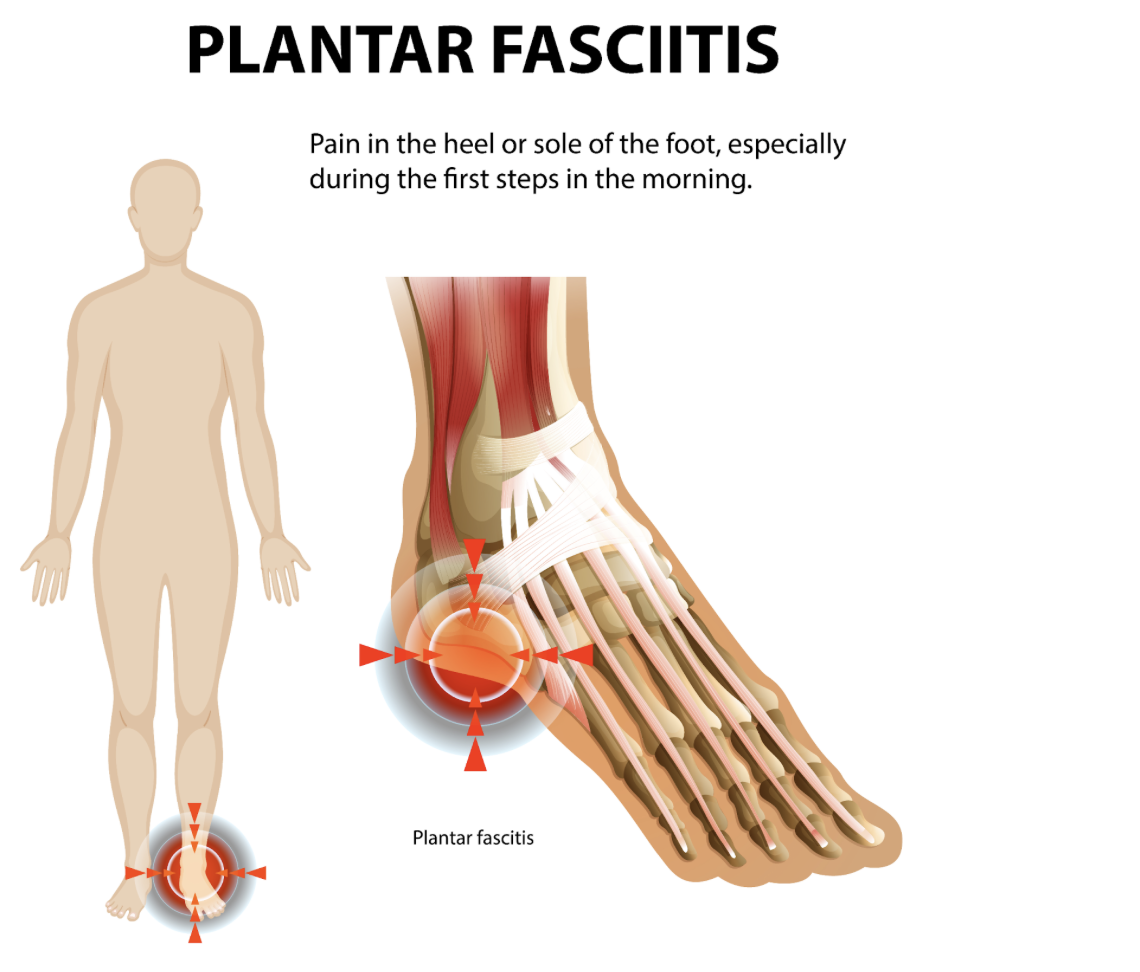
Image Credits: Freepik
- Pain that worsens after activity, not during it: Walking, running, or standing may feel manageable, but once you stop, the fascia reacts, and the heel pain intensifies. This post-activity flare is a classic sign.
- Stiffness in the sole of the foot: Many people find it difficult to walk barefoot on hard surfaces like tile or concrete because the fascia feels rigid and sore after periods of sitting or standing still.
- Localized tenderness at the heel bone: Pressing on the inner side of the heel, where the fascia attaches, often reproduces the pain sharply. This focal tenderness is one of the key clinical markers.
- Pain that spreads with compensation: As the fascia struggles to absorb impact, it changes the way you walk, which can eventually cause discomfort in the ankles, knees, or even lower back.
Causes vs. Risk Factors of Plantar Fasciitis
When it comes to plantar fasciitis, one of the most important things to understand is that not everyone develops it for the same reason.
Some people wake up with heel and foot pain almost overnight after a sudden strain, while for others, it builds up quietly over months or even years. This is why we need to look at it from two angles: the direct causes that trigger pain and the risk factors that make you more susceptible in the first place.
Causes: The Direct Triggers
The causes of plantar fasciitis are usually mechanical in nature, anything that repeatedly stresses or overloads the plantar fascia. Sudden changes in physical activity are among the leading triggers. This could mean:
- A rapid increase in exercise intensity, for example, running longer distances without proper conditioning.
- Prolonged standing or walking on hard surfaces, common in professions like teaching, retail, or healthcare.
- Running or training on concrete, asphalt, or uneven terrain, which places abnormal pressure on the fascia.
- Improper or unsupportive footwear that lacks cushioning or arch support, making the fascia absorb more impact than it should.
- Excess body weight, which naturally increases the load on the heel and plantar fascia during every step.
Each of these factors acts like a repeated tug on the fascia, creating micro-tears that eventually lead to inflammation and pain.
Risk Factors: Why Some People Are More Vulnerable
Risk factors, on the other hand, don’t directly cause plantar fasciitis, but they increase the likelihood that the fascia will get irritated when placed under stress. Structural and lifestyle-related factors play a major role here, such as:
- Flat feet or very high arches, both extremes alter how weight is distributed across the foot, overloading the fascia.
- Tight calf muscles or Achilles tendon, restricted flexibility forces the plantar fascia to absorb more strain during movement.
- Sedentary lifestyle, a lack of regular stretching and strengthening leaves the fascia less resilient to sudden stress.
- Age (30–60 years), studies show plantar fasciitis peaks in this age group, partly due to natural wear and reduced tissue elasticity.
- Occupational demands, professions that involve standing for hours, such as nurses, athletes, or factory workers, are significantly more prone.
The Mind-Body Angle in Heel and Foot Pain
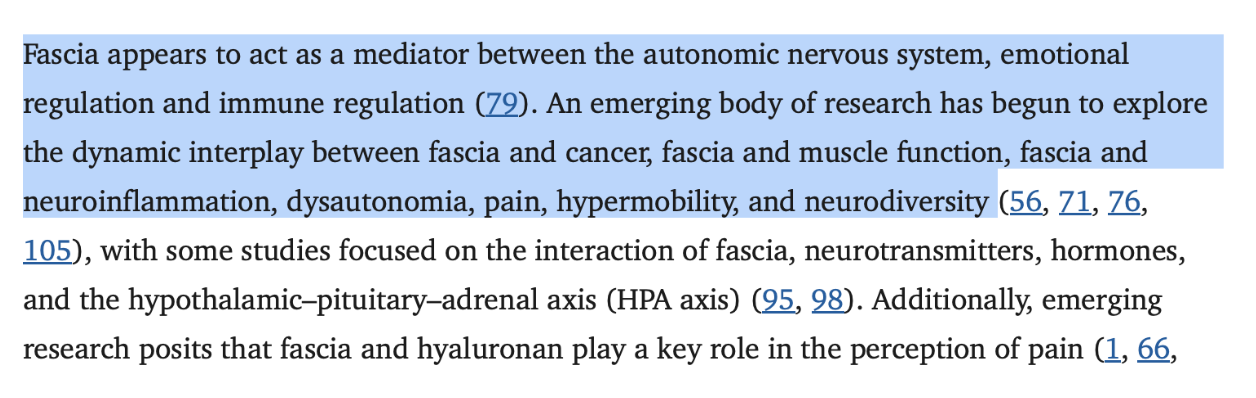
When we think of heel and foot pain, we often limit our focus to biomechanics, arches, fascia, footwear, or posture. While all of these matter, what many forget is that the body does not operate in isolation. The fascia, a connective tissue that runs like a web through the body, is highly sensitive not just to physical strain but also to emotional tension and stress.
Fascia contains sensory nerve endings that respond to both mechanical and emotional stressors, creating stiffness and discomfort when the nervous system is under load.
This is why plantar fasciitis symptoms sometimes flare up during periods of high stress, even when there has been no significant change in physical activity. A study in the Frontiers in Neurology highlighted how chronic stress can alter pain perception and increase muscular tension, which directly impacts fascia health. Simply put, the state of your mind can determine the resilience of your feet.
Source: Slater, A. M., Barclay, S. J., Granfar, R. M. S., & Pratt, R. L. (2024). Fascia as a regulatory system in health and disease. Frontiers in neurology, 15, 1458385. https://doi.org/10.3389/fneur.2024.1458385
Why Ignoring Heel Pain Can Backfire
It’s tempting to dismiss heel and foot pain as a minor annoyance, blaming it on a long day, uncomfortable shoes, or simply ‘getting older.’ Your feet support your body with every step, and when they’re in pain, the impact isn’t limited to just one spot.
Persistent plantar fasciitis symptoms don’t stay confined to the heel. Tight or inflamed fascia can reduce ankle and foot mobility, forcing your body to compensate in subtle ways. This altered gait can place extra strain on your knees, hips, and lower back. Individuals with chronic plantar fascia issues often develop biomechanical adaptations that increase the risk of secondary musculoskeletal injuries, such as knee pain, hip stiffness, lower back strain, shin splints, and Achilles tendon stress..
Ignoring heel pain can also affect overall function and quality of life. Chronic discomfort can reduce physical activity, disrupt sleep, and elevate stress levels, creating a cycle that amplifies pain and stiffness. What starts as a sharp morning twinge or discomfort after standing can gradually compromise posture, alignment, and even your confidence in movement.
In short, heel pain is rarely an isolated issue. Addressing it early, protects not only your feet but your entire musculoskeletal system and overall well-being.
At-Home Remedies and Relief Strategies
If you are struggling with persistent heel and foot pain, you’ll be glad to know that simple home remedies to cure plantar fasciitis can often bring meaningful relief.
The key lies in combining gentle stretches, targeted heel exercises for heel pain, and lifestyle adjustments that support your fascia’s natural healing.
Research shows that conservative self-care approaches, when practiced consistently, can be just as effective as medical interventions for many individuals with plantar fasciitis symptoms.

Source: Buchanan BK, Sina RE, Kushner D. Plantar Fasciitis. [Updated 2024 Jan 7]. In: StatPearls [Internet]. Treasure Island (FL): StatPearls Publishing; 2025 Jan-. Available from: https://www.ncbi.nlm.nih.gov/books/NBK431073/
Massage and Rolling Techniques
One of the simplest yet highly effective tools for recovery is self-massage of the plantar fascia. Controlled pressure helps break down fascial tightness, enhances blood flow, and reduces stiffness.
- Tennis Ball Roll: Place a tennis ball under your arch and roll it gently for 2–3 minutes. This creates a form of myofascial release. Self-massage techniques can reduce morning pain and improve functional mobility.
- Glass Bottle Massage: Another technique is rolling your foot over a chilled glass bottle. The combination of cold therapy and massage not only soothes inflammation but also provides pain modulation similar to cryotherapy.
Disclaimer: Always be careful while performing this exercise, avoid pressing too hard or using a fragile bottle. Stop immediately if you feel sharp pain, and consult a healthcare professional if symptoms persist.
Both these approaches are safe and inexpensive, making them excellent home remedies for heel pain that can be done daily.
Stretches and Heel Exercises for Heel Pain
Targeted stretching remains one of the most evidence-backed interventions for plantar fasciitis. By lengthening the fascia and surrounding musculature, you restore elasticity and reduce microtrauma caused by repetitive strain.
- Towel stretch: Sit with your leg extended, loop a towel around your foot, and gently pull it towards you.
- Calf stretch: Stand facing a wall, step one foot back, and stretch your calf while keeping the heel grounded. Tight calf muscles are a major risk factor for heel pain, and stretching them helps reduce plantar loading.
- Plantar fascia stretch: Cross your affected leg over the other, grasp your toes, and pull them back until you feel a stretch along your arch.
- Toe curls and heel raises: Strengthening routines such as curling a towel with your toes or performing heel raises (10–20 repetitions daily) improve arch stability, reducing recurrence risk.
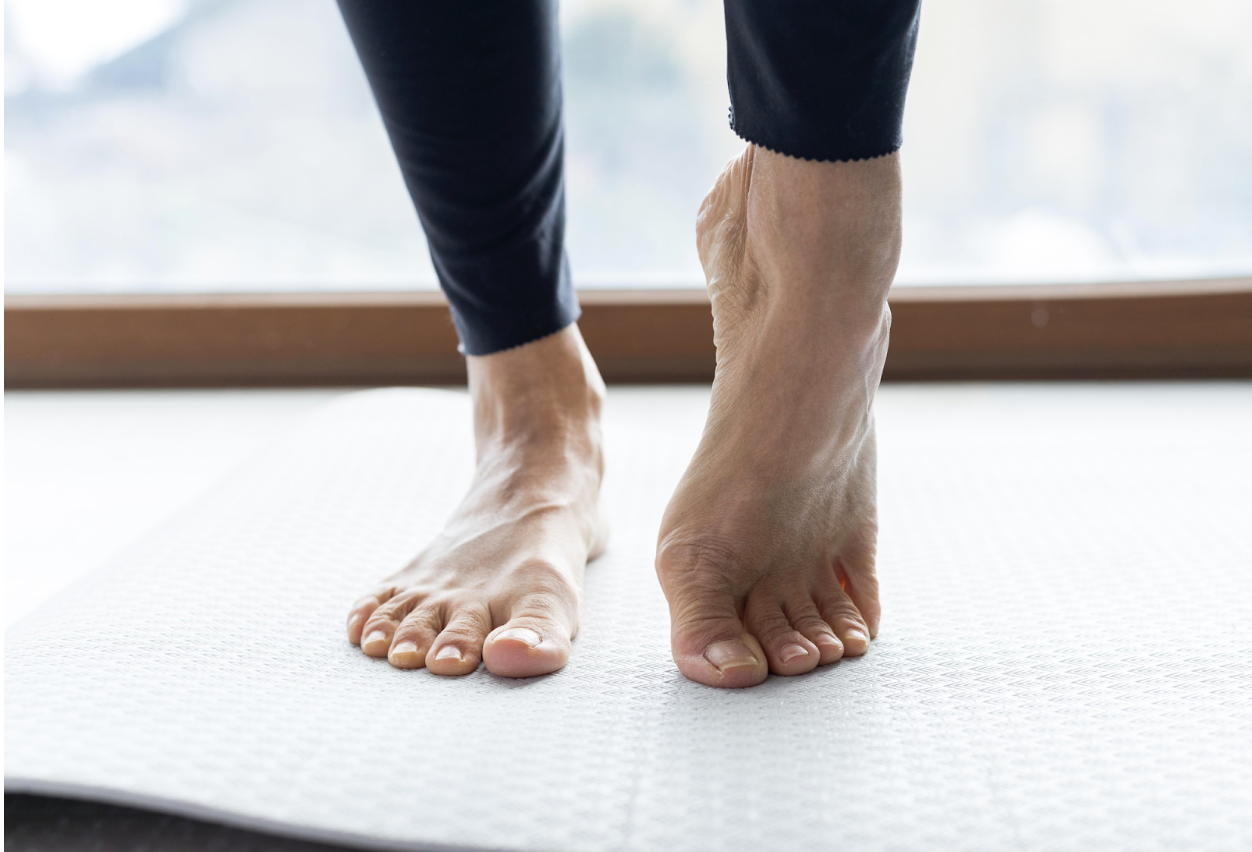
Image Credits: Freepik
Asanas for Heel and Foot Pain Relief
Yoga can be a powerful ally, not only for flexibility but also for rebalancing the fascia through mindful movement. Ancient practices align beautifully with modern biomechanics here.
- Malasana (Deep Squat or Garland Pose): Opens the soles and improves ankle and foot circulation.
- Adho Mukha Svanasana (Downward Dog): Lengthens the Achilles tendon and plantar fascia simultaneously.
- Tadasana (Mountain Pose) with heel raises: Builds foot and ankle strength while engaging fascia dynamically.
- Baddha Konasana (Bound Angle Pose): Opens and relaxes the intrinsic muscles of the feet.
- Supine Towel Stretch: Deeply releases tension from the fascia, ideal before bedtime.
Yoga-based stretching acts as a complementary therapy for musculoskeletal pain, improving both mobility and quality of life.
Disclaimer: Always make an informed decision before trying any asanas, especially if you are on certain medications or have a medical condition or any physical issues, keep your doctor or health care practitioner in the loop before trying anything new. None of what is mentioned in this blog can be a replacement for your doctor’s advice.
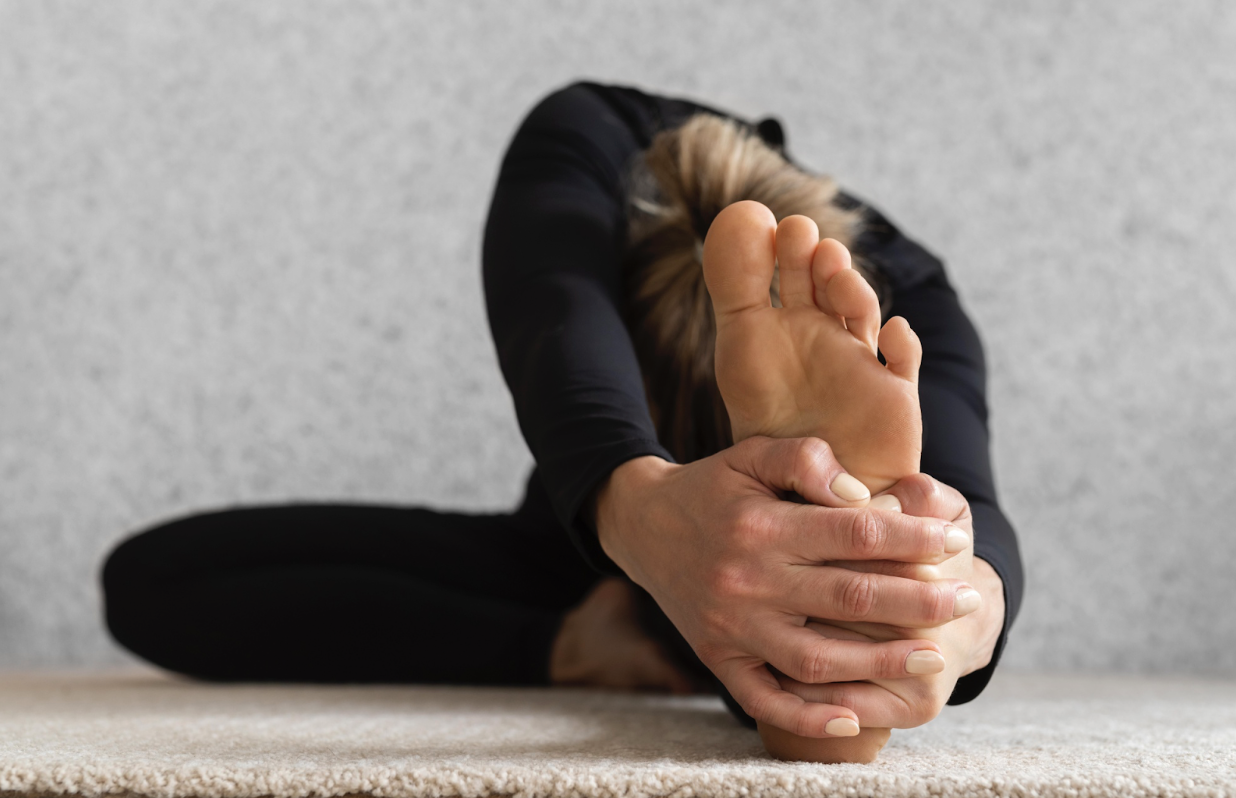
Image Credits: Freepik
Lifestyle Tips for Lasting Relief
Beyond exercises and stretches, lifestyle modifications play a crucial role in preventing recurrences of plantar fasciitis symptoms:
- Choose proper footwear: Well-cushioned shoes with arch support reduce undue strain. Avoid high heels and unsupportive footwear until the pain subsides. Poor footwear is directly associated with plantar fasciitis incidence.
- Use soft insoles or padding: Orthotic inserts help redistribute pressure and reduce heel loading.
- Maintain a healthy body weight: Excess weight increases plantar fascia strain with every step. There is a strong association between obesity and persistent heel pain.
By consistently applying these strategies, you are not just relieving discomfort but also building resilience in your fascia.
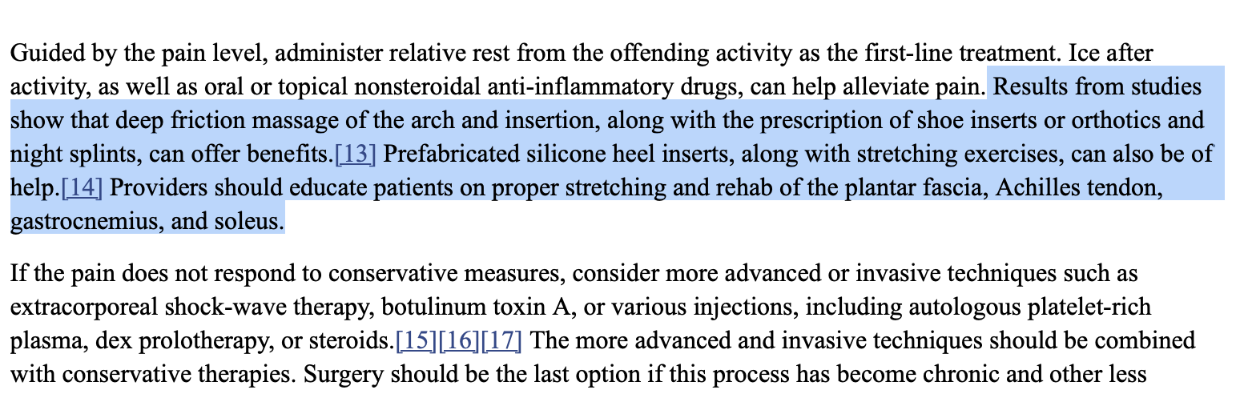
Source: Buchanan BK, Sina RE, Kushner D. Plantar Fasciitis. [Updated 2024 Jan 7]. In: StatPearls [Internet]. Treasure Island (FL): StatPearls Publishing; 2025 Jan-. Available from: https://www.ncbi.nlm.nih.gov/books/NBK431073/
Daily Routine Plan for Heel and Foot Pain
Caring for your feet doesn’t have to be complicated, but consistency is key.
A few mindful minutes throughout the day can significantly reduce plantar fasciitis symptoms and support overall foot health.
Try these:
| Time of Day | Routine / Heel Exercises for Heel Pain |
| Morning | • Towel stretch (20–30 sec) • Toe curls (10–15 reps) • Tennis ball roll (1–2 min) • Tadasana with heel raises |
| Midday | • Calf wall stretch (2–3 times) • Ankle circles • Adho Mukha Svanasana (Downward Dog) • Frozen water bottle roll (1 min) |
| Evening | • Warm water Epsom salt soak (10 min) • Glass bottle massage (2–3 min) • Malasana (Garland Pose) • Baddha Konasana (Bound Angle Pose) |
| Lifestyle Tips (All Day) | • Supportive footwear, cushioned insoles • Avoid barefoot walking on hard floors • Maintain healthy weight • 7–8 hrs restful sleep |
Disclaimer: The home remedies and lifestyle suggestions shared here are meant for general wellness support and should not replace medical advice. Heel and foot pain can have different causes, and what works for one person may not work for another. If your pain persists, worsens, or interferes with daily activities, please seek guidance from a qualified healthcare professional. Always listen to your body and use these practices as gentle support, not a substitute for professional care.
When to Seek a Doctor for Heel and Foot Pain
While most cases of heel and foot pain improve with stretches, lifestyle changes, and home remedies for heel pain, there are situations where medical care becomes essential.
Watch out for these signs:
- Persistent pain beyond 2–3 weeks: If discomfort continues despite trying home remedies to cure plantar fasciitis or practicing heel exercises for heel pain, it may signal an underlying condition such as a stress fracture, arthritis, or nerve entrapment.
- Pain interfering with daily activities: Difficulty walking, standing, or even taking the first steps in the morning indicates more than mild plantar fasciitis symptoms. Early medical evaluation helps confirm the cause and prevents worsening.
- Sudden pain after an injury: Heel pain with swelling, redness, or warmth may point to acute inflammation, tendon rupture, or infection, all of which require timely treatment.
- Numbness or tingling sensations: Radiating pain or tingling in the heel and foot may suggest nerve involvement, which rarely improves with home remedies for heel pain alone. A specialist can help identify and address the root cause.
- Unusual swelling or changes in heel structure: Visible deformities, severe stiffness, or swelling that does not subside may indicate structural issues in the fascia or bone that need a professional approach.

Source: Buchanan BK, Sina RE, Kushner D. Plantar Fasciitis. [Updated 2024 Jan 7]. In: StatPearls [Internet]. Treasure Island (FL): StatPearls Publishing; 2025 Jan-. Available from: https://www.ncbi.nlm.nih.gov/books/NBK431073/
Strong Foundations, Stronger You
At the end of the day, your feet carry the weight of your entire being, step after step, year after year. When you choose to care for them, you’re not just easing discomfort, you’re honoring the foundation that allows you to stand, move, and live fully.
A few mindful minutes each day can transform heel and foot pain from a limitation into a reminder: your body listens to how you treat it. Nurture it with awareness, and it will carry you with strength and grace.
If this resonated with you, watch
https://www.instagram.com/reel/DEl54tgp9UI/?hl=en
Disclaimer: This blog is intended for educational and informational purposes only. It is NOT a substitute for professional medical advice, diagnosis, or treatment. Heel and foot pain can arise from multiple underlying causes, and every individual’s condition is unique. Always consult a qualified healthcare provider before starting any new exercise, remedy, or lifestyle change, especially if you are experiencing persistent pain, swelling, or difficulty in daily movement.
If you’re dealing with heel and foot pain, reduced mobility, or simply want to understand your body better, you don’t have to navigate it alone.
Our Wellness Programs offer personalized guidance, mindful strategies, and practical tools to help you care for your body, improve mobility, and reduce discomfort.
Reach out to us at 18001020253 or write to [email protected], we’re here to support you every step of the way.