No products in the cart.
Every woman grows up knowing one thing: she will bleed every month.
We call it periods.
Medically, it’s the menstrual cycle.
Image Credits: Freepik
But beyond the bleeding, very few people truly understand what’s happening behind the scenes.
Hormones are rising and falling. The brain signals the ovaries. The uterus builds and sheds. Energy shifts. Mood fluctuates. Digestion changes. Sleep patterns alter.
And yet, most women are simply told: “It’s normal.”
Pain? Normal.
Mood swings? Normal.
Fatigue, cravings, heavy flow? Normal.
But here’s the truth: Normal does not mean optimal.
Your menstrual cycle is more than a monthly inconvenience. It is a built-in health report card. Many common period symptoms and even subtle hormonal imbalance symptoms in women are signals from the body, not problems to silence.
At Team Luke, we believe in moving from symptom suppression to root-cause healing. Here, we’ll decode the menstrual cycle, simplify its phases, and help you recognize patterns, so you stop fearing your period and start understanding it.
The Menstrual Cycle: Your Body’s Monthly Intelligence System
When we think of the menstrual cycle, most of us think of bleeding.
But biologically, bleeding is not the main event.
Ovulation is.
The menstrual cycle is a highly coordinated communication system between your brain and your ovaries. On average, a healthy cycle lasts between 21 and 35 days, though this can vary slightly from woman to woman. What matters more than the exact number is regularity and symptom patterns.
At the top of this system is the brain. The hypothalamus releases signals to the pituitary gland, which then produces two key hormones:
- FSH (Follicle-Stimulating Hormone)
- LH (Luteinizing Hormone)
FSH stimulates the ovaries to mature follicles (each containing an egg).
- As follicles grow, they produce estrogen (primarily estradiol), which thickens the uterine lining and supports energy, mood, and cognitive function.
- Mid-cycle, a surge in LH triggers ovulation, the release of an egg. This is the true biological purpose of the menstrual cycle.
- After ovulation, the body produces progesterone, a calming, stabilizing hormone that prepares the uterus for possible pregnancy.
- If pregnancy does not occur, estrogen and progesterone drop, and the uterine lining sheds.
- That shedding is what we call a period.
So the period is actually the end of a cycle, not the beginning of one.
Understanding this shifts everything.
When ovulation doesn’t occur consistently, it can lead to irregular periods, exaggerated PMS (Premenstrual Syndrome) symptoms, heavy bleeding, or other period symptoms. Many hormonal imbalance symptoms in women begin with disrupted ovulation, often driven by stress, poor sleep, inflammation, blood sugar instability, or nutrient deficiencies.
The 4 Menstrual Cycle Phases (Explained Simply)
Now that we understand that ovulation is the central event of the menstrual cycle, let’s break down the four menstrual cycle phases clearly and scientifically.
A typical menstrual cycle lasts 21–35 days, regulated by the Hypothalamic–Pituitary–Ovarian (HPO) axis:
- The hypothalamus releases Gonadotropin-Releasing Hormone (GnRH).
- The pituitary gland releases FSH (Follicle-Stimulating Hormone) and LH (Luteinizing Hormone).
- The ovaries produce estrogen and progesterone.
These hormonal shifts define each phase.
Phase 1: Menstrual Phase
Timeline: Day 1–5 (approximately)
Begins on the first day of bleeding
What happens hormonally?
- Estrogen levels decline.
- Progesterone levels decline.
- The corpus luteum (formed after ovulation) regresses.
- The drop in hormones triggers shedding of the endometrial lining (uterine lining).
What happens physically?
- The endometrium detaches and exits through the cervix and vagina.
- Prostaglandins (inflammatory mediators) increase to stimulate uterine contractions.
- These contractions help expel tissue but may also contribute to period symptoms like cramps.
Bleeding typically lasts 3–7 days. Excessively heavy flow may indicate underlying hormonal imbalance or structural causes. This phase represents the biological reset of the cycle.
Phase 2: Follicular Phase
Timeline: Day 1 until ovulation (overlaps with menstruation initially)
This phase begins on Day 1 but continues beyond bleeding.
What happens hormonally?
- The hypothalamus releases GnRH.
- The pituitary releases FSH.
- FSH stimulates ovarian follicles to mature.
- Developing follicles produce increasing amounts of estrogen (primarily estradiol).
As estrogen rises:
- The endometrium begins rebuilding (proliferative phase).
- The uterine lining thickens in preparation for possible implantation.
- Cervical mucus begins changing gradually.
Several follicles start developing, but usually one becomes dominant. This phase is variable in length and largely determines total cycle length.
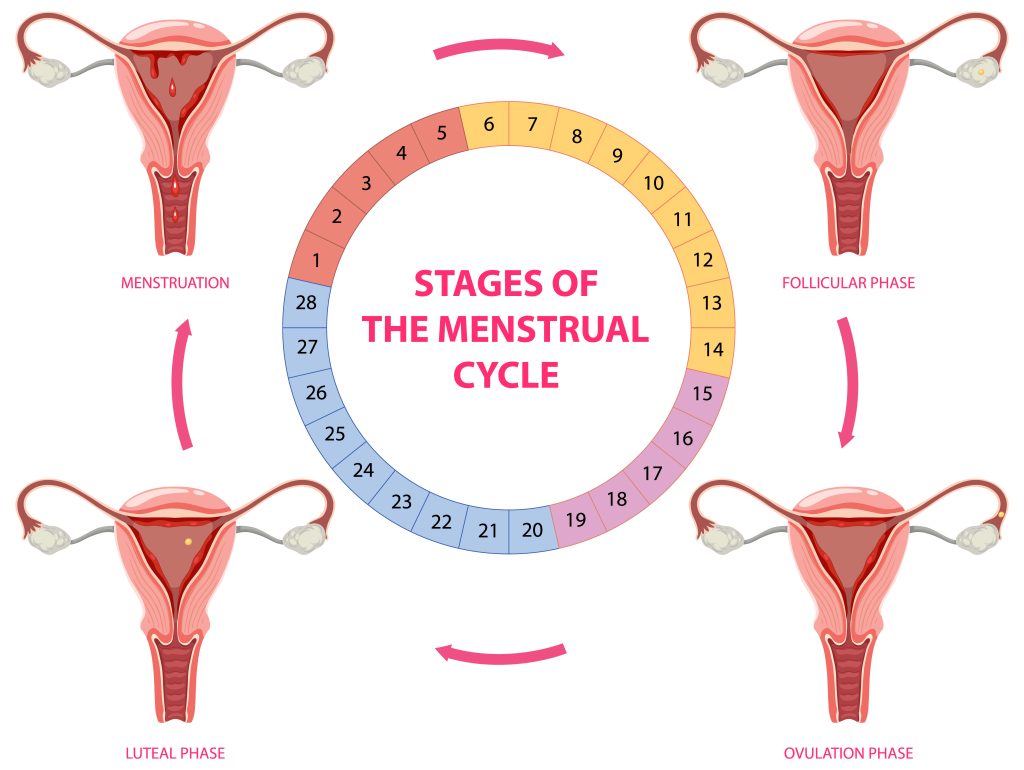
Image Credits: Freepik
Phase 3: Ovulation
Timeline: Mid-cycle (around Day 14 in a 28-day cycle, but varies)**
Ovulation is the release of a mature egg from the ovary.
What happens hormonally?
- Estrogen reaches a threshold peak.
- This triggers a surge in LH.
- The LH surge causes the dominant follicle to rupture.
- The egg is released into the fallopian tube.
- Ovulation usually occurs 24–36 hours after the LH surge begins.
What happens physically?
- The released egg survives for about 12–24 hours.
- Cervical mucus becomes clear, slippery, and stretchy to support sperm movement.
- Basal body temperature rises slightly after ovulation due to progesterone.
Ovulation is essential for progesterone production. Without ovulation, progesterone does not rise adequately, which can lead to irregular periods or exaggerated PMS symptoms.
Phase 4: Luteal Phase
Timeline: Ovulation until next period (typically 12–14 days)**
This phase is relatively fixed in length.
What happens hormonally?
- The ruptured follicle transforms into the corpus luteum.
- The corpus luteum produces progesterone.
- Estrogen is also produced in moderate amounts.
Progesterone:
- Stabilizes and maintains the uterine lining.
- Increases basal body temperature.
- Prepares the body for possible pregnancy.
If pregnancy does not occur:
- The corpus luteum degenerates.
- Progesterone and estrogen levels fall.
- This hormonal withdrawal triggers menstruation.
Why symptoms often appear here:
- The decline in progesterone and estrogen toward the end of this phase can contribute to PMS symptoms in some women, especially when underlying hormonal imbalance symptoms are present.
Understanding what happens in each phase helps distinguish between healthy variation and signs of deeper imbalance.
When Symptoms Are Not Just PMS
When you understand the physiology of the menstrual cycle, one thing becomes clear: hormonal shifts are normal.
But suffering is not.
Occasional discomfort before a period can happen. Mild changes in mood or energy can happen. However, persistent, worsening, or extreme symptoms deserve attention.
Too often, women are told that intense period symptoms are “just PMS.” Science tells us otherwise.
Let’s break this down clearly.
PMS vs PMDD: Not the Same Thing
PMS (Premenstrual Syndrome) refers to a cluster of physical and emotional symptoms that occur during the luteal phase and resolve after menstruation begins.
Common PMS symptoms include:
- Bloating
- Breast tenderness
- Irritability
- Mild mood swings
- Food cravings
- Headaches
However, PMDD (Premenstrual Dysphoric Disorder) is a more severe, clinically recognized condition (as defined in psychiatric and gynecological literature).
PMDD may involve:
- Severe depression
- Intense anxiety
- Rage or emotional outbursts
- Panic attacks
- Suicidal thoughts
- Marked functional impairment
The difference is in severity and impact on daily life. If mood symptoms interfere with work, relationships, or safety, it is not “just PMS.”
PCOS and Periods
Polycystic Ovary Syndrome (PCOS) is one of the most common endocrine disorders in women of reproductive age.
It directly affects PCOS and periods, often presenting as:
- Irregular periods
- Infrequent ovulation (oligo-ovulation)
- Absent periods (amenorrhea)
- Acne
- Weight gain, especially around the abdomen
- Excess facial or body hair (hirsutism)
- Hair thinning
- Difficulty conceiving
PCOS is often driven by insulin resistance, a metabolic issue.
- Elevated insulin stimulates excess androgen (male hormone) production from the ovaries, disrupting ovulation.
- This is why PCOS is not just a “reproductive issue.” It is frequently metabolic.
Chronic stress, poor sleep, inflammation, and blood sugar instability can worsen symptoms and contribute to irregular periods.
Endometriosis Symptoms
Severe pain during periods is often dismissed. It should not be.
Endometriosis occurs when tissue similar to the uterine lining grows outside the uterus, on the ovaries, fallopian tubes, pelvic lining, or even the bowel.
Common endometriosis symptoms include:
- Severe period cramps that worsen over time
- Pain before and during menstruation
- Painful intercourse
- Chronic pelvic pain
- Pain during bowel movements
- Digestive symptoms (bloating, nausea, constipation, diarrhea)
- Fatigue
- Infertility
The pain is often inflammatory and may not respond well to routine painkillers.
Pain that disrupts daily functioning, causes missed work or school, or requires emergency visits is not normal physiology.
Image Credits: Freepik
Heavy Menstrual Bleeding
Clinically known as menorrhagia, heavy menstrual bleeding is defined as:
- Bleeding lasting more than 7 days
- Soaking through pads or tampons every 1–2 hours
- Passing large blood clots
- Symptoms of anemia (fatigue, dizziness, shortness of breath)
Common causes of heavy menstrual bleeding include:
- Estrogen dominance (relative excess estrogen compared to progesterone)
- Uterine fibroids
- Adenomyosis
- Thyroid dysfunction
- Clotting disorders
- Chronic inflammation
- Hormonal imbalance
- Certain medications
Sometimes what is labeled as “normal heavy flow” is actually a hormonal red flag.
Severe Period Cramps: Beyond Prostaglandins
Mild cramps are often due to prostaglandins.
But severe period cramps causes may include:
- Endometriosis
- Adenomyosis
- Fibroids
- Pelvic inflammatory disease
- Excess inflammatory mediators
- Hormonal imbalance
If pain worsens progressively with each cycle, it requires evaluation.
The Bigger Picture
When symptoms like:
- Extreme PMS symptoms
- Persistent irregular periods
- Severe pain
- Heavy menstrual bleeding
- Debilitating fatigue
- Mood instability
continue month after month, they are not random.
They may indicate deeper hormonal imbalance symptoms in women, involving estrogen, progesterone, insulin, cortisol, thyroid hormones, or inflammatory pathways.
The Root Causes: Why Hormones Go Off Balance
Most hormonal imbalance symptoms in women don’t appear overnight; they build quietly over months and years.
Here are the most common drivers.
How Stress Affects the Menstrual Cycle
Chronic stress is one of the most underestimated disruptors of female hormones.
When you’re stressed, the body prioritizes survival. The adrenal glands release cortisol, the primary stress hormone. Persistent elevation of cortisol can:
- Suppress ovulation
- Reduce progesterone production
- Disrupt signals from the HPO axis
- Contribute to irregular periods
This is often why women under prolonged emotional, physical, or metabolic stress experience cycle delays, worsening PMS symptoms, or missed periods.
Understanding how stress affects menstrual cycle function is foundational because a body that feels unsafe will not prioritize reproduction.
Nutrition for Menstrual Health
Hormones are not just chemical messengers; they are influenced by what you eat daily.
Poor blood sugar regulation increases insulin levels, which can disrupt ovulation and worsen conditions like PCOS. Inadequate protein intake affects hormone synthesis. Micronutrient deficiencies can intensify period symptoms.
Key nutrients involved in nutrition for menstrual health include:
- Magnesium (supports muscle relaxation and mood stability)
- Vitamin B6 (pyridoxine) supports neurotransmitters
- Iron (especially in heavy menstrual bleeding)
- Zinc (supports ovulation and immune balance)
Gut health also plays a role in estrogen metabolism. The body must properly eliminate used estrogen. If digestion is sluggish or there is chronic constipation, estrogen can be reabsorbed, worsening PMS symptoms and bloating.
Sleep & Circadian Rhythm
Hormones follow a rhythm.
- Disrupted sleep affects the hypothalamus, alters cortisol patterns, and impacts insulin sensitivity.
- Melatonin (the sleep hormone) interacts with reproductive hormones.
- Chronic late nights, screen exposure, and poor sleep hygiene can gradually disrupt ovulation and progesterone production.
Movement & Exercise
Movement supports insulin sensitivity and metabolic health, but excess can backfire.
- Overtraining, especially chronic high-intensity interval training (HIIT) in already stressed women, can suppress ovulation.
- The body interprets excessive physical stress as a survival threat.
Balanced strength training and moderate movement support hormonal resilience.
Gut Health & Estrogen Recycling
Inside the gut lives a collection of bacteria known as the estrobolome, microbes involved in metabolizing estrogen.
- If gut diversity is poor or there is chronic inflammation, estrogen clearance may be impaired.
- This can contribute to bloating, heavy menstrual bleeding, and exaggerated PMS symptoms.
Even constipation can influence hormone balance.
When you connect the dots, you realize something powerful:
Hormones rarely fail on their own. They respond to the environment you create daily.
Symptom Pattern Mapping: What Your Cycle May Be Telling You
Now that we’ve discussed the root causes, let’s make this practical. Here’s a simplified pattern map based on what research shows about reproductive endocrinology:
| If You Experience | It May Indicate |
| Short cycles (less than 21 days) | Possible estrogen dominance, shortened luteal phase, low progesterone |
| Long cycles (more than 35 days) | Delayed or absent ovulation, common in PCOS and periods affected by insulin resistance |
| Irregular periods | Disrupted ovulation, stress impact, thyroid imbalance, or metabolic dysfunction |
| Severe PMS symptoms (intense mood swings, anxiety, bloating) | Progesterone deficiency, estrogen-progesterone imbalance, heightened stress response |
| Acne before periods | Insulin resistance, elevated androgens, blood sugar instability (common in PCOS and periods irregularity) |
| Painful periods | Elevated prostaglandins, inflammation, possible endometriosis symptoms if severe or progressive |
| Heavy menstrual bleeding | Estrogen dominance, fibroids, thyroid dysfunction, impaired estrogen detoxification |
| Spotting before periods | Low progesterone or luteal phase defect |
This is not for self-diagnosis; it’s for awareness. Always consult a qualified healthcare professional for proper evaluation, diagnosis, and personalized treatment.
Common Menstrual Cycle Myths (Debunked)
Many women grow up internalizing half-truths about their cycles. These menstrual cycle myths often lead to delayed diagnosis, unnecessary guilt, or silent suffering.
Let’s clear a few of them, compassionately and scientifically.
| Myth | What Science Actually Says |
| Painful periods are normal. | Mild discomfort can occur due to prostaglandins, but severe or worsening pain may signal inflammation, endometriosis symptoms, fibroids, or other pathology. Pain that disrupts daily life is not something to normalize. |
| PMS is just moodiness. | PMS symptoms involve measurable hormonal shifts affecting neurotransmitters like serotonin. Severe symptoms may reflect progesterone imbalance or even Premenstrual Dysphoric Disorder (PMDD). It is physiological, not “dramatic.” |
| You shouldn’t exercise during periods. | Moderate movement can improve circulation, reduce prostaglandins, and ease cramps. Exercise should be adjusted, not avoided, based on energy levels. |
| Cravings mean lack of willpower. | Hormonal changes in the luteal phase influence insulin sensitivity and serotonin, increasing appetite and carbohydrate cravings. This is biology, not weakness. |
| Irregular periods are harmless. | Persistent irregular periods often indicate ovulation disruption, stress impact, thyroid dysfunction, or metabolic conditions like PCOS. They are a signal, not a personality trait. |
| Hormonal birth control “fixes” hormones. | Birth control pills regulate bleeding patterns, but they do not correct underlying hormonal imbalance symptoms in women. They override natural ovulation rather than restore it. |
Because your body deserves understanding, not dismissal.
Image Credits: Freepik
A Lifestyle-First Approach to Hormone Balance
What can I actually do to support my hormones?
At Team Luke, we follow a lifestyle-first philosophy. The menstrual cycle is not an inconvenience; it is feedback from your body. When you respond to it thoughtfully, you support balance without immediately resorting to medication or suppression.
Our foundational approach prioritizes root causes over symptom masking:
| Lifestyle Focus | Why It Matters |
| Nutrition first | Adequate protein, balanced blood sugar, micronutrients (magnesium, B6, zinc, iron), and fiber support estrogen metabolism, ovulation, and overall hormonal health. “Food before pills” helps correct imbalances naturally. |
| Sleep & Circadian Rhythm | Proper sleep supports progesterone production, cortisol regulation, and melatonin-estrogen balance. “Sleep before supplements” ensures your hormones have a natural rhythm to follow. |
| Stress Management | Chronic stress elevates cortisol, suppresses ovulation, and worsens PMS symptoms. Mindfulness, meditation, breathwork, or restorative practices help restore the Hypothalamic–Pituitary–Ovarian axis. |
| Movement & Exercise | Strength training supports insulin sensitivity and metabolic health. Gentle or moderate cardio improves circulation and reduces inflammation. Avoid chronic overtraining, especially under high stress. |
| Gut Health | A healthy gut microbiome (estrobolome) supports estrogen clearance, reducing PMS, bloating, and heavy menstrual bleeding. Fermented foods, fiber, and hydration are key. |
| Personalized Care | Each cycle is unique. Observing your period symptoms, cycle length, and hormonal patterns helps tailor interventions rather than following generic advice. |
By addressing these areas first, many women have seen improvements in PMS symptoms, irregular periods, period cramps, heavy menstrual bleeding, and other hormonal imbalance symptoms in women, often without immediate reliance on medication.
For a detailed, step-by-step guide on how our foundational medicine approach works to restore hormone balance naturally, you must read this:
https://www.lukecoutinho.com/blogs/foundations-for-hormonal-balance/
The Last Word
Menstrual cycle is your 5th vital sign. It reveals what’s happening inside your body. It isn’t just a “monthly event,” it’s a monthly report card of your health and hormones.
Every shift in mood, energy, digestion, or sleep, every period symptom, is a signal. Some are subtle whispers, others are louder alerts. Ignoring them means missing what your body is trying to tell you.
Listen closely, respond wisely, and let your cycle guide you toward balance, energy, and true wellness.
Disclaimer: This blog is intended for educational and informational purposes only and should not be used as a substitute for professional medical advice, diagnosis, or treatment. Always seek the guidance of your qualified healthcare provider before making any changes to your medications or lifestyle.
Looking for holistic and foundational guidance for menstrual health or hormonal imbalance?
We help you find a way.
Set up a one-on-one consultation with our foundational team or explore our Hormonal Care Program to optimize your lifestyle goals.
Reach out to us at 1800 102 0253 or write to us at [email protected].