No products in the cart.
Perfectly manicured hands. Glossy gel finishes. Sculpted acrylic nails that instantly elevate confidence and style. For many, nail extensions feel like a small act of self-care — polished, powerful, put-together.
But here’s where beauty and biology often stop talking to each other.
In our obsession with flawless aesthetics, we’ve adopted a quiet belief: if it looks good, it must be safe. Unfortunately, the body doesn’t work on appearances.
Nails are not decorative plastic: They are living tissue, deeply connected to circulation, immunity, and overall health. When we repeatedly seal them under layers of gel and acrylic, we often overlook what’s happening underneath.
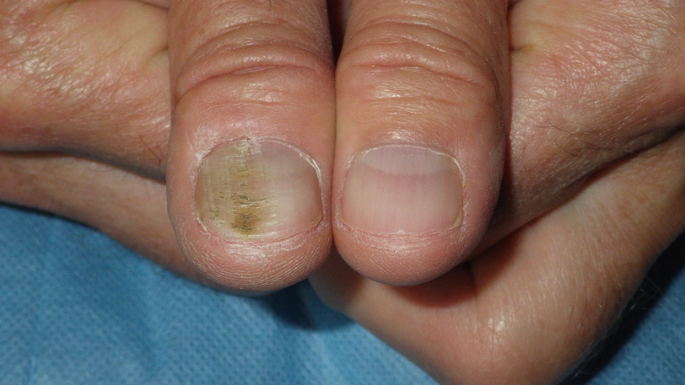
Source: Buckley, D. (2021). Nail Problems in General Practice. In: Buckley, D., Pasquali, P. (eds) Textbook of Primary Care Dermatology. Springer, Cham. https://doi.org/10.1007/978-3-030-29101-3_41
This is where nail infection and nail fungus begin silently. Trapped moisture, weakened nail barriers, poor ventilation, and hygiene gaps can create the perfect environment for acrylic nails and nail fungus, including fingernail fungus that often develops from acrylic nails and often goes unnoticed until visible damage occurs.
Let’s break it down simply and honestly, how nail extensions weaken natural nail health, early signs of fungal infection, safe removal and recovery, practical nail care tips, effective home remedies for fungal nail infection, and the real nail extensions side effects no one talks about.
Beauty should always enhance health, never compromise it.
How Acrylic Nail Extensions Cause Nail Fungus
At a surface level, gel and acrylic nails look strong.
Biologically, however, they do the opposite.
Let’s break this down simply, because once you understand how nail extensions work, the risk of acrylic nails and nail fungus becomes obvious.
Nail Extensions Create a Sealed, Artificial Environment
Acrylic and gel extensions bond tightly to the natural nail plate, forming an almost airtight seal.
What gets trapped underneath?
- Moisture from handwashing and sweating
- Natural oils
- Environmental microbes
- Heat from daily activity
Fungal organisms responsible for nail infections thrive in:
- Warm
- Dark
- Moist
- Low-oxygen environments
In other words, the exact micro-environment is created beneath nail extensions.
This is why fingernail fungus from acrylic nails often starts silently. No pain, no obvious redness, just slow damage happening underneath the polish.
Repeated Extensions Weaken the Nail’s Natural Defense System
Your nail plate and cuticle are not passive structures. They are active protective barriers.
With frequent extensions, several things happen:
- Repeated buffing thins the nail plate
- Overfilling damages the cuticle seal
- Harsh chemicals disrupt the nail’s natural pH
- Micro-cracks form on the nail surface
These micro-traumas allow fungi to penetrate deeper layers of the nail, where they are much harder to treat.
This is how cosmetic damage slowly turns into nail fungus, not overnight, but through repeated stress without recovery.
Reduced Airflow = Reduced Healing
Healthy tissue needs:
- Oxygen
- Circulation
- Time to regenerate
Extensions block all three.
When a nail stays covered for weeks or months without a break, it loses its ability to:
- Regulate moisture
- Repair surface damage
- Maintain a healthy microbial balance
When the body can’t breathe, it can’t heal. The same rule applies to nails.
Harmful Substances Used in Nail Extensions Add to the Risk
Beyond the physical damage, the chemistry used in gel and acrylic nail systems also plays a silent role in increasing fungal infections and long-term nail damage.
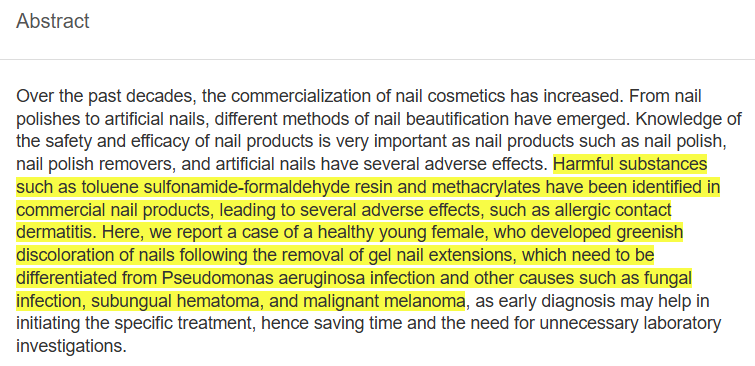
Source: Mahajan, Mohita & Mahajan, B.. (2024). Greenish discoloration due to gel nail extensions mimicking Pseudomonas aeruginosa infection: Is beauty really worth the risk: A case report. Cosmoderma. 4. 121. 10.25259/CSDM_135_2024.
Common substances used in nail extensions include:
| Methacrylates (MMA & EMA) |
|
| Formaldehyde and Formaldehyde Releasers |
|
| Toluene and Plasticisers |
|
| Acetone and Strong Solvents |
|
When these chemicals are used repeatedly without recovery time, they don’t just affect nail appearance; they alter the nail’s biology, making it easier for fungal organisms to colonize and harder for the body to fight them.
Hygiene Gaps Multiply the Risk
Even the best nail cannot survive poor hygiene.
Nail infections are linked to:
- Reused or inadequately sterilized tools
- Contaminated filing surfaces
- Shared UV lamps
- Poor hand hygiene before application
Add prolonged wear to this, and the risk of nail extensions side effects increases significantly — especially fungal overgrowth.
Overuse Is the Real Culprit (Not Occasional Beauty)
Let’s be clear, nail extensions are not the enemy. The real problem is:
- Continuous back-to-back applications
- No recovery phase
- Covering damage instead of healing it
It’s like wearing damp socks every day. You may not notice anything at first. But over time, fungus finds a home.
This is exactly how acrylic nails and nail fungus develop, quietly, gradually, and often unnoticed until the damage is visible.
Understanding this mechanism is the first step toward prevention and toward choosing beauty routines that support, rather than sabotage, long-term health.
Early Signs and Symptoms of Nail Infections to Watch For (Don’t Ignore These)
Most nail fungus doesn’t announce itself dramatically. It starts quietly, and that’s exactly why it’s so often missed.
Early Changes People Commonly Dismiss
In the initial stages, the nail may not hurt at all. Instead, you might notice:
- Yellow, white, or light brown discoloration
- A dull or chalky appearance
- Slight thickening at the nail edge
- Increased brittleness or crumbling
These changes are often brushed off as “normal wear and tear” from extensions, but medically, they are classic early markers of nail fungus.
Progressive Signs That Signal Infection
As fungal overgrowth continues, symptoms may include:
- Noticeable thickening of the nail plate
- Nail lifting or separation from the nail bed
- An unpleasant or musty odor
- Sensitivity, pressure discomfort, or mild pain
Once the fungus reaches the deeper nail layers, the nail loses its ability to regenerate normally, making treatment longer and more complex.
Surface Damage vs True Nail Fungus: Know the Difference
This distinction is critical. Surface damage from extensions usually looks like:
- Temporary roughness
- Mild peeling
- Uniform thinning
Active fungal infection often shows:
- Patchy or spreading discoloration
- Thickening rather than thinning
- Lifting of the nail
- Odor or discomfort
Covering these signs with fresh polish or new extensions doesn’t solve the problem, it feeds it by sealing moisture and darkness over an already compromised nail.
Safe Removal and Nail Care Tips & Practices (What Most People Get Wrong)
If nail extensions cause damage, how we remove them often decides whether the nail heals or deteriorates further. This is where most people unknowingly worsen nail infections and increase the risk of long-term nail fungus.
Let’s clear the confusion.
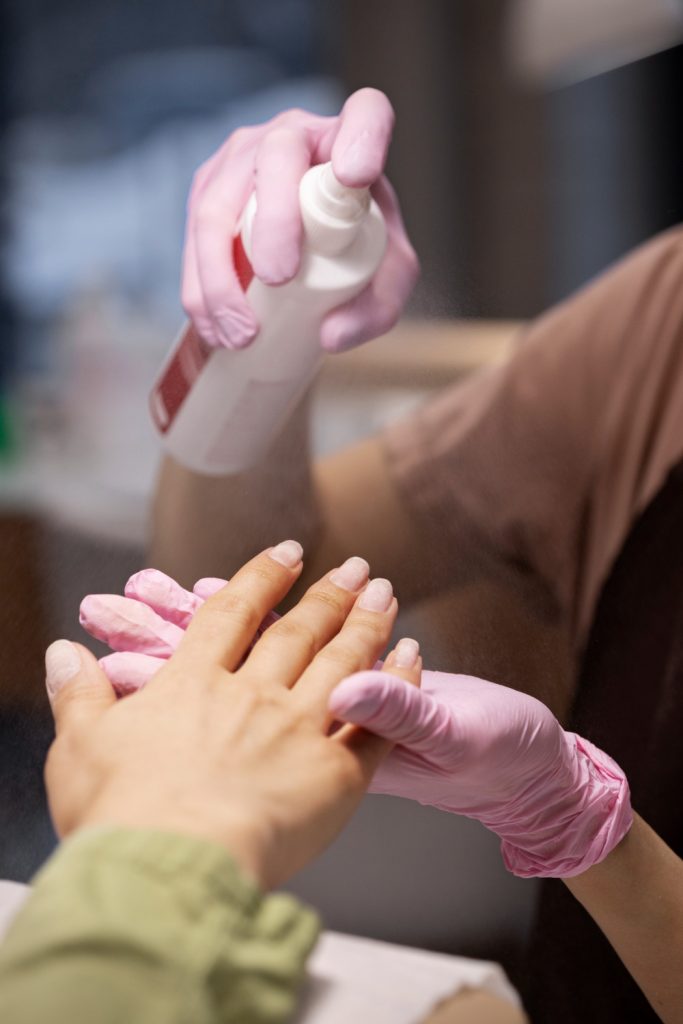
Image Credits: Freepik
Why Peeling or Ripping Extensions Is So Harmful
When gel or acrylic nails are forcefully peeled off, they don’t come away cleanly. They tear layers of the natural nail plate with them.
Repeated mechanical trauma to the nail matrix:
- Thins the nail plate
- Creates micro-tears
- Disrupts nail growth cycles
This damage leaves the nail vulnerable to moisture retention and microbial entry.
Safe Removal: Less Force, More Patience
Proper removal is not about speed; it’s about preserving the nail’s structure. Best practices include:
- Professional removal whenever possible
- Gentle soaking methods to loosen the extension bond
- Zero scraping, peeling, or aggressive filing
- Avoiding sharp tools on the nail plate
Rushing this process worsens nail extension side effects and delays recovery.
The Most Ignored Step: Nail Rest
This is where healing truly begins. Your nails need time, not products, to regenerate. Nails recover best when:
- They are left uncovered
- Moisture levels normalize
- Micro-damage is allowed to be repaired
A minimum break between extensions allows the nail plate to rebuild strength and reduces the recurrence of nail fungus.
Daily Nail Care Tips That Actually Restore Health
Simple, effective nail care tips:
- Keep nails clean and completely dry
- Trim gently; avoid cutting too close to the nail bed
- Avoid constant occlusion with polish or extensions
- Moisturize the surrounding skin without trapping moisture under the nail
These habits reduce the risk of nail infection and support natural nail resilience.
Home Remedies for Fungal Nail Infection and Natural Solutions to Restore Nail Health
Home remedies for fungal nail infection and natural care work best when they support the body’s healing capacity rather than trying to force quick fixes.
| Natural Approach | How It Supports Nail Healing | Guidance |
| Tea Tree Oil (Diluted) | Contains natural antifungal compounds that help limit fungal growth | Always dilute with a carrier oil. Apply to clean, dry nails. Consistency matters more than quantity. |
| Vinegar Soaks | Creates an acidic environment that discourages fungal survival | Short soaks, 2–3 times a week. Dry nails thoroughly after; moisture control is key. |
| Other Essential Oils (Used Safely) | Some essential oils show antifungal activity when used correctly | Never apply undiluted. Natural doesn’t mean harmless; respect dosage. |
| Proper Nail Hygiene | Reduces moisture and microbial load | Clean, dry nails heal faster than constantly covered ones. |
| Nutrition for Nail Strength | Supports keratin production and immune defense | Protein, zinc, iron, biotin, and hydration help rebuild nails from the inside out. |
Natural remedies are not overnight solutions. Nail tissue grows slowly, and healing takes weeks to months.
Disclaimer: Always do a patch test before trying any new product or remedy. If you have sensitive skin, allergies, or an existing nail condition, consult a dermatologist before use. Stop immediately if irritation occurs and seek professional guidance when needed.
Preventive Measures: Nail Extensions Side Effects You Can Avoid
Most nail infections and nail fungus cases linked to extensions are preventable.
| Preventive Habit | Why It Matters | Insight |
| Choose Hygienic, Reputable Salons | Reduces exposure to fungi, bacteria, and contaminated tools | Ask questions. Clean salons welcome informed clients. |
| Avoid Continuous Long-Term Wear | Constant occlusion weakens the nail barrier | Nails need rest just like muscles do. |
| Limit Extension Cycles | Reduces cumulative nail trauma | More is not better, recovery matters. |
| Allow Nails to Breathe Between Applications | Restores oxygen balance and natural repair | Healing begins when coverage stops. |
| Moisturise Without Over-Occlusion | Prevents brittleness without trapping moisture | Hydrate the skin, not the space under the nail. |
| Address Early Damage Instead of Covering It | Prevents recurrence of fungal infections | Hiding symptoms feeds the problem. |
Prevention is quieter, cheaper, and far smarter than a cure.
When to See a Doctor (And Why That’s Not Overreacting)
One of the biggest mistakes we see is people waiting too long, not because they don’t care, but because they don’t want to overreact. Let’s be clear: seeking medical help for a progressing nail infection or nail fungus is not panic, it’s intelligence.
Signs the Infection Is Progressing
It’s time to consult a professional if you notice:
- Persistent or increasing pain
- Swelling or redness around the nail
- Discoloration, spreading, or darkening
- Nail lifting is worsening over time
- No improvement despite consistent care and home remedies
These are not signs to “wait it out” or cover up with polish. They indicate that the infection has moved beyond surface-level imbalance.
Getting help doesn’t mean you’ve failed at self-care. It means you listened early enough.
Beauty Should Never Cost You Your Health
Nail extensions aren’t the problem. Overuse without awareness is.
When beauty routines ignore biology, the body quietly absorbs the stress, until it can’t anymore.
Choose rituals that respect recovery, hygiene, and balance. Beauty that supports long-term wellbeing always outlasts beauty that only looks good today.
Frequently Asked Questions
Can acrylic nails cause nail fungus?
Acrylic nails can increase the risk of nail fungus when worn continuously without breaks. They trap moisture, reduce airflow, and weaken the nail barrier, creating ideal conditions for fungal growth. Poor hygiene and aggressive removal further raise the risk of nail infection, especially fingernail fungus from acrylic nails.
What are the early signs of a fungal nail infection?
Early nail fungus often appears as yellowing, whitening, thickening, brittleness, or a dull, chalky nail surface. Mild lifting, odour, or sensitivity may follow. These signs are commonly mistaken for cosmetic damage, which delays treatment and allows the nail infection to progress.
How can I safely remove nail extensions at home?
Safe at-home removal involves gentle soaking to loosen the extension bond, avoiding peeling, scraping, or force. Aggressive removal damages the nail plate and increases the risk of nail infection. After removal, allow nail rest and follow basic nail care tips to support natural recovery.
What natural remedies help treat nail fungus?
Home remedies for fungal nail infection include diluted tea tree oil, vinegar soaks, proper nail hygiene, and supporting immunity through nutrition. These methods work best in early nail fungus and require consistency. If symptoms worsen or persist, medical guidance is recommended. Always do a patch test before trying home remedies, and consult a dermatologist if you have sensitive skin, allergies, or an existing nail condition.
How can I prevent fungal infections while wearing nail extensions?
Prevent nail fungus by choosing hygienic salons, avoiding continuous long-term wear, limiting extension cycles, and allowing nails to breathe between applications. Keep nails clean and dry, avoid over-occlusion, and address early nail damage instead of covering it to reduce nail extensions side effects.
Disclaimer: This blog is for educational and informational purposes only and is not a substitute for professional medical advice, diagnosis, or treatment. Always seek the advice of your physician or qualified healthcare provider with any questions you may have regarding a medical condition.
If you’re struggling with nail fungal infections, don’t wait.
Set up a one-on-one consultation with our team or explore our Wellness Programs to optimize your skin, hair, and nail health.
Reach out to us at 1800 102 0253 or write to us at [email protected].