No products in the cart.
Let’s pause for a moment and reflect: In a world obsessed with imported superfoods, could the answer to better gut health and balanced blood sugar be sitting right in our kitchens, overlooked and underappreciated?
It’s neither new nor foreign. It’s not spirulina from Hawaii or quinoa from Peru.
It’s Abelmoschus esculentus, known to most of us as okra, or lovingly as bhindi in our households.
And here’s what’s truly humbling: Long before research papers caught up, bhindi had already found a place in traditional food wisdom across cultures, especially in India, Africa, and parts of the Middle East. In Ayurveda and Siddha systems, okra has been cherished for its sattvic qualities, considered calming, grounding, and nourishing for the digestive tract. It’s been part of grandmother’s kitchens and farmer’s markets for centuries, used in simple dishes that supported health.
Today, modern science is beginning to echo what traditional systems already knew.
So, if you’ve ever dismissed bhindi as a ‘boring sabzi,’ or turned up your nose at its slimy-like consistency, it might be time to revisit this locally grown powerhouse.
Nutritional Profile of Okra: Small Pod, Big Power
Okra benefits extend far beyond the labels we often reduce vegetables to—’green,’ or ‘low-cal.’ Bhindi, or okra, is one of those vegetables that packs far more nutritional weight than its soft texture.
What’s Inside This Humble Green Pod?
In just 100 grams of raw okra, you’ll find a well-rounded spectrum of vitamins, minerals, and plant compounds that support multiple systems in the body.
| Nutrient | Amount per 100g (Raw Okra) |
| Calories | 33 kcal |
| Carbohydrates | 7.5 g |
| Dietary Fiber | 3.2 g |
| Protein | 2.0 g |
| Fat | 0.2 g |
| Vitamin C | 23 mg (25% RDA) |
| Vitamin K1 | 31.3 µg (26% RDA) |
| Vitamin B9 (Folate) | 60 µg (15% RDA) |
| Magnesium | 57 mg (14% RDA) |
| Calcium | 82 mg (8% RDA) |
| Potassium | 299 mg (6% RDA) |
Source: USDA FoodData Central, 2023
These values make it clear, okra is not nutritionally ‘lightweight.’ In fact, for anyone looking to adopt more gut healing foods, or support metabolic health, this profile ticks several boxes.
What Makes It Truly Unique?
Let’s talk about mucilage, that slippery/slimy, sometimes off-putting texture that forms when okra is cooked. While it might divide palates at the dinner table, this natural gel is biochemically rich in non-starch polysaccharides. These act as a natural demulcent, coating and soothing the digestive tract, and may help in slowing down the digestive process, something particularly beneficial for blood sugar regulation.
A 2021 review in Molecules emphasized okra’s antioxidant and anti-fatigue compounds, particularly quercetin, rhamnogalacturonan, and flavonol glycosides, natural plant chemicals that support cellular repair and metabolic integrity.
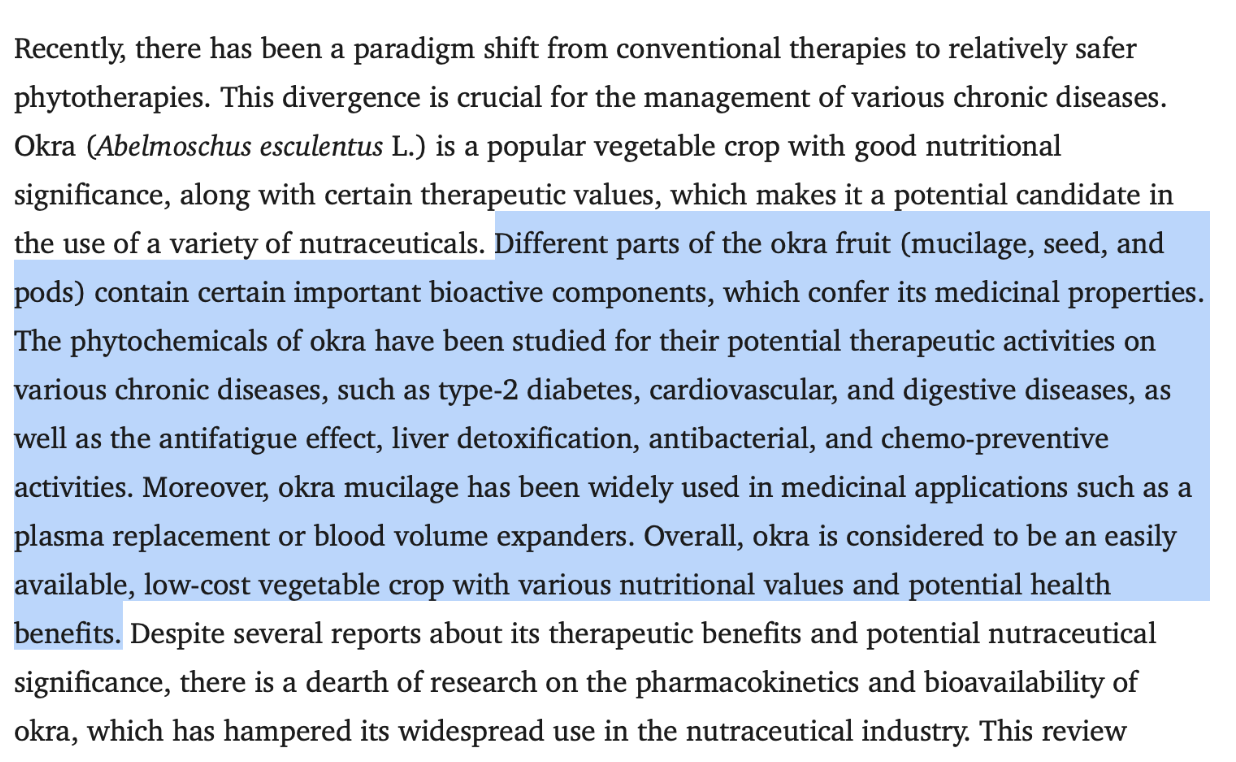
Source: Elkhalifa, A. E. O., Alshammari, E., Adnan, M., Alcantara, J. C., Awadelkareem, A. M., Eltoum, N. E., Mehmood, K., Panda, B. P., & Ashraf, S. A. (2021). Okra (Abelmoschus Esculentus) as a Potential Dietary Medicine with Nutraceutical Importance for Sustainable Health Applications. Molecules (Basel, Switzerland), 26(3), 696. https://doi.org/10.3390/molecules26030696
Okra for Gut Health: The Science Behind the Slime
Among the many okra benefits that are now being celebrated globally, its profound effect on gut health stands out powerfully. In a world where digestive discomfort is becoming increasingly common, from bloating to irregular bowels and weakened immunity, revisiting foods that support gut resilience is not just smart, it’s necessary.
How Okra Supports Gut Integrity
One of the lesser-known bhindi benefits is its unique synergy of soluble fiber, natural mucilage, and bioactive polysaccharides, which make it an exceptional food for nurturing the gut microbiome.
- Mucilage, this gelatinous compound acts as a soothing balm for the intestinal lining, forming a protective layer that may reduce irritation and support gut barrier integrity. It’s especially gentle for those with sensitive digestive tracts.
- Soluble fiber in okra slows down the transit of food through the digestive system, allowing better nutrient absorption while feeding beneficial gut bacteria like Lactobacillus and Bifidobacterium. These bacteria play a role in synthesizing vitamins, breaking down complex carbohydrates, regulating immune function, and even impacting mood via the gut-brain axis..
A Gentle Reminder on Bio-Individuality
While okra for gut health is an emerging area of promise, it’s important to acknowledge the individual variability in how people respond to different forms of okra. For instance:
- Okra water, soaking chopped bhindi in water overnight and drinking it the next day—is a traditional practice many find soothing. But for some, particularly those with sensitive guts, this may trigger bloating or discomfort.
- Lightly steamed or cooked okra, on the other hand, tends to be gentler and still delivers the prebiotic benefits.
So, listen to your body. Observe how it responds. And remember, gut healing isn’t about drastic steps. It’s about consistently supporting the body with foods that work with it.
Okra for Blood Sugar: Supporting Metabolic Balance
One of the lesser celebrated yet clinically observed okra benefits lies in its ability to support balanced blood sugar levels, a function that is becoming increasingly relevant in today’s world of rising insulin resistance and prediabetes.
What makes okra stand out isn’t just that it’s low in simple carbohydrates or calories. It’s how it interacts with the digestive process and the body’s metabolic responses.
Let’s break it down.
A Natural Buffer for Glucose Spikes
When we consume carbohydrate-rich meals, our blood sugar levels tend to rise. While this is a normal physiological response, chronic and excessive spikes over time can wear down insulin sensitivity, a key driver behind metabolic dysfunction.
Now here’s where okra steps in gently.
- The non-starch polysaccharides and soluble dietary fiber form a gel-like consistency when digested. This gel slows the gastric emptying rate, meaning that the sugars from food are absorbed more gradually into the bloodstream rather than rushing in all at once.
- It also limits the activity of alpha-glucosidase, an enzyme that breaks down carbohydrates into glucose. This enzyme-inhibitory activity of okra has been noted to modulate postprandial blood sugar levels.
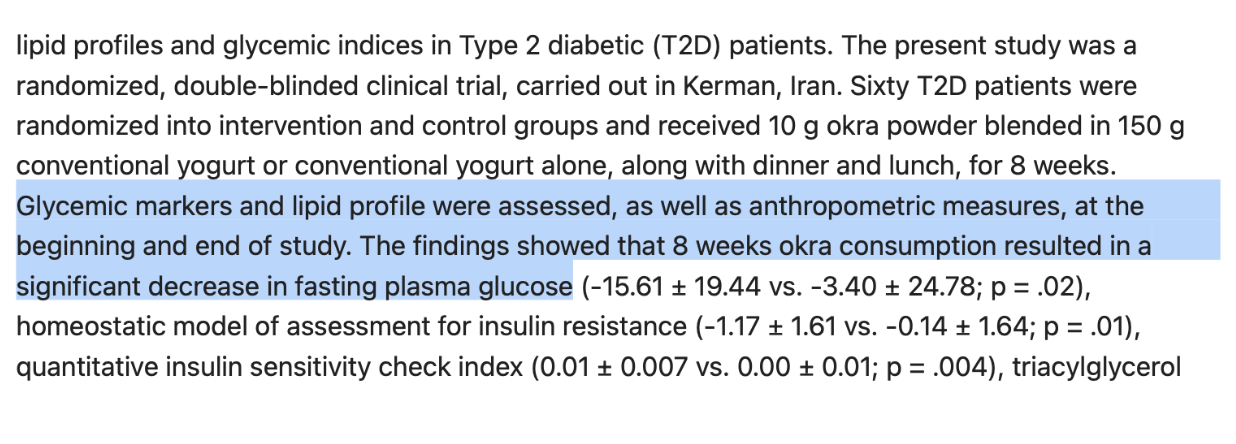
Source: Moradi A, Tarrahi MJ, Ghasempour S, Shafiepour M, Clark CCT, Safavi SM. The effect of okra (Abelmoschus esculentus) on lipid profiles and glycemic indices in Type 2 diabetic adults: Randomized double blinded trials. Phytother Res. 2020 Dec;34(12):3325-3332. doi: 10.1002/ptr.6782. Epub 2020 Jul 24. PMID: 32706159.
Let’s be clear, okra is not a substitute for medical guidance, medication, or necessary lifestyle modifications. It won’t reverse metabolic syndrome or replace your walks, your sleep, or your mindful eating habits. But when layered into a comprehensive approach, it can be one of the many foods that support glucose regulation and insulin responsiveness.
So if you’re someone exploring okra for blood sugar management, consider this vegetable a companion on your wellness journey.
Anti-Inflammatory Potential: Calming the Internal Fire
In today’s fast-paced world, where stress, ultra-processed foods, environmental toxins, and poor sleep have become all too common, silent inflammation is quietly becoming the undercurrent of many chronic conditions. It doesn’t always show up dramatically, but it simmers beneath the surface, fueling everything from metabolic imbalances to fatigue, joint pain, and digestive distress.
While many seek relief through supplements or medications, certain foods, when thoughtfully chosen, can help nudge the body back into balance. Among them, okra (or bhindi) has earned its place for offering support in modulating the body’s inflammatory processes.
What Makes Okra Anti-Inflammatory?
The okra benefits related to inflammation don’t just come from fiber or vitamins. They’re rooted in the plant’s bioactive compounds, which interact at a cellular level to support a more regulated immune response. Here’s what the science tells us:
- Okra is a natural source of flavonoids, tannins, quercetin, and polyphenols, plant compounds known for their role in reducing oxidative stress and downregulating inflammatory pathways.
- In particular, these compounds have shown potential to inhibit pro-inflammatory cytokines, such as TNF-alpha and IL-6, which are the body’s chemical messengers involved in inflammatory responses. Elevated levels of these cytokines are often associated with chronic inflammation and autoimmune conditions.
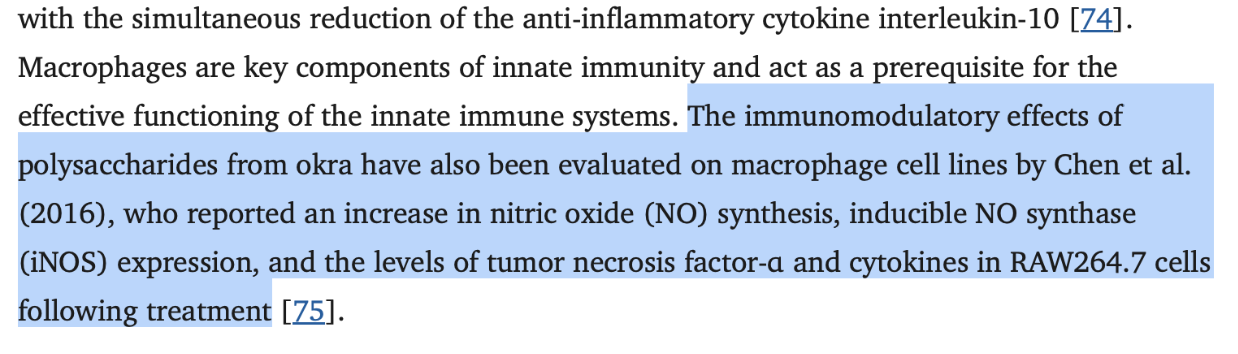
Source: Elkhalifa, A. E. O., Alshammari, E., Adnan, M., Alcantara, J. C., Awadelkareem, A. M., Eltoum, N. E., Mehmood, K., Panda, B. P., & Ashraf, S. A. (2021). Okra (Abelmoschus Esculentus) as a Potential Dietary Medicine with Nutraceutical Importance for Sustainable Health Applications. Molecules (Basel, Switzerland), 26(3), 696. https://doi.org/10.3390/molecules26030696
When people ask me, “What’s the best anti-inflammatory food I should eat?”, my answer is usually not exotic. It’s about consistency with the simple, everyday foods that carry therapeutic potential when respected and used wisely. Okra is one of those.
Okra Benefits in Anticancer and Chronic Disease Management
When it comes to chronic disease prevention, including cancer, the conversation is shifting, from quick fixes to consistent, nourishing inputs that support the body’s innate intelligence. And while no single food can prevent or reverse disease, certain natural compounds may support the body’s ability to regulate inflammation, reduce oxidative stress, and promote cellular balance.
Emerging research suggests that okra benefits extend beyond gut and blood sugar health. Its dense profile of antioxidants, polyphenols, and plant-based compounds may contribute to cellular protection and play a role in chronic disease management when included as part of a well-rounded lifestyle.
Key Phytonutrients That Make Okra Anticancer:
- Flavonoids and Polyphenols: Bhindi is naturally rich in compounds like quercetin, rutin, and epicatechin, all of which possess antioxidant and anti-inflammatory properties. These compounds help reduce oxidative stress, which is closely linked to DNA damage and chronic cellular inflammation.
- Lectin in Okra: The effects of okra-derived lectin on human breast cancer cells were found to inhibit the proliferation of these cells in vitro, suggesting its potential role in cell regulation. While this doesn’t translate into a direct health outcome in humans, it opens avenues for deeper nutritional exploration.
- Polysaccharides and Mucilage: These may help support the body’s natural cleansing pathways and contribute to immune resilience.
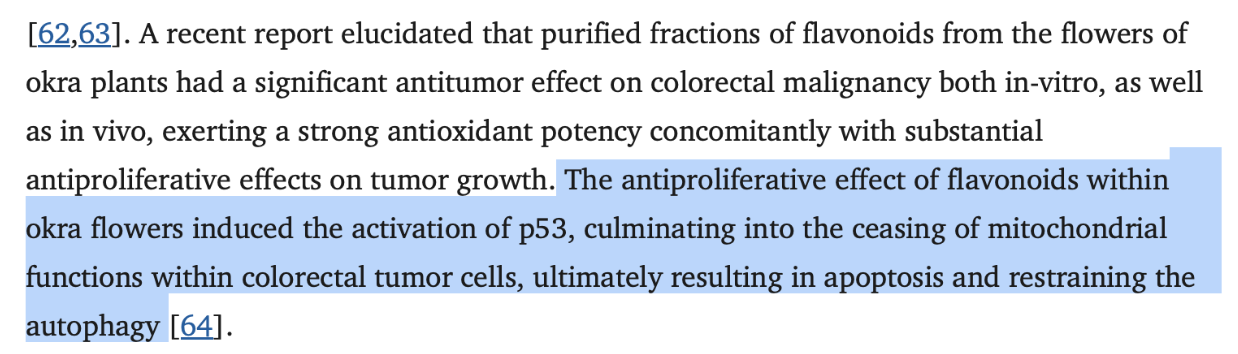
Source: Elkhalifa, A. E. O., Alshammari, E., Adnan, M., Alcantara, J. C., Awadelkareem, A. M., Eltoum, N. E., Mehmood, K., Panda, B. P., & Ashraf, S. A. (2021). Okra (Abelmoschus Esculentus) as a Potential Dietary Medicine with Nutraceutical Importance for Sustainable Health Applications. Molecules (Basel, Switzerland), 26(3), 696. https://doi.org/10.3390/molecules26030696
Who Should Be Cautious: Listen to Your Body
When it comes to okra benefits, it’s easy to get excited, and rightly so. This green pod offers incredible nutritional support. But just like any food, bio-individuality plays a vital role in how your body responds to it.
No food, no matter how powerful, is universally perfect for everyone. What nourishes one person might not sit well with another, and that’s okay.
Let’s walk through a few situations where a little caution with bhindi might be wise:
1. If You Experience Bloating or Gut Discomfort: Some people find that raw okra, especially when consumed in the form of soaked okra water, can lead to bloating, gas, or digestive unease. This may be due to the high soluble fiber and mucilage, which, although soothing for many, can be fermented by gut bacteria in ways that are not always comfortable for everyone.
2. If You’re on Blood Thinners: Okra is naturally rich in vitamin K1, which plays a critical role in blood clotting. While this is beneficial for most, it may interfere with anticoagulant medications like warfarin or similar blood thinners.
3. If You Have a Known Allergy: Although rare, some individuals may be allergic to okra. Symptoms might include skin rashes, itching, or even gastrointestinal upset shortly after consumption.
4. If You’re Going Through Medical Treatments: For those undergoing chemotherapy, radiation, or recovering from surgery, okra is often well tolerated and encouraged, but moderation is key. During these times, digestion is sensitive, and less is often more. Introduce okra gently (as doctor’s advice only and if suits you), in cooked forms, and observe how your body responds.
Cooking Okra Right: Preserving the Goodness
You can buy the best ingredients, read all the research, and still lose the magic, if the cooking process robs the food of its integrity.
That’s the case with okra too. The okra benefits we’ve spoken about, its gut-friendly fiber, anti-inflammatory compounds, and potential to support blood sugar, are preserved best not through over-frying or high-heat cooking, but through gentle, mindful preparation.
Why How You Cook Okra Matters
- High heat, especially deep frying, destroys heat-sensitive nutrients like vitamin C and certain antioxidants.
- Overcooking can break down its soluble fiber and mucilage, which are responsible for many of okra’s gut-healing and blood sugar–buffering benefits.
- Gentle methods, light steaming, stir-frying with minimal oil, or simmering in soups or stews, preserve the delicate nutrients and compounds.

Image Credits: Freepik
Three Wholesome Okra Recipes to Try
1. Okra Stew
- Serves: 2
- Prep Time: 15 mins
- Total Time: 30 mins
Ingredients:
- 10–12 tender okra, chopped
- ½ tomato, chopped
- 3 garlic cloves, finely chopped
- ½ tsp mustard seeds
- ½ tsp cumin seeds
- 1 sprig curry leaves
- 1 pinch hing
- ¼ tsp turmeric
- ½ tsp rasam or sambar powder
- 1 tsp tamarind pulp (or kokum)
- Salt to taste
- 1 cup water
- 1 tbsp mashed toor dal
- Coriander to garnish
Method:
- Dry roast mustard, cumin, curry leaves, and hing in a pan.
- Add garlic and sauté until golden.
- Add tomato and turmeric; cook till soft.
- Add okra, rasam or sambar powder, tamarind, salt, and water. Simmer for 10–12 minutes.
- Stir in mashed dal for a thicker consistency.
- Garnish with coriander. Serve hot.
Per Serving:
Calories: 114 kcal | Carbs: 21.6 g | Protein: 5.8 g | Fat: 1.41 g
2. Okra Stir Fry
- Serves: 2
- Prep Time: 10 mins
- Total Time: 20 mins
Ingredients:
- 10–12 okra, chopped lengthwise or in rounds
- ¼ tsp cumin seeds
- ¼ tsp ajwain (carom seeds)
- 1 pinch turmeric
- ½ tsp coriander powder
- ½ tsp amchur or lemon juice
- Salt to taste
- Coriander to garnish
Method:
- Dry roast cumin and ajwain in a pan.
- Add okra and turmeric. Stir gently, cook uncovered.
- Once halfway done, sprinkle salt and coriander powder.
- Cook until crisp-tender. Turn off the heat and add amchur or lemon juice.
- Garnish with coriander. Serve warm.
Per Serving:
Calories: 49 kcal | Carbs: 10.1 g | Protein: 2.75 g | Fat: 0.9 g
3. Okra Sattu Kadhi
- Serves: 2
- Prep Time: 10 mins
- Total Time: 20 mins
Ingredients:
- 10 tender okra, lightly steamed or sautéed
- 1 tbsp sattu (roasted chana flour)
- ½ cup warm water
- ¼ tsp cumin seeds
- ¼ tsp grated ginger
- 1 pinch turmeric
- 1 pinch hing
- Salt to taste
- 1 tsp lemon juice
- Coriander to garnish
Method:
- Whisk sattu with water, turmeric, hing, and salt.
- In a pan, dry roast cumin seeds and add grated ginger.
- Add okra, stir gently, and cook for 5 minutes.
- Pour in the sattu mixture and simmer for 5–7 minutes, stirring continuously.
- Turn off the heat, add lemon juice, and garnish with coriander.
Per Serving:
Calories: 86 kcal | Carbs: 15.7 g | Protein: 4.88 g | Fat: 1.47 g
Why Local Always Wins: Choosing Bhindi Over Imported Superfoods
Real wellness doesn’t have to be exotic, it just has to be intentional.
In a world that’s increasingly fascinated by labels like ‘superfood,’ it’s easy to overlook what’s growing quietly in our own backyards. We reach for quinoa over millets, blueberries over jamun, kale over moringa, and yes, often for chia seeds over homegrown bhindi.

Image Credits: Freepik
Locally grown foods like okra are adapted to our soil, climate, and seasonal rhythms. That means they’re often fresher, retain more nutrients, and are less likely to trigger sensitivities compared to foreign foods grown and preserved across thousands of miles.
And let’s not forget the economic and environmental cost of chasing exotic foods. Imported superfoods come with hefty carbon footprints, higher price tags, and are often cultivated in ways that compromise soil and water integrity in their native regions.
Conclusion: From Soil to Soul – A Reminder to Come Back Home
The okra benefits we’ve explored aren’t just anecdotal. They’re backed by research, honored by tradition, and proven in real kitchens across the world.
Let’s move away from the belief that health lies somewhere far away, wrapped in fancy packaging or flown in from another continent. Because very often, the real superfoods are growing quietly in your backyard, in your soil, your local markets, and your grandmother’s recipes.
So the next time you walk past bhindi at the market, pause. Pick it up. Cook it simply. And remember: Sometimes, the most powerful foods don’t speak loudly. But they nourish you.
You should also watch:
View this post on Instagram
Disclaimer: This blog is intended for informational and educational purposes only and is NOT a substitute for professional medical advice, diagnosis, or treatment. Always consult your physician or a qualified healthcare provider before making any changes to your food habits, especially if you have existing health conditions or are on medication.
If you’re ready to take your health into your own hands, gently, naturally, and with intention, our Wellness Program is here to support you.
Rooted in science, tradition, and real-life results, it’s designed to help you build a lifestyle that works for you.
Join us and discover how small, consistent changes can create lasting transformation.
Reach out to us at 1800 102 0253 or write to us at [email protected].