No products in the cart.
On sleep, stress, gut health, nutrition, and the emotional truth of trying to become parents in today’s India.
A GUIDE FOR COUPLES CONSIDERING OR UNDERGOING IVF
Somewhere in a clinic waiting room, a woman checks her phone for the fifth time in ten minutes. Her husband sits beside her, holding a folder of reports thick enough to be a small book. They have not told their parents yet. They have not told most of their friends either. What they are about to do, an embryo transfer after eleven months of injections, scans, and disappointment, still feels like something to keep quiet about, even though it is, statistically, becoming one of the most common medical journeys an Indian couple in their thirties will ever take.
This scene repeats itself thousands of times a day across the country now. Yet for decades, infertility was a subject India simply did not discuss. It was whispered about by relatives, blamed almost entirely on women, and treated as a private failure rather than a medical condition. That silence is finally breaking. A generation that grew up with more awareness, more financial independence, and more willingness to ask questions is now walking into fertility clinics earlier, more openly, and with more research already done than their parents ever had access to. That shift, from secrecy to conversation, is one of the more quietly significant changes in Indian reproductive health in the last decade.
The Scale of the Story: IVF in India by the Numbers
India is in the middle of a demographic paradox. The country’s overall fertility rate has fallen below replacement level for the first time in its history, even as individual couples are struggling more than ever to conceive naturally. Delayed marriage, urban lifestyles, environmental exposure, and rising rates of conditions like PCOS and male-factor infertility have combined to push more couples toward assisted reproduction and toward IVF specifically.
| 15-20 Million Indian couples affected by infertility (Indian Journal of Community Medicine, 2024) | 1.9 India’s total fertility rate in 2025 — first time below replacement level of 2.1 | $1.8 Billion Projected IVF market size in India by 2029, up from $900M in 2024 |
Sources: Indian Journal of Community Medicine (2024), Macrotrends National Demographic Data (2025), Market Analysis Report (2024-2029)
What makes these numbers more striking is how few people who need help are actually getting it. Of the roughly 27 million infertile couples in India’s reproductive age group, only a small fraction ever come forward for evaluation, and an even smaller number go on to pursue IVF.
Cost, stigma, geography, and a simple lack of awareness about where to begin all play a role. More than half of all IVF cycles performed in the country are still concentrated in eight major metros, which means access remains deeply uneven outside Delhi-NCR, Mumbai, Bengaluru, Hyderabad, Chennai, Pune, Kolkata, and Ahmedabad.
But something else is changing alongside the statistics. Clinicians across the country are reporting that the patient profile has shifted. A decade ago, couples often approached a fertility specialist quietly, usually after years of unexplained struggle.
Today, women and men in their late twenties and early thirties are walking proactively, sometimes simply to understand their reproductive health before they have even decided to try for a baby. IVF has moved, slowly but unmistakably, from being a last resort whispered about in family circles to being a recognized medical pathway that people are willing to discuss with their doctors, their friends, and on their own terms.
Why This Conversation Matters More Than the Procedure Itself

Source: AI
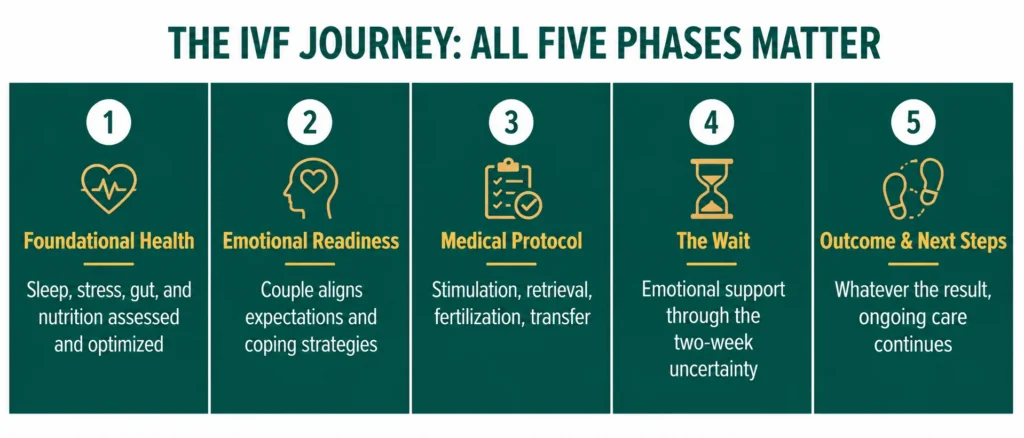
It would be easy to think of IVF as a sequence of clinical steps: ovarian stimulation, egg retrieval, fertilization, embryo transfer, and the agonizing two-week wait that follows. Clinically, that is accurate. But anyone who has actually gone through a cycle or supported a partner through one will tell you that the medical protocol is only half the story. The other half is what happens inside the body and mind in the months before and during treatment, long before anyone steps into an operating theater.
This is where foundational health, sleep, stress regulation, gut health, and nutrition start to matter in ways that are often underexplained to patients. Reproductive endocrinologists are excellent at managing hormone protocols.
They are not always equipped, or given the time, to walk a couple through how their daily habits and emotional state might be shaping the environment their treatment is happening in. That gap is exactly where a more holistic, foundational approach to IVF support has found its place, not as a replacement for medical treatment, but as the essential layer around it.
THE IVF JOURNEY: ALL FIVE PHASES MATTER
Source: AI
Sleep, Stress, Gut Health, and Nutrition: What the Research Actually Shows
It is worth being honest about something upfront. The research on lifestyle factors and IVF outcomes is genuinely mixed. Some studies find clear associations, others find none, and the field is still young compared to the decades of data behind the clinical protocols themselves. What follows is not a promise that better sleep or a cleaner diet will guarantee a positive result. It is a summary of where the evidence currently stands, presented honestly, including its limitations.
Nutrition and Embryo Quality
A prospective cohort study of 590 women undergoing IVF found that those who followed a Mediterranean dietary pattern produced significantly more embryos per cycle than those who did not, with the difference reaching statistical significance (8.40 vs 7.40 embryos available, P = 0.028). The mechanism researchers point to is reduced systemic inflammation and oxidative stress, both of which appear to support a more receptive uterine lining and healthier early embryo development.
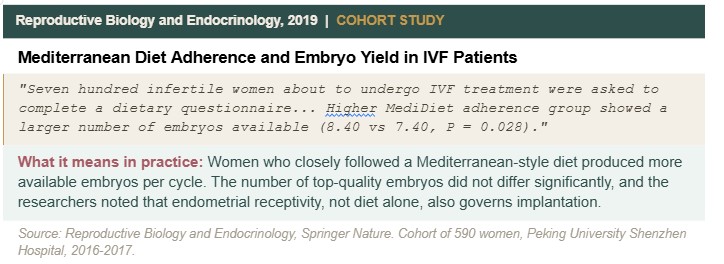
A broader 2024 review found that across multiple studies, couples with stronger adherence to a Mediterranean dietary pattern were 40 to 100 percent more likely to achieve clinical pregnancy, and live birth rates were 2.5 times higher in high-adherence groups in some analyses. The honest takeaway is that diet quality appears to help create favorable conditions, not that any single food or supplement can override biology.
Stress, Cortisol, and the IVF Cycle
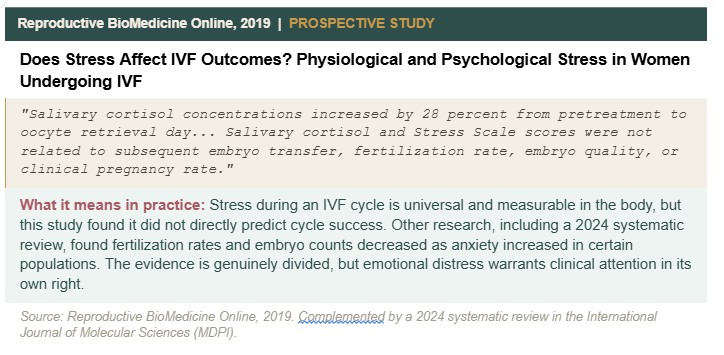
The relationship between stress and IVF outcomes is one of the most actively debated areas in reproductive medicine. What almost every study agrees on, regardless of whether stress directly changes lab numbers, is that women undergoing IVF carry significantly higher levels of anxiety and depression than the general population. A 2019 cross-sectional study found that more than 80 percent of women undergoing fertility treatment scored at risk for clinical depression on standard screening tools.
Sleep and the Gut-Hormone Connection
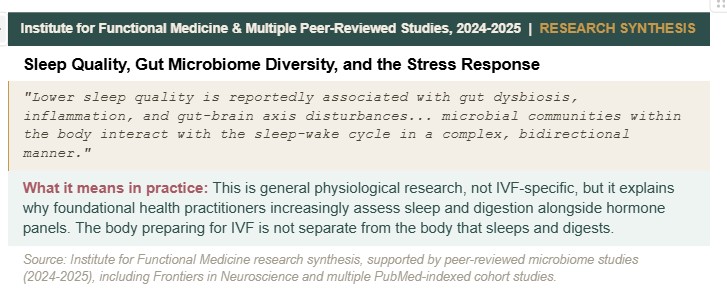
Sleep, gut health, and stress hormones are not separate systems. Poor sleep disrupts the gut microbiome, which in turn affects inflammation and cortisol regulation, both of which play a role in the hormonal environment IVF medications work within. A review by the Institute for Functional Medicine found that lower sleep quality is consistently associated with gut dysbiosis, inflammation, and gut-brain axis disturbances. Separately, research shows that the gut microbiome influences how the body metabolizes estrogen and how resilient the body is to the physical demands of stimulation medication.
The Foundations That Support Your Body Before and During IVF
IVF is an advanced medical intervention, but the body receiving that treatment is still your body. Every cell, hormone, and organ system continues to respond to the choices you make each day. While lifestyle changes cannot guarantee an outcome, they can create an internal environment that supports overall health, resilience, and reproductive function.
Sleep & Circadian Rhythm
Healing begins with rest. Sleep is when the body repairs tissues, regulates hormones, supports immune function, and restores balance. Your circadian rhythm influences cortisol, melatonin, insulin and reproductive hormones. Irregular sleep, late nights, and constant exposure to artificial light can disrupt these natural rhythms. Consistent, restorative sleep remains one of the most powerful yet overlooked tools for supporting health before and during fertility treatment.
Nutrition
Food is not just fuel. It is information for every cell in the body. A diet built around seasonal vegetables, fruits, legumes, whole grains, nuts, seeds, healthy fats, and quality protein provides the nutrients needed for hormone production, cellular repair, and antioxidant defense. Rather than following restrictive fertility diets, focus on eating real, minimally processed foods consistently.
Gut Health
The gut and reproductive system are more connected than many realize. A healthy gut microbiome supports nutrient absorption, immune balance, and estrogen metabolism and helps regulate inflammation. When gut health is compromised, it can influence several systems that contribute to overall well-being.
Metabolic Health
Metabolic health is about much more than weight. Stable blood sugar, healthy insulin sensitivity, balanced blood pressure, and optimal cholesterol all influence how the body functions. Even individuals who appear healthy externally may have underlying metabolic imbalances. Supporting metabolic health through nutrition, movement, sleep, and stress management benefits every organ system, including reproductive health.
Muscle Mass & Movement
Muscle is one of the body’s most metabolically active tissues. Maintaining healthy muscle mass improves insulin sensitivity, supports glucose regulation, reduces chronic inflammation, and contributes to better energy levels. Regular movement, including strength training, walking, and mobility exercises, prepares the body not just for conception but also for pregnancy and recovery.
Stress Regulation
Stress is part of life, but chronic stress keeps the body in a constant state of alertness. Over time, this may affect sleep quality, digestion, appetite, immunity, and hormone regulation. Supporting the nervous system through breathwork, meditation, prayer, spending time in nature, meaningful relationships, or any practice that brings calm allows the body to shift from survival towards restoration.
Chronic Inflammation
Inflammation is not the enemy. It is an essential part of healing. The problem arises when inflammation becomes chronic and persists without resolution. Instead of searching for a single anti-inflammatory food or supplement, focus on the foundations: nourishing food, restorative sleep, regular movement, emotional well-being, and addressing underlying health concerns.
Environmental Health
Every day we are exposed to chemicals through plastics, pesticides, personal care products, household cleaners, and polluted air. While eliminating every exposure is impossible, reducing your overall toxic burden where practical can support hormonal health. Small changes, made consistently, often matter more than perfection.
Oral Health
The mouth is a gateway to the rest of the body. Poor oral hygiene and untreated gum disease contribute to chronic inflammation and may influence overall health. Regular dental care and daily oral hygiene are simple practices that deserve a place in every wellness routine.
Smoking, Alcohol & Vaping
Smoking, vaping, and excessive alcohol increase oxidative stress and place an additional burden on the body. They can affect both egg and sperm quality while also influencing cardiovascular and metabolic health. Reducing or eliminating these habits is an investment in long-term wellness, regardless of where you are on your fertility journey.
Consistency & Preparation
Health is never built overnight. The body needs time to respond to positive lifestyle changes. Whenever possible, begin preparing several months before trying to conceive or starting IVF. Focus on habits you can sustain rather than quick fixes. It is the small, consistent actions repeated every day that create meaningful change.
Emotional Readiness as a Couple: The Conversation Everyone Skips
Most couples prepare for IVF medically long before they prepare for it emotionally. They research clinics, compare protocols, and read about success rates by age group. Far fewer sit down together and talk honestly about what happens if the first cycle does not work, how they will support each other through injections and hormone-driven mood swings, or whether they are even on the same page about how many attempts they are willing to make, financially and emotionally, before stepping back.
This gap shows up constantly in clinical and counseling settings. One partner, often the woman, carries the bulk of the physical burden, the daily injections, the scans, and the medication side effects, while the other partner ends up in a more passive supporting role. Over time, this imbalance can quietly strain even strong relationships. Resentment does not usually announce itself. It builds in small moments: an appointment attended alone, a feeling left unspoken, and a fear neither partner says out loud in case it sounds like giving up.
Infertility is a social and emotional journey rather than primarily a medical issue. The couples who navigate it best are the ones who learn to grieve, hope, and plan together, not separately.
Emotional readiness is not about being free of fear before starting treatment. Almost no one is. It is about both partners understanding, in advance, that the process will test them, agreeing on how they want to communicate during the hard weeks, and deciding together what success looks like beyond just a positive pregnancy test, including how they will care for each other if a cycle fails.
Supporting Patients Through Anxiety, Failed Cycles, and Emotional Burnout
Roughly one in three IVF cycles results in a pregnancy on the first attempt. This means a significant number of patients will face at least one failed cycle before they succeed, if they succeed at all.
Patients often describe:
- The emotional toll of a failed embryo transfer as being comparable to a miscarriage, even though clinically it is categorized differently.
- The two-week wait between embryo transfer and the pregnancy test as the hardest part of the entire process, sometimes even more difficult than the injections or egg retrieval itself.
Good support during this phase includes:
- Normalizing the grief of a failed cycle instead of rushing a couple toward the next attempt before they have processed the current one.
- Watching for signs of burnout, including exhaustion, withdrawal from friends and family, irritability, or a sense of the body being treated as a project rather than a self.
- Making space for both partners to express fear and disappointment without either feeling they have to be the strong one at all times.
- Providing structured support, whether through counselling, peer support groups, or a dedicated care coordinator who checks in between appointments.
Multiple reviews have shown that structured psychological support can reduce emotional distress during IVF, even in studies where it did not significantly improve pregnancy rates. Supporting a patient’s mental health during IVF is valuable in its own right—not only because it might influence treatment outcomes, but because emotional well-being is an essential part of compassionate, patient-centred care.
How Foundational Support Works Alongside Medical Treatment
The strongest fertility support models being built today do not position lifestyle and wellness work as an alternative to IVF. They position it as scaffolding around it. A typical integrated approach might include a baseline assessment of sleep patterns, stress levels, and dietary habits several months before stimulation begins, giving the body time to adjust before medication is introduced.
It might include nutritional guidance built around anti-inflammatory, Mediterranean-style eating, not as a strict rulebook but as a sustainable shift. It often includes structured emotional support, individual or couples counseling, and simple mindfulness or breathing practices that can be used during a scan or an injection.
None of this replaces the reproductive endocrinologist, the embryologist, or the medication protocol. All of it is designed to make the body and the relationship more resilient to the demands that protocol will place on them. Couples who go into a cycle having already addressed chronic sleep deprivation, unmanaged stress, or significant nutritional gaps tend to report feeling more in control of the process, regardless of the outcome, because they walked in having done everything within their power, medically and beyond.
Practical Advice for Couples Navigating This Phase
Source: AI
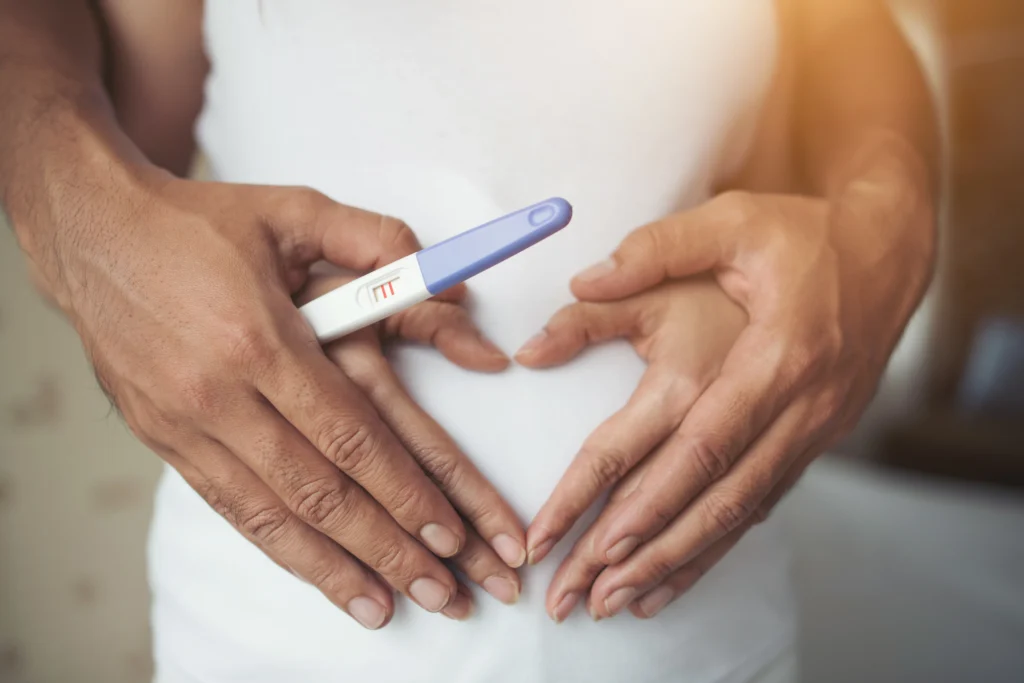
For couples who are just beginning to consider IVF or who are already mid-cycle and feeling overwhelmed, a few pieces of grounded, practical advice tend to come up again and again in clinical and counseling settings.
- Start before you think you need to. If IVF feels even somewhat likely in your future, begin addressing sleep, stress, and nutrition months in advance rather than scrambling in the weeks before a cycle starts. The body benefits from consistency over time, not last-minute intensity.
- Treat the relationship as part of the treatment plan. Schedule time to talk about the process itself, not just logistics. Ask each other directly what kind of support feels helpful and what feels like pressure. These conversations are easier before stress peaks than during it.
- Separate the outcome from your worth. Couples who consciously work on detaching their sense of self-worth from the result of a single cycle cope better with setbacks, because a failed transfer is processed as a medical outcome, not a personal failure.
- Build a small, trusted support circle. You do not need to tell everyone. You do need at least one or two people, whether friends, family, or a counselor, who know what you are going through and can be present without judgment or unsolicited advice.
- Ask your clinic about the full picture. Do not hesitate to ask your fertility team about sleep, gut health, and nutrition, even if they do not bring it up first. A good clinical team will welcome the question, and a holistic wellness program can work directly alongside your medical protocol.
Continue learning with our expert resources.
Understand how nutrition, sleep, stress, and Foundational Medicine can support you through every stage of your fertility journey.
Read: IVF Success Often Begins Here
You Do Not Have to Hold This Alone
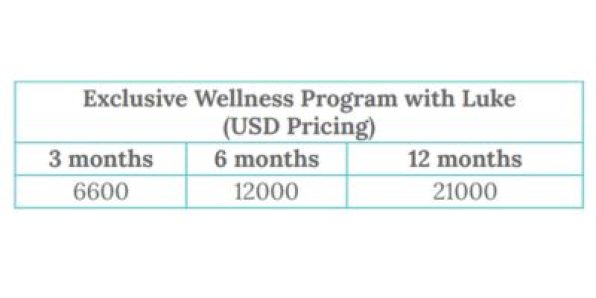
Our Wellness Program is built to sit alongside your IVF treatment, supporting sleep, stress, gut health, nutrition, and emotional readiness as a couple, every step of the way. If you are considering IVF, in the middle of a cycle, or recovering from one that did not go as hoped, our team is here to walk with you.
Explore the Wellness Program
Disclaimer: This article is for general educational purposes only and does not constitute medical advice. Please consult a qualified fertility specialist or healthcare provider before making any decisions about your treatment.