No products in the cart.
You rolled out of bed, made your coffee, opened your laptop, and started your day.
No commute. No traffic. No small talk in the elevator. Sounds ideal, right?
And honestly? For a lot of us, it is. Working from home has been a genuine game-changer. Flexibility, autonomy, no office politics, more time for yourself. The benefits are real.
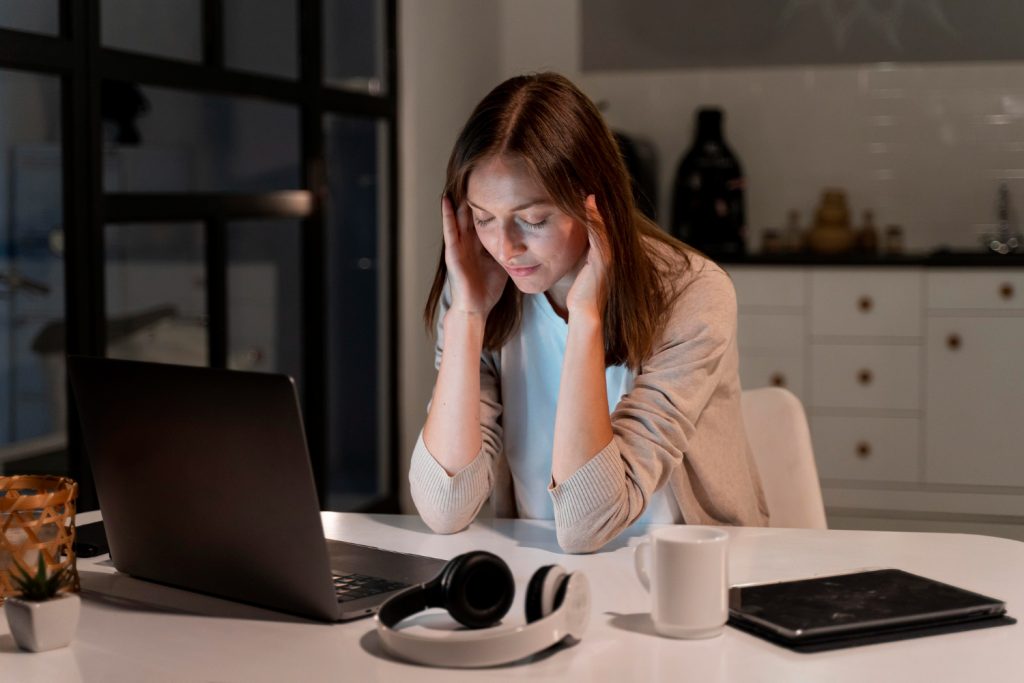
Image Credits: Freepik
But here’s the thing nobody really wants to say out loud: for many people, work from home mental health is quietly taking a hit.
Not in a dramatic, obvious way. More like a slow, low-level drift that you don’t really notice until you realize you haven’t had a real conversation in three days, or you can’t remember the last time you stepped outside before noon.
We are not here to bash remote work or tell you to go back to an office.
We are here to have an honest conversation about the effects of remote work on mental health, why they affect some people more than others, and most importantly, what you can actually do about it.
The Real Picture: Remote Work Mental Health by the Numbers
Let’s start with some data, because this isn’t just a feelings conversation.
Remote work is not a trend that went away after the 2020 pandemic. It’s the new normal for a huge chunk of the workforce.
- People working remotely 3 to 4 days a week had significantly higher odds of experiencing loneliness compared to those not working remotely. (Source: PMID: 41093174)
- Globally, 20% of employees feel lonely at work, with younger and fully remote workers feeling it the most. (Source: Gallup State of the Global Workplace: 2024 Report)
And here’s the flip side, because it’s not all grim: Stanford University research found that remote workers are 13% more productive than their in-office counterparts under the right conditions.
So yes, the reality of remote work is nuanced. It works beautifully for some people and creates real challenges for others. And understanding which camp you’re in is the first step.
The Two Kinds of Remote Workers (And Which One Are You?)
If you’ve ever talked to people about working from home, you’ll notice something pretty quickly. People either absolutely love it or they’re quietly struggling with it. And both experiences are valid.
The Home-First Person
This is someone who genuinely thrives working from home.
- They’re typically more introverted, highly self-directed, and find the office environment draining rather than energizing.
- They love the quiet. They do their best thinking alone.
- They’ve built a solid routine, they have a dedicated workspace, and they’re intentional about their productivity while working from home.
- For them, remote work isn’t just convenient. It’s the setup where they actually become their best professional selves.
The Connection-First Person
This person might tell you they love working from home in theory, but in practice they’ve noticed something feels off.
- They miss the energy of being around people.
- They find motivation harder to sustain without external accountability.
- Their productivity dips. They feel the weight of working from home isolation more than they expected.
- For them, a hybrid model that gives them a mix of home and in-person time tends to work much better for both output and emotional wellbeing.
Neither of these people is right or wrong. What matters is being honest with yourself about which one you are. Because once you know that, you can make choices that actually support you.
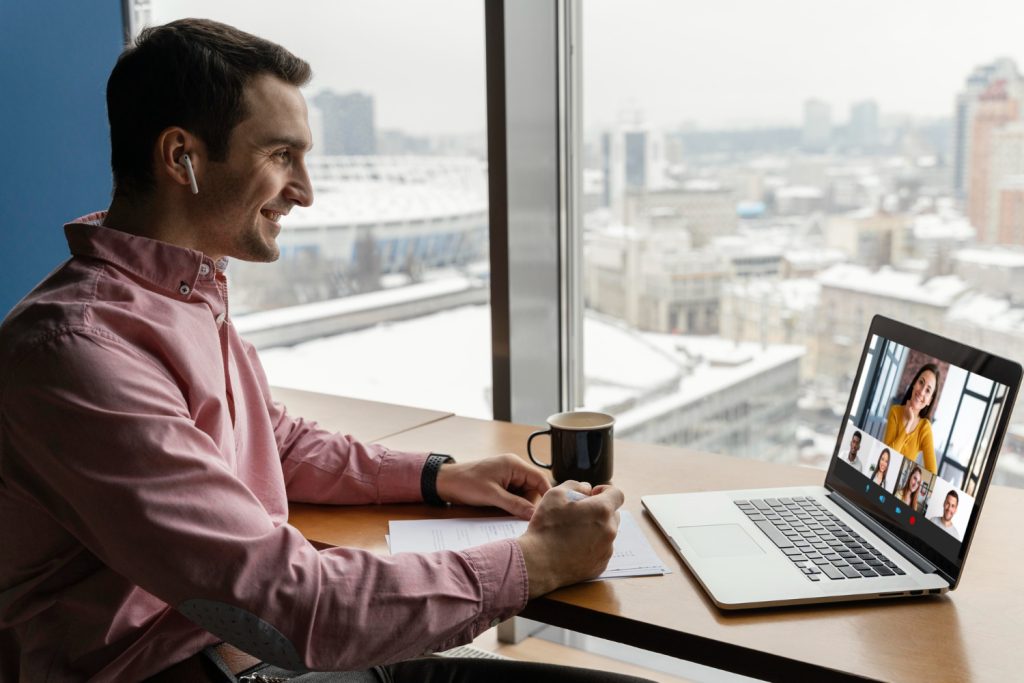
Image Credits: Freepik
Hybrid vs Remote Work Benefits: What Does the Research Actually Say?
One area where the research is starting to get interesting is hybrid vs remote work benefits, specifically around mental health.
A study concluded that hybrid work may be a healthful working style. Their findings suggested that hybrid arrangements could offer a middle ground that protects both mental health and productivity, something that fully remote setups don’t always guarantee. (Source: PMID: 40574640)
- Interestingly, hybrid workers actually produced work with the highest level of novelty, outperforming both fully remote and fully in-office employees.
But here’s what this doesn’t mean: it doesn’t mean hybrid is superior for everyone.
- For someone with a long commute, young children, or a personality that thrives in solitude, fully remote work can absolutely be the better choice. The data simply suggests that for people who are struggling, some in-person time tends to help.
The real headline? It’s not about where you work. It’s about how intentional you are about the things that keep you grounded regardless of where you open your laptop.
Want to know how to set boundaries at work without hurting your career? Click here.
Loneliness While Working Remotely: The Thing People Don’t Say Out Loud
Let’s talk about the importance of human connection at work, because it’s something that often gets dismissed as a nice-to-have when it’s actually fundamental.
When you work in a physical space with other people, you’re getting micro-doses of social interaction all day long. A comment at the coffee machine.
- Someone laughing across the room.
- A colleague dropping by your desk.
- These moments feel small, but they add up.
- They’re the glue that connects us to something bigger than our to-do list.
When you work from home, those moments disappear. And if you’re not actively replacing them, loneliness while working remotely starts to creep in. Slowly at first, and then all at once.
The antidote isn’t just a virtual coffee chat (though those help).
It’s building genuine human connection into your daily life with real intention. And that’s something you can do without ever setting foot in an office.
5 Things to Start Doing Right Now If You Work From Home: Mental Health Habits That Actually Stick
Okay, so here’s where we get practical. Because information without action isn’t going to change how you feel. These are five shifts, grounded in research and lifestyle design, that can genuinely move the needle on your mental wellbeing.
1. Move Your Body Every Single Day (Movement and Mental Health Is Not Optional)
This is probably the most impactful thing on this list, and it’s the one people most consistently skip. When you work from home, your body can go from the bed to the desk to the couch and back again without moving more than fifty steps. That’s a problem, not just for your physical health but for your brain.
- Physical activity is one of the most effective treatments for mental wellbeing, improving mood, energy, immunity, focus, and creativity.
- Remote workers who exercise regularly report significantly lower health-related productivity loss compared to those who don’t.
The good news?
Those who work from home actually report exercising 30 minutes more per workday compared to office workers, largely because of the time saved on commuting. That’s a genuine advantage of remote work, if you actually use it.
Practical hack: Block a 30-minute walk into your calendar like it’s a client meeting. Non-negotiable. No podcast, no phone call. Just you and your thoughts or your neighborhood. Morning walks especially set a completely different tone for the day.
2. Build a Daily Routine for Mental Wellbeing That Actually Has Structure
One of the underrated losses of remote work is the structure that an office environment naturally provided. A commute functioned as a mental transition.
Lunchtime had a rhythm. Home time had a physical boundary.
Without those anchors, work life balance remote work becomes genuinely difficult. Work bleeds into evenings. Mornings become sluggish. You’re technically working all the time, but you’re not really present for any of it.
- Your work from home routine tips need to include bookends.
- A start ritual (make your coffee, take a short walk, write your three priorities for the day) and an end ritual (close the laptop, change clothes, step outside briefly) that signals to your brain that work is over. This is not fluff. It’s neuroscience.
Also worth considering: give yourself a virtual commute.
Use the time you would have spent travelling to check in with a colleague, listen to something that energizes you, or go for that walk. The ritual matters even if the geography doesn’t.
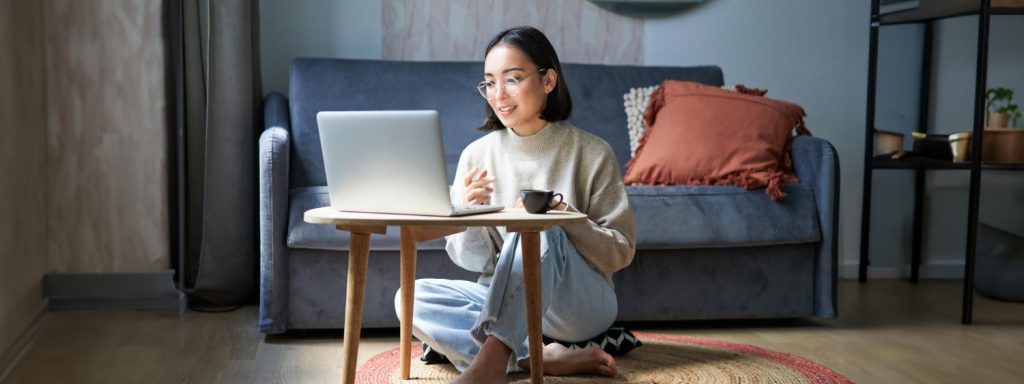
Image Credits: Freepik
3. Prioritize Real Human Connection, Not Just Work Check-Ins
This is about the importance of human connection at work and beyond it.
- Schedule proper catch-ups with colleagues that aren’t about deliverables.
- Keep up with friendships. Join something in your local area, a class, a club, a sport, anything that puts you in a room with real people doing something you enjoy.
Practical hack: Pick one day a week where you work from a coffee shop, co-working space, or a friend’s kitchen. Change the scenery. Put yourself among humans. It sounds simple but the effect on your mood and energy is surprisingly significant.
4. Take Self-Care Seriously (Sleep, Nutrition, Breaks, and Actually Logging Off)
Working from home can be brilliant for self-care if you’re intentional. You have more control over your environment, your food, your sleep schedule, and your breaks than office workers do. Use that.
- But the benefits of remote work lifestyle around self-care only materialize if you’re actually protecting them.
- And given that most of the remote workers are checking emails outside of work hours, it’s clear that many people are giving those benefits right back.
- Prioritize sleep like it’s your most important meeting.
- Adequate sleep makes you more alert, better at decision-making, emotionally more stable, and simply easier to be around.
- Short breaks throughout the day reset your focus.
- The average productive break for a remote worker is 22 minutes spread across the day. Use yours. Step outside. Move around. Make a proper meal.
And here’s a non-negotiable: set a hard stop time. Close the laptop. Put it out of sight if you have to. Your mental health can’t afford the always-on mindset, even if the work could always use another hour.
5. Design Your Environment for How to Stay Productive at Home and Feel Good Doing It
Your environment shapes your behavior more than you think.
If you’re working from the sofa in yesterday’s clothes in a dimly lit room, your brain is getting constant signals that this is a rest space, not a work space. And that friction shows up in your focus, your mood, and your output.
- Invest in a proper setup.
- Get dressed in the morning, even if you’re not leaving.
- Open the curtains. Create a workspace that you actually enjoy sitting in.
These things feel small, but they build a daily routine for mental wellbeing that compounds over time.
- Working from home had real effects on lifestyle behaviors during extended remote periods, including changes to sleep, diet, and physical activity. The people who managed it best were those who were proactive about their environment and daily structure rather than reactive.
Also: get outside your four walls at some point every single day.
Light exposure, physical movement, and simply being in a different space does more for productivity while working from home than any productivity app ever will.
For more helpful tips to manage mental health at work, read this:
https://www.lukecoutinho.com/blogs/manage-stress-in-the-workplace/
The Last Word
Working from home is not bad for your mental health.
And it’s not automatically good for it either. Like most things, the outcome depends almost entirely on how intentional you are about it.
The effects of remote work on mental health are real, they’re documented, and they affect some people more than others.
Loneliness while working remotely, blurred boundaries, reduced movement, lack of routine. These are genuine challenges worth taking seriously.
But remote work also gives you something that most traditional setups don’t: the freedom to design a lifestyle that genuinely supports your wellbeing.
No one else is going to do that for you.
So move your body. Build your routine. Protect your connections. Take your breaks.
And most importantly, pay attention to how you’re actually feeling, not just how productive your to-do list looks.
Because how you feel is the whole point.
Disclaimer: This blog is for educational purposes only and is not a substitute for medical, psychological, or professional advice. If you are experiencing severe stress, burnout, or health concerns, please consult a qualified healthcare professional.
Ready to build a healthier, happier, and more productive workplace?
Set up a one-on-one consultation with our Foundational Medicine team or explore our Corporate Wellness Programs to optimize your organization’s lifestyle goals.
Reach out to us at 1800 102 0253 or write to us at [email protected].