No products in the cart.
You get your thyroid test done. The numbers look off. TSH is low. T3 and T4 are high.
Your doctor is concerned. You are panicking.
But here is something most people never consider.
The problem might not be your thyroid at all. It could be sitting right there in your supplement cabinet.
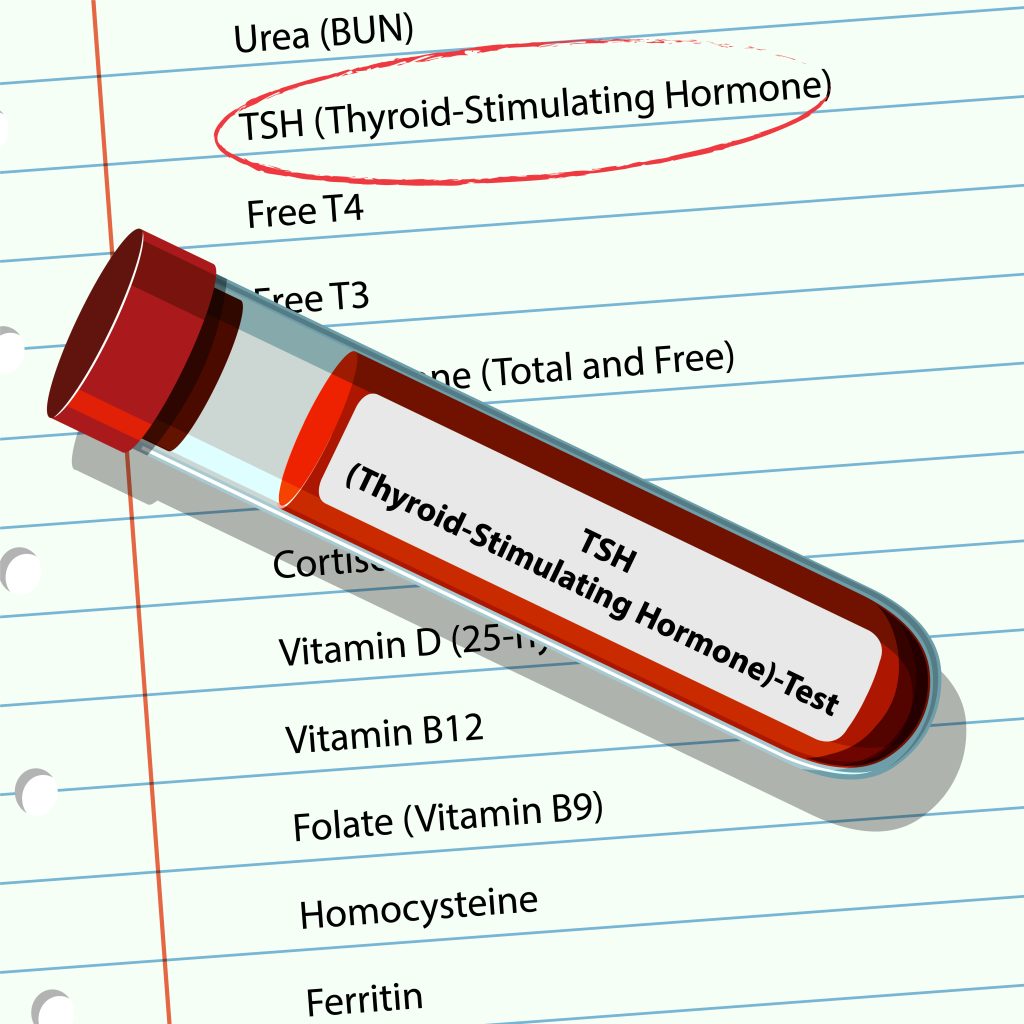
Image Credits: Freepik
The Supplement Nobody Warns You About
Biotin, also called Vitamin B7, is one of the most popular ingredients in hair, skin, and nail supplements today.
Walk into any pharmacy or scroll through any wellness brand and you will find bottles packed with it. What most people do not know is just how much biotin these supplements actually contain.
Here is what a typical hair supplement looks like:
| Supplement Type | Biotin Dose |
| Standard hair supplement | 5,000 mcg |
| High-dose hair supplement | 10,000 mcg |
| Premium or “growth” formulas | 20,000 mcg |
| Daily requirement (as per guidelines) | 30 mcg |
That is up to 600 times more than what your body actually needs in a day.
And when excess biotin floods your bloodstream, it does not just sit quietly.
It starts interfering with something very important, your lab tests.
The Problem Is Not Your Thyroid. It Is the Test.
Most standard thyroid blood tests use a method called Biotin-Streptavidin Immunoassays.
This is the technology that most automated lab systems run on. It is widely used and generally reliable.
But here is the catch.
When there is too much biotin circulating in your blood, it competes directly with the assay binding process. This throws off the entire reading.
High-dose biotin can falsely show:
- Low TSH (thyroid-stimulating hormone)
- High T3
- High T4
Put those three together and it looks exactly like hyperthyroidism.
You could be sitting there completely normal, with a perfectly functioning thyroid, and your report is telling a completely different story.
At our practice, we see this happen more than you would think.
When we suspect biotin interference, we ask patients to stop biotin for 10 days and retest. In many cases, the numbers come back normal.
This Is Not a Theory
Some people hear this and assume it is fringe wellness talk. It is not.
- The U.S. FDA has issued formal warnings about biotin interfering with lab test results
- Clinical Endocrinology journals have documented false thyroid readings caused by high-dose biotin
- This is well established, peer-reviewed, and recognized across medical literature
The science is clear. The interference is real.
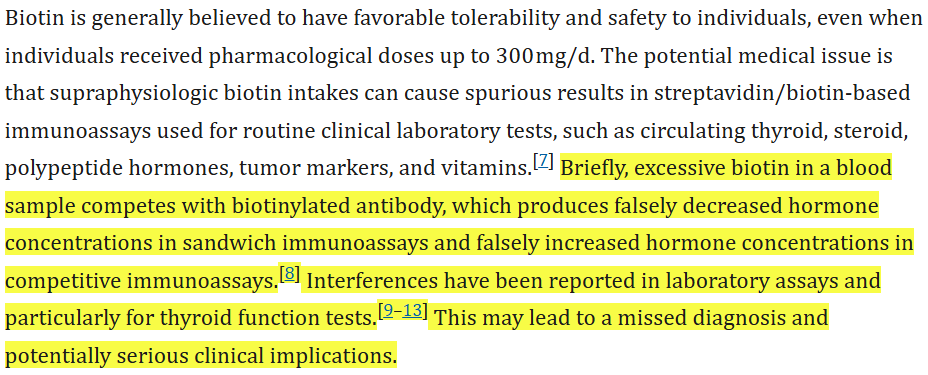
Source: Zhang Y, Wang R, Dong Y, Huang G, Ji B, Wang Q. Assessment of biotin interference in thyroid function tests. Medicine (Baltimore). 2020 Feb;99(9):e19232. doi: 10.1097/MD.0000000000019232. PMID: 32118725; PMCID: PMC7478465.
Why This Matters More Than You Think
Getting a false thyroid result is not just an inconvenience. It can set off a chain of events that affects your health, your mental peace, and your wallet.
Because of a false reading, you could:
- Be misdiagnosed with a thyroid disorder you do not have
- Be prescribed unnecessary medication with its own side effects
- Experience anxiety, fear, and confusion over numbers that do not reflect reality
- Go through repeated testing, specialist visits, and follow-ups; all chasing a problem that does not exist
All of this because of a vitamin. A supplement most people take casually, without thinking twice.
Does Biotin Damage Your Thyroid?
This is an important question and the answer is clear.
No. Biotin does not cause thyroid disease.
It does not damage your thyroid gland. It does not alter how your thyroid functions. Your gland is likely completely fine.
What biotin does is interfere with the laboratory assay method used to measure your thyroid hormones.
The organ is fine. The reading may not be.
This distinction matters because it changes everything about how you respond to an abnormal result.
How to Protect Yourself Before Your Next Test
If you are taking any high-dose biotin supplement, here is what you need to do:
Stop biotin before your thyroid blood test.
Here is a general guideline:
| Biotin Dose | Recommended Stop Period |
| Moderate dose (up to 5,000 mcg) | 48 to 72 hours before the test |
| High dose (10,000 mcg and above) | 5 to 7 days before the test |
| Very high dose or therapeutic dose | Consult your doctor |
And, always inform your doctor about every supplement you are taking before any blood work.
This is not just about biotin. It is about building a habit of being transparent with your healthcare provider so that your results actually reflect what is happening in your body.
Who Is Most at Risk?
You might be surprised at how many people fall into this category without even realizing it.
- Women taking hair growth or hair loss supplements — most of these are loaded with biotin
- People on high-dose B-complex vitamins — biotin is a B vitamin and is often bundled in high amounts
- Patients already being monitored for thyroid disorders — getting a distorted reading here can lead to unnecessary medication adjustments
- Anyone who has not disclosed their supplements to their doctor — which, honestly, is most people
The tricky part is that many people do not even know their supplement contains biotin. It can be listed as biotin, Vitamin B7, or coenzyme R on the label. Always check.

AI-generated image
Read This Carefully
Not every abnormal thyroid report means disease.
Sometimes, it just means you did not pause your supplements before testing.
Before you spiral into worry, before you accept a diagnosis, before you start medication, ask these questions:
- Am I taking any supplement that contains biotin?
- Did I stop it before my blood test?
- Did I tell my doctor everything I am taking?
If the answer to any of these is no, ask for a retest. Stop biotin for at least a week and go again.
Always disclose your supplements before any blood test. It is one of the simplest things you can do to protect the accuracy of your results.
Be informed. Be calm. Test smart.
Disclaimer: This blog is intended for educational and informational purposes only and should not be used as a substitute for professional medical advice, diagnosis, or treatment. Always seek the guidance of your qualified healthcare provider before making any changes to your medications or lifestyle.
Looking for holistic and foundational guidance for thyroid health?
We help you find a way.
Set up a one-on-one consultation with our foundational medicine and lifestyle experts or explore our Wellness Programs to optimize your lifestyle goals.
Reach out to us at 1800 102 0253 or write to us at [email protected].