No products in the cart.
How many times have you heard someone say, “Walking won’t build strength – you need the gym for that”?
I hear this all the time, and I love busting this myth. Walking is one of the most underrated forms of movement we have. People think of it as ‘just cardio,’ but in reality, walking as an exercise does far more for your body than most give it credit for — including strengthening your muscles.
Image Credits: Freepik
If you’ve been wondering, “Can walking build muscle?” The answer is a big yes — when done consistently and correctly. Science, sports nutrition, and years of working with thousands of clients worldwide have shown me that walking engages multiple muscle groups, improves endurance, and lays the foundation for strength.
In my practice, I’ve seen busy CEOs, cancer survivors, diabetics, and even athletes in recovery start with something as simple as walking — and see real, measurable improvements in strength, muscle tone, and stamina. For many of my clients, walking is the first step toward regaining health, building strength, and eventually progressing to more intense workouts.
And here’s the best part: You don’t need fancy equipment, memberships, or hours in the gym. You need a pair of working legs, a little discipline, and a plan.
So here, we’ll explore:
- How walking engages and strengthens muscles
- What research says about walking as a muscle-building tool
- How much walking is good for health and strength
- How to maximize the muscle benefits from your daily steps
So, let’s dive in and break this myth once and for all — because every step you take can make you stronger.
Why Walking as an Exercise is NOT Just Cardio
Many people dismiss walking as ‘too easy’ to count as real exercise. But here’s the truth: walking is a weight-bearing exercise, which means every step you take engages your muscles to move and stabilize your body. It’s simple, yet incredibly effective — especially when done consistently.
Here’s why walking is much more than just cardio:
- Full-body engagement: Walking isn’t just leg work. Your core stabilizes your torso, your arms swing to balance your stride, and your legs handle propulsion and shock absorption.
- Muscle coordination: Walking activates multiple muscle groups in a coordinated way, improving neuromuscular function and balance.
- Joint and bone health: Being weight-bearing, walking helps maintain bone density and strengthens connective tissues around your joints — something stationary cardio cannot do.
- Endurance and stamina: Walking repeatedly challenges your muscles over time, increasing their oxidative capacity and resistance to fatigue.
We always tell our clients — whether they are busy professionals, older adults, or even cancer recovery patients — that walking is one of the most sustainable and accessible ways to build strength and resilience. It’s low-impact, safe, and incredibly effective when paired with the right approach.
Wondering, “How much walking is good for health?” Even 20–30 minutes a day can start building baseline strength, improving posture, and boosting overall well-being. And yes, walking as an exercise can absolutely contribute to muscle development — more than most people think.
Walking Engages Key Muscle Groups
Walking is a true full-body workout. Every step you take activates muscles from head to toe — and it’s this coordination that builds strength, endurance, and functional fitness.
Let’s break down exactly which muscles are working with every step:
Lower Body:
- Quadriceps & Hamstrings: Control your knee movement and absorb impact.
- Glutes: Propel you forward and stabilize your hips.
- Calves (Gastrocnemius & Soleus): Push off the ground with every step.
- Hip Flexors & Adductors: Maintain pelvic stability and balance.
A classic electromyography (EMG) study measured muscle activity during level walking. It showed that the gluteus maximus and calves were highly active during the push-off phase, while quads and hamstrings worked to control the knees. This proves that walking is not just repetitive leg motion — it’s coordinated, muscle-building movement.

Source: Ericson, Mats & Nisell, et al. Jan. (1986). Quantified electromyography of lower-limb muscles during level walking. Scandinavian journal of rehabilitation medicine. 18. 159-63. 10.2340/16501977198618159163.
Core:
- Abdominals & Obliques: Keep your torso upright and control rotation.
- Lower Back (Erector Spinae): Maintains posture and spinal stability.
Your core is constantly working as you walk, even though it might not feel like it. This engagement improves balance, protects your spine, and supports all other movements — which is why walking is a functional, real-world strength exercise.
Upper Body:
- Shoulders & Arms (Deltoids & Trapezius): Swinging your arms counterbalances leg movement.
- Upper Back (Rhomboids & Trapezius): Keeps your posture upright and supports shoulder alignment.
Even though it’s subtle, your upper body is actively engaged with every stride, helping you move efficiently and safely while strengthening smaller stabilizing muscles.
Whether you’re asking, “Can walking build muscle?” or looking for ways to improve how much walking is good for health, understanding which muscles are at work helps you make every step count.
Walking Builds Muscle Endurance and Strength
How many people think strength only lives in barbells and protein shakes? I hear it all the time. The truth is simpler and more useful: walking as an exercise is a low-risk, high-return way to build muscle endurance and meaningful functional strength — especially when you apply a few intelligent progressions.
The physiology — How walking actually strengthens muscle
When you walk, muscles perform thousands of low-force, repeated contractions. That repeated activity:
- Improves oxidative capacity — Your muscle fibers (especially Type I, slow-twitch fibers) become better at using oxygen and producing ATP for sustained work. Over weeks, this improves fatigue resistance and endurance.
- Enhances neuromuscular recruitment — Walking trains motor patterns and coordination between hips, knees, and ankles, which improves the way your nervous system calls on muscle fibers during movement. This is critical for functional strength (standing, climbing stairs, getting up from a chair).
- Increases muscle work on inclines and uneven ground — Slope, speed, and surface complexity demand greater force from glutes, hamstrings, and calves, shifting the stimulus from purely endurance toward strength-building.
Those are not just lab curiosities — intervention studies and reviews show walking-based programs improve muscle quality, strength, and walking performance in older adults and clinical populations.
A 12-week brisk walking program in elderly women (average age ~84 years) significantly improved flexibility (p < 0.05), lower limb strength (p < 0.01), and cardiorespiratory endurance (p < 0.01), even though muscle mass did not change.
- Metabolomics revealed positive changes in amino acids like arginine, glutamine, and tyrosine — key players in neurotransmitter and energy pathways. In simple terms, the women got stronger, more mobile, and more resilient without bulking up.
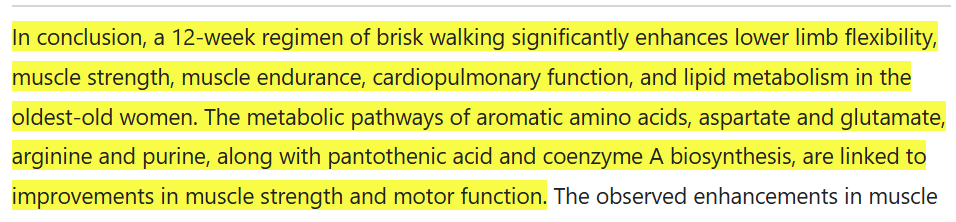
Source: Wang, Y., Lu, Y., Fang, Z. et al. Brisk walking improves motor function and lower limb muscle strength in Chinese women aged 80 years and older. Sci Rep 14, 7933 (2024). https://doi.org/10.1038/s41598-024-55925-6
Another study had participants walk at a constant speed (3.4 mph) across inclines ranging from 0% to 15%. EMG analysis revealed that as the incline increased, the extensor muscles of the lower body—glutes, hamstrings, and calves—had longer activation periods, showing higher recruitment with steeper inclines.
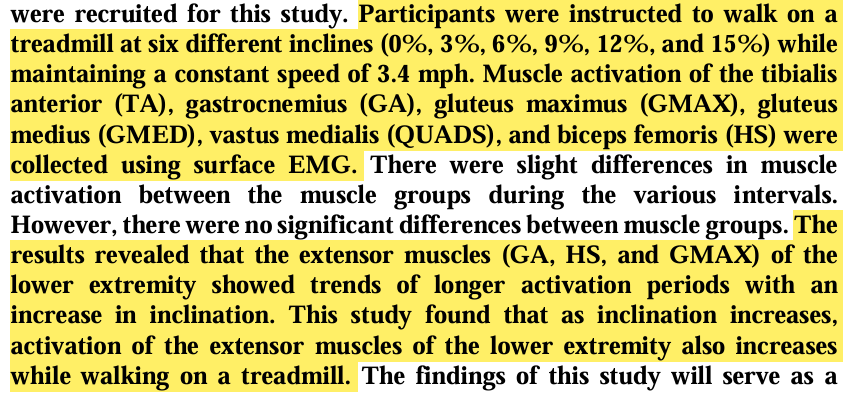
Source: Elizabeth Orozco, Hannah Joslin, et al. Characteristics of Lower Extremity Muscle Activation in Response to Change in Inclination while Walking on a Treadmill. European Journal of Sport Sciences, Vol 1, Issue 4, August 2022. DOI: http://dx.doi.org/10.24018/ejsport.2022.1.4.24
Walking and Muscle Recovery: A Sports Nutrition Perspective
Walking plays a powerful role in muscle recovery. Many people think recovery only happens when you rest completely, but in my years of working with clients—from athletes to cancer survivors—I’ve seen that gentle, low-intensity movement like walking often accelerates recovery far better than complete rest.
Why? Because walking improves circulation. The increased blood flow delivers oxygen, glucose, and amino acids directly to the muscle tissues, which are the raw materials your body needs to repair and rebuild.
Think of it as improving the delivery system—if nutrients are the bricks and cement, blood flow is the truck that carries them to the construction site.
From a sports nutrition perspective, this becomes even more critical. Your muscles don’t just need protein; they need efficient transport of those amino acids into the muscle fibers. Walking facilitates this.
- Low-intensity activities like walking enhance insulin sensitivity. Why does that matter? Because when your insulin sensitivity is higher, your muscles can absorb glucose and amino acids more effectively after exercise. This creates an anabolic environment that supports muscle repair and growth—even if the gains aren’t as large as with high-intensity training.
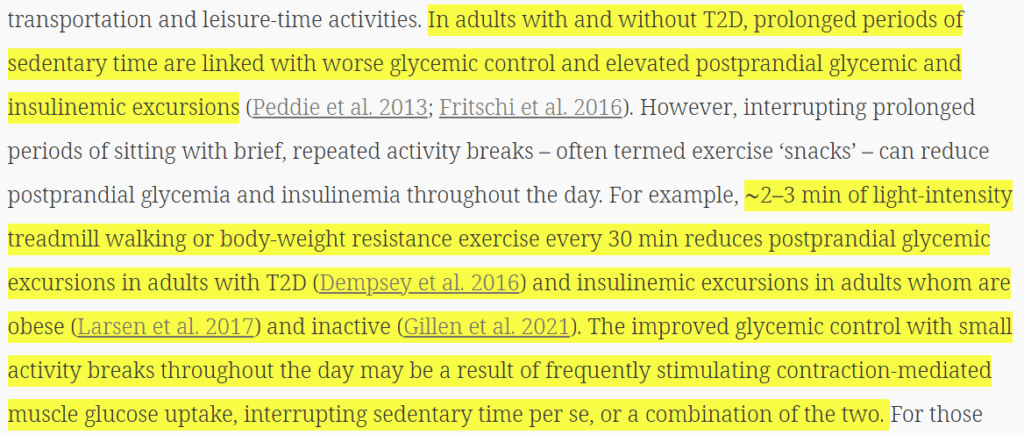
Source: Jenna B. Gillen, Stephanie Estafanos, and Alexa Govette. 2021. Exercise-nutrient interactions for improved postprandial glycemic control and insulin sensitivity. Applied Physiology, Nutrition, and Metabolism. 46(8): 856-865. https://doi.org/10.1139/apnm-2021-0168.
- A study on patients with Peripheral Artery Disease (PAD) found that 12 weeks of walking therapy improved walking capacity by 65%, which may reduce mortality risk by up to 22%.
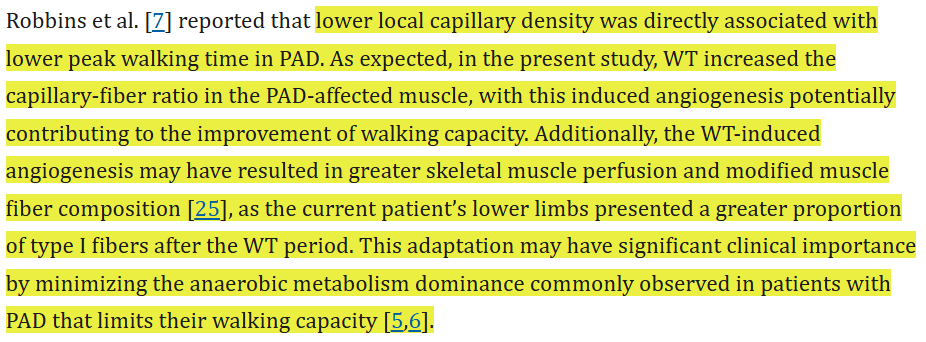
Source: da Silva ND Jr, Andrade-Lima A, et al. Walking Training Increases microRNA-126 Expression and Muscle Capillarization in Patients with Peripheral Artery Disease. Genes (Basel). 2022 Dec 29;14(1):101. doi: 10.3390/genes14010101. PMID: 36672843; PMCID: PMC9858623.
Walking Exercise Benefits You Can Expect
Once you commit to walking consistently, here’s what you can expect — based on research and thousands of success stories from our clients:
- Better Aerobic Fitness: VO₂ max improves by 10–16% (meaning you can climb stairs or go on hikes with ease).
- Blood Sugar Regulation: Lower fasting glucose, better insulin sensitivity, and reduced post-meal spikes.
- Joint-Friendly Fat Loss: Fat loss without the wear and tear of running or jumping.
- Muscle Strength & Endurance: Noticeably stronger legs, better posture, and improved balance within weeks.
- Sharper Mind & Better Mood: Higher BDNF levels mean better focus, memory, and lower anxiety.
- Anti-Inflammatory & Immune Support: Walking reduces chronic inflammation and supports immune resilience.
- Better Sleep: Regular walkers report deeper, more restful sleep and better recovery.
We’ve had cancer survivors, diabetics, and busy professionals transform their health by simply walking the right way. When done consistently, IWT becomes one of the most powerful tools for longevity.
How to Maximize Muscle Gains from Walking
With the right tweaks, it becomes a powerful tool for strength, endurance, and overall health. Here’s how you can maximize your muscle gains from walking:
- Increase Duration: Aim for 30–60 minutes a day, but don’t be intimidated. Start where you are — even 10 minutes today is better than zero. Over time, your muscles adapt through consistency.
- Add Intensity: Walk at a brisk pace or add inclines (like hill walks or treadmill settings). Research shows incline walking boosts glute activation by up to 30% compared to flat walking, which means more strength gains in your legs and hips.
- Use Intervals: Try fast/slow intervals — for example, 2 minutes brisk, 1 minute slower. This not only challenges your muscles but also improves cardiovascular fitness and endurance. Try Interval Walking Training (IWT), one of my favorite methods, wherein you alternate between fast-paced walking and slow recovery walking.
- Add Resistance: A weighted vest, resistance bands, or even light dumbbells can increase the workload on your muscles, following the principle of progressive overload. This is how walking transitions from light movement into a real strength-building exercise.
- Walk Mindfully: Pay attention to posture and core engagement. Shoulders back, head up, abs lightly engaged. Walking this way protects your spine, strengthens your core, and makes the movement more effective.
Remember, walking as an exercise isn’t about perfection — it’s about progression. Build gradually, listen to your body, and you’ll be amazed at the strength, endurance, and resilience you develop.
The Last Word
Whether you’re taking 10,000 steps a day or adding incline walks to your routine, your muscles are working—and getting stronger—with every step.
So the next time someone says walking doesn’t build muscle, you can confidently share the science. Be educated, not influenced.
Disclaimer: The information shared in this blog is for educational purposes only and not intended to replace medical advice, diagnosis, or treatment. Always consult your healthcare provider before beginning any new fitness or wellness routine—especially if you have an existing medical condition, injury, or mobility concern.
Try this 6-Day Walking Challenge:
Frequently Asked Questions
Can walking build muscle?
Yes! Walking as an exercise strengthens your legs, glutes, and core. Research shows it improves muscle quality and endurance, especially for beginners or older adults. While it won’t bulk you like lifting weights, regular walking can build muscle strength, improve tone, and prepare you for advanced workouts.
How much walking is good for health and muscle gain?
Experts recommend 30–60 minutes daily. Wondering how much walking is good for health? Even 10,000 steps a day improves cardiovascular fitness, metabolism, and muscle tone. Start with 10 minutes, then progress. The key is consistency — daily walking builds endurance while gradually strengthening your muscles.
Is walking as effective as the gym for muscles?
Walking as an exercise is great for building endurance and toning muscles, but it’s not a substitute for resistance training. Think of walking as your foundation — it supports recovery, strengthens core muscle groups, and enhances overall fitness. Pair it with strength training for maximum muscle gains.
What type of walking builds more muscle?
Want to know if walking builds muscle faster? Incline walks, brisk pace, and interval walking give better results. Walking uphill or alternating between fast and slow speeds challenges your leg and glute muscles. Adding weights or mindful posture turns everyday walking into a muscle-toning workout.
Does walking help in recovery and endurance?
Yes, walking as an exercise boosts blood flow, nutrient delivery, and oxygen supply to muscles. This aids recovery after workouts, reduces soreness, and supports overall endurance. That’s why both athletes and beginners use walking as a smart, low-impact way to stay active while building muscle quality.
Looking for holistic and integrative guidance on physical well-being?
We help you find a way.
Set up a one-on-one consultation with our integrative team or explore our Wellness Programs to optimize your lifestyle goals.
Reach out to us at 1800 102 0253 or write to us at [email protected].