No products in the cart.
You know, there are so many people who write to me saying, “Luke, I’ve tried everything—creams, facials, expensive treatments—but these dark marks on my face just don’t go away.” Some even point to those dark patches on the forehead or cheeks and tell me how they hide behind makeup or avoid social situations because of it.
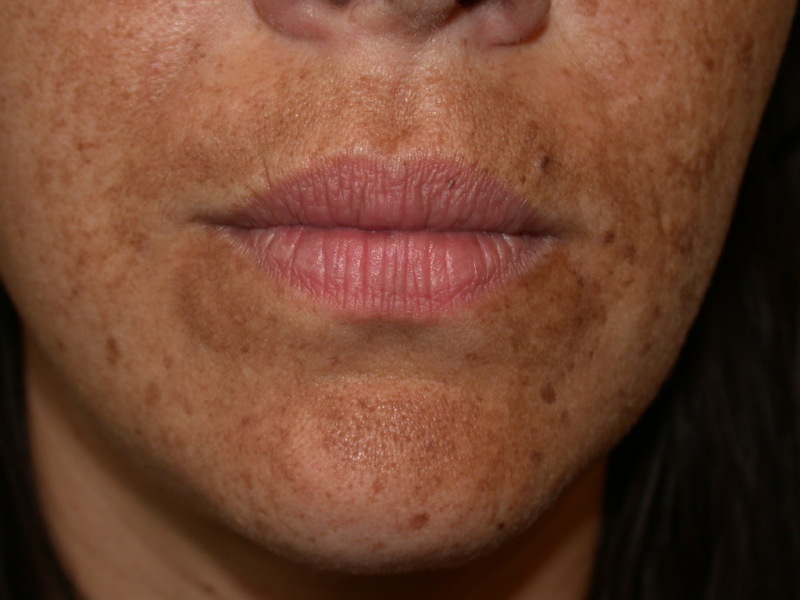
Image Source: Basit H, Godse KV, Al Aboud AM. Melasma. [Updated 2023 Aug 8]. In: StatPearls [Internet]. Treasure Island (FL): StatPearls Publishing; 2025 Jan-. [Figure, Melasma, Face DermNet New Zealand] Available from: https://www.ncbi.nlm.nih.gov/books/NBK459271/figure/article-24941.image.f1/
But here’s the important part: these marks are not always ‘just about the skin.’ They’re not random. They are the body’s way of communicating that something deeper may need attention.
Melasma symptoms—from patchy brown or gray discoloration to uneven pigmentation—often have roots in hormones, gut health, chronic inflammation, stress, or even liver sluggishness.
This is why, instead of relying only on creams or quick fixes, I believe in going deeper and addressing the melasma causes. When you start working on your nutrition, hormones, digestion, and lifestyle, your skin begins to respond naturally. The beauty of this approach is that while you may come in wanting clearer skin, you leave with better overall health and vitality.
Let’s explore the science, the root causes, and natural solutions that we have seen work—not just in theory, but in real-life healing journeys.
What Is Melasma and Why Does It Show Up on the Face?
So, what exactly is melasma? Many people confuse it with regular pigmentation, but it’s quite different. Pigmentation can happen from acne scars, injuries, or just sun exposure.
Melasma on the face, on the other hand, is a chronic skin condition. It occurs when our melanocytes—the cells that produce melanin—start working in overdrive.
The result? Those symmetrical brown or grayish patches are most often on the forehead, cheeks, and upper lip.
Now, why does this happen? The melasma causes go beyond ‘too much sun.’ Let me break it down for you:
- Hormonal changes: This is one of the biggest triggers. I often see women develop melasma during pregnancy (sometimes called the ‘mask of pregnancy’), while on birth control, or during perimenopause. Imbalances in estrogen, progesterone, and even thyroid function can all play a role.
- Sun exposure and heat: UV radiation doesn’t just tan the skin, it stimulates melanin production. Add heat and inflammation to the mix, and pigmentation worsens. In fact, UV and visible light together intensify melasma patches.
- Genetic predisposition: If melasma runs in the family, there’s a scientific basis for that. Studies report that 50% of individuals with melasma have a positive family history, and certain polymorphisms (like in the MC1R gene) may increase susceptibility.
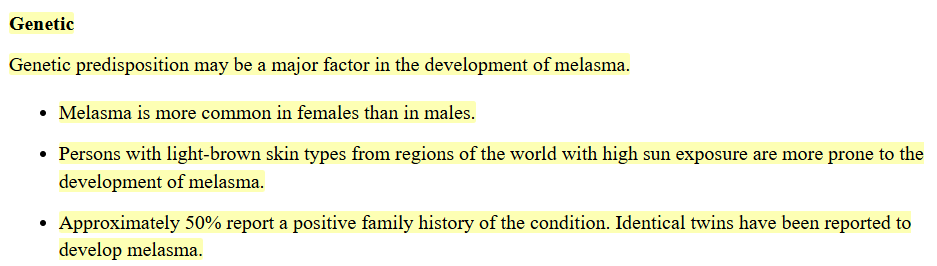
Source: Basit H, Godse KV, Al Aboud AM. Melasma. [Updated 2023 Aug 8]. In: StatPearls [Internet]. Treasure Island (FL): StatPearls Publishing; 2025 Jan-. Available from: https://www.ncbi.nlm.nih.gov/books/NBK459271/
- Chronic inflammation: Whether it’s from poor nutrition, environmental toxins, or hidden food sensitivities, inflammation keeps melanocytes in an activated state.
- Stress and cortisol dysregulation: Elevated stress hormones are known to alter skin barrier function and pigmentation. Psychological stress is directly linked with the worsening of melasma symptoms.
- Gut and liver imbalances: This is something I speak about often. If your gut microbiome is off, or if your liver isn’t cleansing efficiently, the skin often becomes the exit route. Melasma patches can be a sign that your body needs internal support.
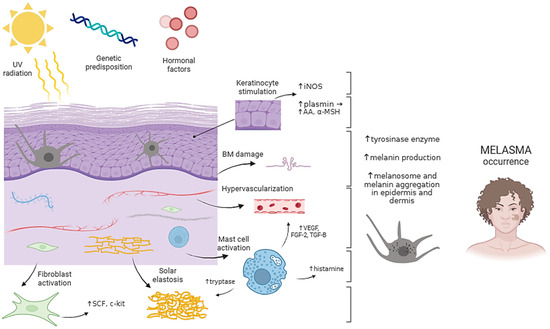
Pathogenesis of melasma. UV radiation, genetic predisposition, and hormonal factors are key contributors to melasma development. Chronic sun exposure in susceptible individuals triggers a complex interplay between dermal and epidermal cells, ultimately leading to increased melanin production and hyperpigmented patches characteristic of melasma. Abbreviations: AA—arachidonic acid; BM—basement membrane; FGF-2—fibroblast growth factor 2; iNOS—inducible nitric oxide synthase; SCF—stem cell factor; TGF-B—transforming growth factor B; UV—ultraviolet; α-MSH—alpha-melanocyte stimulating hormone. (Source: Parać E, Bukvić Mokos Z. Unmasking Melasma: Confronting the Treatment Challenges. Cosmetics. 2024; 11(4):143. https://doi.org/10.3390/cosmetics11040143)
And here’s the important part—if we only treat melasma on the surface and ignore these root causes, it usually comes back. I’ve seen this with so many clients: laser treatments, chemical peels, bleaching creams… they may fade the spots for a while, but unless hormones, gut health, and lifestyle are addressed, the patches return.
Dark Patches on the Forehead or Cheeks? It’s Not Just About Sunscreen
I can’t tell you how many times someone comes to me saying, “Luke, I wear sunscreen every single day, but I still have these stubborn dark patches on my forehead and cheeks. Why won’t they go away?”
Now, don’t get me wrong—sunscreen is important, but it’s not the whole story. Melasma symptoms are not caused by the sun alone.
Melasma is a photo-oxidative condition—meaning it’s worsened by sunlight + heat + internal inflammation. Even visible light (from screens, bulbs, and indoor exposure) can aggravate melasma, not just UV. So if you’re only relying on sunscreen, you’re addressing a fraction of the problem.
When we work with clients, we don’t just tell them to apply SPF, we guide them to:
- Reduce internal inflammation (through food and stress balance).
- Build up their antioxidant stores (through nutrients like vitamin C, E, polyphenols, and glutathione).
- Protect from both UV and heat exposure (hats, shade, timing outdoor activity).
So the next time you see dark patches on your forehead or cheeks, remind yourself, it’s not just about what you apply to your skin. It’s about what’s happening inside and how your environment interacts with it.
Balanced Nutrition & Lifestyle: What Actually Helps for Dark Marks on The Face
When clients approach us worried about dark marks on their face or stubborn melasma on their face, we don’t start with a shopping list of creams. We start with cells. If we feed your cells the right inputs and remove the wrong ones, pigmentation pathways calm down. Here’s what worked for our clients:
1) Build a ‘cell-friendly’ plate (every meal)
Why:
Spikes in blood sugar drive oxidative stress and low-grade inflammation—two upstream switches that nudge melanocytes to make more pigment. Melasma is frequently tied to insulin resistance, so balancing glucose is non-negotiable.
How do we do it:
- Half plate: Fiber + color. Leafy greens, cucumbers, peppers, tomatoes, carrots, broccoli/cauliflower (crucifers help liver cleanse enzymes).
- Quarter plate: Protein. Lentils/beans, eggs, curd/paneer, fish, or chicken.
- Quarter plate: Smart carbs or extra vegetables. Millets, red/black rice, quinoa, sweet potato—ideally cooled/reheated for more resistant starch.
- Thumb of fat: Nuts, seeds, coconut, olive, or mustard oil.
- Timing: 10–12-hour overnight fast (not extreme fasting). No grazing.
These are general nutrition guidelines, not a one-size-fits-all diet plan. Every individual’s needs differ, especially with conditions like melasma, insulin resistance, or other health concerns. Always personalize your plate based on your body, preferences, and professional advice.
2) Nutrients that help regulate pigmentation (food first, then consider add-ons)
- Vitamin C: A powerful antioxidant that protects skin cells from oxidative stress in melasma. Food sources: Amla, oranges, guava, bell peppers, lemon water.
- Vitamin E: Works in synergy with Vitamin C to reduce oxidative damage. Food sources: Almonds, sunflower seeds, avocados.
- Zinc: Essential for wound healing and regulating melanocyte activity (the cells that produce pigment). Food sources: Pumpkin seeds, chickpeas, lentils, cashews.
- B-complex (especially B12 & Folate): Deficiency has been linked to pigmentation issues and fatigue. Food sources: Leafy greens, whole grains, legumes, beetroot, ethical A2 dairy (if it suits you).
- Omega-3 fatty acids: Help reduce inflammation, which is one of the root causes of pigmentation. Food sources: Walnuts, flaxseeds, chia seeds, fatty fish (if part of your meals).
- Turmeric/curcumin, polyphenols, carotenoids: Spices and colored plants (turmeric, berries, tomato/lycopene, green tea) add daily antioxidant ‘pressure’ in your favor.
3) Gut & liver routines (where inside-out skincare really happens)
- Daily fiber target: ~25–35 g from veg, lentils, beans, chia/flax, and whole grains to feed a diverse microbiome. (Fermented foods like homemade dahi, kefir, kanji, pickled veg.)
- Crucifers & bitters: Broccoli, cabbage, radish, methi, arugula support cleanse enzymes and estrogen metabolism—useful if hormones play a role.
- Omega-3 + movement for the liver: Both are linked with better hepatic fat handling. A healthier liver = calmer inflammatory signaling to skin.

Image Credits: Freepik
4) Hydration & seasonal cleansers
This isn’t about harsh or restrictive cleanses or ‘detoxing’—it’s about seasonal alignment.
- Hydration: Cool herbal infusions, warm lemon water in the morning, and sipping fluids regularly to support skin plumpness and toxin flushing.
- Seasonal foods: Think hydrating cucumbers in summer, cooked greens in monsoon, warming spices in winter—your skin responds when your body feels in rhythm with the season.
5) Stress, sleep, and movement
Stress isn’t just a feeling; your skin has its own stress axis. Our stress messengers can directly influence melanocytes and melanogenesis. Poor sleep and chronic stress keep pigment switches ‘sticky.’
- Simple fixes: 10–15 minutes of breathwork (box breathing, 4-7-8), sunlight in the first hour of the morning, and a consistent bedtime. For a quality deep sleep, try these sleep hygiene rituals.
- Daily movement: Helps regulate insulin, circulation, and cleansing pathways. This doesn’t need to be a gym workout — walking after meals, yoga, or light strength training all count.
6) Sun, heat, and visible light: protect smarter (not just more)
Sunscreen matters—but with melasma and dark patches on the forehead, visible (blue) light and heat also stoke melanogenesis.
In one of our podcasts with Dr. Sonali Kohli, an Integrative Aesthetic Dermatologist and Hair Transplant Surgeon, she said, “Choosing the right sunscreen? Look for zinc/titanium oxide, SPF 30+, and broad-spectrum protection—and don’t forget to apply enough…”
What that looks like in practice:
- Expose, then protect: Get 10–15 minutes of gentle morning sun on your skin for Vitamin D, then protect.
- Choose the right sunscreen:
- Look for broad-spectrum protection (UVA + UVB).
- Opt for mineral sunscreens with zinc oxide or titanium oxide—these sit on the skin and reflect rays instead of absorbing them.
- If pigmentation is an issue, go for sunscreens with a triple plus sign (PA+++) or iron oxides for visible light protection.
- Tinted mineral sunscreens (SPF 30+): These cover UV + visible light and are especially helpful for preventing melasma relapse.
- Application matters: Use the fingertip unit method to apply generously, and reapply if you sweat, swim, or spend long hours outdoors.
- Don’t forget physical barriers: Wide-brim hats, sunglasses, umbrellas, and simply walking in the shade can often protect you better than overdoing sunscreen.
- Be mindful of heat: Excess heat (like hot kitchens, saunas, or using hot tools close to your face) can also trigger pigmentation.
7) Labs worth discussing with your doctor (bio-individual tweaks)
If pigmentation is persistent or recurs easily, rule out/optimize the terrain:
- Thyroid panel + antibodies (links seen between melasma and thyroid autoimmunity).
- Iron studies, B12, folate (mixed data, but deficiencies are common—and sometimes co-exist with pigmentation concerns).
- Glycemic/insulin markers if you have polycystic ovary syndrome (PCOS), cravings, central weight, or energy crashes (ties back to the insulin-melasma connection).
Always consult your doctor to decide which tests are relevant for you based on your health history, symptoms, and individual needs.
Topical Natural Remedies (My Favorite Hacks)
Before we dig into the internal layers of skincare, let’s talk about gentle, homemade rituals that many clients love—simple, natural, and grounding:
- Besan + Turmeric Mask: A tried-and-tested kitchen classic I share on the blog: mix 1 tablespoon of besan (gram flour) with a pinch of turmeric and enough yogurt or milk to make a paste. Apply, let dry, rinse with lukewarm water. It exfoliates, brightens, and feels nurturing.
- Aloe Vera Gel: Fresh aloe is my go-to when inflammation flares—cooling, healing, and soothing. I tell clients: keep it simple, patch-test, and let your skin feel calm.
- Rose Water or Cucumber Water Spritz: A quick spritz that feels luxurious and resets stressed skin—especially great during hot seasons. It cools inflammation without heaviness.
- Lemon + Honey + Aloe Blend: I once shared this as a skin-brightening elixir—mix lemon juice, honey, and aloe vera gel and apply 2–3 times a week. It helps hydrate while gently lifting dullness.
- Other Gentle Pantry Favorites: On my holistic recipe corner and DIY page, you’ll find things like oatmeal baths (for soothing), or a simple besan-oats-almond-oil mask—perfect for monsoon dullness and texture smoothing.
These are not dramatic overnight miracles—but they are safe, feel-good rituals that support skin beautifully when your body is already in a healing mindset.
Bio-Individuality: Your Skin Is Unique
I remind everyone in my videos and programs: what worked for your best friend may not work for you. Each person’s skin, liver tone, gut, and hormonal landscape is unique. That’s why I avoid cookie-cutter ‘protocols.’ Instead, we observe, gently adjust, and stay curious about what your body is telling you.

Image Credits: Freepik
Consistency Over Quick Fixes
Melasma and dark patches don’t clear overnight—and if we chase that overnight promise, we end up on a whack-a-mole cycle of fading and relapse. The real story is this: reliable habits, day after day—better food, better rest, simple topical care, stress balance. Over time, gentle and invisible shifts build up to visible results.
The Last Word
When it comes to melasma—or any pigmentation—remember this: your skin is not the problem, it’s only the messenger. Covering it up or attacking it harshly will never work long-term. Instead, listen to what it’s telling you. Is your body inflamed? Is your gut unhappy? Are your hormones or stress levels out of balance?
Once we shifted the focus inward—balancing food, lifestyle, rest, and emotions—the skin started to follow. That’s the magic of addressing the root, not the symptom.
If there’s one thing I want you to take away, it’s this: healing is possible. Your skin can and will reflect your inner health when you give your body the chance. Let food, lifestyle, rest, and a calm mind be your everyday medicine.
And always—be kind to yourself in the process.
Frequently Asked Questions
1. What are the common melasma symptoms?
Melasma symptoms usually include dark patches or spots that appear on the cheeks, forehead, nose bridge, or upper lip. These patches are often symmetrical and can get darker with sun exposure, hormonal changes, or stress. Unlike acne scars, melasma on the face doesn’t cause pain or irritation.
2. What causes melasma on the face?
Melasma causes are multifactorial. Triggers include hormonal fluctuations (like pregnancy or birth control), excess sun exposure, chronic stress, thyroid imbalance, and inflammation. Even lifestyle choices, such as poor sleep or unhealthy food, can worsen pigmentation. Essentially, dark marks on the face signal deeper internal imbalances, not just a skin issue.
3. How do I reduce dark patches on my forehead?
Dark patches on the forehead often link to melasma. Natural healing involves managing sun exposure, reducing inflammation through balanced nutrition, supporting gut health, and keeping stress in check. Foods rich in antioxidants, healthy fats, and hydration can help, along with lifestyle changes that target the root melasma causes.
4. Are dark marks on the face always melasma?
Not always. Dark marks on the face may result from acne scars, sun damage, or nutrient deficiencies. However, melasma on the face is identified by symmetrical, brownish patches triggered by internal and external factors. A professional diagnosis helps rule out other conditions and create a targeted, root-cause-based approach.
5. Can melasma be cured completely?
Melasma is often chronic, but it can be managed effectively. By addressing melasma causes—like hormonal shifts, stress, and gut health—dark patches on the forehead and face can fade significantly. The focus should be on long-term lifestyle changes rather than quick fixes, allowing skin to reflect deeper internal healing.
Disclaimer: This blog is for educational purposes only and is not a substitute for medical advice, diagnosis, or treatment. Dark marks on the face, melasma, or any skin condition should be evaluated by a qualified healthcare professional or dermatologist. Always consult your doctor before making any changes to your diet, lifestyle, or treatment plan.
Need personalized guidance to treat skin conditions by addressing their root cause?
We help you find a way.
Set up a one-on-one consultation with our skincare specialists or enroll in our Wellness Programs for personalized solutions.
Reach out to us at 1800 102 0253 or write to us at [email protected].