No products in the cart.
At 60, Atul Shendye was in a stable, peaceful phase of life, surrounded by a loving family, steady routines, and simple joys.
His days were marked by home-cooked meals, daily swims, long walks, and time spent doing things he genuinely enjoyed. He travelled often, both within India and abroad, stayed in beautiful places, celebrated milestones with his family, and yet never felt the need to showcase any of it to the world.
Life, for Atul, was full, but understated.

Even on his 60th birthday, celebrated with his family at one of Dubai’s finest hotels, there was no urge to make announcements or seek attention. He was content living a private life, grounded in routine, relationships, and good health.
From the outside, his life reflected what many aspire to after decades of hard work: a sense of balance, calm, and quiet fulfillment.
And then, without warning, everything changed.
A routine medical check led to an endoscopy.
The results revealed a malignant tumor in the stomach.
What followed was not just a medical diagnosis, but a moment that altered how Atul saw his body, his future, and the life he had so carefully built. What lay ahead was a journey he had never imagined, one that would strip life down to its essentials and rebuild it again, one conscious, disciplined day at a time.
This is not just another medical case. It is one of those stomach cancer survivor stories that reminds us how suddenly life can shift, and how deeply human strength can rise in response.
This is Atul Shendye’s story.
The First Signs: When the Body Whispered
Looking back, Atul often says the body doesn’t suddenly break down; it communicates quietly, long before a diagnosis ever appears on paper. In his case, the first signals were subtle enough to feel manageable, even easy to dismiss.
In August 2023, Atul underwent what was intended to be a routine annual health check.
Most reports came back normal, except one, his complete blood count showed alarmingly low hemoglobin levels, hovering around 7–7.5.
- Around the same time, he began experiencing persistent acidity and gastroesophageal reflux disease (GERD). Nothing dramatic, nothing that immediately raised red flags.
- His family physician prescribed acidity medication along with iron supplements, and for a short while, things seemed to improve.
- His hemoglobin levels picked up slightly, offering reassurance that the issue was under control.
But the discomfort didn’t truly settle. Over the next few months, the acidity continued to intensify.
By January 2024, another blood test revealed that his hemoglobin had dropped again. Alongside this, Atul began noticing something new: a minor difficulty while swallowing.
- It wasn’t alarming at first. In fact, it was easy to adapt without realizing what was happening.
- Portions became smaller, meals took longer, and without conscious intention, his overall food intake reduced.
- Gradually, his weight began to drop.
At the time, these changes felt disconnected, including low hemoglobin, acidity, and slight swallowing discomfort. None of them pointed clearly toward a serious illness. These early, quiet changes were the beginning of a path that would later redefine Atul’s understanding of health, awareness, and life after cancer treatment.
The Diagnosis That Changed Everything
When the swallowing discomfort and unexplained drop in hemoglobin could no longer be explained, Atul’s physician advised an endoscopy.
Until that moment, the possibility of something serious had remained distant, almost unthinkable. What the procedure revealed, however, altered the course of his life in an instant.
The endoscopy showed a tumor in the upper part of his stomach, one that appeared malignant.
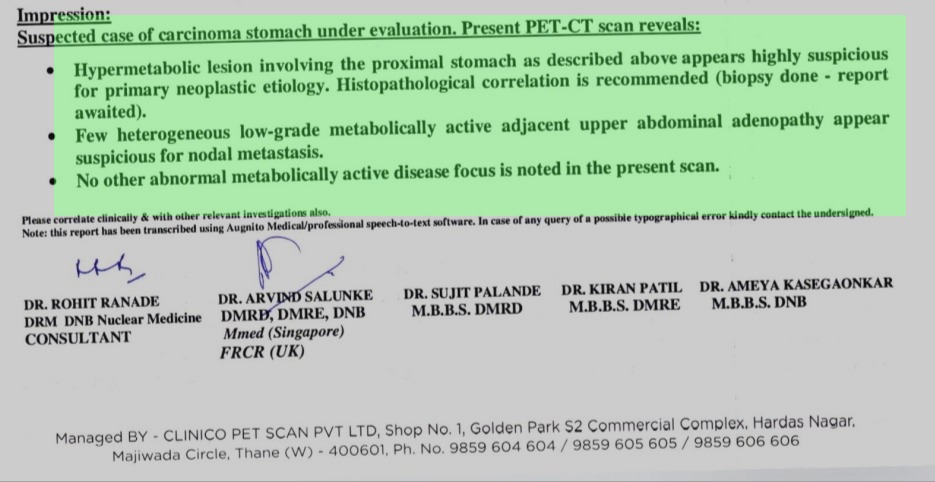
The weight of that information was difficult to process. Shock set in first, followed by fear and disbelief. For Atul and his family, it took time just to absorb what they had been told.
- A condition like stomach cancer does not arrive with noise; it quietly disrupts the flow of life, bringing everything to a sudden pause. Routines stop. Conversations change. The future, once taken for granted, suddenly feels uncertain.
What made the diagnosis even harder to accept was Atul’s lifestyle. He had lived simply and consciously, with home-cooked meals, daily swimming, regular walks, and a moderate routine.
There were no excesses, no obvious warning signs.
And yet, the question that echoed constantly was one many stomach cancer patients ask: Why me?
Beyond the physical implications, the diagnosis began affecting parts of his life that are rarely spoken about.
His confidence wavered. His sense of control slipped.
- Hospital visits replaced familiar routines, and medical terminology filled conversations where everyday plans once existed.
- Activities that once brought joy felt distant.
- The emotional impact was relentless, fear, anxiety, and moments of deep sadness surfaced in waves, often changing from hour to hour.
Entering the Medical Phase of Care
Once the diagnosis was confirmed, the focus shifted toward understanding treatment options and making informed decisions. As a family, they chose not to remain passive recipients of information. Instead, they consciously decided to learn, ask questions, and advocate for a course of care that felt aligned and timely.
Atul’s first consultation was with an oncology surgeon, who took the time to explain the road ahead and outline the next steps. Soon after, a medical oncologist was consulted, and chemotherapy was initiated.
Like many individuals navigating stomach cancer treatment success, Atul was aware that chemotherapy could be demanding on the body.
Over the course of four chemotherapy sessions:
- Follow-up scans showed the tumor had reduced to less than half its original size
- While the treatment served its medical purpose, it also came with significant physical challenges
These included:
- Persistent acidity
- Extreme fatigue and weakness
- Digestive disturbances, including diarrhea
- Two hospitalizations for post-chemotherapy recovery
It became increasingly clear that while treatment was addressing the disease, it was also placing heavy demands on a body already under stress.
With the tumor responding well, surgery was advised. In May 2024, Atul underwent a partial gastrectomy. The procedure went smoothly, and the histopathology report that followed was satisfactory.
However, life after partial gastrectomy is rarely linear.
In the weeks that followed:
- Eating no longer felt effortless
- Digestion changed significantly
- Strength was slow to return
- Day-to-day functioning required conscious adjustment
This period marked the beginning of a new understanding: healing does not end with treatment; it asks for sustained care, patience, and support long after.
The Phase That Nearly Broke Him: When Eating Became Impossible
After surgery, the expectation was a gradual return to normalcy.
- The procedure had gone well
- Reports were reassuring
- Initial tests showed no functional issues with the reconstructed esophagus and stomach
Chemotherapy resumed in June 2024. The side effects were still present, but more manageable than before. Then, things began to change.
When Swallowing Slowly Slipped Away
About six weeks post-surgery, Atul started experiencing difficulty swallowing. He was already on a soft diet
- Each meal felt harder than the last
- Eating became increasingly uncomfortable
Initially, this was attributed to:
- Chemotherapy-related nausea
- Acidity and reflux
Treatment continued. But the swallowing did not improve; it steadily worsened. Despite repeated consultations:
- There were no clear answers
- His food intake was reduced further
- His weight dropped at an alarming pace
A PET Scan That Changed the Narrative
By September 2024, Atul had completed his remaining chemotherapy sessions and was scheduled for a final PET scan. The results were unsettling.
- The scan suggested possible cancer cells in a peripheral node
- This raised concerns about recurrence
- Earlier histopathology reports had been clear
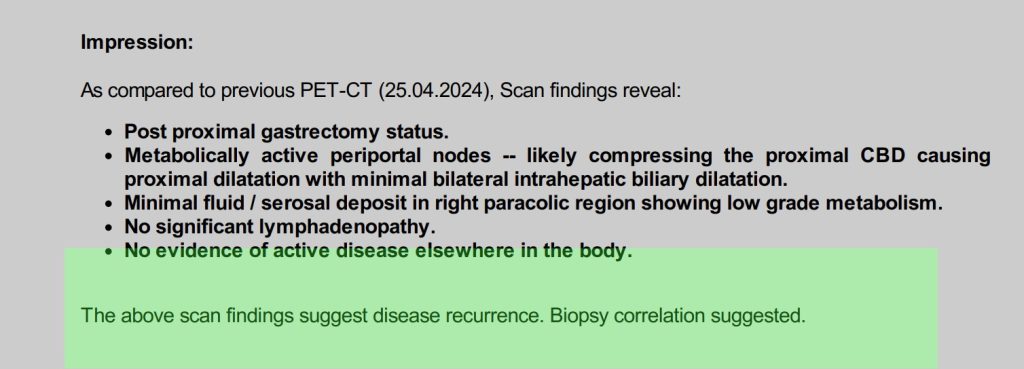
There was uncertainty, even among the medical team. Before deciding on further treatment, additional investigations were advised.
The Test That Finally Explained Everything
As swallowing difficulties persisted and weight loss worsened, a repeat barium swallow test was suggested.
It revealed what months of suffering had hidden: A severe stricture at the base of the esophagus. The discovery was devastating, but clarifying.
It explained why, for months, Atul had been unable to consume anything beyond liquids.
By this point:
- He had survived largely on liquid nutrition for over four months
- His weight had dropped to dangerously low levels
- His strength had declined significantly
When Procedures Couldn’t Go Further
An endoscopy was planned to:
- Biopsy the suspicious node
- Dilate the stricture to allow food intake
However:
- The narrowing was too severe
- The scope could not reach the required area
A laparoscopy was attempted next, but without success. With no viable options left at that center, the family sought a second opinion.
Partial Relief After Prolonged Distress
At another hospital, an endoscopy was finally performed successfully.
- The biopsy confirmed the presence of cancer
- The stricture was dilated enough to allow small amounts of food
Physically, there was some relief. Emotionally, the toll had already set in.
When the Fear Felt Heavier Than the Diagnosis
For Atul, this phase was more distressing than the diagnosis itself. What troubled him most was:
- The fear of the stricture
- The inability to eat or nourish his body
- The loss of strength and independence
This phase marked the lowest point of Atul’s journey. And yet, it quietly became the moment that set the stage for a different approach to healing, one that would soon begin to shift the direction of his recovery.
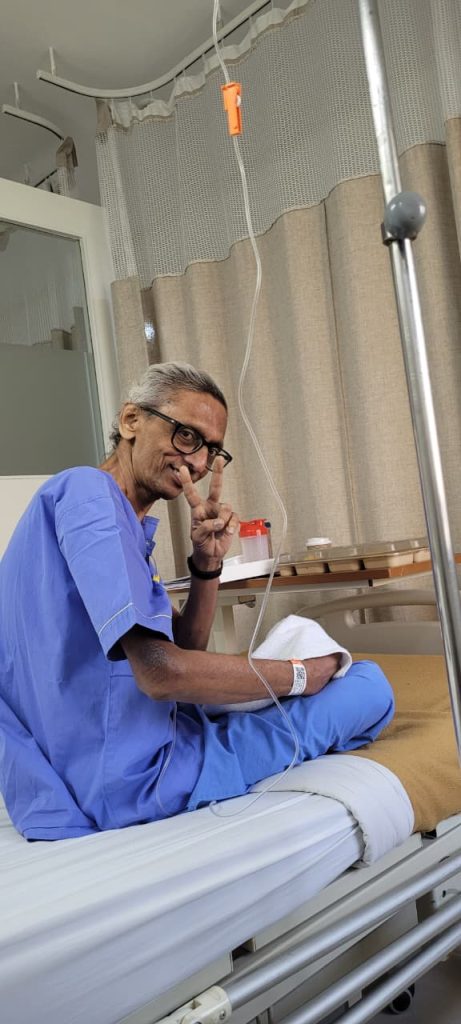
A Conscious Decision: “We Need to Do This Differently”
When Atul slowly began eating again, the plan was to proceed with further chemotherapy and immunotherapy. But within three weeks, the swallowing difficulty returned.
Another consultation confirmed what the family already feared: another dilatation would be required, and frequent repetitions carried their own risks.
That was the moment everything paused. Not out of denial, but out of clarity.
As Atul later reflected, this phase led him to one clear decision: “I have to take charge now.”
As a family, a conscious decision was made:
- To pause and rebuild
- To restore strength before proceeding further
- To handle things differently this time
Nutrition, movement, sleep, emotional well-being, and daily routines were no longer optional. They were non-negotiable.
If Atul had to move forward, his body needed the resources to support that journey.
Rebuilding the Foundations with Team Luke
While seeking structured nutritional and lifestyle guidance, Atul’s daughters recalled something familiar.
They had been watching Luke’s videos online, often coming across stories of healing and radical remission. In a moment of exhaustion and uncertainty, this approach felt worth exploring, not as an alternative to medical care, but as support alongside it.
In December 2024, the family decided to onboard with Team Luke.
Atul was assigned to Vidhi Shah, Senior Nutritionist & Lifestyle Expert at Team Luke, with extensive experience supporting individuals undergoing and recovering from cancer treatment.
From the very first conversations:
- There was clarity, not overwhelm
- Structure, not fear
- Reassurance that rebuilding could happen step by step
This was not about replacing treatment. It was about strengthening the foundations so treatment could be endured more safely and effectively.
And for the first time in months, the path ahead felt considered, supported, and possible.
Vidhi’s Approach: Precision, Compassion & Practicality
From the very beginning, Vidhi’s approach was rooted in clarity, not complexity.
The first step was not intensity, but precision.
As Vidhi explained to the family:
“Our primary focus right now is to reduce inflammation, stop feeding cancer-supportive pathways, and rebuild nutrition in a way your body can actually tolerate.”
The Core Focus Areas
The nutritional and lifestyle strategy centered around:
- Reducing inflammation and cancer-supportive pathways
- Anti-angiogenic nutrition, DNA repair support, and immune strengthening
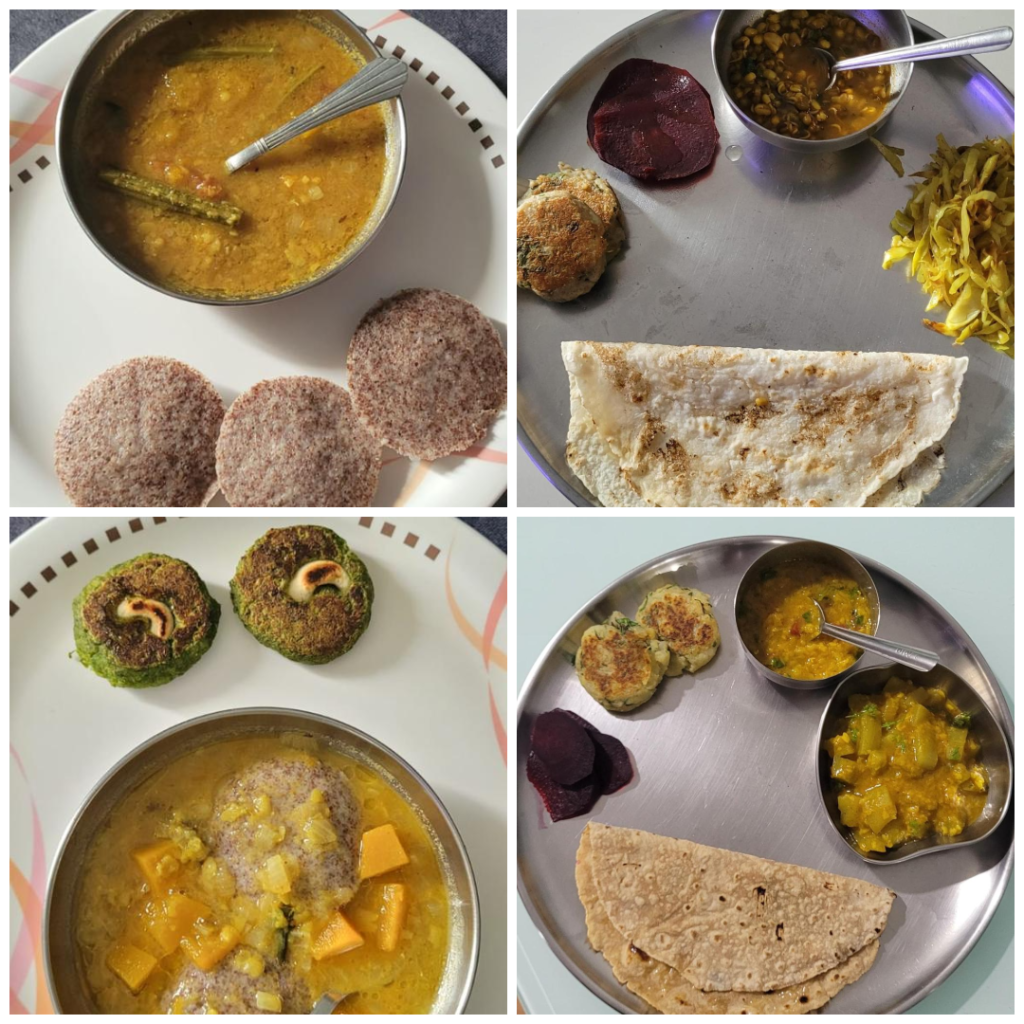
- Nutrition adapted to swallowing limitations using soft, non-irritating foods
- Gut health and microbiome restoration to improve absorption and reduce acidity
- Healthy weight gain, muscle mass, and strength support
- Stabilizing digestion after prolonged chemotherapy and repeated dilatations
Everything was designed to work alongside ongoing chemotherapy and immunotherapy, not separate from it. At every stage, the approach remained rooted in foundational medicine, respecting medical treatment while using lifestyle, nutrition, and daily practices to rebuild balance.
Learn more about: What is foundational medicine and how it can help cancer patients.
Practical, Not Overwhelming
Atul initially worried the plan would be difficult to manage. Instead, it felt grounding.
“Her guidance was practical, realistic, and easy to incorporate into our daily routine,” he shared.
Meal planning was gentle. Routines were flexible. Movement was introduced within his strength levels, not beyond them. The emphasis was never perfection, but consistency.
Emotional Health Was Treated as Essential
Recognizing the emotional toll of months without eating and repeated medical setbacks, Vidhi integrated tools to support inner stability:
- Breathwork and guided breathing
- Visualization practices
- Gratitude and journaling
- Mindful eating and sleep hygiene
These practices were not treated as add-ons, but as foundational to recovery.
“Thanks to her support, we felt empowered to take control of our health in a way we never thought possible.”
The Family as the Framework
Atul’s wife and daughters played a central role in the execution. They committed fully to:
- Following nutrition protocols
- Maintaining routines even during travel
- Supporting emotional practices daily

This consistency mattered. Even during a short family break to Dubai, Vidhi’s routines remained intact, proof that the approach was sustainable, not restrictive.
Strength, Slowly Restored
Alongside nutritional stability, movement became a turning point. With encouragement from his daughters, both certified yoga teachers, Atul began gentle weight training.
Strength training, in particular, marked a shift.
- It restored confidence.
- It improved physical resilience.
- It reinforced belief in recovery.
“I started feeling stronger, physically and mentally, and even noticed changes in my appearance.”
The lifestyle interventions, combined with medical care, gradually brought stability, something that had felt out of reach for months.
When the Body Responded: Transformation & Healing Became Visible
Change did not arrive dramatically. It arrived gradually and unmistakably.
Within a few weeks of consistent nutrition, movement, and emotional support, Atul began noticing shifts that felt almost unfamiliar after months of depletion.
“I started noticing changes in my energy levels, acidity, and even my appearance.”
The body, once exhausted, began to respond.
Physical Progress
- Swallowing improved after months of difficulty
- Energy levels stabilized
- Acidity reduced significantly
- Movement became easier and more confident
- Weight and muscle strength began to improve
- He could travel again and maintain his routine, even while in Dubai
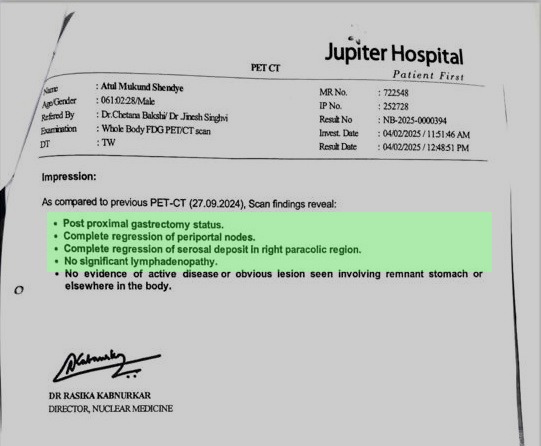
A scan conducted after joining the program showed disease regression.
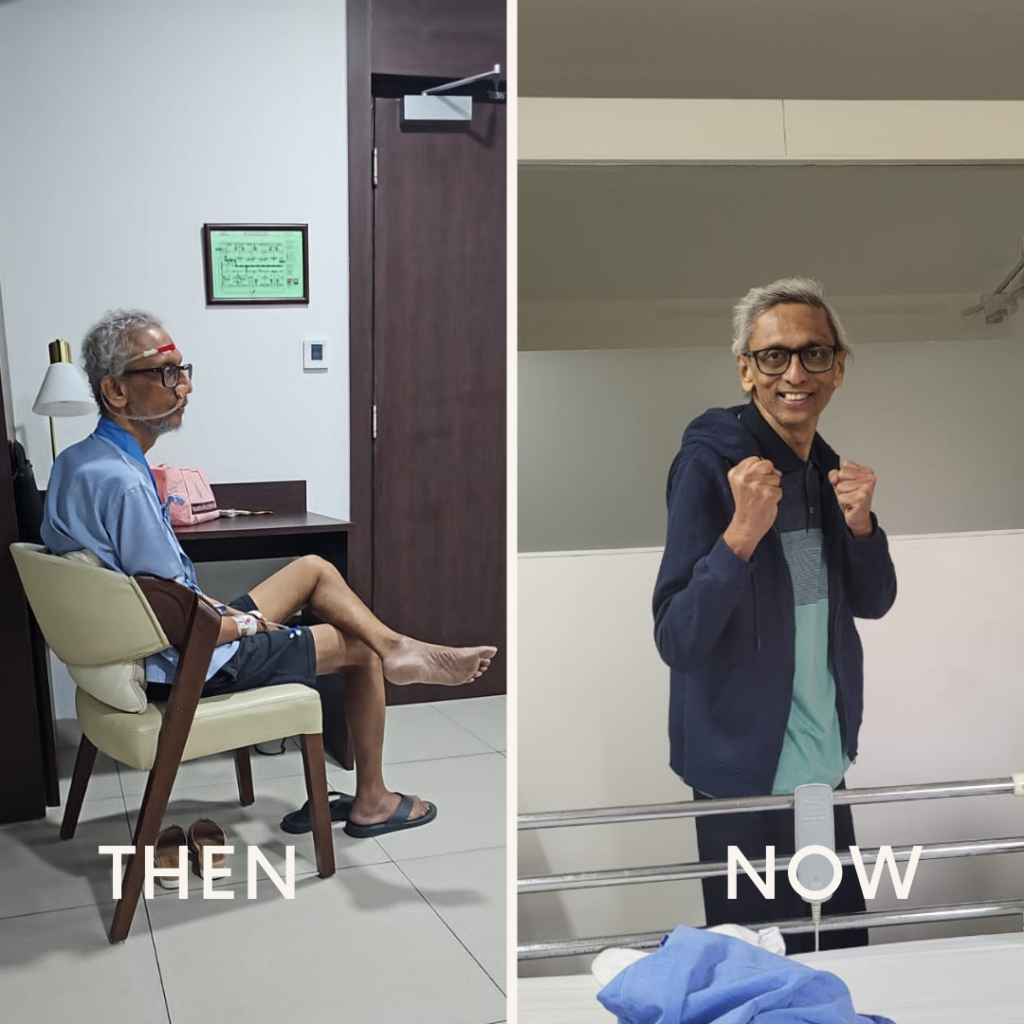
Perhaps the most telling shift was not clinical, but visual.
“Words cannot fully express how I felt in that moment; it was an overwhelming mix of relief, gratitude, and hope. Everything suddenly made the effort worth it. For the first time in a long while, I felt hope that healing was truly possible.”
“I stopped looking like a patient,” Atul shared.
Mindset & Confidence
With physical strength returning, Atul’s mindset began to transform:
- Hope and emotional balance resurfaced
- Discipline replaced helplessness
- Weight training became a consistent practice
- Breathwork, manifestation, journaling, and gratitude became daily tools
- He felt in control of his healing rather than overwhelmed by it
He was no longer just enduring treatment. He was participating actively in his recovery.
Emotional Well-being
Equally important were the emotional changes:
- Fear and anxiety reduced
- Resilience strengthened
- Small wins were noticed and celebrated
- Family bonding deepened
- Faith and trust, in the process and in the body, returned
Overall, Atul shifted from a space of hopelessness to one of empowered healing.
Life After Cancer Treatment: What Healing Really Looks Like
As Atul shared,
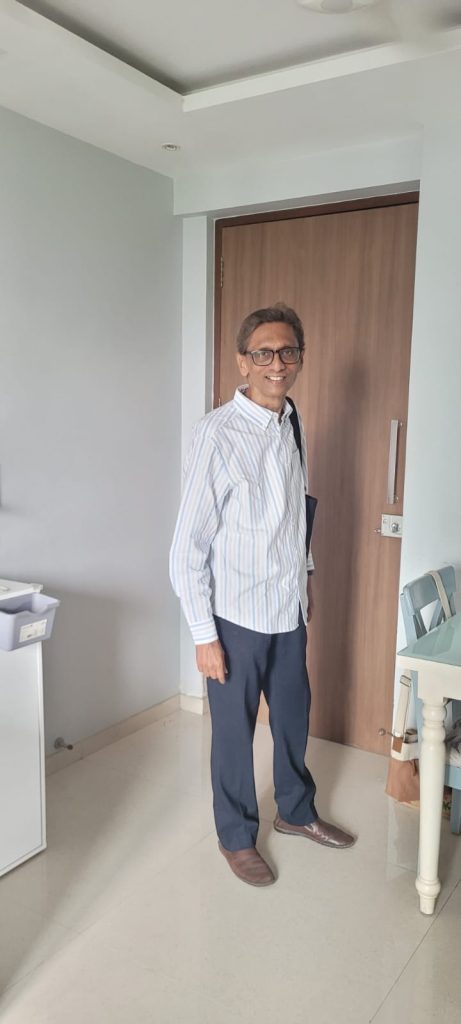
“Progress has been slow. There has been some weight gain and signs of healing, but the toughest moments were in my mind.”
“Those moments were the hardest to endure, but they also taught me resilience.”
Healing, Atul learned, is rarely linear. But it remains possible.
Consistency Over Everything Else
What made the difference was not intensity, but showing up every day. Atul committed to a simple, steady rhythm:
- Timely medication
- Daily walking and gentle strength training
- Following his food plan mindfully
- Prioritizing sleep
- Practicing journaling and gratitude
“Every single day, I stuck to the same routine.”
He learned to listen to his body, allow it time, and approach food with patience and respect, chewing slowly, stopping before overeating, and trusting the process.
Small improvements were noticed. Small wins were acknowledged.
Healing Was Never a Solo Journey
This phase was sustained by support.
His wife and daughters remained his anchors. The extended family offered constant encouragement. His doctors, Vidhi, Luke, and the wider team provided steady guidance and care. Faith also played a central role.
“There was no turning back, only the choice to recover. And with their support, I chose healing.”
This journey reshaped Atul’s perspective. “I now see this as my second life.”
A Reflection from Vidhi and Team Luke: What This Journey Taught Us
For us at Team Luke, guiding Atul’s case was deeply meaningful, not because it was easy, but because of what it represented.
The most rewarding moments were witnessing:
- A man who couldn’t swallow food slowly regained the ability to eat
- His emotional recovery, from despair to quiet strength
- His discipline: daily steps, routines, mindset practices, even during chemotherapy
- His family’s unwavering commitment and unity
- A PET scan showing complete disease regression
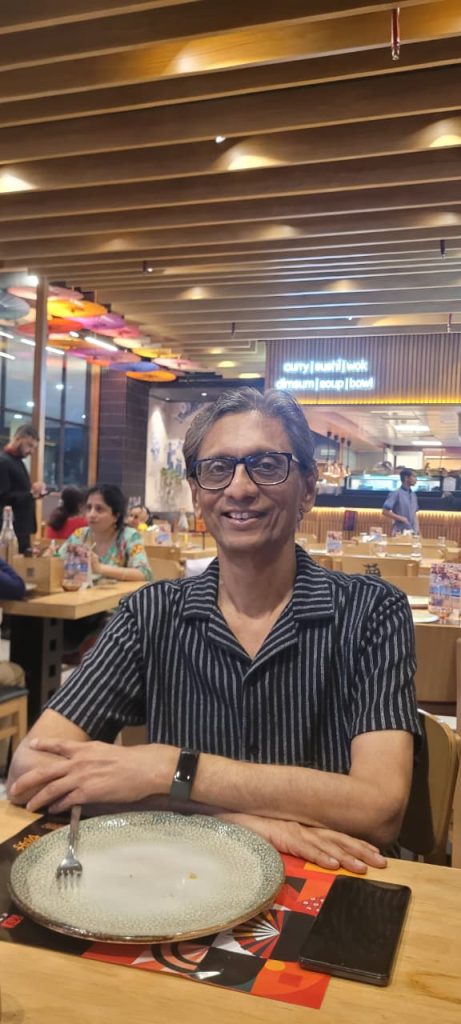
- Seeing him travel, laugh, feel hopeful, and rebuild life again
Atul’s journey is a reminder that healing is rarely about one intervention. It is about:
- Lifestyle medicine
- Family support
- Emotional resilience
- Consistency over perfection
- And the remarkable capacity of the human body and spirit when given the right support
This is not just a stomach cancer survivor story. It is a story of reclaiming agency, rebuilding foundations, and choosing to live again.
The Last Word
Atul’s story reminds us of something simple, yet deeply powerful.
Medical treatment addresses the condition. But recovery is shaped by what we do every single day after that.
Healing isn’t dramatic or instant. It’s built quietly, through choices, consistency, and self-awareness.
A second life doesn’t arrive by chance. It is chosen consciously.
With humility.
With patience.
With hope.
And that choice, made daily, changes everything.
Disclaimer: While this may inspire you, please remember that each case is unique. What worked for him doesn’t necessarily have to work for you. His protocol was designed by keeping his past and current lifestyle, case, and situation in mind. If you have a medical condition or are on medications, please keep your doctor in the loop before trying anything new. Life-saving treatments like surgery, chemotherapy, and radiation are essential, while strong lifestyle foundations help support recovery. Make an informed decision, always.
Inspired by Atul’s journey? Your story can begin, too.
We’re here to support YOU every step of the way.
Set up a one-on-one consultation with our integrative team or enroll in our Cancer Care Program with Luke’s Senior Team/Luke’s Team for personalized solutions.
Reach out to us at 1800 102 0253 or write to us at [email protected].