No products in the cart.
Mood swings. Poor sleep. Weight gain. Bloating.
Most of us view these as separate problems: a sleep issue, a gut issue, a weight issue. But the body doesn’t function in fragments. It functions as a single, intelligent, and connected system, where all components constantly communicate.
We often hear about estrogen, insulin, testosterone, thyroid hormones, and rightly so. These conversations matter.
Image Credits: Freepik
But what’s equally important to understand is that hormones work as a team. They are chemical messengers, constantly rising and falling to maintain balance. When one hormone goes out of sync, it rarely affects just one function. It impacts many.
One such hormone that doesn’t get enough attention is the progesterone hormone. Quiet but powerful, progesterone helps balance estrogen. When levels drop, it can cause low progesterone symptoms like mood changes, bloating, sleep issues, and more.
This isn’t about blaming hormones or fearing symptoms. It’s about awareness. About understanding the progesterone hormone function and recognizing that symptoms are not random, they’re messages.
When we learn to listen to these signals and support balance at the root, the body often responds with remarkable intelligence.
What Is Progesterone and Why Does It Matter?
Progesterone is one of the body’s most important but often overlooked hormones. Understanding progesterone hormone function helps us see why even subtle changes in its levels can affect both men and women.
How Progesterone Is Made and Where
- In women: Progesterone is primarily produced in the ovaries, especially after ovulation during the luteal phase of the menstrual cycle. During pregnancy, the placenta takes over progesterone production to support fetal growth.
- In men: Progesterone is produced in the adrenal glands and testes. While often overlooked, it supports testosterone production, brain function, and overall metabolic health.
- The adrenal connection: The adrenal glands also make progesterone as a precursor for cortisol and other steroid hormones, linking it directly to stress response and energy regulation.
Progesterone Levels Across Life Stages
- In women, Progesterone begins to rise after ovulation, typically around 12–14 days after the start of your period, reaches its peak about 5–7 days later during the mid-luteal phase, and drops if pregnancy does not occur. Levels naturally decline with age, particularly in the 30s and 40s.
- In men, levels are generally lower but still essential for hormonal balance, mood, sleep, and reproductive health.
Key Functions of Progesterone
- Menstrual Health & Fertility: Progesterone prepares the uterus for pregnancy, regulates your cycle, and supports early pregnancy. Low progesterone levels are strongly linked to infertility and early miscarriage.
- Mood & Emotional Stability: Progesterone interacts with gamma-aminobutyric acid (GABA) receptors in the brain, which helps calm the nervous system. Low levels can contribute to anxiety, irritability, and mood swings.
- Sleep Quality: Progesterone has mild sedative properties that help you sleep deeply. Women with low progesterone often experience insomnia or restless sleep.
- Bloating & Weight: Progesterone helps balance estrogen, which regulates water retention and fat storage. Low levels can lead to bloating, stubborn belly fat, and even PMS (premenstrual syndrome)-related weight fluctuations.
- Fertility & Pregnancy Support: Adequate progesterone is critical for implantation and sustaining pregnancy, making it central to the conversation about progesterone and pregnancy.
Here’s an important insight:
Progesterone isn’t just a ‘female hormone,’ it plays essential roles in men and women alike.
When levels drop, even slightly, the body can signal imbalances through symptoms like mood swings, sleep problems, bloating, and changes in fertility.
Causes of Low Progesterone in Today’s Lifestyle
Progesterone naturally declines with age, usually starting in the early 30s and becoming more noticeable by the late 30s. But modern lifestyle factors, stress, and environmental exposures can accelerate this decline. Understanding the causes helps you take meaningful action.
1. Chronic Stress: The Pregnenolone Steal
The biggest driver of low progesterone is chronic stress. Pregnenolone, the ‘mother hormone,’ is the precursor for both cortisol and progesterone. When stress is prolonged:
- Your body prioritizes cortisol production to manage stress.
- Less pregnenolone is available for progesterone, causing its levels to drop.
- This is why stress not only affects your mood and energy but also fertility, menstrual flow, and overall hormonal balance.
As Luke says, “Your body protects you from getting pregnant during high periods of stress. When you’re constantly in a fight-or-flight state, progesterone drops naturally.”
2. Nutrition, Inflammation, and Nutrient Deficiencies
Inflammatory foods (processed foods, refined sugar, trans fats) can impair hormone production.
Extreme calorie restriction or fad diets signal the body that it is under ‘starvation stress,’ which raises cortisol and lowers progesterone.
- Key micronutrients such as magnesium, zinc, Vitamin B6, and Vitamin C are critical for progesterone synthesis. Deficiency can impair production.
3. Environmental Toxins & Hormone Disruptors
- Everyday chemicals in plastics (BPA), pesticides, and cosmetics mimic estrogen and interfere with progesterone function.
- Drinking water from plastic bottles, using chemical-laden skincare products, or consuming conventionally farmed produce can increase exposure.
Over time, these estrogen-mimicking compounds disrupt the natural hormonal balance, reducing progesterone’s effectiveness.
4. Sleep Deprivation and Circadian Misalignment
Progesterone levels are tightly linked to sleep quality.
- Research shows that women who are consistently sleep-deprived have lower luteal-phase progesterone.
- Poor sleep affects the adrenal glands and cortisol rhythm, indirectly reducing progesterone.

Source: Sharkey KM, Crawford SL, Kim S, Joffe H. Objective sleep interruption and reproductive hormone dynamics in the menstrual cycle. Sleep Med. 2014 Jun;15(6):688-93. doi: 10.1016/j.sleep.2014.02.003. Epub 2014 Mar 6. PMID: 24841109; PMCID: PMC4098663.
5. Chronic Inflammation & Metabolic Stress
Conditions like insulin resistance, obesity, and metabolic syndrome create a chronic inflammatory state.
- Inflammation affects the ovaries and adrenal glands, reducing progesterone production and impacting fertility.
Signs and Symptoms of Low Progesterone You Shouldn’t Ignore
Low progesterone often manifests in subtle ways. Recognizing these signals early can help prevent more serious hormonal imbalances down the line:
- Mood & Emotional Changes: Irritability, anxiety, mood swings, and brain fog. Progesterone interacts with GABA receptors to regulate the nervous system.
- Sleep Issues: Trouble falling asleep, frequent waking, or restless nights. Low progesterone reduces its natural sedative effect.
- Menstrual & Fertility Issues: Heavy or irregular periods, spotting before menstruation, PMS, difficulty conceiving, and early miscarriages.
- Bloating & Weight Gain: Water retention and stubborn belly fat can appear even without dietary changes.
- Perimenopause Symptoms: Hot flashes, night sweats, mood fluctuations, and hormonal swings as progesterone naturally declines.
- Digestive and Gut Signals: Not all bloating is gut-related; progesterone impacts smooth muscle function and can influence gut motility.
These symptoms are signals, not failures. Your body is communicating that it needs support, not that you’re doing something wrong.
The Progesterone–Estrogen Relationship: Balance Is Everything
Hormones never work in isolation; they are chemical messengers that operate as a team.
One of the most important relationships in the body is between progesterone and estrogen. When progesterone levels drop, even slightly, estrogen can take the lead, creating a state known as estrogen dominance.
Why Balance Matters
Progesterone acts as a natural counterbalance to estrogen. When this balance is disrupted:
- PMS & Mood Swings: Low progesterone fails to calm the nervous system, leading to irritability and emotional fluctuations.
- Polycystic ovary syndrome (PCOS) & Hormonal Imbalance: Women with polycystic ovarian syndrome often have relative progesterone deficiency, contributing to irregular cycles, acne, and metabolic changes.
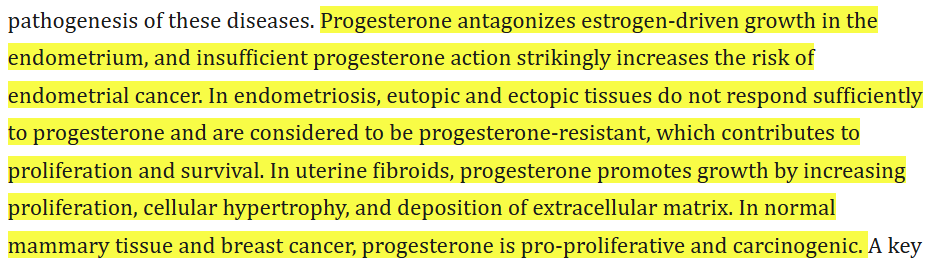
- Endometriosis & Fibroids: Without sufficient progesterone, estrogen-driven tissue growth can accelerate, worsening symptoms.
- Heavy Periods & Fertility Challenges: Progesterone prepares the uterus for pregnancy; low levels can lead to heavy bleeding, difficulty conceiving, or early miscarriages.
- Perimenopause Symptoms: As progesterone naturally declines with age, women may experience hot flashes, night sweats, mood changes, and irregular cycles.
Critical Implications for Health
- Breast & Endometrial Cancers: Studies indicate that progesterone supports estrogen regulation, which is crucial in estrogen receptor + breast cancers and endometrial cancers.
- Hormonal Protocols During Recovery: Even during cancer treatment or recovery, supporting progesterone naturally, through nutrition, stress management, and lifestyle, can improve outcomes and help the body maintain balance.
Source: Kim JJ, Kurita T, Bulun SE. Progesterone action in endometrial cancer, endometriosis, uterine fibroids, and breast cancer. Endocr Rev. 2013 Feb;34(1):130-62. doi: 10.1210/er.2012-1043. Epub 2013 Jan 9. PMID: 23303565; PMCID: PMC3565104.
Estrogen Dominance Is Not Just a Women’s Issue
Estrogen dominance isn’t limited to women. Men are also affected, particularly in the context of obesity, low testosterone, and fat distribution.
How It Happens in Men
- Fat Cells as Estrogen Storage Units: Excess abdominal fat stores estrogen, which can disrupt hormonal balance.
- Lower Testosterone: Rising estrogen relative to testosterone can lead to reduced energy, mood changes, and metabolic issues.
- Belly Fat Isn’t Just Calories: Chronic stress, nutrition, and environmental exposures can drive estrogen dominance, making fat around the midriff a hormonal signal, not just overeating.
Why Progesterone Still Matters
Even when progesterone levels appear ‘normal,’ they may be insufficient to counteract excess estrogen. Supporting progesterone hormone function is key for:
- Women: Managing PCOS, endometriosis, fibroids, heavy periods, and cancer risk.
- Men: Supporting testosterone production, reducing belly fat, and maintaining metabolic health.
Progesterone and Pregnancy: Why Stress Impacts Fertility
Progesterone isn’t just a hormone for regular cycles; it’s essential for fertility and a healthy pregnancy. But modern life often disrupts its delicate balance.
Why Stress Can Block Pregnancy
- During chronic stress, your body shifts into fight-or-flight mode, dominated by cortisol and adrenaline.
- As discussed earlier, progesterone shares the same precursor hormone (pregnenolone) as cortisol. When stress is prolonged, more pregnenolone is used for cortisol, leaving less available for progesterone.
- Reduced progesterone signals the body that conditions aren’t ideal for pregnancy, impacting ovulation, implantation, and early pregnancy maintenance.
Many of our patients conceive after simply removing themselves from stressful environments: a holiday, time away, or reducing chronic pressures. This shows how lowering stress can restore hormonal balance and support fertility.
Reframing Infertility
Infertility isn’t always a ‘failure,’ it’s often a stress + hormonal safety signal. Understanding this empowers couples to address the root cause, rather than only chasing medical interventions.

Image Credits: Freepik
PCOS and Hormonal Imbalance: The Role of Progesterone
PCOS is more than irregular cycles or weight gain; it’s a hormonal imbalance, often driven by low progesterone and relative estrogen dominance.
How Progesterone Helps
Low progesterone fails to counterbalance estrogen, creating irregular ovulation, heavy periods, and metabolic disruption.
Symptoms are often worsened by:
- Sleep deprivation: Impacts cortisol rhythm and progesterone production
- Insulin resistance: High insulin stimulates androgen production, further disturbing hormonal balance
- Belly fat accumulation: Fat cells store estrogen, which keeps progesterone in a relative deficit
Calorie-cutting alone rarely fixes hormonal weight gain. The solution lies in supporting progesterone, reducing stress, improving sleep, and balancing insulin.
Here are 5 PCOS-friendly breakfast ideas you must try!
Testing Progesterone the Right Way
Understanding your progesterone levels is one of the most important steps in identifying and addressing hormonal imbalances. But it’s not just about testing, it’s about testing the right way, at the right time, and in the right context.
When to Test
- Mid-Luteal Phase: Progesterone peaks roughly 7 days before your period. Testing during this window gives the most accurate picture of your body’s production.
Testing too early or too late in the cycle can give misleading results, potentially missing a deficiency.
Testing Options
- Blood Tests: The most common method, providing a snapshot of serum progesterone levels.
- Saliva Tests: Measures free, biologically active progesterone, useful for monitoring hormone fluctuations.
- Urine Hormone Testing: Provides insight into metabolized hormone levels over time, showing trends rather than a single moment.
What About Men? When Should They Test?
Men don’t have monthly hormone cycles like women, so progesterone testing isn’t cycle-dependent.
Best time to test:
- Any day of the month
- Morning sample (8–10 am) for consistency
Testing is especially useful if there are signs of:
- Chronic stress or burnout
- Poor sleep quality
- Low libido or mood changes
- Symptoms of estrogen dominance
Why Testing Both Progesterone and Estrogen Matters
Progesterone doesn’t act alone; its effect is always in relation to estrogen.
- Even if progesterone appears ‘normal,’ it may be insufficient to counteract high estrogen, leading to estrogen dominance symptoms.
Testing both hormones together gives a complete picture, allowing healthcare providers to create personalized protocols for hormonal balance.
Root-Cause Lifestyle Strategies to Support the Progesterone Hormone
Supporting your progesterone hormone isn’t just about supplements or medications; it’s about strengthening your body and mind through lifestyle, nutrition, and daily habits.
Stress Regulation: Protect Your Progesterone
Stress is one of the biggest threats to healthy progesterone levels. Chronic stress triggers cortisol production, which can steal the precursors your body needs to make progesterone.
Actionable strategies:
- Breathwork & Meditation: Even 5–10 minutes daily lowers cortisol and supports progesterone synthesis.
- Silence & Reflection: Simple mindfulness practices reduce sympathetic nervous system overactivity.
- Change Stress Perception: Reframing challenges helps your body stay in ‘rest-and-repair’ mode rather than fight-or-flight.
You can’t remove all stressors, but you can strengthen your body and mind to fight them effectively.
Struggling with stress & emotional overwhelm? Learn simple yet powerful techniques to reset, relax & regain balance.
Sleep: The Hormone Reset Button
Sleep is not optional; it’s the body’s natural hormonal reset. Progesterone production and estrogen regulation are deeply tied to circadian rhythms.
- Sleep deprivation → estrogen dominance, PCOS, belly fat accumulation
- Good sleep → better stress handling and hormonal balance
Practical tips:
- Aim for 7–9 hours of quality sleep nightly
- Keep a consistent sleep-wake schedule
- Reduce caffeine and screen exposure in the evening
For quality deep sleep, try these 11 sleep hygiene secrets experts swear by!
Nutrition That Supports Hormonal Balance
What you eat is directly tied to your progesterone hormone function. Poor nutrition or fad diets increase inflammation, stress, and cortisol, reducing progesterone.
Key strategies:
- Balanced fiber: Mix soluble and insoluble fibers, don’t overdo it
- Cooked cruciferous vegetables: Broccoli, cauliflower, and kale help the liver cleanse
- Reduce stimulants & sugar: Minimize caffeine, alcohol, and white sugar to reduce stress and inflammation
- Avoid extreme dieting: Starvation or crash diets spike cortisol, lowering progesterone
- Chemical-free foods: Choose organic or minimally processed options to reduce estrogen-mimicking chemical load
Reduce Estrogen Load
Even with healthy progesterone levels, high estrogen can tip the balance. Every day exposure to xenoestrogens can increase estrogen dominance:
- Plastics & BPA: Found in bottles, containers, and canned foods
- Pesticides & hormones in food: Meat, dairy, fruits, vegetables
- Cosmetics & personal care products: Parabens, DEA, and other hormone-mimicking chemicals
Cleaner food, water, and personal care choices strengthen your hormonal foundation.
Support Liver & Gut Cleanse
Estrogen is metabolized via the liver and gut. Poor bowel movements or liver overload mean estrogen recirculates, disrupting progesterone function.
Practical tips:
- Ensure regular bowel movements; constipation keeps estrogen in circulation
- Support liver health with hydration, cruciferous vegetables, and minimal alcohol
- Focus on gut-friendly foods to reduce inflammation and improve cleansing pathways
Building a Stronger System in a Stressful World
Life will always have challenges. Ways to strengthen your mind and body:
- Nutrition tailored to hormone support
- Exercise suitable for your body type and hormonal profile
- High-quality sleep and circadian rhythm alignment
- Emotional resilience: meditation, visualization, reflection, and acceptance
Emotional wellness directly impacts progesterone hormone function. Regulating emotions reduces cortisol, supports adrenal health, and allows your body to produce progesterone efficiently.
When to Seek Professional Guidance for Progesterone Hormone Health
Even with lifestyle changes, there are times when professional guidance is essential to ensure your progesterone hormone function is optimized.
- Persistent symptoms such as heavy or irregular periods, mood swings, bloating, sleep disturbances, or fertility challenges
- Difficulty conceiving or recurring early miscarriages
The Last Word
Your body is always talking, sometimes in whispers, sometimes in loud signals.
Mood swings, bloating, irregular cycles, sleep troubles, or fertility challenges aren’t failures; they are messages from your body that your progesterone hormone function may need support.
The key is to listen, understand, and act.
Eat smart. Move more. Sleep right. Breathe deep.
Treat your body with respect, give it what it needs, and trust in its intelligence, because your hormones, your health, and your vitality all respond when you do.
For more information, tune in to the full podcast episode:
Frequently Asked Questions
1. What is progesterone, and why is it important for women and men?
Progesterone is a vital hormone that supports reproductive health, mood, sleep, and metabolism in women and men. Its key functions are maintaining hormonal balance, supporting fertility, protecting against excessive estrogen effects, and helping the body stay calm, resilient, and well-regulated.
2. What are the common signs of low progesterone?
Common low progesterone symptoms include PMS, mood swings, anxiety, poor sleep, bloating, heavy or irregular periods, spotting before cycles, stubborn belly fat, fertility challenges, and perimenopause symptoms. These signals often appear gradually and are frequently mistaken for stress, gut issues, or aging.
3. How does progesterone imbalance contribute to estrogen dominance?
When the progesterone hormone is low, estrogen’s effects become stronger, leading to estrogen dominance. Even if estrogen levels appear normal, insufficient progesterone fails to balance them. This imbalance is linked to PMS, PCOS, and hormonal imbalance, fibroids, endometriosis, fertility issues, and metabolic challenges.
4. Can lifestyle changes naturally improve progesterone levels?
Yes. Supporting progesterone hormone function starts with lifestyle correction. Stress reduction, quality sleep, balanced nutrition, avoiding extreme dieting, reducing chemical exposure, and improving gut and liver health can naturally support progesterone levels and reduce the causes of low progesterone over time.
5. What role does progesterone play in sleep, mood, and weight management?
Progesterone has a calming effect on the brain, supporting deep sleep and emotional stability. Healthy progesterone hormone function helps regulate stress hormones, reduce anxiety, and prevent estrogen-driven fat storage. When progesterone is low, sleep disruption, mood swings, and stubborn weight gain are more common.
Disclaimer: This blog is intended for educational and informational purposes only and should not be used as a substitute for professional medical advice, diagnosis, or treatment. Always seek the guidance of your qualified healthcare provider, urologist, or fertility specialist before making any changes to your medications or lifestyle.
Looking for holistic and foundational guidance for low progesterone?
We help you find a way.
Set up a one-on-one consultation with our foundational team or explore our Hormonal Care Program to optimize your lifestyle goals.
Reach out to us at 1800 102 0253 or write to us at [email protected].