No products in the cart.
Let’s be honest, when you’re dealing with fibroids, it’s easy to feel like your body is working against you. The bloating, the pain, the unpredictable cycles, the emotional overwhelm…it can feel like you’re trying to manage a body that refuses to cooperate. But what if your body isn’t resisting you?
What if it’s trying to communicate?
You see, fibroids aren’t random. They don’t show up overnight. They are often a reflection of deeper hormonal imbalances, chronic inflammation, sluggish pathways, and everyday exposures that quietly build up over time. And the good news is that also means there’s something you can do about it.
This isn’t about chasing control or following a strict food chart. It’s about tuning in. Learning to nourish in a way that aligns with your body’s real needs, from hormonal rhythm to gut health to blood sugar stability. The goal isn’t perfection. It’s creating an internal environment that supports balance and reduces the internal chaos that feeds fibroid growth.
So when we talk about a fibroid nutrition plan, we’re not talking about restriction. We’re talking about intention. About choosing foods and habits that speak your body’s language, in ways that reduce stress on your hormones, cool inflammation, and support natural cleansing.
Because managing fibroids isn’t just about what you avoid, it’s about what you invite in. Let’s begin with awareness, simplicity, and choices that feel doable, and most importantly, sustainable.
But First, What Are Fibroids?
Fibroids, or uterine leiomyomas, are non-cancerous growths that develop within or around the uterus. While they can range in size from microscopic to grapefruit-sized, what’s even more important is their location, because it influences symptoms:
- Intramural fibroids grow within the muscular wall of the uterus. These are the most common and often linked to heavy bleeding or pelvic pain.
- Submucosal fibroids protrude into the uterine cavity and are more likely to affect fertility and cause prolonged menstrual bleeding.
- Subserosal fibroids grow outward from the uterine surface and can press against surrounding organs, sometimes triggering bloating, urinary frequency, or back pain.
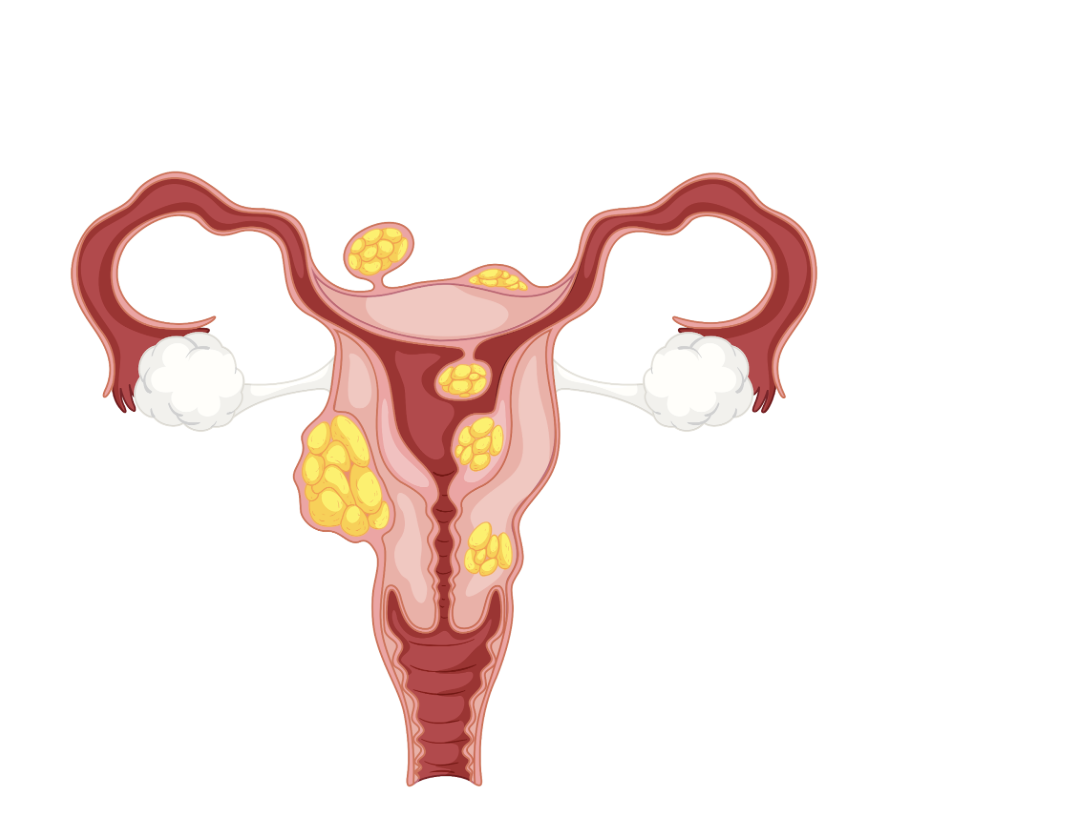
Image Credits: Freepik
Do I Have Fibroids? Know the Symptoms, Tests, and Your Options
Fibroids can grow quietly without a single sign.
But most times, your body is speaking to you through symptoms. We just need to learn how to listen.
Some common symptoms, but not limited to, can include:
- Irregular periods: One month it’s there, the next it’s heavier or missing. The bleeding might stop and start again mid-cycle.
- Heavy menstrual bleeding: Enough to cause low hemoglobin or anemia.
- Severe menstrual cramps: Not just discomfort, but pain that interferes with daily life.
- Pelvic pain or pressure: A dull, throbbing sensation in your pelvic region.
- Painful urination or frequent urges: Especially if a fibroid is pressing against your bladder.
- Difficulty emptying your bladder: You feel the urge but can’t release a full stream.
- Painful intercourse: Especially during deep penetration.
- Chronic lower back pain: Dull, persistent, and unexplained.
- Constipation and bloating: A fibroid pressing on the bowel can interfere with digestion.
- Fertility challenges: Trouble conceiving or frequent miscarriages, sometimes a fibroid is silently blocking a fallopian tube, or affecting implantation.
These symptoms are not something to be dismissed as ‘normal.’
If you’re experiencing any of these symptoms regularly, get checked. Early awareness can save you a lot of pain, physically and emotionally.
Here are some useful diagnostics your qualified healthcare professional might ask you to do:
- Pelvic ultrasound: The most common first step to detect fibroid size and location.
- MRI: In some cases, your doctor may want a clearer, more detailed view.
- Blood tests: To evaluate hemoglobin levels (if bleeding is heavy), inflammation markers, and hormonal imbalances.
Now, if you have fibroids, you may ask, “Is surgery always necessary?”
Here’s the truth: not always.
Yes, sometimes fibroids grow so large that surgery becomes the only option. And if that’s the case, you do it. You don’t delay. You don’t wait. Because delaying can lead to bigger complications.
But here’s the good news: if your doctor says you have 3 to 6 months before deciding, that’s a window. A beautiful window where lifestyle becomes your medicine.
We have seen hundreds of women shrink their fibroids, not by magic, not by supplements alone, but by completely overhauling the root causes, like reducing stress, getting off inflammatory foods, etc.
Yes, surgery has its place. But sometimes, your body just needs the right environment to reverse what’s going wrong.
How Fibroids Are The Outcome of Internal Imbalances
If you’ve ever wondered why fibroids form, and more importantly, what makes them grow or stay dormant, the answer lies deep within your biology. A well-structured fibroid nutrition plan isn’t just about what’s healthy in general. It’s about aligning your food and lifestyle choices with your body’s unique hormonal landscape, cleansing pathways, and inflammatory load.
Let’s understand the root causes of fibroids:
1. Hormonal Imbalance: Estrogen Dominance and Progesterone Deficiency
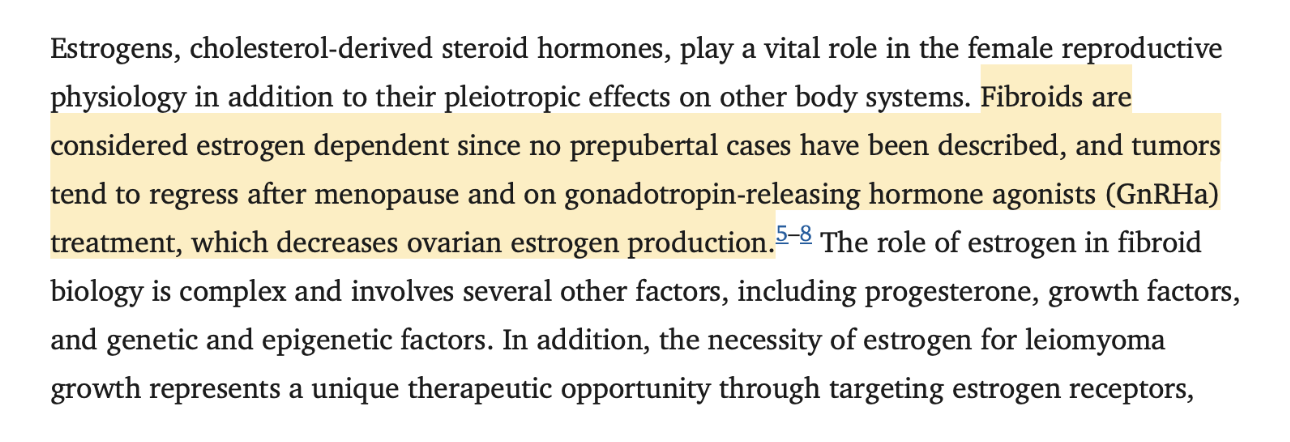
The most significant hormonal driver of fibroid growth is estrogen dominance, a condition where estrogen levels are elevated in relation to progesterone. Estrogen stimulates the proliferation of smooth muscle cells in the uterus, and fibroids, by nature, are made of these very cells.
But it’s not just about ‘high estrogen.’ It’s about relative balance. A decline in progesterone, whether due to stress, poor ovulation, or age, removes the natural ‘braking system’ that keeps estrogen’s growth-promoting effects in check. This imbalance becomes a major contributor to fibroid development.
Source: Borahay, M. A., Asoglu, M. R., Mas, A., Adam, S., Kilic, G. S., & Al-Hendy, A. (2017). Estrogen Receptors and Signaling in Fibroids: Role in Pathobiology and Therapeutic Implications. Reproductive sciences (Thousand Oaks, Calif.), 24(9), 1235–1244. https://doi.org/10.1177/1933719116678686
2. Chronic Inflammation: The Fertile Ground for Fibroid Expansion
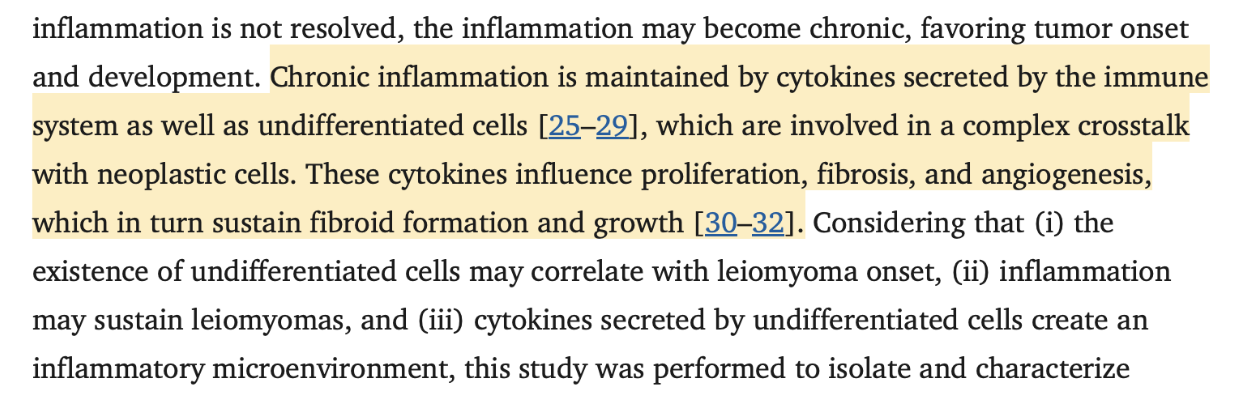
Inflammation isn’t always loud. Sometimes it’s a low-grade, chronic background noise that silently fuels tissue growth, pain, and immune dysfunction. Research shows that women with fibroids often exhibit elevated inflammatory markers (genes causing inflammation), including interleukin-6 (IL-6), C-reactive protein (CRP), and tumor necrosis factor-alpha (TNF-α), all of which have been shown to stimulate fibroid cell proliferation.
Source: Orciani, M., Caffarini, M., Biagini, A., Lucarini, G., Delli Carpini, G., Berretta, A., Di Primio, R., & Ciavattini, A. (2018). Chronic Inflammation May Enhance Leiomyoma Development by the Involvement of Progenitor Cells. Stem cells international, 2018, 1716246. https://doi.org/10.1155/2018/1716246
3. Impaired Cleanse: A Congested Liver Means Recycled Estrogen
Your liver plays a central role in estrogen metabolism through a few pathways. If the liver is overwhelmed, due to alcohol, synthetic chemicals, poor nutrient intake, or nonalcoholic fatty liver disease, estrogen clearance slows down.
This means old estrogen gets recirculated back into your system, amplifying estrogen dominance and giving fibroids more of what they crave.
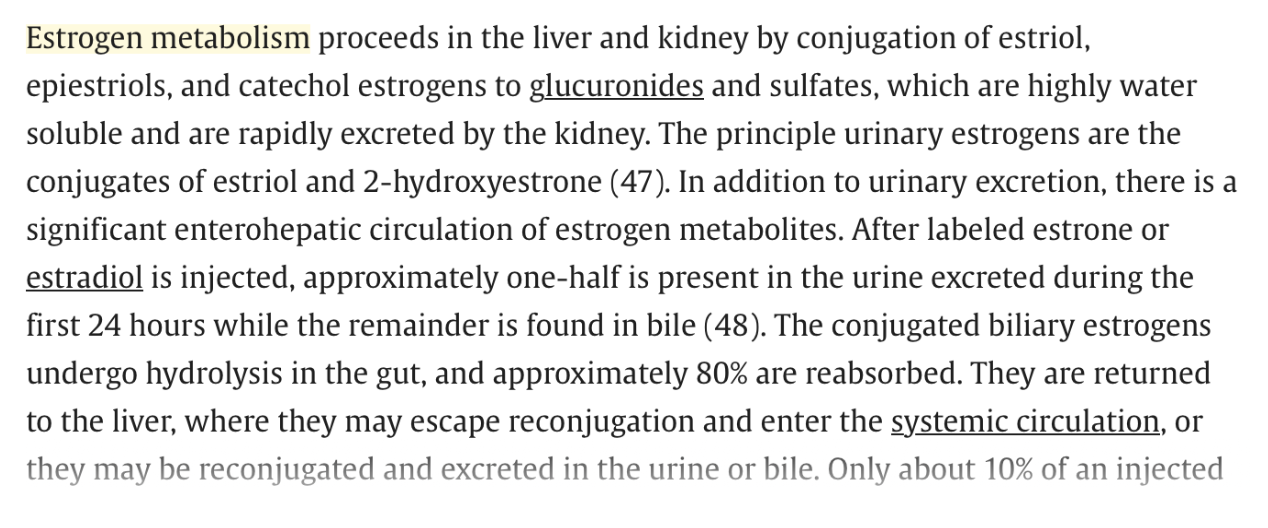
Source: Sciencedirect.com. Retrieved May 30, 2025, from https://www.sciencedirect.com/topics/immunology-and-microbiology/
4. Insulin Resistance: A Hidden Hormonal Disruptor
High insulin levels don’t just affect blood sugar, they directly impact sex hormone metabolism. Chronically elevated insulin promotes androgen excess, increases estrogen production through aromatization in fat cells, and stimulates cellular proliferation, making the uterine environment more fibroid-friendly.

Source: Baird, D. D., Travlos, G., Wilson, R., Dunson, D. B., Hill, M. C., D’Aloisio, A. A., London, S. J., & Schectman, J. M. (2009). Uterine leiomyomata in relation to insulin-like growth factor-I, insulin, and diabetes. Epidemiology (Cambridge, Mass.), 20(4), 604–610. https://doi.org/10.1097/EDE.0b013e31819d8d3f
5. Xenoestrogens: External Estrogens Hiding in Daily Life
Xenoestrogens are synthetic compounds that mimic estrogen in the body. Found in plastics (like BPA), pesticides, industrial chemicals, and many personal care products, these compounds bind to estrogen receptors and amplify hormonal imbalance.

Source: Bariani, M. V., Rangaswamy, R., Siblini, H., Yang, Q., Al-Hendy, A., & Zota, A. R. (2020). The role of endocrine-disrupting chemicals in uterine fibroid pathogenesis. Current opinion in endocrinology, diabetes, and obesity, 27(6), 380–387. https://doi.org/10.1097/MED.0000000000000578
Can Fibroids Shrink Naturally?
Absolutely, yes. But with a few conditions.
Here’s how and why fibroids can shrink:
- When inflammation is reduced (through right nutrition, sleep, and stress control)
- When estrogen dominance is corrected (by balancing hormones naturally)
- When abdominal fat is lost (especially visceral fat around your belly)
- When vitamin D levels are corrected (low D is directly linked to fibroid growth)
Fibroid Reducing Foods: What to Prioritize
When it comes to fibroids, one question people often ask is: “Can food really make a difference?”
And the answer is absolutely, yes.
While medical intervention has its place, there’s so much you can do with your lifestyle.
The right nutrition and lifestyle can create an environment in your body that doesn’t support the growth of fibroids, and in many cases, it may even help reduce them.
Let’s understand the categories of foods that are beneficial for fibroid management.
1. Estrogen-Metabolizing Foods
Fibroids are sensitive to estrogen levels, and certain foods can aid in metabolizing and eliminating excess estrogen from the body.
- Cruciferous Vegetables: Broccoli, cabbage, kale, arugula, and radish are rich in indole-3-carbinol (I3C) and diindolylmethane (DIM), compounds that support estrogen metabolism.
- Flaxseeds: High in lignans, flaxseeds can modulate estrogen levels and have been associated with reduced fibroid risk.
2. Liver-Supporting Foods
The liver plays a crucial role in cleansing excess hormones. Supporting liver function can enhance estrogen clearance.
- Beets: Contain betaine, which supports liver cleansing processes.
- Garlic and Onions: Rich in sulfur compounds that aid in liver enzyme activation.
- Turmeric: Contains curcumin, known for its anti-inflammatory and liver-supportive properties.
3. Anti-Inflammatory Foods
Chronic inflammation can contribute to fibroid growth. Incorporating anti-inflammatory foods can help mitigate this risk.
- Berries: Blueberries, strawberries, and raspberries are rich in antioxidants and have anti-inflammatory effects.
- Pomegranate: Contains polyphenols that combat oxidative stress.
- Avocados: High in monounsaturated fats and antioxidants.
- Olive Oil: Extra virgin olive oil is a staple in anti-inflammatory foods.
- Nuts: Almonds and walnuts provide healthy fats and antioxidants.
- Fatty Fish: Salmon and mackerel are rich in omega-3 fatty acids.
4. Blood Sugar-Balancing Foods
Stable blood sugar levels can help in managing insulin, which in turn may help manage fibroid development.
- Lentils: High in fiber and protein, aiding in blood sugar regulation.
- Whole Grains: Brown rice and quinoa have a low glycemic index.
- Fenugreek: Known to improve insulin sensitivity.
- Cinnamon: May help lower blood sugar levels.
- Oats: Contain beta-glucan, which can stabilize blood sugar.
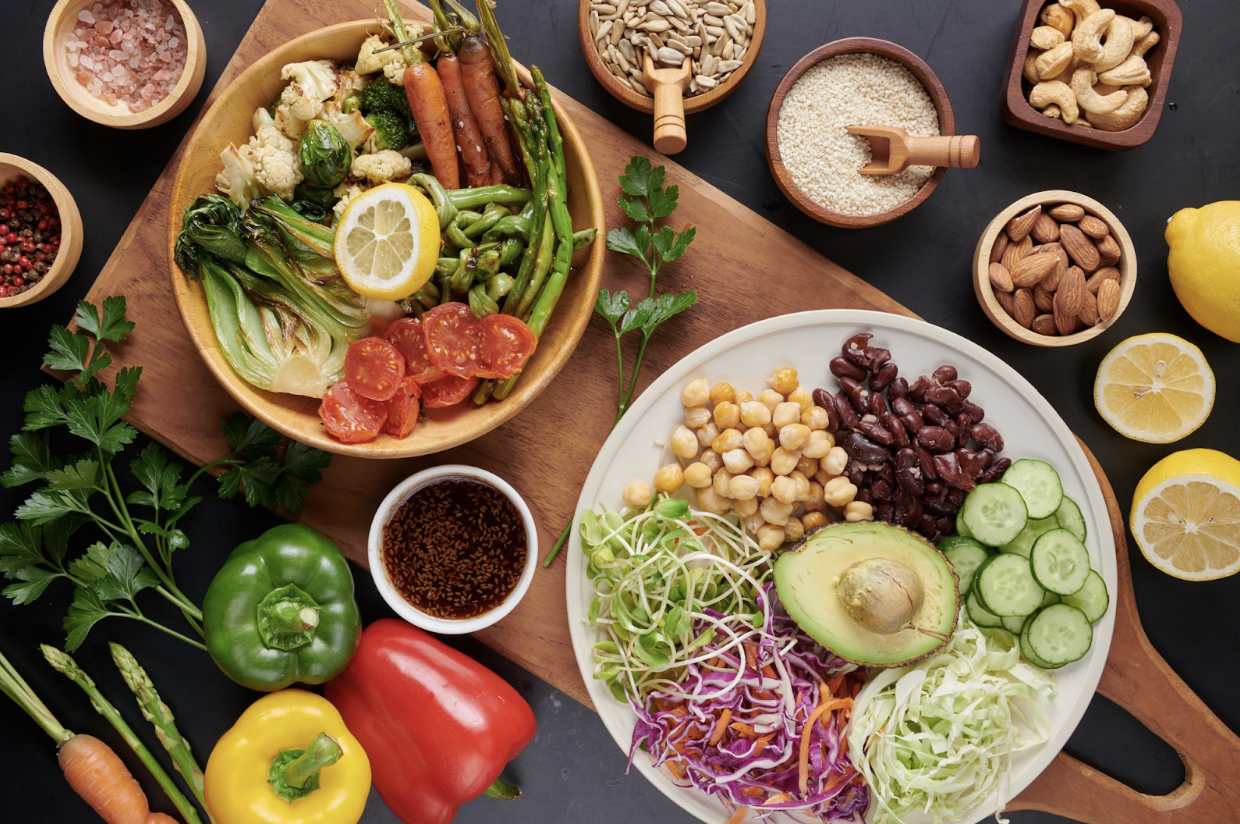
Image Credits: Freepik
5. Gut-Loving Foods
A healthy gut microbiome is essential for hormone regulation and overall health.
- Sauerkraut and Kimchi: Fermented foods that introduce beneficial probiotics.
- Kefir: A fermented dairy product rich in probiotics.
- Green Bananas: Contain resistant starch, which feeds beneficial gut bacteria.
- Psyllium Husk: A soluble fiber that supports digestive health.
Disclaimer: Food is powerful, but it’s not a one-size-fits-all solution. The above food items are for general educational purposes and are not intended to replace medical advice. While certain foods may support hormonal balance, reduce inflammation, and promote better uterine health, nutrition is highly individual. What works for one person may not work for another. If you have been diagnosed with fibroids or any underlying condition, it’s important to work with your doctor to personalise your food choices.
Foods to Avoid for Fibroid Management
When it comes to managing fibroids, understanding which foods to avoid is just as crucial as knowing what to include in your plate. A well-structured fibroid food plan not only focuses on fibroid reducing foods but also emphasizes steering clear of certain foods that can exacerbate symptoms and promote fibroid growth.
1. High-Estrogen Foods
Fibroids are estrogen-sensitive tumors, and elevated estrogen levels can stimulate their growth.
- Commercial Dairy Products: Non-organic dairy often contains added hormones, including estrogen, which can disrupt hormonal balance.
- Red and Processed Meats: These meats can be high in saturated fats and added hormones, contributing to increased estrogen levels.
- Soy Isolates: Highly processed soy products contain phytoestrogens that can mimic estrogen in the body, potentially encouraging fibroid growth.
2. Inflammatory Agents
Chronic inflammation is linked to fibroid development and symptom severity.
- Trans Fats: Found in fried foods and processed snacks, trans fats can trigger systemic inflammation.
- Refined Sugars: Excessive sugar intake can lead to inflammation and insulin resistance, both of which are associated with fibroid growth.
- Fried Foods: These are often high in unhealthy fats that promote inflammatory responses.
3. Chemical and Hormone-Laden Foods
Exposure to certain chemicals can disrupt endocrine function and influence fibroid development.
- Non-Organic Produce: Pesticide residues on conventionally grown fruits and vegetables can act as endocrine disruptors.
- BPA-Lined Cans: Bisphenol A (BPA) is a chemical found in some food packaging that can mimic estrogen and potentially contribute to fibroid growth.
4. Alcohol and Excessive Caffeine
Both substances can interfere with liver function, which is essential for hormone metabolism.
- Alcohol: Excessive alcohol consumption can burden the liver, impairing its ability to metabolize estrogen effectively.
- Caffeine: High caffeine intake (more than the recommended value) may disrupt hormone levels and stress the liver, potentially exacerbating fibroid symptoms.
5. Refined Carbohydrates and Processed Snacks
These foods can lead to insulin resistance, which is associated with hormonal imbalances.
- White Bread, Pasta, and Rice: These refined grains can cause rapid spikes in blood sugar, leading to increased insulin production.
- Sugary Snacks and Beverages: High sugar content can contribute to insulin resistance and weight gain, both risk factors for fibroid development.
Daily Habits That Support Hormonal Harmony
While a well-structured fibroid nutrition plan lays the foundation for managing fibroids, integrating specific daily habits can significantly enhance hormonal balance and overall well-being. Let’s delve into these supportive practices:
- Circadian-Aligned Sleep: Enhancing Melatonin Production
Maintaining a consistent sleep schedule aligned with natural light-dark cycles supports the body’s circadian rhythm. Melatonin, the hormone regulating sleep, also influences estrogen levels. Disruptions in melatonin production can affect hormonal balance, potentially impacting fibroid development.
2. Breathwork & Meditation: Reducing Cortisol Levels
Engaging in regular breathwork and meditation practices can lower cortisol, the body’s primary stress hormone. Elevated cortisol levels can disrupt the balance between estrogen and progesterone. Incorporating mindfulness techniques daily may foster a more balanced hormonal environment.
3. Digital Cleanse: Supporting Melatonin Secretion
Excessive exposure to screens, especially before bedtime, can interfere with melatonin production due to blue light emission. Implementing a digital curfew and using blue light filters can help maintain natural circadian rhythms, supporting hormonal health.
4. Castor Oil Packs & Abdominal Massage: Enhancing Pelvic Circulation
Applying castor oil packs to the abdominal area and gentle self-massage can enhance circulation to pelvic organs. Improved blood flow may support the body’s natural healing processes and hormonal regulation.
Disclaimer: Before you start castor oil therapy or massage, consult your qualified healthcare provider, especially if you’re pregnant, trying to conceive, or have underlying conditions. Also, be sure to do a patch test to rule out any allergic reaction to castor oil.
Environmental Awareness: Cleansing Beyond the Plate
When it comes to managing fibroids, a comprehensive approach extends beyond food choices. Environmental exposures to endocrine-disrupting chemicals (EDCs) play a significant role in hormonal balance and fibroid development. Understanding and mitigating these exposures can enhance the effectiveness of a fibroid food plan:
- Rethink Your Containers: Plastic containers, especially when heated, can leach EDCs like bisphenol A (BPA) and phthalates into food and beverages. These chemicals mimic estrogen in the body, potentially promoting fibroid growth. Switching to glass or stainless steel containers reduces this risk.
- Choose Clean Personal Care and Household Products: Many cosmetics and cleaning products contain parabens, phthalates, and sulfates, chemicals known to disrupt hormonal function. Regular exposure to these substances has been linked to an increased risk of fibroids. Opt for products labeled as free from these compounds to minimize exposure.
- Prioritize Organic or Low-Pesticide Produce: Non-organic fruits and vegetables often carry pesticide residues that can act as EDCs. The Environmental Working Group’s (EWG) 2024 Dirty Dozen list highlights produce with the highest pesticide levels, including strawberries, spinach, and kale. Whenever possible, choose organic options for produce with lower pesticide residues.
- Improve Indoor Air Quality: Indoor air can harbor volatile organic compounds (VOCs) from household products and building materials, some of which mimic estrogen. Using air purifiers equipped with activated carbon filters can effectively reduce VOC levels. While houseplants are aesthetically pleasing, their capacity to purify air is limited in typical home environments.
Movement Matters: Exercise and Fibroid Health
Physical activity plays a pivotal role in hormonal regulation and fibroid management. However, the type and intensity of exercise should be tailored to individual needs and symptoms:
- Engage in Moderate-Intensity Cardio: Activities like brisk walking and swimming enhance metabolism and improve insulin sensitivity, both of which are beneficial for hormonal balance. These exercises are generally well-tolerated and can be adjusted based on comfort levels.
- Incorporate Strength Training: Resistance exercises help maintain a healthy balance between estrogen and testosterone. Including strength training sessions twice a week can support overall hormonal health.
- Practice Pelvic-Focused Exercises: Yoga and other pelvic-centric exercises promote circulation in the pelvic region, potentially alleviating fibroid-related discomfort. These low-impact activities can be particularly beneficial for those experiencing pain or pressure.
- Avoid High-Impact or Prolonged High-Intensity Workouts: For individuals with large or painful fibroids, high-impact exercises or extended high-intensity interval training (HIIT) sessions may exacerbate symptoms. Listening to your body and opting for gentler movements can prevent additional stress on the body.

Image Credits: Freepik
Conclusion: You’re the Gardener of Your Health
Fibroids may be part of your body’s current terrain, but your daily choices, the food you eat, how you move, rest, feel, and cleanse are the tools in your hands.
There’s no magic pill here, and that’s okay. Because real change, the kind that lasts, never happens overnight.
This isn’t about perfection. It’s about awareness. About tuning in. About honouring your body not just as something to ‘fix,’ but as a living, breathing ecosystem that responds to kindness, attention, and care.
Disclaimer: This blog is for educational and informational purposes only. It does not substitute medical advice, diagnosis, or treatment. Always consult with your qualified healthcare provider before starting, stopping, or modifying any form of hormone therapy replacement or lifestyle intervention, especially if you have a medical condition, are on medication, or are managing perimenopause, menopause, or hormonal disorders. Every individual is unique, and what works for one may not work for another.
Your hormones aren’t broken; your body is simply asking for support.
If you’re ready to move beyond confusion, fad fixes, and risky shortcuts, our Hormonal Care Program offers personalized, lifestyle-first guidance.
Schedule a one-on-one consultation with our experts by calling us at 1800 102 0253 or emailing us at [email protected].