No products in the cart.
Gunda (Cordia dichotoma / Cordia myxa): India’s Most Forgotten Fruit Is a Prebiotic Powerhouse, Your Gut Has Been Waiting For
Picture your mother or nani pulling out a big steel dabba at the start of every monsoon season.
Inside it: a dark, oil-slicked pickle with small, knobbly berries that left your fingers sticky no matter how carefully you served yourself. You probably ate it without thinking. She probably made it without explaining. And somewhere between the two of you, a very old and very wise conversation about gut health was happening, just without the hashtags.
That berry is gunda. And what it was quietly doing for your gut is finally something science can explain in full.
First, What Even Is Gunda?
Gunda goes by many names depending on where you are in India. Lasoda or lasura in Hindi and Rajasthan. Bhokar in Maharashtra. In English, it is sometimes called gumberry, fragrant manjack, or Indian cherry.
Botanically, it is Cordia dichotoma or Cordia myxa (both related species), a hardy tree that grows easily in the arid, dry heat of western and central India.
The fruit is small, green, and unremarkable on the outside. Inside, it contains a sticky, mucilaginous (gel-like and slippery) pulp surrounding a stone. This stickiness makes it annoying to prep it and nearly impossible to transport long distances, which is probably why it never made it to the urban wellness counter.
It is seasonal, available roughly between March and June, and almost entirely absent from city markets.
That inaccessibility has cost us a lot. Because this fruit is doing something inside the gut that most expensive probiotic supplements are trying very hard to replicate.
Stickiness Is the Point. Here Is Why.
That mucilaginous quality, the slippery, gel-forming fiber inside gunda, is not a design flaw. It is the most important thing about this fruit from a gut health standpoint.
How Gunda Supports Gut Health
- The fiber in gunda is not easily broken down during digestion.
- It reaches the gut almost intact, where it feeds the good bacteria living there.
- This helps beneficial gut bacteria grow and thrive.
- A healthier gut microbiome can support digestion, immunity, and overall gut balance.
- As these good bacteria feed on the fiber, they produce compounds that help nourish and protect the gut lining.
- These compounds also help maintain the natural barrier of the intestine.
- A strong gut lining allows nutrients to pass through while keeping harmful substances out.
- When the gut lining weakens, irritation and inflammation may increase over time.
- Gunda’s natural prebiotic fiber helps support the bacteria that keep this protective system functioning well.
What the Nutritional Numbers Actually Show
A study on the nutritional composition of Cordia myxa found that, per 100 grams of dried fruit, gunda contains approximately 6 mg of iron and 55 mg of calcium. That iron number is meaningful.
According to the Indian Council of Medical Research (ICMR), the recommended daily intake (RDI) of iron for women of reproductive age in India is 29 mg per day. Many Indian women are chronically deficient, particularly during the months leading up to and following heavy monsoon-season illnesses.
Now here is where the nutritional design of this fruit becomes especially clever: Gunda also contains vitamin C (ascorbic acid) and polyphenols, confirmed by a 2025 Scientific Reports study that used UPLC-MSn analysis to identify flavonoids, phenolic acids, and anthocyanins in Cordia myxa fruit.
Vitamin C is one of the most powerful enhancers of non-heme iron absorption. Non-heme iron is the plant-based form of iron, the kind most Indians rely on because vegetarian diets are common. On its own, non-heme iron has relatively poor absorption. Combined with vitamin C in the same food source, that absorption increases significantly.
A fruit that carries iron and the co-factor that unlocks that iron, together, in the same bite? That is not an accident. That is a food designed by nature for the climate, the body, and the nutritional palate of the people who have always eaten it.
The Cholesterol Connection
If you are someone watching your lipid profile, particularly LDL (low-density lipoprotein, or “bad” cholesterol), the soluble fiber in gunda is working on your behalf through another mechanism entirely.
Research published in ACS Omega on soluble dietary fibers found that pectin-type fibers, including mucilage compounds like those found in gunda, bind to bile acids in the digestive tract and pull them out of the body through stool.
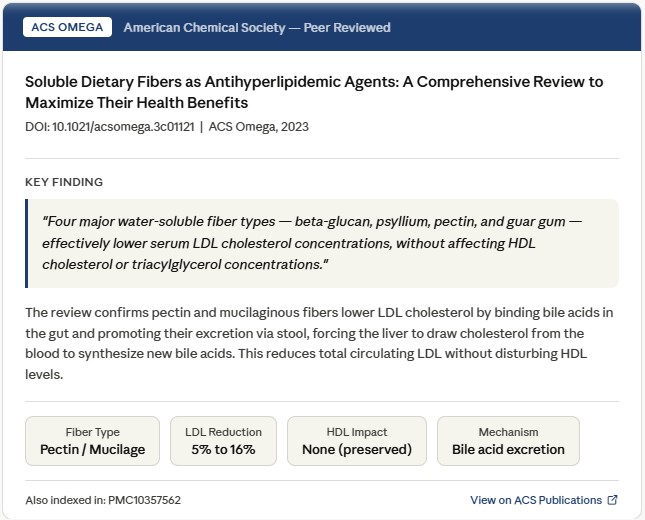
Bile acids are made from cholesterol.
When your body loses bile acids, the liver is forced to draw more cholesterol from the blood to make new ones. The result is a measurable reduction in circulating LDL levels, without negatively affecting HDL (high-density lipoprotein, or “good” cholesterol).
No pharmaceutical intervention. No supplement.
Just fiber doing chemistry.
Why the Monsoon Timing Was Never a Coincidence
There is a fascinating research paper worth knowing about here, published in PMC: Fermented Foods Affect the Seasonal Stability of Gut Bacteria in an Indian Rural Population.
The study tracked gut microbiota across seasons in healthy Indian individuals and found that seasonal shifts, particularly the transition into hot, humid summer and then into monsoon, cause measurable changes in dominant gut bacteria communities.
The shift is real. The disruption is documented.
Contaminated water, humidity-driven food spoilage, and the body’s overall stress during this seasonal transition weaken gut immunity. Since approximately 70 percent of immune cells are located in the gut, when the gut microbiome is disturbed, the entire immune system feels it.
The communities of Rajasthan and Gujarat, eating gunda pickle through the summer and into the monsoon, were essentially doing what a functional medicine practitioner might now recommend: eating a prebiotic-rich fermented food to support beneficial gut bacteria before the season most likely to disrupt them.
The pickle also adds another dimension.
The fermentation process involved in traditional achar preparation can encourage the growth of lactic acid bacteria (LAB), the family to which Lactobacillus belongs.
So, in gunda pickle, you may be getting both the prebiotic (fiber to feed your good bacteria) and, potentially, the probiotic (live bacteria themselves) in the same spoonful.
Grandma was running a precision wellness protocol. She just called it making achaar.
A Simple Healthy Gunda Pickle You Can Make Right Now
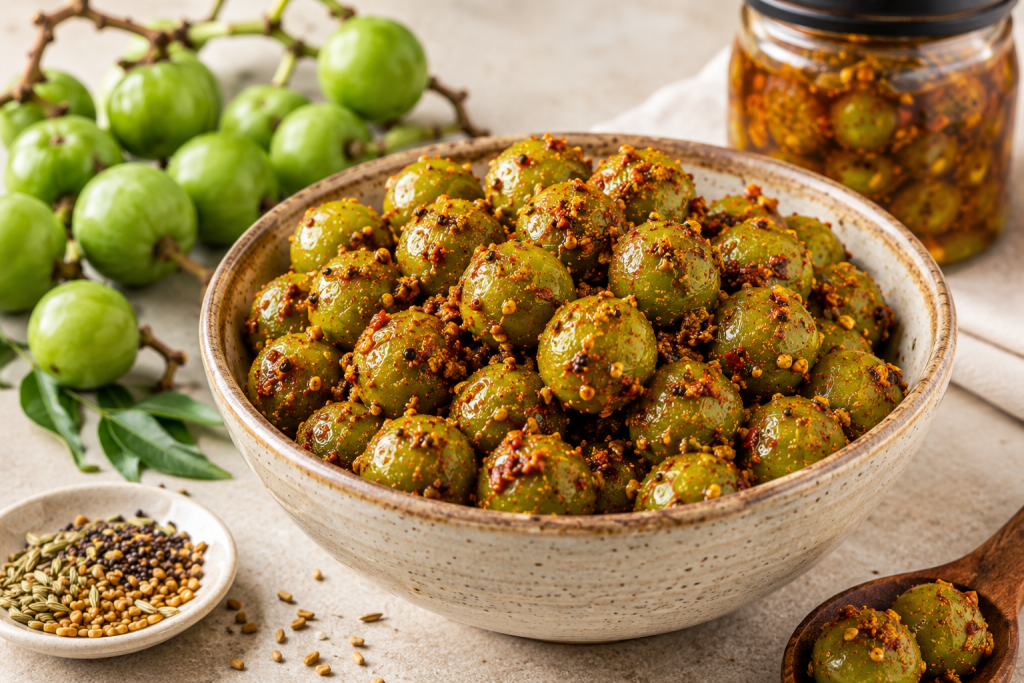
Source: AI
Gunda is available at select Indian vegetable markets between March and June. Buy it fresh and in bulk. It does not keep long unpreserved, but the pickle can last up to a year.
Healthy Gunda Pickle Recipe
Ingredients:
- 500 g fresh gunda
- 1 tbsp cold-pressed mustard or sesame oil
- 1 tsp mustard seeds
- ½ tsp fenugreek (methi) seeds
- ½ tsp fennel (saunf) seeds
- ¼ tsp turmeric powder
- 1 tsp red chilli powder
- Rock salt to taste
- A pinch of hing (asafoetida)
- 1 tsp jaggery powder (optional)
- Juice of ½ lemon
Method:
- Wash the gunda thoroughly and pat dry completely.
- Lightly crack or slit each gunda to remove the seed if preferred.
- Dry roast mustard, methi, and fennel seeds until aromatic. Cool and coarsely crush them.
- Heat oil lightly in a pan. Add hing and the crushed spices.
- Switch off the flame and mix in turmeric, red chili powder, salt, and jaggery.
- Add the gunda and toss gently until well coated with the masala.
- Finish with fresh lemon juice and transfer to a clean glass jar.
- Let it rest for 1 to 2 days before eating for better flavor infusion. Store refrigerated and always use a dry spoon.
Why This Version Is Healthier:
- Uses less oil than traditional achaar
- Contains natural prebiotic fiber from gunda
- Includes digestion-supportive spices like fennel and methi
- No artificial preservatives or excess salt
Serve with dal-chawal, khichdi, or rotis for a tangy, gut-friendly addition to your meal.
The Real Ask Here
We spend a lot of money on gut health. Probiotic capsules, fiber sachets, prebiotic gummies, and powders with names we can barely pronounce. And sometimes those things are genuinely needed.
But there is something worth sitting with.
Our food culture, the real, regional, seasonal, unadulterated version of it, already contained many of the answers. They were simply passed down in recipe form rather than research paper form. Gunda is one of those answers. When your grandmother made a fresh batch every summer, she was not being nostalgic. She was being smart. And the smartest thing we can do now is notice that, reconnect with it, and let science confirm what her hands already knew.
Disclaimer:
Gunda can be a nutritious addition to the diet, but individual tolerance may vary. Since traditional gunda preparations are often high in salt and oil, moderation is important, especially for individuals with hypertension, kidney conditions, or digestive sensitivities. This article is for educational purposes only and is not a substitute for medical advice, diagnosis, or treatment.
Traditional foods like gunda remind us that many answers to better gut health were always part of our food culture.
If bloating, digestive discomfort, or gut issues still feel like your normal, it may be time to look deeper.
Book a one-on-one consultation with our integrative team or explore our specialized Gut Care Program for personalized support.
Call us at 1800 102 0253 or write to us at: [email protected]
References:
- Bioactive compounds and antioxidant potential of Cordia myxa (Lasoda), Fitoterapia, ScienceDirect, March 2024
- Comparative metabolic profiling of Cordia myxa leaves and fruits, Scientific Reports, Nature, 2025
- Pectin oligosaccharides: Prebiotic effect and gut microbiota modulation, PMC (National Institutes of Health), 2024
- Soluble dietary fibers as antihyperlipidemic agents, ACS Omega, 2023
- Fiber and Prebiotics: Mechanisms and Health Benefits, PMC, 2013
- Fermented foods and seasonal stability of gut bacteria in the Indian population, PMC, 2025
- SCFAs: Gut epithelial and immune regulation, Frontiers in Immunology, 2019
- Anti-inflammatory effects of Cordia myxa fruit on experimentally induced colitis, PubMed, 2001
Mineral analysis and proximate composition of Cordia dichotoma and Cordia myxa, Biological Sciences, 2024