No products in the cart.
A foundations-first guide to understanding NEAT, everyday movement, and how every person, regardless of schedule or lifestyle, can build a healthier, more active life.
Most people believe that if they are not exercising, they are not doing enough for their health. That belief alone is responsible for a lot of guilt, a lot of inaction, and a lot of missed opportunity.
Here is something worth understanding clearly: movement and exercise are not the same thing. They overlap, yes. But they are fundamentally different in their nature, their physiology, and their impact on your daily health.
Exercise is a subset of movement. Movement is the whole picture.
And for millions of working professionals, homemakers, school-going children, and busy parents, it is the movement outside of structured exercise that either makes or breaks long-term health.
If you wait until you have time to exercise, you may wait forever. But movement? That is always available.
The Real Difference Between Movement and Exercise
Exercise, by definition, is planned, structured, and repetitive physical activity done with the goal of improving or maintaining physical fitness. It has a start time and an end time. It requires intention, often space, and sometimes equipment.
Movement, on the other hand, is any contraction of muscle that results in energy expenditure beyond resting. It includes walking to the kitchen, climbing stairs, stretching while on a call, washing dishes, sweeping floors, carrying groceries, or bouncing a leg while seated.
Scientists have a specific term for the energy burned through this kind of non-exercise activity: NEAT. It stands for Non-Exercise Activity Thermogenesis.
What Is NEAT, and Why Does It Matter?
NEAT refers to all the calories your body burns through movement that is not sleeping, eating, or formal exercise. The range of NEAT varies enormously between people, and this variation is one of the biggest predictors of body weight, metabolic health, cardiovascular function, and longevity.
It has shown that NEAT can differ by up to 2,000 calories per day between two people of similar body size. That is an extraordinary gap, and it has almost nothing to do with going to the gym.
Active people, not necessarily gym-goers, but active people who move naturally throughout their day, have significantly lower rates of obesity, type 2 diabetes, cardiovascular disease, depression, and cognitive decline compared to sedentary people, even sedentary people who exercise.
This is the paradox that researchers call the “active couch potato” problem. Someone who exercises for 45 minutes and then sits for 12 hours has a very different health profile than someone who never formally exercises but moves consistently all day long.
What Happens Physiologically When You Sit Too Long
When you remain seated or stationary for extended periods, several things happen inside your body that no amount of evening exercise can fully undo:
- Lipoprotein lipase, an enzyme critical for fat metabolism, drops significantly in the muscles of the legs and lower body.
- Insulin sensitivity decreases, meaning glucose is less efficiently absorbed by your cells, raising blood sugar.
- Circulation slows, particularly to the lower extremities.
- Postural muscles weaken, contributing to chronic pain in the back, neck, hips, and shoulders.
- Lymphatic drainage slows, since lymph, unlike blood, has no pump. It depends entirely on muscle movement to circulate.
- Mental clarity decreases, because cerebral blood flow is directly linked to physical movement.
Thirty minutes of exercise in the morning cannot reset these effects if the remaining 15 waking hours are spent in a chair. This is not a reason to panic. It is a reason to understand what your body actually needs.
For Working Professionals: Movement Without a Schedule
Source: Magnific
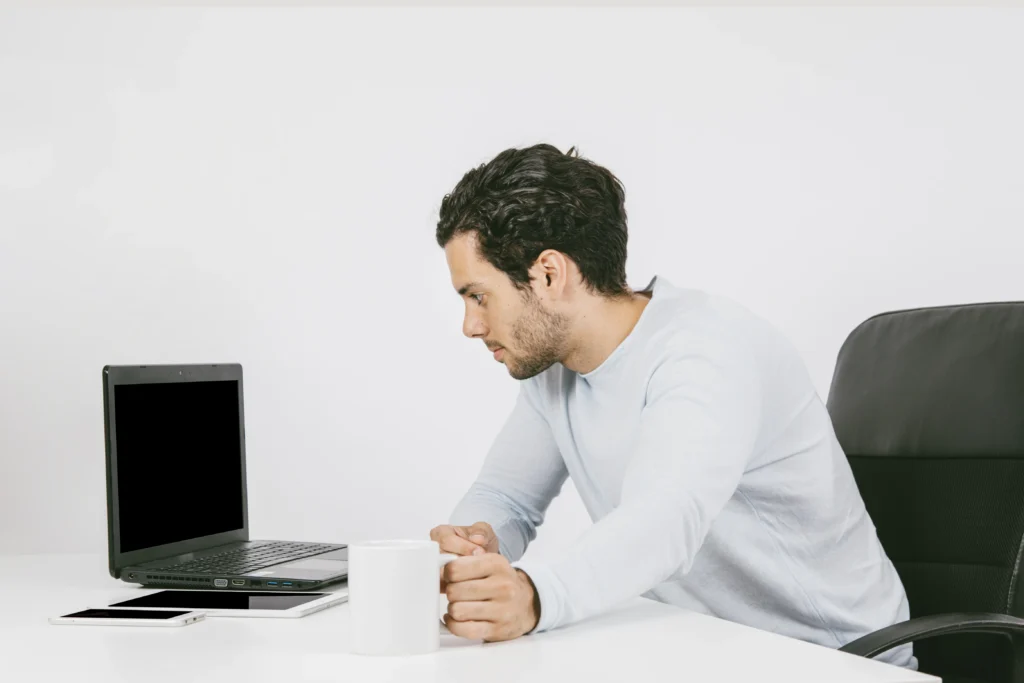
If you are someone who spends most of your day in front of a screen, attending meetings, managing deadlines, and commuting, this section is for you.
The challenge is real. Time is not the problem, most of the time. The problem is that we have designed our work environments in ways that have removed all incidental movement from our days. We order food in, take elevators, park close to the entrance, and sit in the same position for hours at a time.
The solution is not to find more hours. It is to redesign your existing hours.
The 30-30 Rule
One of the most evidence-supported habits you can build as a working adult is simple: do not sit for more than 30 consecutive minutes without breaking position.
This does not require leaving your desk. It requires standing, stretching, walking to refill your water, or doing 10 calf raises while you read an email. The interruption of prolonged sitting is physiologically significant, even if the movement is brief.
Practical Movement Strategies for Working Adults
- Walk while you talk. Any call that does not require you to look at a screen is a walking call. A single 30-minute walking call replaces 30 minutes of sitting with low-intensity movement that improves circulation, oxygen delivery, and cognitive function.
- Use transitions intentionally. The gap between meetings, the walk to the bathroom, and the trip to the printer: these are movement opportunities. Over a full workday, these transitions can add up to 2,000 to 4,000 steps without any additional time.
- Set a movement cue, not a timer. Instead of relying on an alarm you will dismiss, attach movement to an existing habit. Every time you finish a task and mark it done, stand up and move for 2 minutes before starting the next.
- Rethink your lunch break. A 10-minute walk after eating is not just movement. It is one of the most effective tools for blood sugar regulation, reducing post-meal glucose spikes by as much as 30 percent according to published research.
- Adjust your workspace. If possible, raise your laptop on a stand and work standing for part of the day. Standing desks are not required. A stack of books works equally well. The goal is postural variation, not perfection.
A real-world number to aim for:
If you are desk-bound, try to accumulate 250 steps every waking hour. That works out to roughly 3,500 steps from non-exercise movement alone before any formal activity.
For Homemakers: Recognizing and Reclaiming the Movement You Already Do

Source: Magnific
Homemakers are often the most underestimated group when it comes to physical activity. The work of running a home, managing children, cooking, cleaning, shopping, and caregiving is physically demanding. But it tends to be invisibilized, including by the people doing it.
The first shift is one of recognition. What you are doing is movement. Significant, real, physiologically meaningful movement. It deserves to be counted, and it deserves to be expanded where possible.
The Hidden Activity in Housework
Research has quantified the caloric and cardiovascular value of common household tasks:
- Mopping or scrubbing floors: Burns between 200 and 240 calories per hour, engages the core, arms, and lower body, and maintains good range of motion.
- Cooking from scratch: Involves standing for extended periods, repetitive arm movements, and frequent transitions between tasks.
- Carrying a child or groceries: Is resistance training. The load, combined with postural demands, builds functional strength.
- Gardening: Combines squatting, kneeling, lifting, and reaching. It is one of the most complete forms of natural movement available.
None of this is to say that housework replaces deliberate movement practices. But it is a foundation to build on, not a baseline to dismiss.
Creating Space for Purposeful Movement as a Homemaker
The primary challenge for homemakers is not lack of physical activity. It is lack of time that belongs to them alone, time that is not structured around someone else’s needs.
Here is what matters most: movement is not only valuable when it is done in isolation. It can be integrated into existing life.
- While the dough is resting or the food is cooking: Use those 10 to 15 minutes for stretching, breathing exercises, or a short walk in or around the home.
- During screen time with children: Sit on the floor instead of the couch. Cross-legged sitting, kneeling, and floor-based positions work the hips and lower back in ways that chairs never do.
- Involve children in movement: Dancing in the kitchen while cooking, walking to the market instead of ordering online, and doing yoga together on the weekend. Movement becomes social rather than stolen.
- Reframe movement as maintenance: The body that is not moved regularly becomes the body that eventually demands medical attention. Even 15 uninterrupted minutes daily of intentional stretching and walking is a significant investment.
You do not need to go anywhere. You do not need to buy anything. You need to decide that your physical well-being is as non-negotiable as the needs you already show up for every day.
For Children: Movement Is Not Optional; It Is Developmental

Source: Magnific
Children are not small adults. Their relationship to movement is different in kind, not just in degree. For a child, movement is not fitness. It is development.
Motor skills, coordination, proprioception, spatial reasoning, emotional regulation, bone density, sleep quality, and even immune function are all directly linked to how much a child moves during the early years.
The concern today is real. Children are spending more time seated, more time on screens, and less time in unstructured physical play than any previous generation. And the consequences are showing up in pediatric health data in ways that are difficult to ignore: rising rates of childhood obesity, poor posture, increasing anxiety and sleep problems, and early signs of metabolic dysfunction.
What Children Actually Need
The World Health Organization recommends at least 60 minutes of moderate-to-vigorous physical activity daily for children between 5 and 17 years of age. But this is a floor, not a ceiling, and it does not account for the movement children need throughout the day, separate from structured activity.
Sedentary behavior, which includes screen time and sitting, should be limited to less than two hours of recreational screen time per day for school-age children, with frequent movement breaks built into any prolonged sitting.
Movement Strategies for Children by Age
Toddlers and Young Children (Ages 2 to 5)
- Floor time: Playing on the ground, crawling, rolling, and climbing builds foundational motor patterns that support everything from writing to sports later in life.
- Unstructured outdoor time: A park, a garden, or even a balcony with space to run and jump is enough. Unstructured play is how children develop movement creativity.
- Avoid prolonged sitting: Prams, high chairs, bouncers, and screen time all restrict movement. Build in at least 180 minutes of daily physical activity across the day for toddlers, much of it active play.
School-Age Children (Ages 6 to 12)
- Walk or cycle to school where possible: Even partially. The movement, the sensory experience, and the independence all contribute to physical and psychological development.
- Limit homework time in one stretch: Children should not sit for more than 20 to 30 minutes at a time without a movement break. Build in a 5-minute active break between subjects.
- Replace screen entertainment with active alternatives where possible: Building, drawing, outdoor games, and cooking are all movement-rich activities that also develop other important capacities.
- Encourage sports, dance, or martial arts: Not for competition, but for the movement vocabulary they provide. A child who learns to move in multiple planes, who kicks, jumps, bends, rotates, and reaches, builds a physical foundation that protects them for decades.
| The habits built in childhood are not just about preventing obesity. They are about establishing a relationship with the body that lasts a lifetime. A child who grows up knowing how to move, who associates movement with play and joy rather than punishment or obligation, has a fundamental advantage. |
For School-Going Adolescents: The Stakes Are Higher Than They Appear

Source: Magnific
Teenagers face a unique collision of pressures: academic demands that require hours of sitting, social pressures around body image and performance, increasing screen engagement, and often a withdrawal from the childhood movement habits that once came naturally.
Physical activity among adolescents drops sharply around the age of 13 to 14, according to global health data. For girls, the drop is even steeper. And yet this is precisely the period when bone density is being laid down, when mental health foundations are being established, and when metabolic patterns are being set.
Movement as a Tool for Academic Performance
This is worth understanding clearly, because academic performance is often used as a justification for sedentary behavior. The evidence points in exactly the opposite direction.
Studies across multiple countries and age groups consistently show that physically active adolescents perform better academically. They show improved attention, better working memory, faster cognitive processing, and lower rates of anxiety and depression.
Exercise and movement increase brain-derived neurotrophic factor, a protein that supports the growth and maintenance of neurons. A body that moves more is a brain that learns better.
Practical Strategies for Adolescents
- The Pomodoro-movement hybrid: Study for 25 minutes, then move for 5. Not scroll. Move. Walk, stretch, do jumping jacks, or dance to one song. This is not lost study time. This is how you study better.
- Morning movement before screens: The first thing most adolescents do in the morning is reach for their phone. What happens in the first 30 minutes of the day sets the neurological tone for everything that follows. Even 10 minutes of walking, stretching, or yoga before the phone is a significant reframe.
- Physical education as a non-negotiable, not a sacrifice: When exam pressure builds, physical education like going for a walk, to the gym or for a badminton game is the first thing adolescents and parents cut. This is backwards. The periods of highest cognitive demand are exactly when movement matters most.
- Screen-free movement: Encourage any physical activity that is not paired with a screen. Sports, swimming, cycling, dancing, hiking, and even household tasks all count. The goal is to maintain the body’s movement habit even when academic pressure increases.
- Social movement: Adolescents are social creatures. Movement that happens with peers, whether it is a sport, a walk, or a dance class, is more likely to be sustained than solo movement.
A Final Word: The Goal Is a Moving Life, Not a Workout Life
Exercise has a specific and important role in human health. Resistance training builds and preserves muscle mass. Cardiovascular exercise strengthens the heart and improves aerobic capacity. Flexibility and mobility work preserve range of motion and prevent injury. All of this matters.
But the foundation beneath all of it is a body that moves. Not once a day. Not in one dedicated hour. But continuously, habitually, and naturally, the way human bodies were designed to move across the span of an active life.
The good news is that this is available to everyone. It does not require a gym membership, workout clothes, a dedicated time slot, or any particular level of fitness. It requires understanding that movement is not a reward for discipline. It is a basic biological requirement, one that your body will find ways to signal it needs through stiffness, fatigue, poor sleep, weight gain, and mood changes if it is not consistently met.
Move more. Sit less. Make it yours.
Build a Healthier Lifestyle, One Step at a Time
True wellness is not about intense workouts or quick fixes. It begins with small, sustainable habits that support your body every day. From movement and nutrition to sleep, stress management, and preventive care, the right guidance can help you create lasting change.
Explore our Wellness Programs and work with experts who help you build habits that fit your lifestyle, not disrupt it.
Call us at 1800 102 0253 or write to us at [email protected].
Disclaimer: This article is intended for educational purposes only and should not be considered medical advice. Individual health conditions, medications, and nutritional needs vary. Always consult your healthcare practitioner before making significant changes to your diet, lifestyle, or treatment plan. The information shared here is designed to support awareness and informed decision-making, not replace professional medical guidance.