No products in the cart.
For millions of Indians, mornings begin with a familiar ritual. A hot bowl of poha, tempered with mustard seeds, curry leaves, onions, peanuts, and a squeeze of fresh lemon.
It is quick, comforting, affordable, and deeply rooted in our food culture.
Yet, in recent years, traditional breakfasts like poha have been unfairly labeled as “too carb-heavy” or “not healthy enough.” Many people swap them for protein bars, processed cereals, or expensive breakfast mixes, believing they are making a healthier choice.
The truth is, the problem is not poha.
The problem is that many of us eat it in isolation, without enough protein to create a balanced meal.
Instead of abandoning a traditional breakfast that has nourished generations, what if we simply made it better?
By adding high-quality protein and a few nutrient-dense ingredients, your everyday poha can become a wholesome breakfast that supports muscle health, balanced blood sugar, healthy aging, immunity, satiety, and overall well-being.
After all, wellness is not about replacing tradition. It is about building on it with knowledge.
Why Protein Matters More Than We Think
Protein is often associated with athletes or bodybuilders, but every cell in your body depends on it.
Protein provides amino acids, the building blocks needed to repair tissues, produce enzymes and hormones, build antibodies, maintain healthy skin and hair, and preserve muscle throughout life.
Beginning in our 30s, we naturally start losing muscle mass if we do not consume enough protein and engage in regular strength training. This gradual decline can affect metabolism, strength, mobility, bone health, and recovery as we age.
A protein-rich breakfast also helps:
- Keep you fuller for longer
- Support balanced blood sugar levels
- Reduce mid-morning cravings
- Improve energy throughout the day
- Support tissue repair and recovery
- Nourish the body’s natural defense systems
Instead of thinking of breakfast as simply the first meal of the day, think of it as the first opportunity to nourish every system in your body.
Is Poha Healthy?
Absolutely.
Poha is made from flattened rice and is naturally light, easy to digest, and gluten-free. Traditional recipes also include turmeric, curry leaves, mustard seeds, onions, coriander, peanuts, and lemon, all of which contribute valuable phytonutrients, antioxidants, vitamins, and minerals.
The challenge lies in one simple fact.
A bowl of plain poha is relatively low in protein.
That means it may not provide enough of the nutrients your body needs to stay satisfied and energized for several hours.
Fortunately, this is easy to change.
Here are eight simple ways to turn your everyday poha into a balanced, protein-rich breakfast.
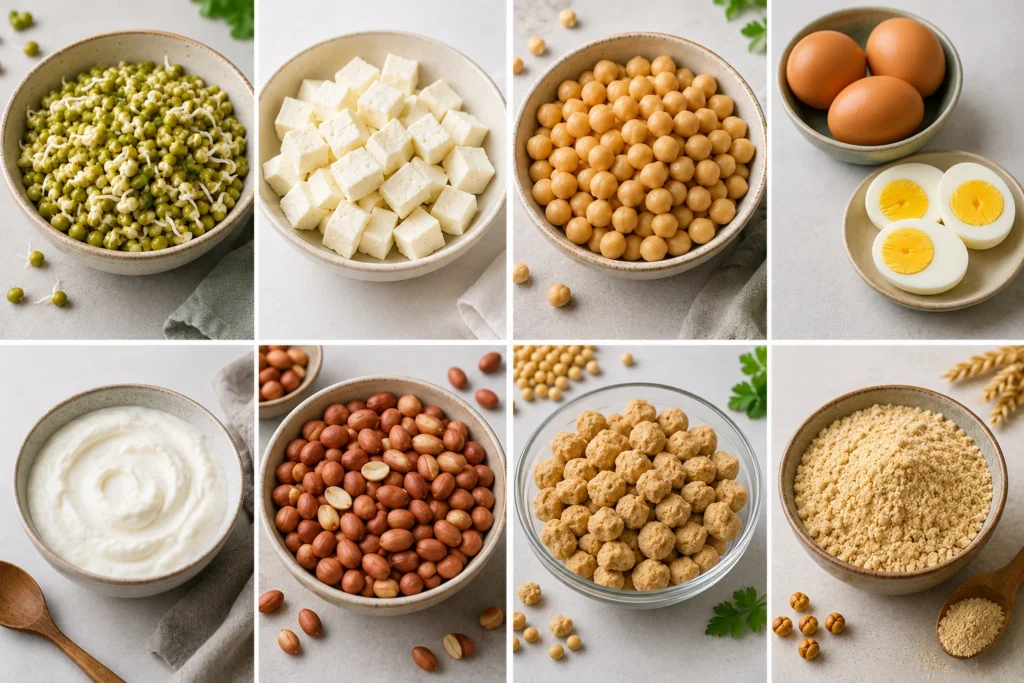
Source: AI
1. Add Sprouted Moong
Sprouted green gram is one of the easiest and most nutritious additions you can make.
Sprouting improves the availability of several nutrients while making legumes easier to digest for many people. It also adds plant protein, fiber, and beneficial compounds that support gut health.
Lightly steam or sauté the sprouts before mixing them into your poha for the best texture.
2. Crumble in Paneer or Tofu
Whether you prefer dairy or plant-based foods, both paneer and tofu blend beautifully with poha.
Fresh homemade paneer provides high-quality protein along with calcium, while tofu is an excellent plant protein that readily absorbs the flavors of Indian spices.
Crumble either one into the poha during the final few minutes of cooking so it stays soft without becoming rubbery.
3. Toss in Cooked Chickpeas or Black Chana
A handful of boiled chickpeas or kala chana transforms poha into a far more satisfying meal.
Besides adding plant protein, they also contribute fiber, iron, folate, and slowly digestible carbohydrates that help support sustained energy.
Cooking a batch ahead of time makes breakfast preparation quick and effortless.
4. Pair It With Eggs, If You Eat Them
Eggs remain one of the highest-quality protein sources available.
Instead of mixing them into the poha, serve two boiled eggs, a vegetable omelet, or lightly scrambled eggs on the side.
This creates a balanced breakfast while preserving the traditional texture and flavor of poha.
5. Enjoy It With Unsweetened Greek Yogurt or Homemade Hung Curd
Adding a bowl of plain Greek yogurt or homemade hung curd alongside poha increases the protein content significantly.
It also provides beneficial bacteria that support gut health while adding creaminess to the meal.
Choose plain, unsweetened varieties without added sugars or artificial flavors.
6. Be Generous With Peanuts
Peanuts have always been an integral part of traditional poha recipes, but many of us add only a small spoonful.
Increasing the quantity slightly can improve both protein intake and satiety while providing healthy fats, magnesium, and vitamin E.
As with all nuts, portion size still matters, but there is no need to fear them when included as part of a balanced meal.
7. Include Soy Foods Like Edamame or Soy Granules
Soy is one of the few plant foods that naturally provides all nine essential amino acids.
Steamed edamame, hydrated soy granules, or even finely chopped soy chunks can be mixed into poha without changing its familiar taste.
For those following a vegetarian lifestyle, soy can be a valuable addition to a varied diet.
8. Add Sattu for a Traditional Protein Boost
Long before high-protein breakfast trends became popular, India already had one of its own nutritional treasures: sattu.
Made from roasted Bengal gram, sattu is naturally rich in protein, fiber, and several essential minerals.
Instead of reaching for processed protein mixes, try incorporating this traditional ingredient into your breakfast.
You can prepare a savory sattu dip by whisking it with homemade curd, roasted cumin, coriander, black salt, and fresh lemon juice and enjoy it alongside your poha. You can also sprinkle a small amount over warm poha just before serving to add an earthy flavor and nutritional boost.
Sometimes, the most nourishing foods are the ones our grandparents already knew well.
Building a Better Breakfast Is About Balance
Many people believe eating more protein means replacing traditional foods with imported ingredients or processed supplements.
In reality, wellness often lies in improving the meals we already love.
A balanced breakfast includes more than just protein.
It also brings together fiber, healthy fats, colorful vegetables, herbs, spices, and minimally processed ingredients that work together to nourish the body.
When these nutrients come together, they support gut health, stable energy, muscle maintenance, metabolic health, healthy aging, and the body’s natural repair processes.
The goal is not perfection.
It is nourishment.
The Bigger Picture
Health is rarely built through restriction.
It is built through consistent choices repeated every single day.
A few sprouts today.
Some paneer tomorrow.
An extra serving of chickpeas.
A spoonful of sattu.
These may seem like small changes, but over time they become powerful investments in your health.
So the next time someone tells you to stop eating poha, remember this.
You probably do not need to replace it.
You simply need to complete it.
When tradition meets nutrition, everyday meals become one of the most powerful forms of self-care.
Begin Your Wellness Journey
Good nutrition is never about copying someone else’s plate. It is about understanding your body’s unique needs and building sustainable habits that support long-term health.
If you would like personalized guidance on improving your nutrition, balancing your meals, managing blood sugar, supporting gut health, reducing inflammation, or creating a lifestyle that works for you, our Wellness Program offers one-on-one support from a team of experts.
Together, we help you move beyond quick fixes and build lasting wellness through nutrition, movement, sleep, stress management, and mindful living.
Frequently Asked Questions
1. Is poha a healthy breakfast?
Yes. Poha can be part of a healthy, balanced breakfast when prepared with wholesome ingredients such as onions, curry leaves, mustard seeds, peanuts, turmeric, and vegetables. It provides carbohydrates for energy and is light and easy to digest. Pairing poha with whole-food protein sources like sprouts, paneer, tofu, eggs, chickpeas, or yogurt creates a more balanced meal that helps you stay fuller for longer and supports overall health.
2. How can I make poha high in protein?
You can increase the protein content of poha by adding sprouted moong, paneer, tofu, boiled chickpeas, black chana, soy foods, or extra peanuts. Serving it with eggs or plain Greek yogurt is another simple way to create a more balanced and satisfying breakfast.
3. Is poha good for fat loss?
Poha can absolutely be part of a healthy eating pattern. When paired with protein, fiber, healthy fats, and vegetables, it becomes a more balanced meal that supports satiety, steady energy, and overall metabolic health. Long-term health is built through consistent food and lifestyle choices rather than focusing on a single food.
4. Can people with diabetes eat poha?
Yes, poha can fit into a balanced eating pattern for many people with diabetes when enjoyed in appropriate portions and paired with protein, fiber, and healthy fats. Adding ingredients like sprouts, paneer, tofu, chickpeas, peanuts, and vegetables can help create a more balanced meal. Since individual blood sugar responses vary, personalized guidance is always recommended. Moderation is always the key.
5. What is the best protein to add to poha?
There isn’t one “best” option. Sprouted moong, paneer, tofu, chickpeas, black chana, Greek yogurt, sattu, soy foods, and eggs are all nutritious protein sources that pair well with poha. Choosing minimally processed, whole-food ingredients is an easy way to make your breakfast more nourishing while supporting muscle health, steady energy, and overall well-being.
Disclaimer
This article is intended for educational purposes only and should not be considered medical advice. Nutritional needs vary based on age, health conditions, medications, activity levels, and individual goals. If you have diabetes, kidney disease, liver disease, food allergies, or any other medical condition, consult your healthcare provider or a qualified nutrition professional before making significant dietary changes. Protein requirements also vary from person to person, so what works for one individual may not be appropriate for another.