No products in the cart.
👉 Click here to get the downloadable version of this Luke-Approved Fiber Reset Protocol
You are not broken. You are under-fibred.
That one line might just change the way you look at your health forever.
Most people walking into clinics today believe they have a metabolism problem, a hormonal imbalance, or simply the bad luck of ageing.
They cut calories.
They try new diets.
They buy supplements.
And yet nothing seems to move the needle. The fatigue stays. The bloating doesn’t go. The cholesterol number keeps climbing.
Here’s the uncomfortable truth: in the majority of cases, the root problem isn’t exotic. It’s fiber deficiency.
Image Credits: Freepik
Fiber quietly governs your gut health, your blood sugar response, your cholesterol levels, your hunger signals, and your inflammatory load. When you don’t get enough of it, your entire system starts to dysfunction. And most people today are getting less than half of what they actually need.
This is the Fiber Reset Protocol.
Not a trend. Not a 7-day detox.
A science-backed, practical guide to resetting your body the right way, starting with the foundation that most people have been ignoring their whole lives.
The Fiber Gap: A Silent Epidemic
The science is clear.
Recommended daily fiber intake is approximately 38 grams for men and 25 grams for women.
Children need around 14 grams per 1,000 kcal of food consumed, which translates to about 15 to 25 grams depending on age.
The average person today? Getting less than 50% of that.
This is not a minor nutritional footnote. Fiber deficiency symptoms are wide-ranging and often misattributed to other conditions. When you are chronically fiber-deficient, you will likely experience:
- Poor gut health and irregular bowel habits
- Elevated LDL cholesterol and cardiovascular risk
- Unstable blood sugar and insulin sensitivity issues
- Poor appetite control and increased cravings
- Low-grade gut inflammation
Fix the fiber, and you begin to fix the body.
What Fiber Actually Does Inside Your Body
Fiber is not just roughage that helps things move along. It is an active participant in your metabolic health. Here is what fiber actually does at a physiological level:
| Function | What It Means For You |
| Slows glucose absorption | Prevents sharp post-meal blood sugar spikes |
| Lowers LDL cholesterol | Binds bile acids and removes them from the body |
| Feeds gut bacteria | Nourishes beneficial microbiome for immunity and mood |
| Improves bowel health | Normalizes stool consistency, both constipation and loose stools |
| Increases satiety | Keeps you fuller longer, reducing overeating |
This is not wellness marketing. This is basic physiology. And it works every single time, provided you are consistent.
Why Indians Are Particularly Fiber-Deficient
India has a food culture that was once extraordinarily fiber-rich. Dal, sabzi, whole grains, legumes, seasonal fruits. Traditional Indian diets were, by design, high in both soluble and insoluble fiber.
But that has changed. Here is why most Indians today are falling short:
- Refined grains like maida and polished white rice have replaced whole grain alternatives
- Low vegetable diversity in daily meals, often limited to the same two or three options
- Protein-heavy diets, especially among gym-goers, with little attention to fiber
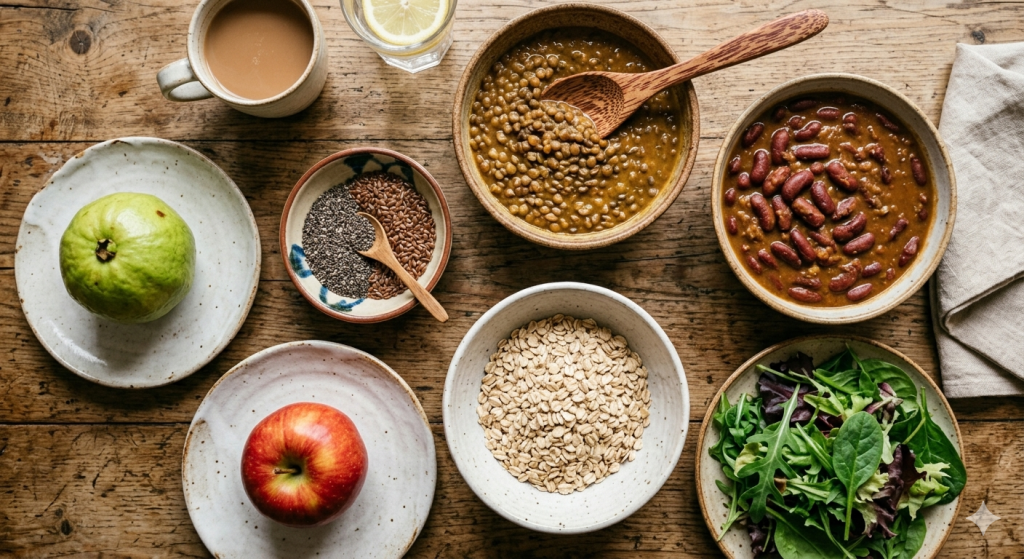
- Reduced consumption of legumes like dal, rajma, and chana, which are fiber powerhouses
The shift towards convenience foods and packaged snacks has quietly stripped fiber out of the Indian diet. And the chronic diseases following this shift, including type 2 diabetes, polycystic ovary syndrome (PCOS), irritable bowel syndrome (IBS), and cardiovascular disease, tell the story clearly.
AI-generated image
High Fiber Foods for Indians: Your Complete Guide
Vegetarian Sources
| Food | Estimated Fiber per Serving |
| Dal (cooked, 1 cup) | 15 g |
| Rajma/Chana (cooked, 1 cup) | 12–16 g |
| Oats (1 cup cooked) | 4 g |
| Millets (1 cup cooked) | 3–5 g |
| Leafy greens/Cruciferous sabzi (1 cup) | 3–5 g |
| Apple or Guava (1 medium) | 4–5 g |
| Chia seeds (2 tbsp) | 8 g |
| Flaxseeds (2 tbsp) | 5 g |
A Note on Non-Vegetarian Diets
If you eat chicken, fish, or eggs, this matters: animal proteins contain zero fiber. Zero.
No matter how much protein you are getting from your non-veg meals, you are not getting any fiber from them.
This is one of the biggest mistakes in high-protein diets.
People load up on chicken breast and eggs, assume they are eating well, and wonder why their gut health is poor or their cholesterol is going up.
Always combine your animal proteins with vegetables, legumes, or whole grains to bring fiber into the picture.
Start here: 10 fiber-rich foods your gut needs.
Sample High-Fiber Day: What It Actually Looks Like
Vegetarian Sample Day (~38 g fiber)
| Meal | What to Eat | Approx. Fiber |
| Breakfast | Oats + chia seeds | 8–10 g |
| Lunch | Dal + sabzi + 2 rotis | 14 g |
| Snack | Fruit (apple or guava) | 4 g |
| Dinner | Vegetable curry + legumes | 8 g |
| Supplement | Psyllium husk 5 g | 4 g |
| Total | ~38 g | |
Non-Vegetarian Sample Day (~32–36 g fiber)
| Meal | What to Eat | Approx. Fiber |
| Breakfast | Oats + seeds | 8 g |
| Lunch | Chicken + dal + vegetables | 12 g |
| Snack | Fruit | 4 g |
| Dinner | Fish + vegetable side | 8 g |
| Supplement | Psyllium husk 5 g | 4 g |
| Total | ~32–36 g | |
Meet Psyllium Husk: The Correction Tool
Even with the best diet intentions, many people find it hard to hit their fiber targets every single day. Life gets in the way. Travel, busy schedules, limited food options. This is where psyllium husk becomes one of the most powerful tools you have.
AI-generated image
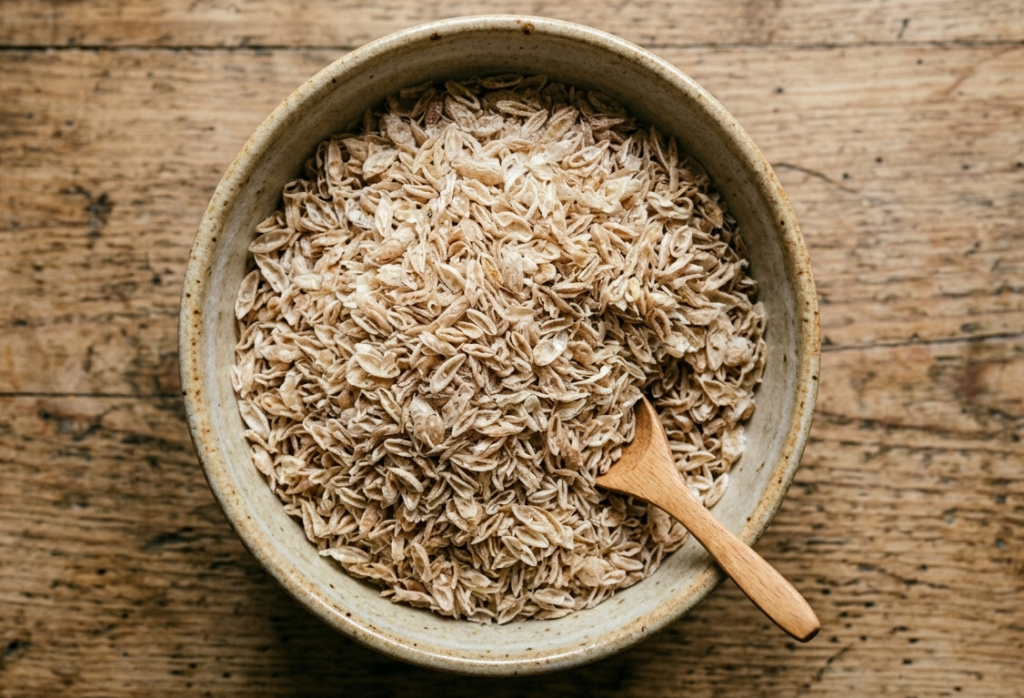
Psyllium, also known as isabgol, is a soluble, gel-forming fiber. When it hits water inside your digestive tract, it forms a thick gel. And that gel does something remarkable:
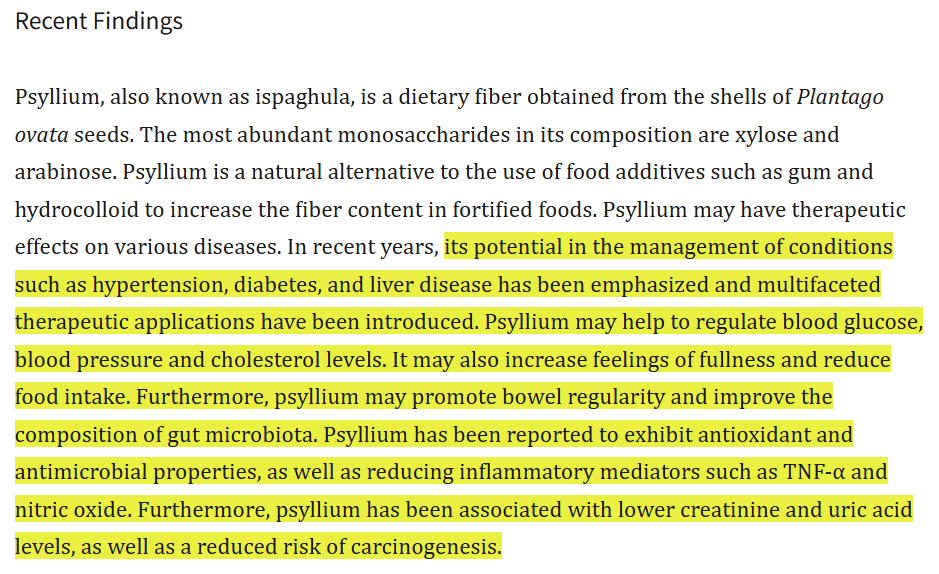
- Slows glucose absorption, reducing post-meal blood sugar spikes
- Binds bile acids in the gut, pulling LDL (low-density lipoprotein) cholesterol out of circulation
- Feeds beneficial gut bacteria, supporting your microbiome
- Improves stool consistency, helping with both constipation and loose stools
This is not a trend supplement.
- Multiple clinical trials have confirmed psyllium husk benefits for LDL cholesterol reduction, total cholesterol improvement, and cardiovascular risk markers. And because it works mechanically, not chemically, the safety profile is excellent.
Source: Sanlier N, Ozler E. From Husks and Seeds to Health: an Inevitable Outcome Rather than a Fluke. Curr Nutr Rep. 2026 Feb 26;15(1):15. doi: 10.1007/s13668-025-00722-4. PMID: 41741921; PMCID: PMC12935724.
Psyllium Husk for Blood Sugar Control
For anyone managing prediabetes, type 2 diabetes, or metabolic syndrome, psyllium husk is particularly relevant.
- The gel it forms physically slows carbohydrate absorption in the small intestine, leading to flatter post-meal glucose curves and improved insulin sensitivity over time.
Psyllium Husk for Gut Health
Unlike harsh laxatives, psyllium normalizes stools rather than forcing a response.
- It adds bulk where needed and softens where needed.
- This is why it helps across a wide range of gut issues including constipation, loose stools, IBS, and gut inflammation.
The Protein Shake Hack
One of the simplest ways to use psyllium husk is by adding it to your protein shake.
- Protein is fast-digesting. Fiber slows it down.
- Together, you get better satiety, slower glucose release, reduced blood sugar spikes, and a bonus serving of prebiotic fiber to feed your gut microbiome.
Protein plus fiber equals better metabolism.
How Much Psyllium Husk Per Day: The Protocol
Start low. Build slow. This matters.
| Phase | Dose | Timing |
| Week 1–2 (start here) | 3–5 g once daily | With a large glass of water |
| Week 3+ (maintenance) | 5–10 g per day | Split across one or two servings |
| Important rule | Always separate from medications | 1–2 hour gap before or after |
Always take psyllium with plenty of water. This is non-negotiable. The gel needs liquid to form properly.
Without adequate water, psyllium can actually worsen constipation rather than help it.
The Biggest Fiber Mistakes People Make
| Common Mistake | What to Do Instead |
| Adding too much fiber too fast | Start small and build gradually over weeks |
| Not drinking enough water | Always pair fiber increases with increased water intake |
| Relying only on supplements | Eat real high fiber foods first; use psyllium to bridge the gap |
| Ignoring fiber diversity | Mix soluble and insoluble fiber from varied food sources |
| Spreading fiber unevenly | Distribute fiber intake across all meals, not just one |
‘Fibermaxxing’ is another mistake: more fiber, faster, without the right foundation. Read this before you try it.
https://www.lukecoutinho.com/blogs/fibermaxxing-guide-gut-health/
Who Should Be Careful With Fiber Supplementation
Psyllium husk is safe for most people. But certain conditions warrant caution or medical supervision:
- Bowel obstruction (do not use without medical clearance)
- Severe swallowing difficulties
- Immediately after gut surgery
- Severe active digestive disease (consult your doctor first)
One critical timing note: do not take psyllium husk at the same time as any medications.
The gel-forming action can interfere with drug absorption. Always maintain a 1 to 2 hour gap.
Important Disclaimer
This protocol is educational in nature.
While evidence strongly supports high fiber diet benefits and the use of psyllium for metabolic health, individual needs vary.
- Always consult your healthcare provider if you have a medical condition
- Do not replace prescribed treatments
- Introduce fiber slowly to allow your gut to adapt

Image Credits: Freepik
How to Increase Fiber Intake Naturally: The Simple Rules
- Start your day with oats, seeds, or whole grain options
- Never skip your dal, chana, or rajma at lunch
- Make vegetables non-negotiable at every meal, not optional
- Snack on fruit instead of packaged foods
- Use psyllium husk as your fiber insurance policy
- Stay consistent, not perfect
The best fiber supplement for gut health is the one you will actually take consistently. But always prioritize food first.
Supplements fill the gaps; they don’t replace the foundation.
The Last Word
Fiber is not a trend. It is a foundation.
When you fix your fiber intake, something remarkable happens. Your gut starts working the way it was designed to. Your blood sugar begins to stabilize. Your cholesterol numbers shift in the right direction. Your hunger becomes more manageable. Your energy evens out.
None of this happens overnight. But it does happen. Because the body knows how to heal when you stop depriving it of what it needs.
“Psyllium isn’t a detox. It’s dietary discipline in fiber form.”
— Luke Coutinho
Start the protocol today. One small step. One glass of water. One meal with real fiber.
Your body will do the rest.
Disclaimer: The information provided here is for educational and informational purposes only. It is not intended as a substitute for professional medical advice, diagnosis, or treatment. Always consult your healthcare provider before making changes to your nutrition, lifestyle, or healthcare regimen, especially if you have existing medical conditions or are taking prescribed medications.
Want personalized guidance on fiber intake?
We help you find a way.
Set up a one-on-one consultation with our foundational medicine team or explore our Wellness Programs to optimize your lifestyle goals.
Reach out to us at 1800 102 0253 or write to us at [email protected].