No products in the cart.
Most people are doing it backwards.
They spend thousands on collagen powders, peptides, and creams, expecting transformation.
Weeks pass. Sometimes months.
The skin looks the same. The joints still ache.
The results just never show up.
Image Credits: Freepik
Here’s the truth nobody tells you: collagen doesn’t fail because you don’t supplement enough. It fails because the body doesn’t have what it needs to build, protect, and repair it.
This is a protocol guide, not a product pitch. It’s rooted in nutritional biochemistry, physiology, lifestyle, and foundational medicine, and it will show you exactly what your body needs to produce collagen naturally, consistently, and sustainably, with or without a supplement in sight.
Save this. Share this. Come back to this.
What Is Collagen, Really? (And Why the Basics Matter More Than the Bottle)
Collagen is the most abundant structural protein in the human body.
It forms the scaffolding of your skin, keeps your joints cushioned, supports your gut lining, and gives your tissues tensile strength.
Understanding collagen production in the body starts with understanding this: collagen is built, not just consumed.
Your body is constantly synthesizing and breaking down collagen.
The net result, whether you’re gaining or losing collagen integrity, depends almost entirely on your internal environment. Not your supplement shelf.
For more in-depth insights on collagen, don’t miss this:
https://www.lukecoutinho.com/blogs/guide-to-collagen-benefits/
The 7 Foundations of Collagen Synthesis (The Protocol)
Collagen synthesis declines approximately 1% per year after the age of 25.
But this decline is accelerated dramatically by poor nutrition, chronic stress, blood sugar dysregulation, poor sleep, and gut dysfunction.
These are the levers. These are what we fix first.
Foundation 1: Protein, The Non-Negotiable
Collagen is made of amino acids, primarily glycine, proline, and hydroxyproline. If your total daily protein for collagen synthesis is insufficient, your body simply does not have the raw materials to build the structure.
It doesn’t matter how premium your collagen supplement is. No protein, no structure. Full stop.
What to do:
- Aim for consistent daily protein spread across meals, not just one big shake
- Prioritize complete protein sources (animal or well-combined plant proteins)
- Don’t skip meals where protein could anchor your intake
| Vegetarian Protein Sources | Non-Vegetarian Protein Sources |
| Lentils, dals, chickpeas | Eggs, chicken, fish, meat |
| Green peas, tofu, tempeh | Bone broth, chicken skin |
| Nuts, seeds, whole grains | Sardines, mackerel, salmon |
Research confirms that inadequate dietary protein directly impairs wound healing and tissue repair, both of which are collagen-dependent processes.
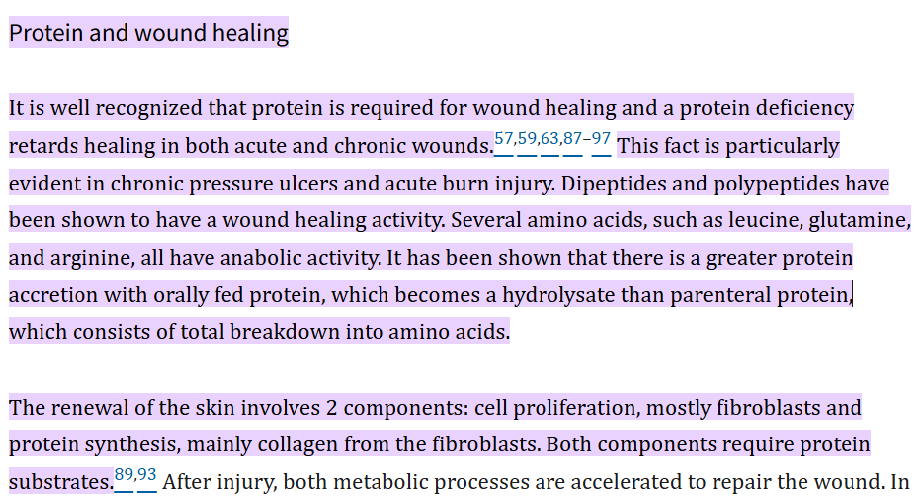
Source: Demling RH. Nutrition, anabolism, and the wound healing process: an overview. Eplasty. 2009;9:e9. Epub 2009 Feb 3. PMID: 19274069; PMCID: PMC2642618.
Foundation 2: Vitamin C, The Collagen Switch
This one is not optional. Vitamin C for collagen production is not a nice-to-have. It is biochemically essential.
Here’s why: two enzymes critical to collagen synthesis, prolyl hydroxylase and lysyl hydroxylase, are entirely dependent on Vitamin C.
- Without adequate Vitamin C, the collagen triple helix becomes unstable.
- Repair slows. Skin quality drops.
You can take all the collagen supplements you want, but without Vitamin C, the activation switch stays off.
Daily food sources matter more than mega doses:
| Food | Vitamin C Content (approx.) |
| Amla (Indian gooseberry) | 600-700 mg per 100g |
| Capsicum (red bell pepper) | 128 mg per 100g |
| Citrus fruits | 50-70 mg per 100g |
| Broccoli | 89 mg per 100g |
| Green peas | 40 mg per 100g |
| Berries | 30-60 mg per 100g |
A landmark study confirmed that Vitamin C supplementation alongside collagen peptides significantly improved skin elasticity and hydration compared to collagen alone.
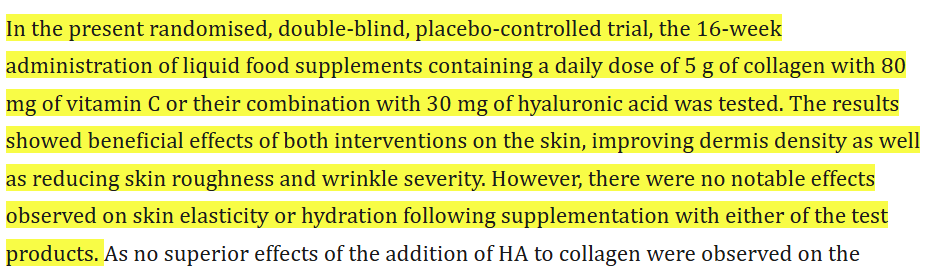
Source: Žmitek K, Žmitek J, Hristov H, Rogl Butina M, Keršmanc P, Pogačnik T. The Effects of Dietary Supplementation with Collagen and Vitamin C and Their Combination with Hyaluronic Acid on Skin Density, Texture and Other Parameters: A Randomised, Double-Blind, Placebo-Controlled Trial. Nutrients. 2024 Jun 17;16(12):1908. doi: 10.3390/nu16121908. PMID: 38931263; PMCID: PMC11206740.
The foods that increase collagen aren’t always the glamorous ones. Sometimes it’s a simple amla, the green pea in your dal, the capsicum in your sabzi.
Foundation 3: Minerals People Forget
Collagen enzymes don’t run on protein and Vitamin C alone. They also need minerals to function. The most critical ones:
Zinc supports collagen synthesis and wound repair. Deficiency is linked directly to impaired skin healing.
- Food sources: Pumpkin seeds, legumes, eggs, meat
Copper is required by lysyl oxidase, an enzyme responsible for cross-linking collagen fibers for structural strength.
- Food sources: Sesame seeds, nuts, organ meats
Iron (when deficient) reduces the activity of hydroxylase enzymes that stabilize collagen.
- Food sources: Lentils, spinach, red meat, fish
Even the most “perfect” skincare routine cannot compensate for mineral deficiencies at the cellular level. Food first. Supplements only when genuinely needed.
Image Credits: Freepik
Foundation 4: Blood Sugar Stability, The Collagen Protector
This one ages people faster than almost anything else, and most people don’t connect it to skin at all.
- When blood sugar spikes repeatedly, a process called glycation occurs.
- Sugar molecules attach to collagen proteins, causing them to become stiff, cross-linked, and dysfunctional.
The scientific term for these damaged structures is Advanced Glycation End-products, or AGEs.
- Glycation accelerates skin ageing signals, weakens elasticity, and makes collagen rigid rather than supple.
This is one of the most evidence-based explanations for how to improve skin elasticity naturally, which begins at the metabolic level, not the moisturizer level.
Skin health is metabolic health.
Fiber-rich foods (vegetables, legumes, whole grains) slow glucose absorption and protect collagen indirectly.
Research links dietary glycation load to accelerated dermal ageing.
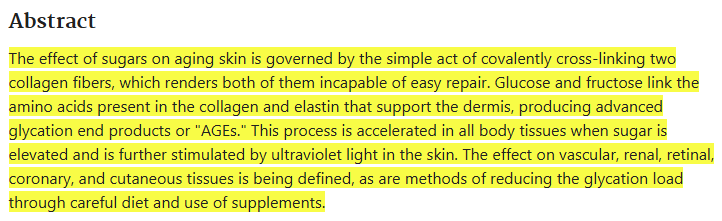
Source: Danby FW. Nutrition and aging skin: sugar and glycation. Clin Dermatol. 2010 Jul-Aug;28(4):409-11. doi: 10.1016/j.clindermatol.2010.03.018. PMID: 20620757.
Foundation 5: Gut Health, Where Collagen Absorption Begins
You can eat the right proteins, take the best supplements, and still see poor results if your gut isn’t absorbing and transporting nutrients effectively.
The collagen and gut health connection is fundamental and underappreciated.
- Amino acids from dietary protein must be digested, absorbed through the intestinal lining, and transported to collagen-synthesizing cells (fibroblasts).
- If the gut lining is inflamed, permeability is compromised, or digestive enzyme activity is poor, this delivery system breaks down.
Constipation, bloating, irritable bowel syndrome (IBS), and chronic gut inflammation are not just digestive issues.
They often show up on the skin first.
Fix the gut, and the skin quietly improves.
The research on the gut-skin axis is growing rapidly, with studies demonstrating links between gut microbiome health and inflammatory skin conditions.
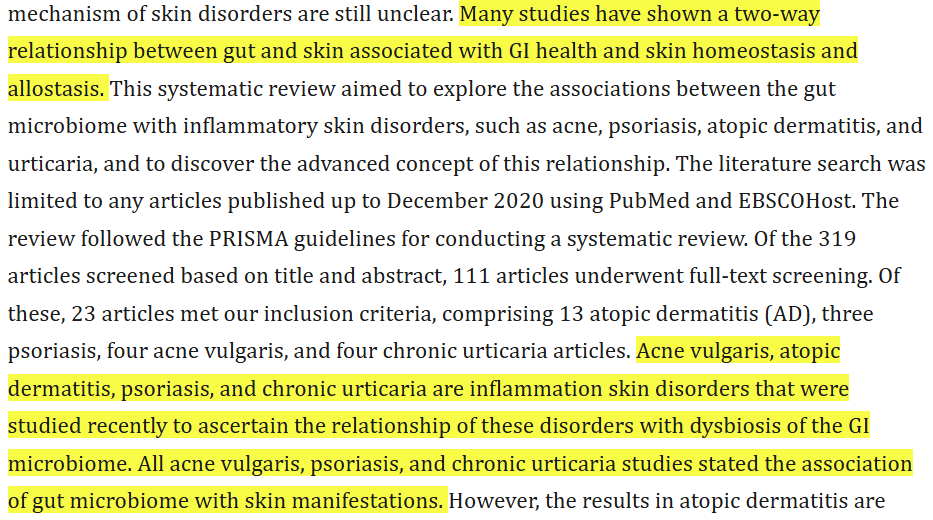
Source: Widhiati S, Purnomosari D, Wibawa T, Soebono H. The role of gut microbiome in inflammatory skin disorders: A systematic review. Dermatol Reports. 2021 Dec 28;14(1):9188. doi: 10.4081/dr.2022.9188. PMID: 35371420; PMCID: PMC8969879.
Foundation 6: Sleep, The Real Collagen Booster
No supplement has ever replicated what deep sleep does for tissue repair.
- During deep sleep (slow-wave sleep), growth hormone is released in its highest concentrations.
- This hormone is a primary driver of collagen synthesis and cellular repair.
- Most of the overnight regeneration that keeps skin firm, joints healthy, and tissues intact happens in this window.
No deep sleep means poor tissue repair, dull skin, slower healing, and faster ageing.
Understanding how sleep affects skin health reframes the entire conversation about anti-ageing.
You cannot out-supplement poor sleep. Sleep is the most underrated, completely free, scientifically validated skin treatment available.
Research found that poor sleepers showed significantly increased signs of intrinsic skin ageing, including reduced collagen integrity.
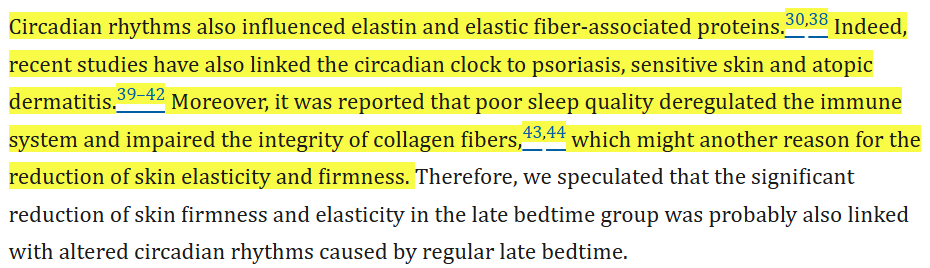
Source: Shao L, Jiang S, Li Y, Shi Y, Wang M, Liu T, Yang S, Ma L. Regular Late Bedtime Significantly Affects the Skin Physiological Characteristics and Skin Bacterial Microbiome. Clin Cosmet Investig Dermatol. 2022 Jun 7;15:1051-1063. doi: 10.2147/CCID.S364542. PMID: 35698548; PMCID: PMC9188400.
Foundation 7: Stress and the Nervous System
Stress and skin ageing are directly, biologically linked. Not metaphorically. Not spiritually. Biochemically.
- Chronic stress elevates cortisol.
- Cortisol is catabolic, meaning it breaks structures down.
- High cortisol degrades collagen, slows repair mechanisms, and accelerates the biological processes associated with skin ageing.
A calm nervous system creates the internal environment in which repair happens.
- Breathwork, movement, adequate rest, and nervous system regulation are not luxury wellness practices. They are collagen-protective strategies.
Chronic psychological stress accelerates telomere shortening and collagen degradation in skin fibroblasts.
The Collagen Protocol: Your Daily Basics at a Glance
| Daily Foundation | Action |
| Protein | Include a quality protein source at every meal |
| Vitamin C | Eat one Vitamin C-rich food daily (amla, citrus, capsicum, berries) |
| Minerals | Include zinc and copper-rich foods regularly |
| Blood Sugar | Prioritize fiber-rich vegetables and whole foods |
| Gut Health | Address bloating, constipation, or gut inflammation proactively |
| Sleep | Protect 7-9 hours of quality sleep, screens off before bed |
| Stress | Practice one daily stress regulation tool: breathwork, walks, or stillness |
Do this for 30 days. Then reassess whether you need a supplement at all.
So, Do Collagen Supplements Work?
Yes. But only when the foundations are in place.
The benefits of collagen supplements are real and documented.
- Hydrolyzed collagen peptides have shown measurable improvements in skin hydration, elasticity, and joint comfort in randomized controlled trials.
- Marine and bovine collagen supplements have also shown promise for collagen for joint health, particularly in athletes and those with osteoarthritis.
But here’s the honest position: supplements support a functioning system. They don’t replace one.
Who may benefit more from collagen supplements:
| Profile | Reason |
| Over 40 | Natural decline in synthesis accelerates |
| High-intensity training | Greater breakdown and repair demand |
| Low protein diet | Limited amino acid availability |
| Slow recovery | Increased need for targeted collagen peptides |
| Joint discomfort | Localized support alongside foundational nutrition |
Regarding the best time to take collagen supplements: Taking hydrolyzed collagen with a Vitamin C source around 30-60 minutes before exercise or before sleep may optimize uptake.
However, consistency matters far more than timing.