No products in the cart.
The monsoon does something strange to our digestion. The same food that sat well with us in summer suddenly feels heavy. Bloating shows up more often. Infections go up. And every year, without fail, our community asks us the same question: what is actually safe to eat and drink right now?
Kombucha keeps coming up in this conversation. It has become one of the most talked-about fermented drinks in the wellness world, often positioned as a gut-friendly alternative to soda and even to alcohol. But monsoon changes the rules for anything fermented, kombucha included. So let us break this down properly, the way we always do, with the science, the nuance, and the practical guidance you can actually use. What does the research say about kombucha and gut health, Is it a smart choice for the rainy season? How do you make it safely at home? What should you buy if you cannot make it yourself? How do you bring it into your routine? And who needs to stay away from it?
What Is Kombucha?
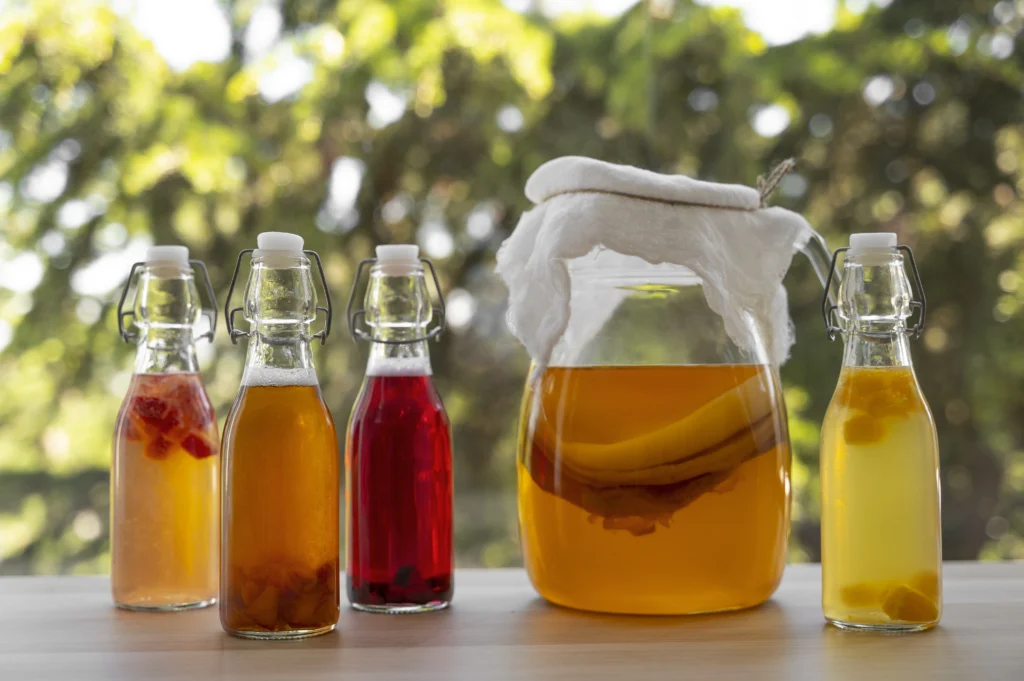
Kombucha is fermented tea. You start with sweetened black or green tea, add a SCOBY, which stands for symbiotic culture of bacteria and yeast, and let it sit for about one to two weeks. During this time, the bacteria and yeast feed on the sugar and produce organic acids, a small amount of carbon dioxide, and trace alcohol, usually under 0.5 percent. What you get is a tangy, fizzy, slightly sour drink that many people now reach for instead of soda or even beer.
Is Kombucha Good for Your Gut? What the Research Actually Say
Source: Magnific
At Team Luke, we never chase a trend just because it is popular. We go back to the evidence, and we like to look at the actual numbers behind the claims, not just the headline. So let us answer the core question directly: yes, kombucha does appear to support gut health, and here is the data and the specific benefits behind that answer.
The gut and digestive benefits, backed by numbers
- Shifts gut bacteria within 4 weeks: A controlled trial on 24 healthy adults found that just four weeks of daily kombucha (about 470 ml or 16 oz per day) was enough to meaningfully enrich short-chain fatty acid-producing bacteria such as Bifidobacterium and Prevotella and to make a beneficial probiotic strain, Weizmannia coagulans, a dominant part of the gut microbiome. [2]
- Eases digestive symptoms: A systematic review of all 8 published kombucha clinical trials to date (spanning roughly 150 to 200 total participants across studies) concluded kombucha may meaningfully help alleviate gastrointestinal symptoms, with a modest but real capacity to modulate gut and salivary microbiota. [1]
- Cuts a meal’s blood sugar spike by nearly 21 percent: In an 11-person crossover trial, drinking unpasteurized kombucha alongside a high glycemic meal brought the meal’s glycemic index down from 86 to 68, a drop of 18 points, and lowered the insulin index from 85 to 70. That took the meal from the “high GI” category to “medium GI.” Plain soda water and diet soft drink produced no such effect. [3]
- Improves fat metabolism markers: A 2025 randomized trial from IMDEA Food, Madrid, using a fiber-enriched kombucha, found a measurable reduction in serum triglycerides alongside an increase in beneficial Bifidobacterium and a decrease in Ruminococcus torques, a bacteria strain associated with inflammatory bowel conditions. [4]
- Delivers billions of live cultures per serving: Depending on the brand and batch, a single serving of raw kombucha typically carries anywhere from 1 to 5 billion CFU (colony-forming units) of live bacteria and yeast, in the same range as many standalone probiotic supplements, but in a food format your gut may absorb and utilize more readily. [6]
- Supports liver and antioxidant load: A broader systematic review covering 15 studies found kombucha consumption is associated with reduced oxidative stress and inflammation markers, improved natural liver detoxification or cleansing processes, and reduced intestinal dysbiosis, largely from the tea polyphenols and organic acids generated during fermentation. [5]
- A genuinely lower calorie, lower sugar swap: Well fermented, low-sugar kombucha brands can run 71 percent lower in total sugar and 67 percent lower in calories compared to standard commercial soft drinks of the same size, which matters if you are using it as your evening or soda replacement. [7]
Our takeaway: To directly answer the question, yes, kombucha is good for your gut for most healthy adults, with real, measurable evidence behind gut microbiota shifts, digestive comfort, and post-meal blood sugar control. The research base is genuinely promising and still young, so we recommend enjoying it consistently in small amounts rather than expecting it to work overnight or in isolation. Always keep your healthcare professionals in the loop before introducing anything new in your daily diet regimen.
How to Make Kombucha Safely at Home, Monsoon Edition
Source: Magnific
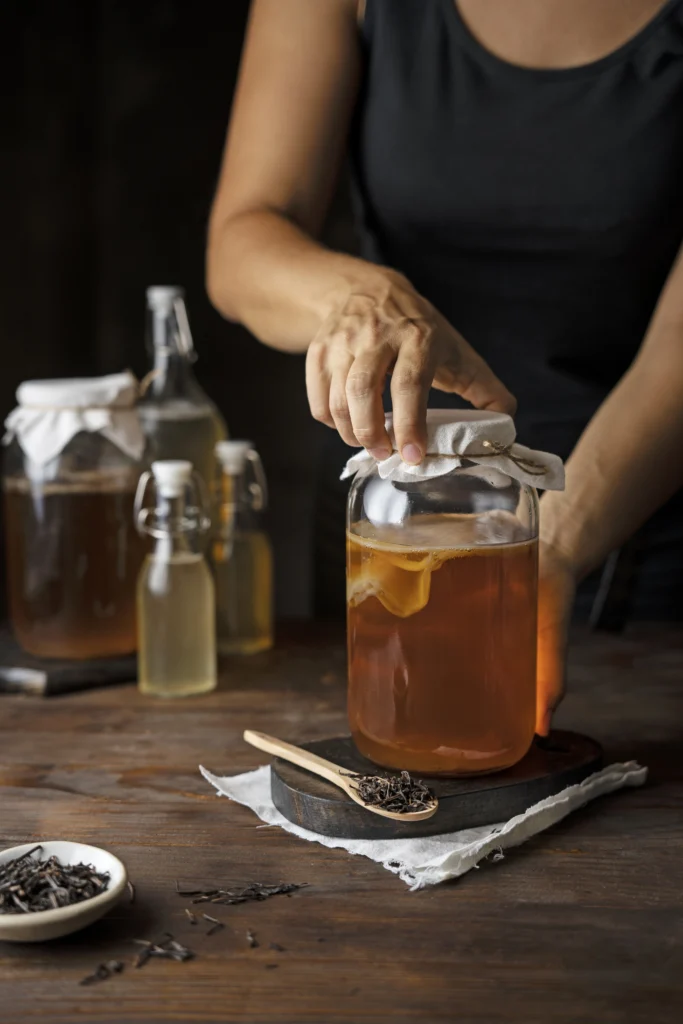
If you want to brew during the rainy season, treat this as non-negotiable groundwork.
- Sanitize everything. Wash your jar, spoon, and cloth cover in hot water. Avoid antibacterial soap residue, as it can weaken the SCOBY.
- Use a strong starter. Add at least one to two cups of previously fermented, unflavoured kombucha as starter liquid per batch. This lowers the pH quickly, which is your best defense against mold.
- Keep it warm, not damp. Aim for a spot between 24 and 29 degrees Celsius. Avoid keeping the jar directly on the floor or near a window where monsoon moisture collects.
- Cover with a tightly woven cloth, not cheesecloth. It should keep out fruit flies and dust while still letting the culture breathe.
- Improve airflow in the room. Use a fan or keep the space ventilated. Standing humid air around the jar is the single biggest reason SCOBYs turn moldy during monsoon.
- Check daily. A healthy SCOBY smells vinegary and tangy. If you see fuzzy, raised patches in white, green, blue, or black, that is mold, not a normal part of fermentation. Discard the entire batch and start fresh with a new SCOBY. Please DO NOT try to salvage it.
- Taste test before bottling. It should taste tart, slightly sweet, and fizzy, never off, musty, or overly boozy.
If You Cannot Make It at Home: What to Buy and How to Select a Clean Label
We know brewing is not for everyone, especially through monsoon, and that is completely okay. A good quality, store-bought kombucha can absolutely give you similar benefits, as long as you know how to read the label like we do. Here is our checklist before anything goes into your cart.
- Unpasteurized or raw, always. This is non-negotiable if you want the probiotic benefit. Pasteurization extends shelf life but kills the live cultures, which defeats the purpose of drinking kombucha in the first place. Look for the words “raw,” “unpasteurized,” or “live and “active cultures” on the label.
- Keep the ingredient list short. Water, tea, a sugar source, and a live culture are really all that is needed. Ginger, turmeric, lemon, or whole fruit are welcome additions. If you see artificial flavors, colors, preservatives, or anything you cannot pronounce, put it back on the shelf.
- Check the residual sugar. As a general guide, if a serving lists more than 4 to 6 grams of sugar, some of that is likely added back after fermentation rather than left over naturally. Lower sugar usually signals a longer, more traditional fermentation.
- Look for the cold chain. Genuine raw kombucha needs refrigeration, in the store and at home. If a bottle of “raw” kombucha is sitting on an unrefrigerated shelf for weeks, be cautious.
- Check the tea base. It should be brewed from real black or green tea leaves, not powders or tea extracts. This also tells you it carries genuine polyphenols and antioxidants, not just flavor.
- Note the alcohol content. Reputable brands disclose this clearly, usually under 0.5 percent. If it is not mentioned anywhere, that is a red flag, not reassurance.
- Small batch over mass-produced, where possible. Local or small-batch brands are often more transparent about their process and more consistent in their fermentation quality. Buying local also usually means fresher stock, which matters more with a living product like this.
Once you shortlist two or three brands you trust, stay consistent with them. Do not chase every new flavor on the shelf. A predictable, well-fermented bottle from a brand you trust is worth more than an exciting one from a brand you know nothing about.
How to Incorporate Kombucha Into Your Day
- Start small. Begin with 100 to 150 ml a day and observe how your gut responds before increasing the amount.
- Have it with a meal, not on an empty stomach. This is when the research shows the most benefit for blood sugar, and it is gentler on an already acid-sensitive gut.
- Use it as your soda or alcohol swap. If you are trying to move away from sugary carbonated drinks or evening drinks, kombucha is a genuinely better option, but treat it as a mindful swap, not a health drink you consume without limits.
- Keep it refrigerated once opened, and finish it within the timeframe the brand recommends, or within a few days if homemade.
- Avoid pairing it with very spicy or oily monsoon street food. Two irritants at once is more than our gut can comfortably handle in this season.
Who Should Take It Mindfully, or Avoid It
- Pregnant women. Most nutrition and obstetric experts advise avoiding kombucha in pregnancy because of its trace alcohol content, since no amount of alcohol is considered fully safe in pregnancy, along with the unpasteurized, live culture nature of the drink.
- Immunocompromised individuals, including those on chemotherapy, organ transplant recipients, or anyone with a weakened immune system. Because kombucha is unpasteurized, it carries a higher foodborne illness risk for this group, and rare but serious complications have been documented, almost always tied to home-brewed batches.
- People with acid reflux or a sensitive gut. The acidity can aggravate GERD, ulcers, or IBS flare-ups.
- Anyone with a histamine intolerance. Fermented foods are naturally higher in histamine and can trigger headaches, flushing, or digestive upset in sensitive individuals.
- Children. The caffeine and trace alcohol content mean kombucha is best kept out of a child’s regular diet.
- People on blood sugar or diabetes medication. Kombucha can influence blood sugar response, so monitor closely and loop in your doctor before making it a daily habit.
- Anyone drinking home-brewed kombucha during monsoon, specifically. If you are even slightly unsure about your brewing hygiene this season, choose a trusted commercial, unpasteurized, well-refrigerated brand instead.
Our Bottom Line
Kombucha is not a monsoonal miracle drink, and it is not something to fear either. The research genuinely supports it as a mild, gut-supportive addition to a balanced diet for most healthy adults, particularly as a smarter alternative to sugary sodas or alcohol. But the monsoon is a season that punishes carelessness with anything fermented. If you buy it, choose brands you trust, read the label the way we have shown you, and keep it refrigerated. If you brew it at home, respect the extra hygiene and airflow this season demands. And if you fall into one of the higher risk groups above, this is one wellness trend you can comfortably sit out.
As we always say at Team Luke, it is never just about what you eat or drink; it is about how mindfully you bring it into your life and whether your body is truly ready for it in that season. Listen to your gut. It usually knows before you do.
Ready to Heal Your Gut, the Root Cause Way?
Kombucha can be one small, mindful piece of the puzzle, but real, lasting gut healing goes deeper than any single food or drink. Our Gut Care Program at Team Luke is built on root cause, foundational medicine science, personalized nutrition, targeted lifestyle shifts, and ongoing coach support to help you fix bloating, irregularity, food sensitivities, and low immunity from the inside out.
Explore our Gut Care Program
Disclaimer: This blog is for general awareness and educational purposes only and is not a substitute for professional medical advice, diagnosis, or treatment. Please consult a qualified healthcare provider before making changes, especially if you are pregnant, immunocompromised, or managing an existing health condition.
References
- Arce-Lopez, et al. (2025). Effect of fiber-modified kombucha tea on gut microbiota in a healthy population: A randomized controlled trial. Current Research in Food Science.
- Atkinson, et al. (2023). Glycemic and insulinemic impact of unpasteurized kombucha consumed with a high-GI meal. Frontiers in Nutrition.
- BC Centre for Disease Control. (2020). Food safety assessment of kombucha tea recipe and production.
- Ecklu-Mensah, et al. (2024). Modulating the human gut microbiome and health markers through kombucha consumption: A controlled clinical study. Scientific Reports.
- Foodsure Editorial Team. (2026). Top 10 kombucha brands in India: Probiotic content and label comparison. Foodsure.
- Fraiz, et al. (2025). Benefits of kombucha consumption: A systematic review of clinical trials focused on microbiota and metabolic health. Fermentation, 11(6), Article 353.
- Kombucha Brewers International. (2023). Kombucha code of practice.
- Multiple authors. (2021). Effect of kombucha intake on the gut microbiota and obesity-related comorbidities: A systematic review. Nutrients.
- The Good Bug Editorial Team. (2025). Kombucha vs. soda: Sugar and calorie comparison. The Good Bug.