No products in the cart.
You could be doing everything ‘right’ for your health.
Eating home-cooked meals with fresh vegetables. Choosing what you believe is the best food for metabolism boost. Waking up early to exercise. Sleeping on time. Some of you even have air purifiers running all day at home, convinced you’ve created a safe bubble for your lungs and your family.
And then you open the news.
“Delhi ranks among the world’s most polluted cities.”
“In India, New Delhi’s smog crisis exposes the high price of clean air.”
“Can overusing air purifiers harm your lungs?”
It’s confusing, unsettling, and honestly exhausting. Because no matter how disciplined your lifestyle is, air pollution feels like the one factor you cannot fully control.
Think of your body like a well-designed home. You’ve invested in strong walls, good food, clean water, and regular maintenance. But air pollution doesn’t knock on the door and wait for permission. It slips in through invisible cracks; windows slightly open, ventilation shafts, even when you think you’re protected. Once inside, it doesn’t just settle on surfaces. It quietly interferes with the wiring.
Why Air Pollution Is Far More Dangerous Than We Think
When we talk about air pollution health effects, the conversation usually begins and ends with the lungs. Asthma. Allergies. Breathlessness. But science tells us that this is only the surface-level damage., the part we can feel. The deeper impact happens quietly, long before symptoms appear.
Fine particulate matter, especially PM2.5 (particulate matter), is small enough to bypass the body’s natural respiratory defenses. These particles do not remain confined to the airways. They cross the alveolar barrier, enter systemic circulation, and reach organs far beyond the lungs, including the heart, liver, brain, and even reproductive tissues.
Once inside the bloodstream, these pollutants act as biological stressors. They increase oxidative stress, overwhelm antioxidant defenses, and activate chronic low-grade inflammation. This persistent inflammatory state is now considered a common denominator behind many modern diseases. Long-term exposure has been strongly associated with cardiovascular disease, insulin resistance, autoimmune conditions, and accelerated metabolic dysfunction, as documented by large cohort studies from the World Health Organization and the Global Burden of Disease project.
What Is DNA Methylation, and Why Pollution Disrupts It
Your genes are not rigid commands; they are responsive systems. What truly matters is how your DNA behaves, and that behavior is governed by a process called DNA methylation.
So, what is DNA methylation?
Think of it as a dimmer switch, not an on-off button, for your genes. The genetic code remains unchanged, but methylation determines which genes are expressed, which are muted, and how strongly they respond to stress, inflammation, or repair signals.
When methylation is balanced, cells function with precision. DNA repair mechanisms work efficiently, inflammation resolves appropriately, and metabolism remains adaptable. This is what researchers describe as genomic stability, the quiet foundation of long-term health.
When methylation is disrupted, it causes oxidative stress, one of the primary biological consequences of air pollution, interferes with these finely tuned methylation cycles. Studies published in Environmental Health, Epigenetics, and Nature Reviews Genetics show that chronic exposure to pollutants can alter methylation patterns, impairing DNA repair pathways and increasing vulnerability to metabolic and inflammatory diseases over time.
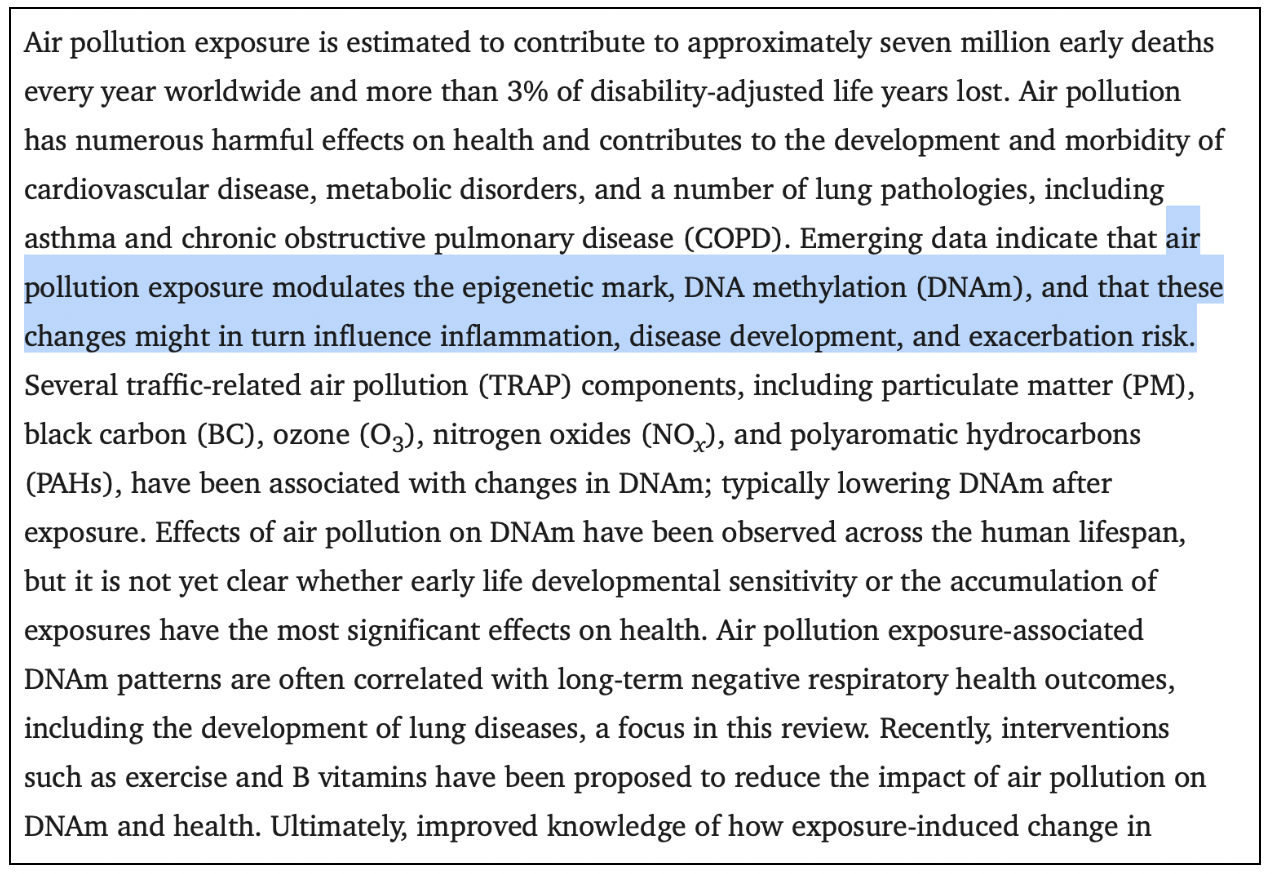
Source: Rider, C. F., & Carlsten, C. (2019). Air pollution and DNA methylation: effects of exposure in humans. Clinical epigenetics, 11(1), 131. https://doi.org/10.1186/s13148-019-0713-2
This does not happen overnight. It accumulates slowly, silently, and systemically.
That is why protecting your DNA is not an optional or advanced health strategy. It is foundational. Because once methylation balance is compromised, the body’s ability to adapt, recover, and regulate itself begins to weaken, long before disease ever shows up on a report.
Why Nutrition Matters More Than Ever in a Polluted World
We may not control the air we breathe, but we absolutely influence how our body responds to it. When pollution cannot be fully avoided, buffering its biological impact becomes the strategy.
This is where nutrition needs a redefinition. Food is no longer just about calories, weight management, or trends. It becomes a tool for cellular protection, helping the body adapt to environmental stressors like air pollution.
Certain nutrients play a critical role in this adaptive response, particularly folates and B vitamins.
These nutrients are essential because they support:
- DNA repair mechanisms, helping cells maintain genetic stability under oxidative stress
- Proper DNA methylation, which regulates gene expression and cellular function
- Cleansing pathways, especially those involved in neutralising pollution-induced toxins
- Metabolic efficiency, supporting insulin sensitivity and energy regulation

Image Credits: Freepik
Adequate folate availability is strongly associated with improved genomic stability, particularly in populations exposed to chronic environmental stressors. This is why folate-rich food is increasingly discussed as a foundational nutrient for long-term health.
This is also why nutrition should not be viewed as a quick fix or a single ‘anti pollution foods’ list. It is about building a nutritional foundation that allows the body to respond intelligently, day after day.
Which brings us to a food combination that has carried an unfair reputation for decades, despite being one of the most nutritionally intelligent pairings in our culture.
Dal-Rice Isn’t the Enemy
Somewhere along the way, dal-rice became the villain of modern nutrition conversations. It was blamed for weight gain, fatty liver, sluggish metabolism, and everything that supposedly goes wrong with health after a certain age.
Dal and rice form a pairing that is nutritionally deliberate and biologically intelligent; one that has sustained populations for centuries.

Image Credits: Freepik
When eaten as a combination, dal and rice provide:
- A complete protein, where the amino acids missing in rice are complemented by lentils
- A naturally folate-rich food pairing, supporting methylation and cellular repair pathways
- Metabolic balance, refined over generations through portioning, preparation, and activity
For vegetarians, lentils and legumes such as rajma, channa, lobia, moong, and masoor are among the richest natural dietary sources of folate.
Why Lentils Quietly Protect Your Genes
The value of lentils goes far beyond protein or fiber. What makes them truly powerful is their role in supporting the systems that protect your DNA every single day.
Folate-rich food is essential for maintaining genetic stability. Without adequate folate, these processes become inefficient, especially in environments of chronic oxidative stress, such as long-term exposure to air pollution.
Folate supports DNA health by enabling:
- DNA synthesis and repair, allowing cells to replicate accurately and fix daily damage
- Stable methylation cycles, which regulate gene expression and protect genomic integrity
- Lower homocysteine levels, a biochemical marker associated with cardiovascular and metabolic risk when elevated
Folate and Vitamin B12 Foods – The Balance That Matters
While folate-rich food plays a vital role in DNA repair and methylation, it does not work in isolation. For these pathways to function efficiently, folate must be balanced with vitamin B12.
Folate and vitamin B12 are partners in the methylation cycle. When vitamin B12 is inadequate, folate cannot be utilised effectively, even if intake appears sufficient. An imbalance between the two can impair DNA synthesis and elevate homocysteine levels, both markers associated with cardiovascular and metabolic risk.

Image Credits: Freepik
This balance becomes especially relevant for vegetarians, where food sources of vitamin B12 are limited.
For those following plant-forward or vegetarian food habits, this means being mindful of:
- Fermented foods, which may contribute small amounts of bioavailable B12 depending on preparation
- Dairy foods, if tolerated, as a consistent dietary source
- Periodic testing, particularly for individuals exposed to chronic stress or environmental pollutants
- Targeted supplementation, when needed, based on lab values rather than guesswork
Nutrition works best when it is precise, not extreme. Supporting methylation, DNA repair, and metabolic health is less about adding more foods and more about ensuring the right nutrients are working together.
Why Dal-Rice Isn’t Responsible for Metabolic Syndrome
Metabolic syndrome does not develop because of a single food. It develops because of a mismatch between intake, activity, recovery, and stress.
When we look at the science behind weight gain and insulin resistance, the drivers are clear. Metabolic dysfunction is far more strongly associated with lifestyle patterns than with traditional staples like dal or rice.
The real contributors include:
- Physical inactivity, which reduces insulin sensitivity and metabolic flexibility
- Chronic overeating, irrespective of whether calories come from carbohydrates or fats
- Poor sleep quality, which disrupts appetite hormones and glucose regulation
- Sustained psychological stress, elevating cortisol and promoting fat storage
- Sedentary routines, where daily movement is minimal despite adequate nutrition
Lentils are not the problem.
If we step outside modern urban life and observe traditionally active populations, like farmers, manual workers, and rural communities, we see a different reality. Their foods are often carbohydrate-rich and lentil-heavy, yet rates of metabolic disease have historically been low. These populations remain metabolically robust not because their food is special, but because it is matched with consistent movement, physical labour, and natural energy expenditure.
Dal-rice only becomes problematic when movement disappears and portions increase without adjustment. In isolation, no food can compensate for prolonged inactivity.
In fact, when consumed in appropriate quantities and within an active lifestyle, lentils can form part of the best food for metabolism boost. Their fiber slows glucose absorption, their protein supports muscle maintenance, and their micronutrients aid enzymatic reactions involved in energy metabolism.
Anti-Pollution Foods Start With the Basics
When pollution levels rise, so does the noise. Suddenly, there’s a flood of supplements, powders, and so-called ‘superfoods’ promising protection from environmental toxins. While some nutrients can be supportive, relying on shortcuts often distracts from what actually builds resilience.
The most effective anti-pollution foods are rarely exotic or new. They are the ones that consistently support cleansing, antioxidant defenses, and metabolic stability, day after day.

Image Credits: Freepik
A strong nutritional foundation begins with:
- Lentils and legumes – Rajma, channa, moong, masoor, and lobia are rich in folate, fiber, and plant compounds that support DNA repair, regulate inflammation, and maintain healthy methylation cycles.
- Seasonal vegetables – Spinach, drumstick, carrots, pumpkin, and other vibrant vegetables provide antioxidants and phytonutrients that neutralize oxidative stress and protect cellular integrity.
- Whole grains – Brown rice, millets, and quinoa supply steady energy and essential micronutrients, supporting metabolic efficiency and cellular function.
- Traditional fats in moderation – Pure ghee, coconut oil, and cold-pressed oils support hormone production, nutrient absorption, and anti-inflammatory pathways.
- Ginger and turmeric – Natural anti-inflammatory and antioxidant compounds in these spices help combat oxidative stress and reduce lung and systemic inflammation.
- Jaggery and other traditional foods – Rich in minerals and antioxidants, jaggery aids liver function and gently supports the body’s natural cleanse pathways.
- Herbal additions – Tulsi, mint, and coriander enhance the body’s cleansing processes and support respiratory health in subtle but meaningful ways.
Before chasing quick fixes, formulas, or the latest nutrition hype, the foundation has to be solid. Because in a polluted world, consistency beats complexity, and the body responds best to what it recognises and can use efficiently.
And for those looking to go a step further, there is a magic lung cleanse we recommend to our clients. It combines some of these everyday ingredients in a simple recipe that supports respiratory health and helps reduce pollutant load on the lungs.
To see the full recipe, click here: The Magic Lung Cleanse
High AQI Days – Lifestyle Adjustments That Protect Your DNA
When air quality drops, the body experiences a higher toxic load even at rest. Fine particulates, heavy metals, and oxidative compounds increase systemic inflammation and place additional demand on cleansing and repair pathways. On such days, the objective is damage control and recovery support.
Thoughtful lifestyle adjustments can significantly reduce the cumulative impact of pollution on your lungs, heart, metabolism, and DNA.
On high-AQI days, consider expanding your focus beyond exercise alone:
- Reduce overall outdoor time, not just workouts. Short errands, open-air commutes, and unnecessary exposure add up over the day.
- Wear a well-fitting mask when stepping outdoors, especially in high-traffic areas. Masks with proper filtration (like N95-equivalent) can significantly reduce inhalation of fine particulate matter when exposure is unavoidable.
- Keep windows closed during peak pollution hours, particularly early morning and late evening when particulate matter tends to accumulate.
- Use indoor air purification strategically, ensuring filters are cleaned and maintained to prevent secondary irritation.
- Add indoor plants thoughtfully, not as a replacement for air purification but as a supportive layer. Certain plants help improve indoor air quality and humidity, while also reducing visual and psychological stress.
- Avoid exposure stacking, such as combining pollution exposure with smoking, incense, or indoor chemical cleaners.
- Choose gentler indoor movement, like mobility work, stretching, or breath-focused practices that do not increase ventilation excessively.
- Increase hydration, which supports mucosal barriers and assists the body’s natural cleansing processes.
- Prioritise sleep quality, as DNA repair and cellular recovery are most active during deep sleep cycles.
- Support gut health, since a significant portion of immune regulation and toxin handling occurs through the gut-liver axis.
- Manage psychological stress, because elevated cortisol amplifies inflammation and weakens the body’s adaptive capacity under toxic exposure.
Training hard while breathing polluted air does not build resilience. It increases the volume of toxins entering the body, intensifies oxidative stress, and places additional strain on DNA repair systems.

Image Credits: Freepik
On high-AQI days, restraint becomes a form of intelligence. Adjusting intensity, slowing down, and focusing on recovery are not compromises; they are protective strategies. In the long run, this approach preserves health, performance, and metabolic balance far more effectively than pushing through conditions the body was never designed to tolerate.
Protecting Your Genes Is a Daily Practice
You don’t need extremes, restriction, or constant reinvention.
What you need is awareness and consistency.
Air pollution health effects are real, cumulative, and deeply biological. But what is equally important, and far less discussed, is the body’s remarkable ability to adapt when it is supported in the right way. The human system is not fragile. It is responsive, intelligent, and designed to maintain balance when given the right inputs.
It often comes from remembering what has quietly worked for generations.
Want Luke’s Free 101 Guide to Conscious Breathing: Simple Ways to Protect Your Lungs in Delhi and Mumbai’s Toxic Air? Read the guide here
If this resonates with you, you may find this helpful to watch.
Disclaimer: The information shared in this blog is intended for educational and awareness purposes only. It is not meant to diagnose, treat, cure, or prevent any medical condition. Nutritional and lifestyle approaches discussed here should be viewed as supportive strategies, not substitutes for professional medical care. If you have an existing medical condition, are pregnant, undergoing medical treatment, or considering changes to your food, supplements, or exercise routine, especially in relation to metabolic, cardiovascular, or autoimmune health, please consult a qualified healthcare professional.
Pollution may be part of our reality today, but it doesn’t have to dictate the quality of your health.
If you’re ready to take charge of your lifestyle, your energy, and your cognitive well-being, we’re here to walk that journey with you.
Set up a one-on-one consultation with our integrative team or explore our Wellness Programs to optimize your lifestyle goals.
Reach out to us at 1800 102 0253 or write to us at [email protected].