No products in the cart.
I’ve been watching something shift over the last few years.
Health has become louder.
We track it. Post it. Film it. Optimize it. Announce it.
And somewhere between the protein powders, ice baths, 5 AM alarms, and 75-day challenges, we started confusing visibility with vitality.
A lot of millennials genuinely care about health. That’s not the problem. This is a generation that reads labels, talks about mental health openly, invests in therapy, tracks sleep, and signs up for wellness programs.
But here’s what I’ve also seen in my practice.
People are doing everything — and still not sleeping well.
They’re working out intensely — and their hormones are imbalanced.
They’re posting green juices — and skipping actual meals.
They’re optimizing routines — and living in constant comparison.
That’s where performative wellness creeps in.
It’s not fake. It’s not always intentional. It’s just misplaced.
When health becomes something we display more than something we regulate internally, the basics quietly collapse.
And the basics are boring.
Consistent sleep timing.
Simple balanced meals.
Walking daily.
Breathing deeply.
Recovering properly.
No one applauds those. But biology does.
So the real question isn’t whether millennials care about wellness.
It’s whether we’re trading foundational health for habits that look impressive but don’t hold up long-term.
Today, I’m sharing the answers to questions I keep hearing: about performative wellness, social pressure, nervous system burnout, and how to come back to what actually works.
Performative Wellness vs Real Wellness: What’s Actually Happening?
1. Has performative wellness replaced real wellness?
We need to separate two things. Looking healthy, and actually being healthy.Performative wellness is when health becomes something we display. The workout screenshot, the trendy diet, the green juice, the perfect routine. It’s not always wrong, but it’s often more about visibility than biology.Social platforms train us to chase what looks impressive. Meanwhile, the habits that actually change health are quiet and repetitive. Regular meals, consistent sleep, stress regulation, and meaningful movement.When our health rituals are done for an audience, the internal work gets drowned out. And instead of resilience, we build noise.Here’s the difference.
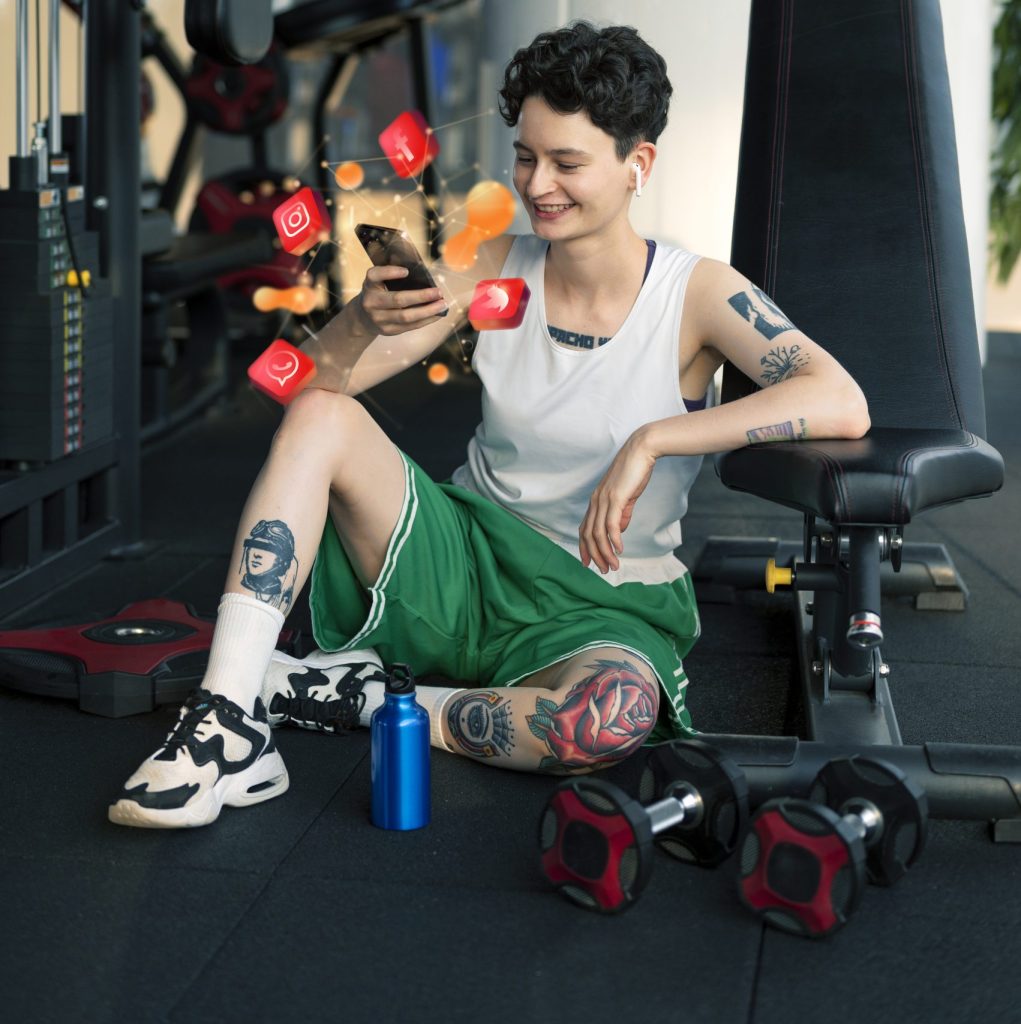
Image by Freepik
Health that performs is aesthetic.
Health that functions is biological.
Real wellness shows up in your sleep cycle stabilizing. Inflammation markers improving. Digestion becoming predictable. Energy staying steady through the day. Hormones regulating without chaos.
Those things rarely trend.
But they determine whether your body thrives long-term.
The danger isn’t caring about wellness. Millennials care deeply. The danger is confusing visibility with vitality. When health becomes something to broadcast instead of something to regulate internally, we drift away from real wellness and toward a version that looks strong but isn’t always sustainable.
2. Are trends like 75 Hard more about performance than internal wellness?
In many cases, yes.Viral challenges love output. Days, streaks, steps, reps. Wellness becomes a scoreboard. The problem is it puts everyone into one template, and bio-individuality gets ignored.Your body isn’t a template. It has a stress load, a sleep rhythm, recovery needs, hormones, metabolism, and real-life limitations.Short bursts can feel motivating because they trigger dopamine. Completing a streak gives you a quick psychological reward. But when you build routines around dopamine loops rather than sustainable regulation, you risk nervous system fatigue.The question isn’t whether you can push for 75 days.The question is whether your nervous system can recover from it.I’ve seen people complete challenges and then crash. Sleep worsens. Cortisol levels remain elevated. Cravings spike. Mood fluctuates. The routine looked disciplined, but biologically it was depleting.Short-term intensity can be useful. But healthy habits are built on repeatability, not extremity.If something leaves you exhausted or confused when the challenge ends, it wasn’t a foundation. It was a push.A better question is simple: Can you repeat this tomorrow? Next week? Next month?

Image by Freepik
3. Is this shift driven by peer pressure and social constructs?
A lot of it is social psychology, yes.When you’re constantly exposed to polished wellness content, it creates comparison loops. And algorithms don’t reward consistency. They reward extremes, aesthetics, and dramatic transformations.This is where social media wellness culture becomes powerful. It subtly trains people to equate visibility with validity.There’s also what psychology calls social comparison theory. The more you see optimized routines, sculpted bodies, perfect meal prep grids, the more your baseline shifts. Suddenly, ordinary self-care feels insufficient.Another issue is aesthetic bias. If it looks impressive, we assume it’s effective.

Image by Freepik
But mental wellness and emotional wellness rarely look dramatic. They look like boundaries. Like saying no. Like sleeping early instead of filming content. Like eating a simple balanced meal instead of chasing the next ‘superfood.’
Social momentum can motivate. It can introduce you to new ideas.
But it should never replace listening to your body.
Your hunger cues don’t show up on a feed.
Your stress signals don’t trend.
Your nervous system doesn’t care how many likes your routine gets.
4. Do performative behaviors come at the cost of basics?
Often, yes. We’ve seen it repeatedly.People will do late-night workouts, extreme detoxes, or intense routines, while the fundamentals collapse in the background. Sleep becomes inconsistent. Meals are rushed. Stress stays high. Recovery becomes optional.Circadian rhythm disruption is one of the first casualties. When you override sleep to maintain streaks or appearances, your hormonal regulation suffers. Melatonin drops. Cortisol stays elevated. Appetite signals fluctuate.Under-recovery creates metabolic stress. The body shifts into survival mode instead of repair mode.A body that’s under-slept or stuck in chronic sympathetic activation doesn’t respond well to intensity. It becomes more inflamed, more reactive, and more tired.Movement should support you, not deplete you.
Nutrition should nourish you, not punish you.
Recovery should be part of the plan, not a reward you earn.The basics are the engine. Everything else is accessories.If the engine fails, the aesthetic doesn’t matter.
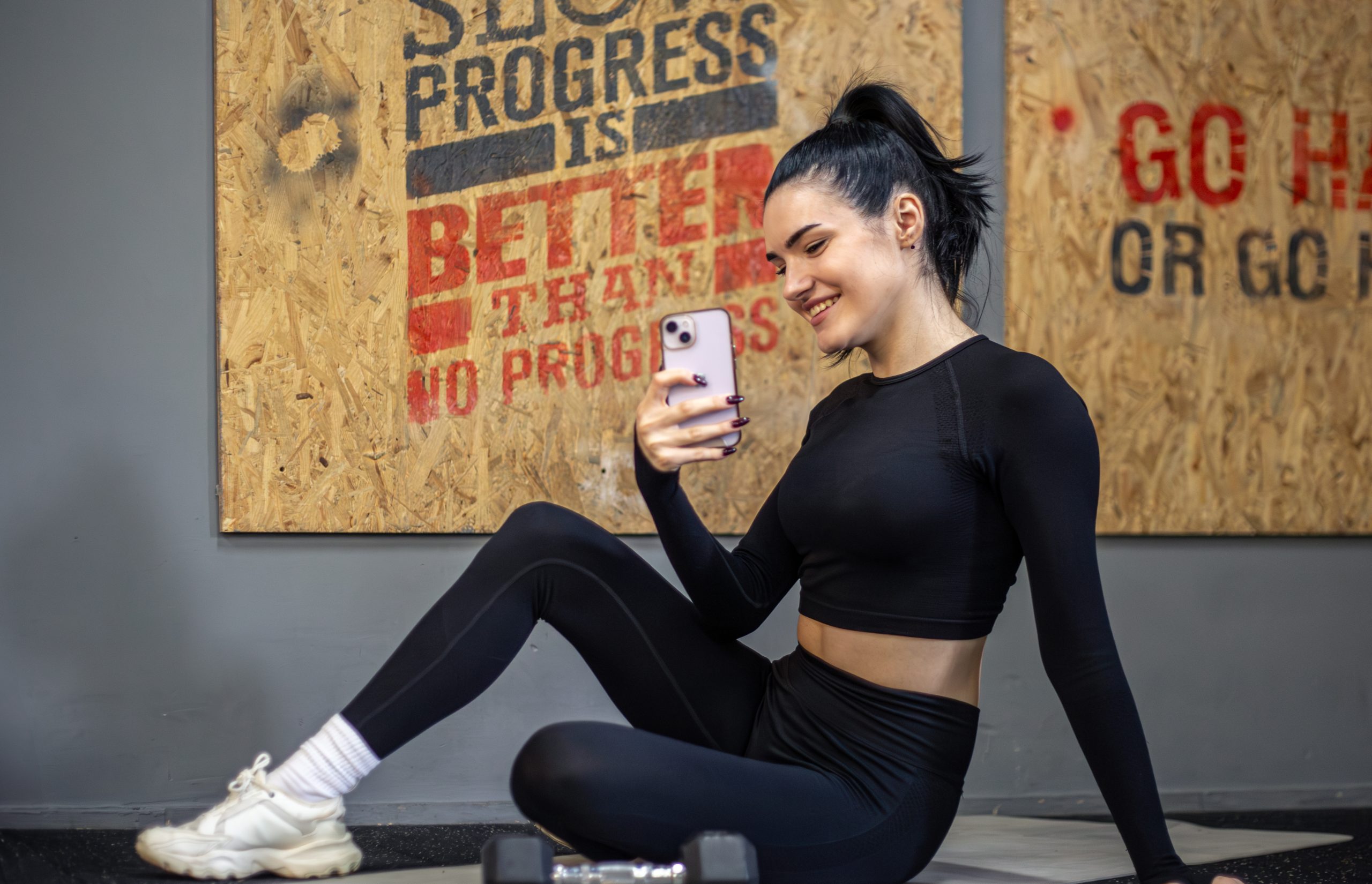
Image by Freepik
The Nervous System Cost of Performative Wellness
One of the most overlooked consequences of performative wellness is what it does to the nervous system.When health becomes something you constantly optimize, measure, improve, and display, the body rarely gets the signal that it is safe.And safety is biology.Most people today are already living in mild, chronic sympathetic activation. The “fight or flight” branch of the nervous system stays switched on longer than it should. Add comparison loops, productivity pressure, aesthetic expectations, and streak challenges to that mix, and the body never fully downshifts into parasympathetic repair mode.That has consequences.
5. What happens to the nervous system when wellness becomes performance?
When wellness turns into output, the nervous system interprets it as demand.You are tracking, posting, comparing, and improving. Even when it’s framed as ‘self-care,’ it can still feel like a facade and performance.Over time, this creates:
- Chronic sympathetic activation
- Elevated cortisol levels
- Sleep fragmentation
- Reduced recovery capacity
Your body cannot heal properly if it doesn’t experience regulation.
Real mental wellness and emotional wellness require nervous system regulation. That means periods of true parasympathetic dominance — slower breathing, stable heart rate, digestive ease, deep sleep.
If your wellness routine keeps you mentally “on,” it’s not regulation. It’s stimulation.
And stimulation without recovery leads to burnout.
6. Are dopamine loops part of the problem?
Yes, and this is subtle. Social platforms are built around dopamine loops.Scroll → compare → adjust → perform → receive validation → repeat.Now layer that onto wellness.You complete a workout. You post it. You receive engagement. That creates reinforcement. The brain links health behavior with public validation.The danger isn’t the workout. The danger is when the motivation shifts from biological function to visible reward.Over time, this creates what I call optimization fatigue. You’re constantly upgrading routines. Tweaking macros. Trying new protocols. Stacking supplements. Increasing intensity. But the nervous system never stabilizes.Chronic low-grade stress builds.
Cortisol levels remain elevated. Recovery windows shrink. Sleep quality declines even if sleep duration looks fine on paper. You can look disciplined and still be physiologically dysregulated. That’s the paradox of modern wellness culture.
7. Can comparison stress impact actual health markers?
Absolutely. Comparison isn’t just psychological. It’s physiological. When you’re repeatedly exposed to better bodies, better routines, better productivity metrics, the brain perceives threat. Not a physical threat; a social threat.Social threat still activates stress pathways. Sustained comparison stress contributes to:
- Chronic stress patterns
- Elevated cortisol
- Impaired sleep cycles
- Hormonal dysregulation
- Emotional reactivity
This is where
performative wellness quietly undermines real wellness.
Instead of strengthening resilience, it fragments attention.
Instead of building rhythm, it builds pressure.
Instead of supporting sustainable wellness, it creates self-monitoring fatigue.
And a nervous system that never feels ‘enough’ cannot regulate efficiently.
The Solution: A Foundational Approach to Wellness
If performative wellness is about visibility, foundational wellness is about stability. Over the years, we’ve seen that health improves when people return to non-negotiables. Not trends. Not streaks. Not aesthetic routines.
In over 14 years of working with patients across conditions, we’ve prioritized respecting
bio-individuality, because what works for one person does not have to work for another.
Foundational Medicine is built on six biological, non-negotiable pillars:
- Food Science and Nutrient Synergy
- Adequate Holistic Movement
- Deep Sleep
- Emotional Wellness and Mental Health
- Nature: Internal and External Environment
- Spirit and Breathwork
When these pillars are supported, immunity stabilizes, inflammation reduces, side effects become easier to manage, recovery improves, and the body regains its natural intelligence to heal.
When these are stable, everything else becomes optional. When these are unstable, no trend compensates.

Image by Freepik
8. What are simple generational good-health basics that require intent, not money?
Most good health fundamentals are boring. And that’s the point. They don’t need expensive tools. They need repetition. Here are the basics millennials often overlook in the chase for aesthetic wellbeing:
• Consistent sleep timing
Going to bed and waking up at roughly the same time anchors hormones, appetite, and recovery. Circadian rhythm is not glamorous, but it regulates more than any trending supplement.
• Nutrient-dense meals
Simple balanced plates with vegetables, protein, and healthy fats stabilise blood sugar, mood, and energy. Real nutrition and wellness begin with what you repeat daily, not what you experiment with occasionally.
• Gentle daily movement
Walking, mobility work, stretching. Not every workout needs to be intense. Sustainable movement supports metabolism without exhausting the nervous system.
• Stress regulation
Breathing pauses. Screen boundaries. Quiet time. Emotional regulation is foundational to mental wellness and emotional health. Without it, no routine sticks.
• Recovery built in
Rest days. Sunlight exposure. Time away from metrics. Recovery is not laziness. It is biological maintenance.
These habits are not content-friendly. They are biology-friendly.
They don’t require money. They require intention.
And that’s the difference.
An excerpt of this interview first appeared in a prior media feature.
Ready to take charge of your child’s health?
Join our Wellness Program
Need personalized guidance? Book a consult with our Foundational Medicine Experts.
📩 Write to us at [email protected]
📞 Or call us at 1800 102 0253
We help you find a way.
Disclaimer: This blog is intended for education and general lifestyle awareness. It does not replace personalized medical advice, diagnosis, or treatment. Always make informed choices and consult with your doctor before making any new changes to your lifestyle or food habits. If you have any pre-existing conditions, please keep your healthcare expert in the loop before trying anything new.