No products in the cart.
Picture this. It is raining outside, you are curled up with a hot cup of chai, your evening walk has been cancelled for the third day in a row, and that plate of pakoras looks far more appealing than a bowl of salad. Sound familiar?
This is the reality for most of us during monsoon, and it is exactly why so many people who digest perfectly well through the rest of the year suddenly find themselves dealing with bloating, irregularity, and that heavy, sluggish feeling in the gut the moment the rains arrive.
At Team Luke, this is one of the most common concerns we hear about every monsoon season. And the truth is, it makes complete sense once you look at what actually changes in this weather. Less thirst, less movement, more comfort food, and disrupted routines all add up quietly, and before you know it, your gut is asking for help.
Seasonal changes can influence hydration, physical activity, meal patterns, and even your body’s internal clock, all of which play a role in how efficiently your digestive system functions. That’s why constipation often becomes more common during the rainy season.
The good news is that none of this needs a complicated fix. Just a few mindful shifts in your daily routine can make a real difference. Here are 7 habits we recommend for the monsoon season, along with simple tips to actually put each one into practice.
1. Track Your Invisible Water Loss

Source: AI
One of the biggest reasons people become constipated during the monsoon is dehydration, and most of them do not even realize it is happening. Humidity and cooler temperatures reduce your natural thirst signal, so you end up drinking far less water than you actually need, even though your body is still losing fluids through sweat and humidity.
We tell those who come to us to stop relying on thirst as their only cue during this season. Set a reminder on your phone, keep a marked water bottle on your desk, or simply build a habit of drinking a glass of water at fixed points in the day, first thing in the morning, before each meal, and once in the evening. Adequate hydration keeps stools soft and helps the intestines move waste through the colon efficiently.
Try This Today: Start tomorrow with a glass of warm water on an empty stomach before anything else, even tea or coffee. This one habit alone often makes a visible difference within a few days.
Disclaimer: Stay adequately hydrated unless you have been advised to restrict your fluid intake by your healthcare provider, such as in certain kidney conditions, heart failure, or other medical conditions where fluid restriction is necessary.
2. Do Not Let Rainy Day Laziness Cancel Your Movement

Source : AI
Movement is one of the most underrated tools for healthy digestion, and it is also one of the first things people give up when it starts raining. Skipped walks, more time indoors, and general low activity slow down bowel motility, which is the natural muscular movement that pushes waste through your intestines.
You do not need an elaborate workout to counter this. Even 15 to 20 minutes of indoor stretching, using the stairs a few extra times, or a brisk walk in a dry window of the day can make a real difference. The goal is consistency, not intensity. A body that moves regularly digests more efficiently.
Try This Today: Keep a five-minute stretching or walking session ready to slot in whenever there is a break in the rain, rather than waiting for a fixed workout time that may not happen.
3. Rotate Your Fiber Sources Every Week
Source: AI
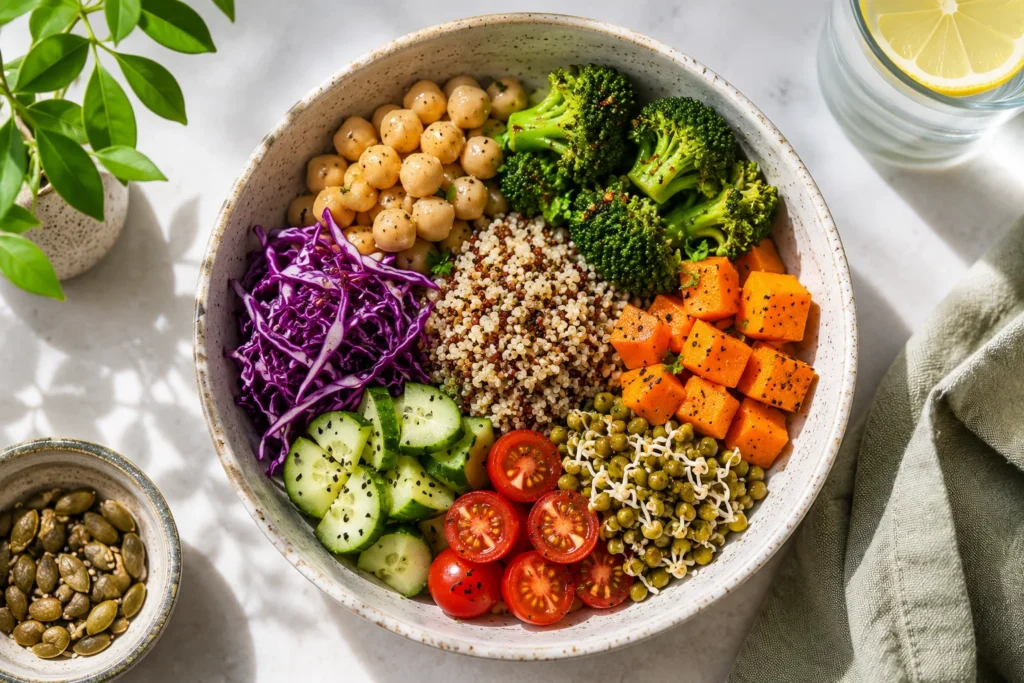
Many people eat the same two or three fiber-rich foods on repeat and assume they are covering their bases. In reality, different fibers nourish different groups of beneficial gut bacteria. Eating a wider variety of fiber-rich foods helps support a more diverse gut microbiome, which is associated with better digestive health.
We encourage rotating between fruits, whole grains, legumes, and vegetables through the week rather than sticking to a fixed rotation. Seasonal monsoon produce like bottle gourd, ridge gourd, and moong dal are excellent choices that are both fiber-rich and gentle on digestion. Variety here is not about complexity. It is simply about giving your gut a broader range of nourishment.
Try This Today: Pick one new fiber-rich vegetable, fruit, or grain each week and add it to your regular meals, so your fiber sources naturally rotate over the course of a month.
4. Time Your Chai and Coffee Breaks

Source: AI
Monsoon and chai go hand in hand for most of us, and there is nothing wrong with enjoying that comfort. The issue arises when caffeine intake goes up during this season without a matching increase in water intake. Caffeine has a mild diuretic effect, and when it replaces water rather than supplementing it, dehydration creeps in quietly.
A simple habit we recommend is pairing every cup of tea or coffee with a glass of water. This one small adjustment prevents the caffeine to water ratio from tipping too far in one direction and protects your gut from the dehydration that often follows.
Try This Today: Keep a glass of water next to your cup every time you make chai or coffee, and finish it before or shortly after your beverage.
5. Introduce Fermented Foods Slowly

Source: AI
Curd, idli and dosa batter, and traditional pickles are wonderful sources of beneficial bacteria that support gut health. However, we often see people increase their intake of fermented foods too quickly once they hear about their benefits, which can lead to bloating and discomfort rather than relief.
Our advice is to build up gradually. Introduce one fermented food at a time, observe how your body responds over a few days, and increase the quantity slowly. This allows your gut microbiome to adjust without being overwhelmed, and you get the benefits without the side effects.
Try This Today: Start with a small bowl of curd or one idli a day for the first week, and only increase the portion once your body shows no signs of bloating or discomfort.
6. Keep Meal Timings Anchored, Even When Plans Change
Source: AI
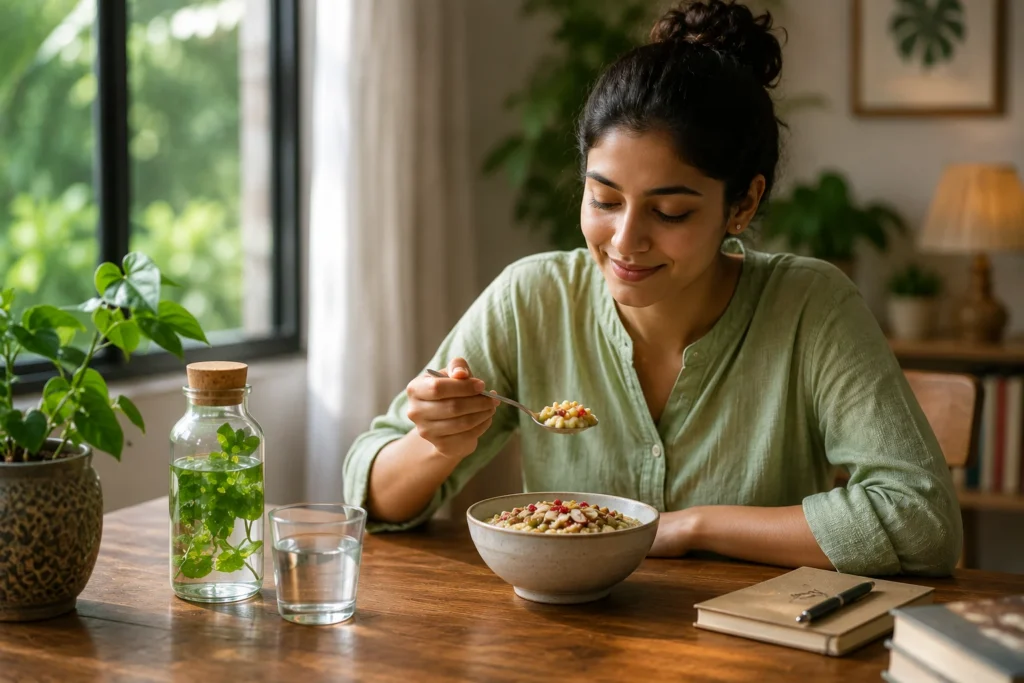
Monsoon has a way of disrupting daily schedules. Meetings get rescheduled, commutes take longer, and meals often get pushed later than usual. What many people do not realize is that eating at wildly different times each day confuses the gut’s internal clock, and this directly affects bowel regularity.
You do not need to be rigid about every meal, but try to anchor at least one meal, ideally breakfast, to a consistent time each day. This single anchor point helps maintain a predictable rhythm for your digestive system, even when the rest of your day is unpredictable.
Try This Today: Choose a breakfast time that works even on your busiest days, and commit to eating something small at that time every single day, regardless of how the rest of your schedule shifts.
7. Protect Your Sleep Window

Source: AI
Grey skies and cooler weather often tempt people into oversleeping or napping irregularly through the day. While rest is important, irregular sleep patterns disrupt the circadian rhythm, and gut motility is closely tied to this internal clock.
We recommend keeping a consistent sleep and wake time through the monsoon months, even on weekends. Quality, regular sleep supports the natural rhythm your digestive system depends on, and it is one of the most overlooked factors in long-term gut health.
Try This Today: Set a fixed wake-up time for the week, including weekends, and work backward to decide your bedtime, rather than letting bedtime drift based on how the weather feels.
A Final Word
None of these habits require drastic changes or expensive interventions. What they require is consistency and awareness. Constipation during monsoon is almost always your body’s way of asking for more water, more movement, more rhythm, and a little more attention to the small daily choices that add up over time.
If you find that these habits are not enough and you are dealing with persistent digestive discomfort, it may be worth looking deeper into your gut health rather than treating the symptom alone.
Continue Your Monsoon Wellness Journey
Discover our Monsoon Wellness Guide for practical tips to stay healthy, nourish your immunity, and care for your body through the season.
Explore Our Gut Care Program
If constipation, bloating, or irregular digestion has become a recurring pattern for you, our Gut Care Program is designed to get to the root of the issue. Through personalized nutrition plans, gut microbiome support, and lifestyle coaching guided by our team of experienced nutritionists and foundational medicine experts we help you rebuild a digestive system that works with you, not against you, season after season.
Reach out to us to learn more about how the Gut Care Program can be tailored to your specific needs.
Disclaimer: This article is intended for general informational and educational purposes only and should not be considered a substitute for professional medical advice, diagnosis, or treatment. Please consult your physician or a qualified healthcare provider before making any changes to your diet, lifestyle, or health routine, especially if you have an existing medical condition or are currently on medication. Individual results may vary.