No products in the cart.
It was an ordinary day. The kind where nothing feels significant, until it does.
When Jaskiran Mann, a 54-year-old homemaker from Karnal, felt that lump, the ordinary day ended. Two words from her doctor, breast cancer, and the world she knew rearranged itself completely.
“Upset, scared, and unsure of what lay ahead,” she recalls, “I had to find my footing.”
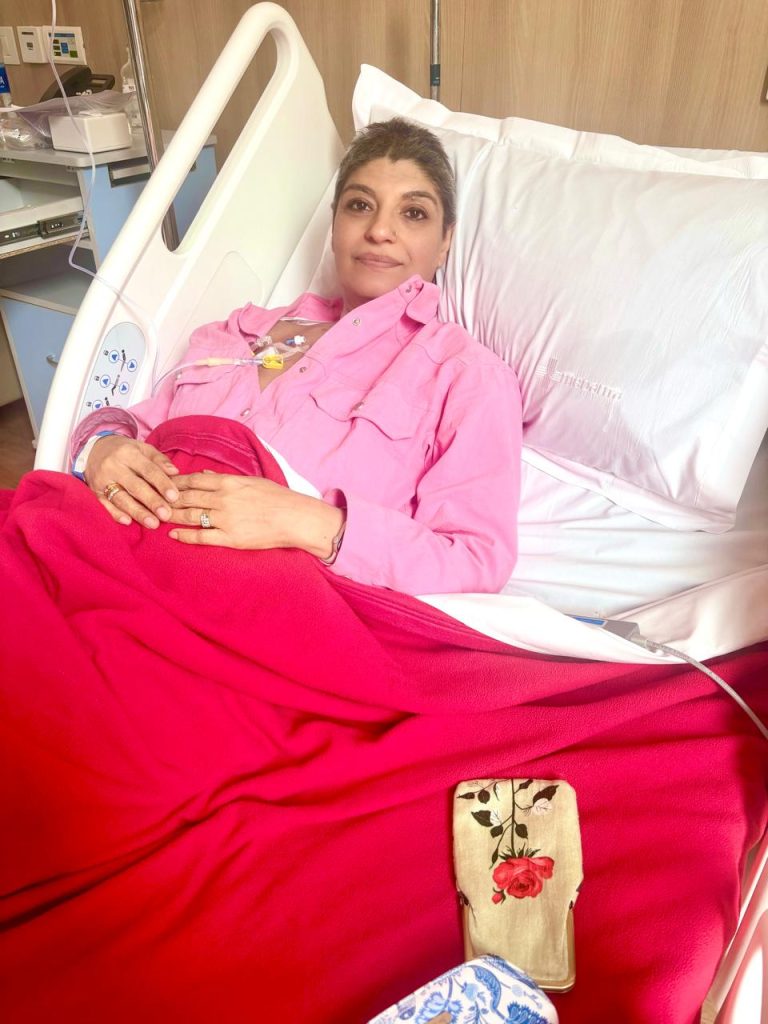
But here’s the thing about Jaskiran: she had already seen what cancer can do.
Her sister had faced colon cancer.
Her mother had battled renal cancer.
This wasn’t a distant, abstract word for her; it was a shadow she had watched move through the people she loved most.
And now it had found her.
Carrying the Weight of Breast Cancer Diagnosis and a Family History
Fear doesn’t prepare you. Even when you think it might.
When Jaskiran was diagnosed with left breast carcinoma and began chemotherapy in May 2025, the fear wasn’t just about the cancer itself. It was layered, tangled, deeply personal.
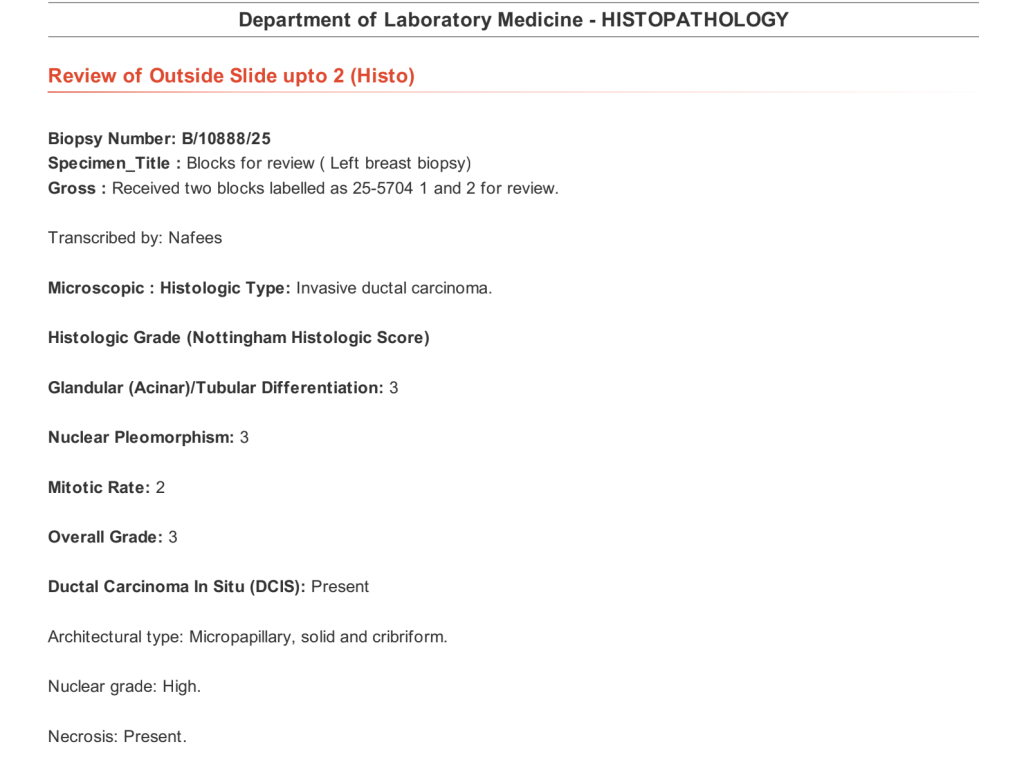
- Fear had made eating feel dangerous.
- Her gut was already struggling with constipation, and now she was terrified of making things worse through food.
- Her confidence had quietly crumbled.
- Managing her home, something she had always done with quiet pride, suddenly felt enormous.
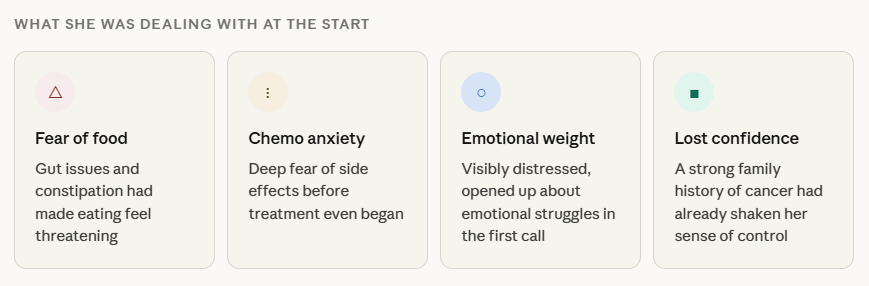
“She was visibly emotional during our conversation,” recalls Jinal Jain, her nutritionist and foundational medicine expert at Team Luke.
“It was a very deep call. She opened up about so much: her fears, her emotional well-being, what she was carrying. It was clear this was not just a physical illness. She was holding a great deal.”
This is what managing cancer treatment side effects really looks like. Not just blood reports and clinical charts. But a woman sitting in her living room, afraid to eat breakfast.
The Turning Point: She Chose to Fight, and She Found Team Luke
Here is what makes Jaskiran’s story remarkable.
Even in the depths of that fear, she made a choice.
She reached out to Team Luke.
Not as an alternative to her medical treatment, her chemotherapy was essential, and she knew it.
But she wanted something more.
She wanted her body to be ready.
She wanted to build a foundation so strong that her treatment could work better, her side effects could be more manageable, and her recovery could be supported from the inside out.
“Knowing about breast cancer in itself, she was positive and took the treatment very positively,” Jinal shares.
That positivity, fragile as it might have felt in those early days, was the spark. And Team Luke was ready to meet it.
“The plan was not just about change and food, but a new approach to health and resilience.”
— Jaskiran Mann
Meeting Jinal: The Foundational Medicine Expert Who Believed in Her, Even When She Couldn’t
“Having Jinal by my side made all the difference.”
When Jaskiran first connected with Jinal, it wasn’t a transaction.
It was a conversation, a real one. The kind where you say the things you haven’t said out loud yet.
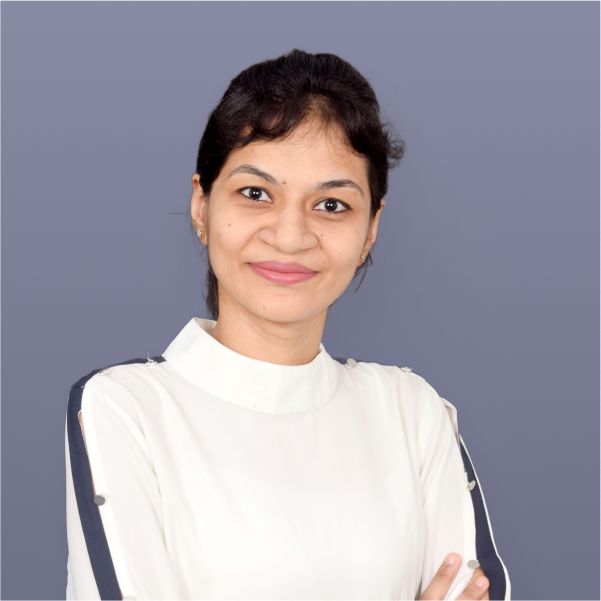
Jinal Jain, Senior Nutritionist & Foundational Medicine Expert
Jinal’s approach to nutrition during chemotherapy wasn’t simply about adding anti-cancer superfoods to a meal plan.
She understood something deeper: that Jaskiran needed to repair her relationship with food first. Fear had made eating feel dangerous. Jinal made it feel safe again.
“She was very supportive and knowledgeable,” Jaskiran says, “tailoring everything to my specific needs.”
And that tailoring was meticulous.
Because the role of a nutritionist in cancer recovery is not about generic prescriptions; it’s about seeing one person, clearly and completely, and building something just for them.
The Holistic Cancer Care Approach Team Luke Used
Team Luke’s protocol for Jaskiran wasn’t pulled from a template.
It was built around her: her history, her fears, her family, her blood parameters, her emotions, her environment, and even her childhood.
This is what lifestyle as foundational medicine looks like in practice.
Learn more about: What is foundational medicine and how it can help cancer patients.
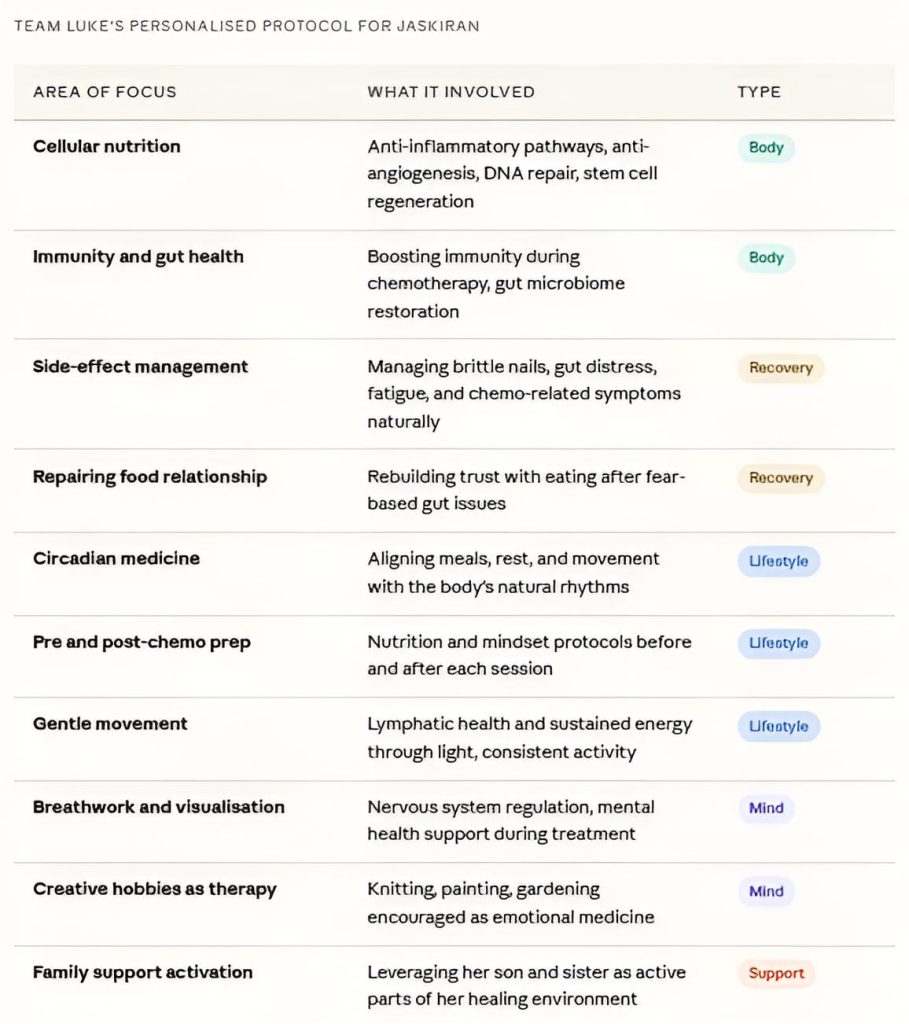
This is what holistic cancer care looks like when it’s done right.
Not a list of superfoods.
Not a rigid meal plan.
But a living, breathing protocol that respects the whole person.
The Hard Days and How She Moved Through Them
Let’s not skip the difficult parts. Jaskiran wouldn’t want us to.
The hardest moment, she says, was when her hair started falling out.
“It hit me hard, and the reality of what I was going through started sinking in.”
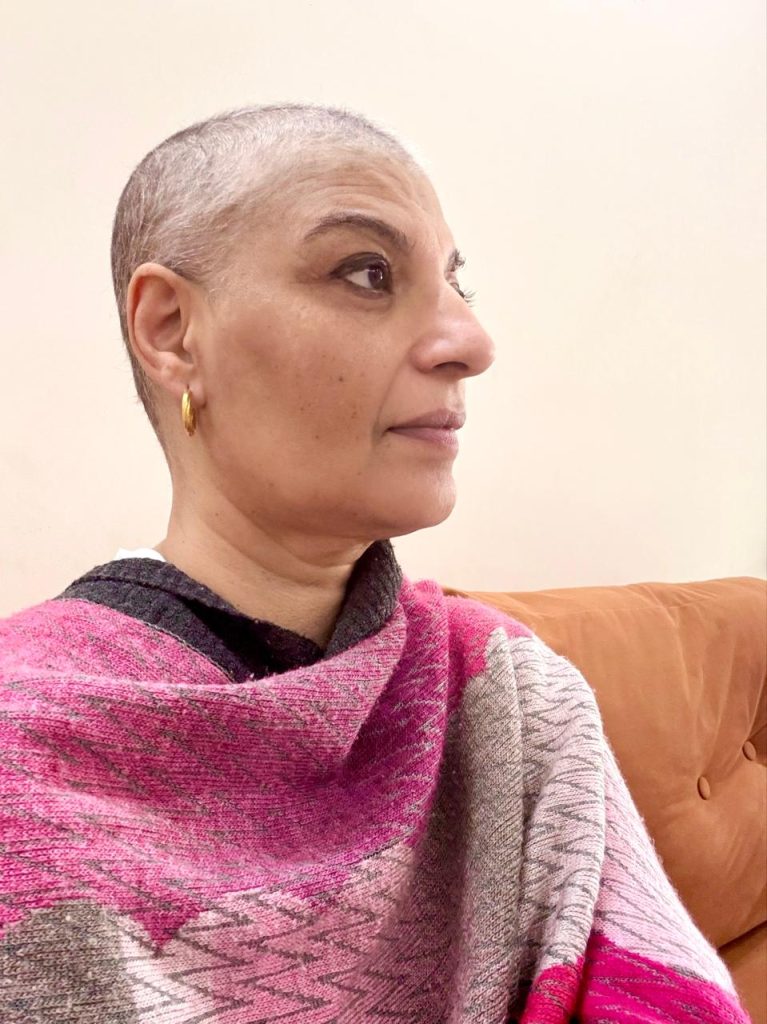
How to deal with hair loss during chemo is one of those questions that has no clean answer.
No nutrition plan makes it painless.
What Jinal and Team Luke offered instead was something more honest: presence, consistency, and a protocol that kept everything else as stable as possible, so the emotional weight of that moment didn’t also come with a body that was crumbling.
“Throughout my treatment, my parameters were stable,” Jaskiran recalls.
And that stability, that quiet, ongoing evidence that her body was holding, became its own form of comfort.
Her nails became brittle.
Her gut struggled.
There were days when simply existing took effort. But Jinal was there, adjusting, adapting, checking in.
The natural ways to reduce chemotherapy side effects weren’t dramatic; they were consistent.
Daily choices, daily nourishment, daily care.
And slowly, incrementally, it began to work.
Pockets of Light: How Creativity Became Her Therapy
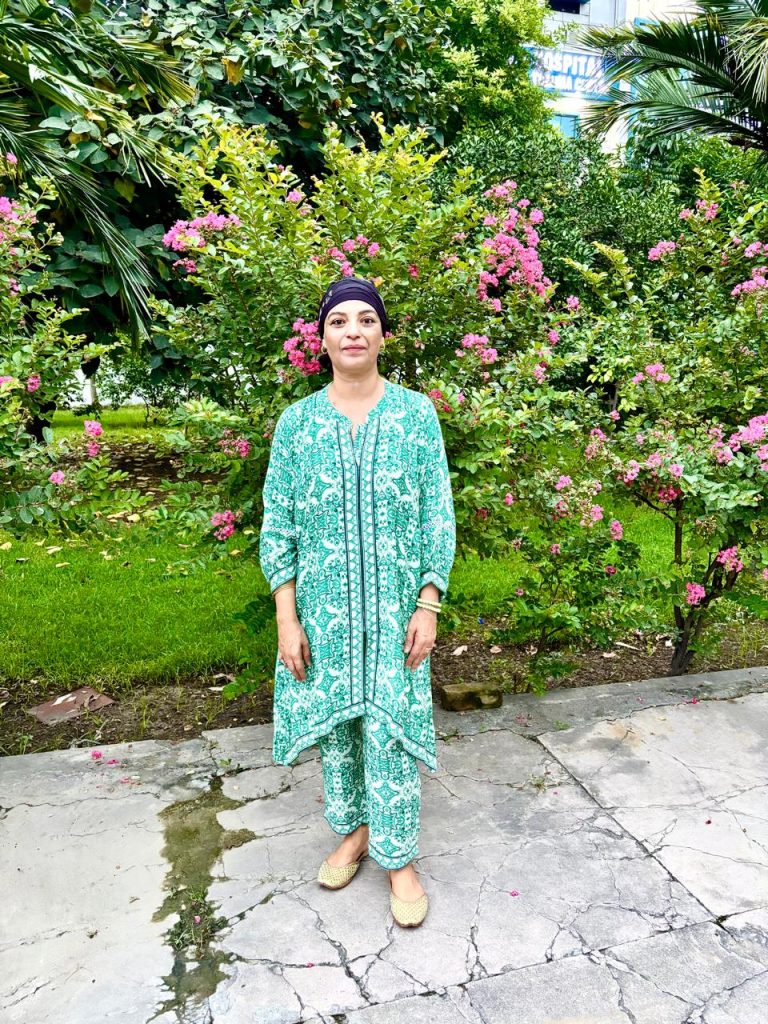
Even in the hospital, Jaskiran was painting.
She would send Jinal photographs of her artwork, of her garden from her window, of herself dressed up and smiling despite the chemo cap.
“She always had a positive side to things,” Jinal says with quiet admiration.
“She used to share pictures from the hospital, and otherwise too, when she used to get ready.”
- This is the part of emotional support during cancer treatment that doesn’t always make it into the clinical notes: the brushstroke that becomes a meditation.
- The garden that becomes a sanctuary. The knitting that becomes a prayer.
“Each brushstroke became my meditation and my colors my therapy. My plants give me solace. And each stitch was a reminder that I was creating something warm, something comforting for my loved ones.”
— Jaskiran Mann
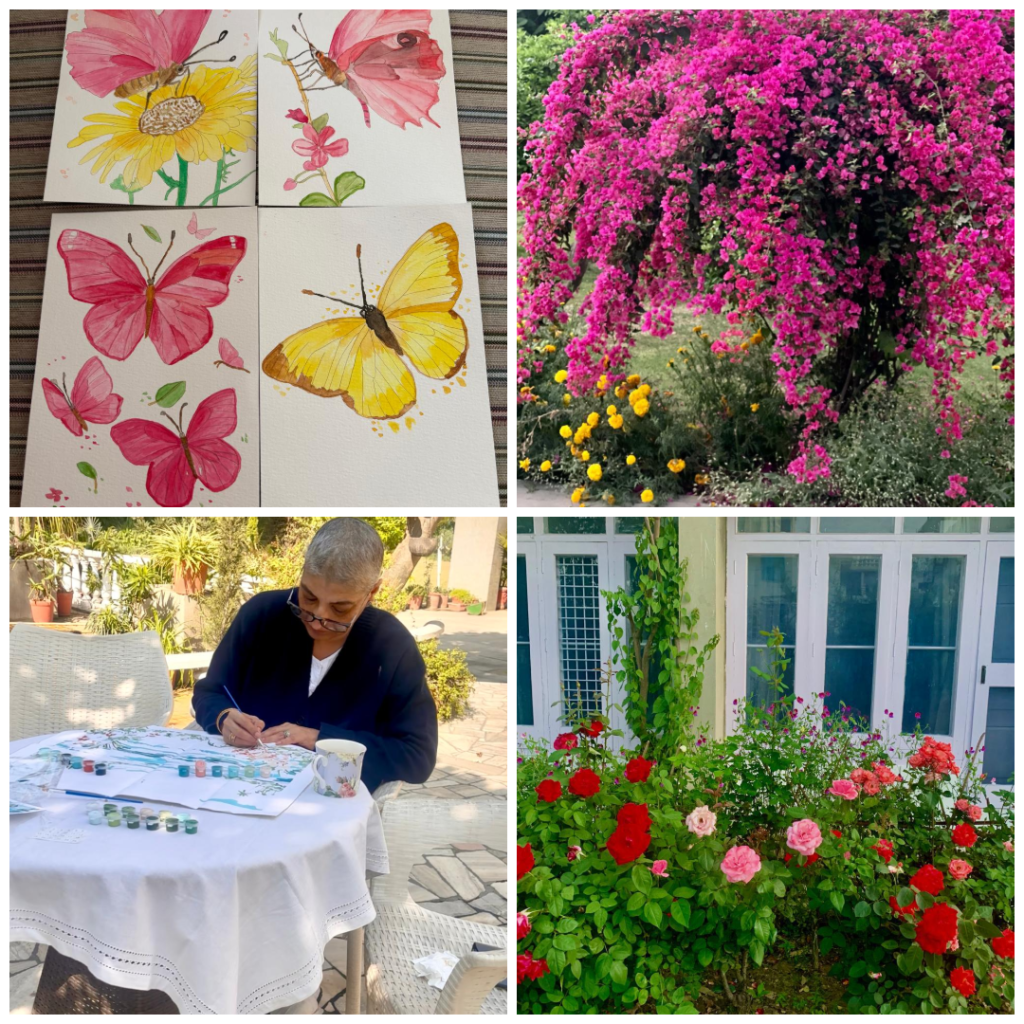
Creativity didn’t cure her cancer. But it gave her somewhere to put the feelings she couldn’t say.
- It kept her hands busy when her mind raced.
- It gave her evidence, daily, tangible evidence, that she was still someone who created beauty, even in the middle of chaos.
At Diwali, she decorated her home and sent pictures.
She painted.
She tended to her garden.
She even arranged a photoshoot, bald, beautiful, and completely herself.
Not despite what she was going through, but because of who she was.
Her Strongest Pillars: Why Family Support in Cancer Recovery Cannot Be Overstated
There is a dimension to the importance of family support in cancer recovery that science is only beginning to fully quantify, but Jaskiran felt it in her bones.
Her son and her sister became her pillars.
“They held me up whenever I couldn’t stand, reminding me to breathe when I forgot. Their love, patience, and unwavering support were my lifelines.”
- Team Luke actively wove this support into her protocol, not as an afterthought, but as a therapeutic resource.
- Because staying strong during chemotherapy is never a solo endeavor.
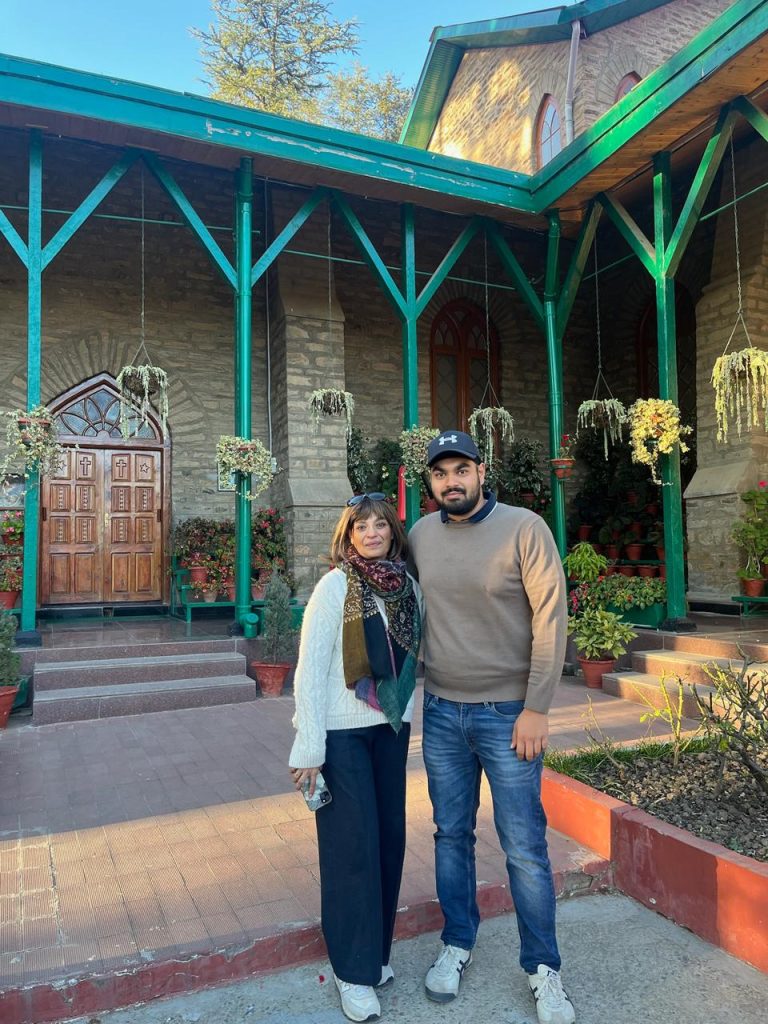
Jaskiran with her son
Healing happens in relationships: with your body, with food, with your team, and with the people who love you.
And those people showed up. Every single day.
7 Months Later: Tumor-Free and Thriving
Today, Jaskiran is tumor-free.
Her doctors are pleased. She is on a preventive maintenance protocol with Team Luke, her third phase after her initial program and one renewal, and she is, by every measure, thriving.
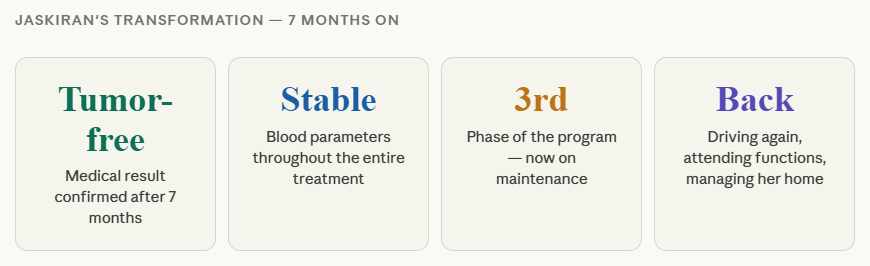
But the numbers only tell part of the story.
The real transformation is this: Jaskiran is driving again. She had once loved driving, and somewhere in the fear of illness, she had quietly set it aside.
Now she’s back behind the wheel.
- She’s attending weddings, managing her home, tending her garden, finishing paintings, completing knitting projects, and walking into rooms with a confidence she had to rebuild stitch by patient stitch.
“She has become much more confident,” Jinal says.
“She drives the car on her own, makes beautiful paintings, takes care of her garden, does knitting, manages the house, attends weddings.”
- This is what lifestyle changes during chemotherapy can do when they’re approached with intelligence, care, and deep respect for the individual.
- This is what emotional resilience looks like when it’s been quietly, consistently built over months of small, intentional choices.
Jaskiran didn’t just survive her treatment. She emerged from it more herself than she’d been in years.
A Message to Anyone Walking a Similar Path
“To anyone walking a similar path: you are not alone.”
Jaskiran said it, and she means it, not as a platitude, but as testimony.
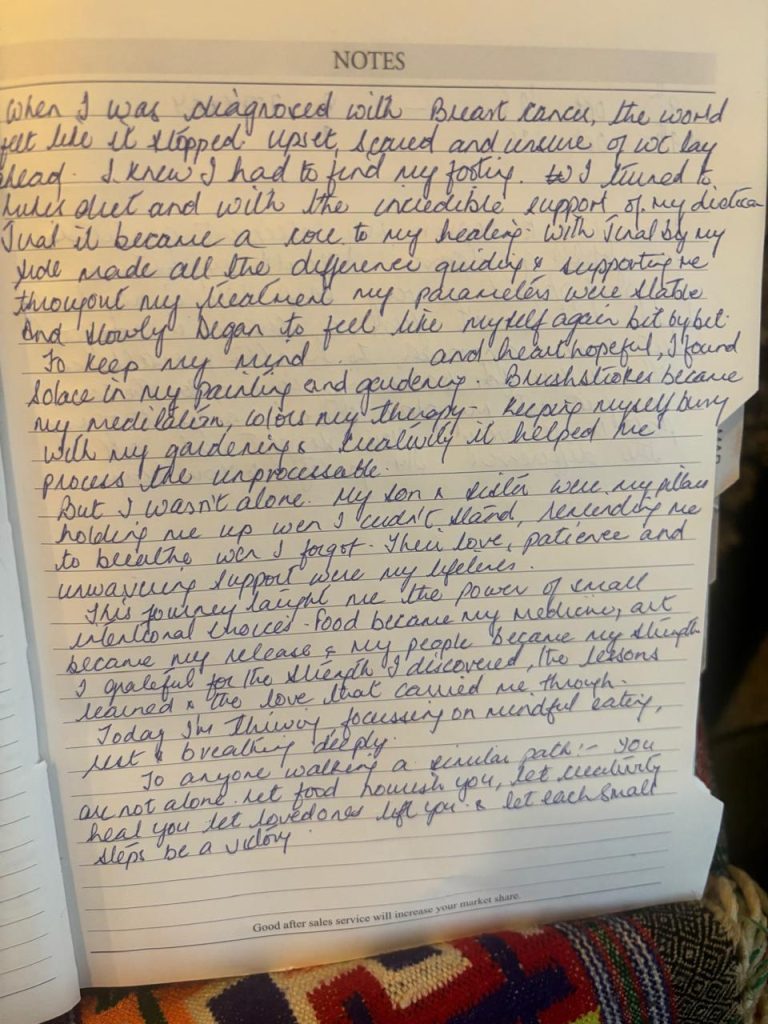
Handwritten note by Jaskiran
She was scared.
She was uncertain.
She lost her hair and cried.
She had days when the weight of it all felt impossible to lift.
And she came through.
Not because everything went perfectly.
But because she made small, intentional choices. And because she had a team and family who saw her fully and walked beside her.
Cancer care is never just about treatment.
- It is not about adding anti-cancer superfoods to your plate or following a rigid protocol.
- It is about building an internal environment, through medicine, nutrition, mindset, emotional health, movement, relationships, sleep, nature, and faith, that supports recovery and empowers the individual.
This is lifestyle as foundational medicine.
And for Jaskiran, it made all the difference.
“Let food nourish you. Let creativity heal you. Let each small step be a victory. Let love lift you.”
We are proud of you, Jaskiran.
Disclaimer: While this may inspire you, please remember that each case is unique. What worked for her doesn’t necessarily have to work for you. Her protocol was designed by keeping her past and current lifestyle, case, and situation in mind. If you have a medical condition or are on medications, please keep your doctor in the loop before trying anything new. Make an informed decision, always.
Inspired by Jaskiran’s journey? Your healing story can begin, too.
We’re here to support YOU every step of the way.
Set up a one-on-one consultation with our integrative team or enroll in our Cancer Care Program with Luke’s Senior Team/Luke’s Team for personalized solutions.
Reach out to us at 1800 102 0253 or write to us at [email protected].