No products in the cart.
“We’ve always had a great sex life. But lately, I don’t even want to be touched. I love my husband. So why does my body feel like it’s checked out?”
If you’ve said something like this to yourself in your late 30s or 40s, quietly, maybe with a little shame, you’re not alone. Not even close.
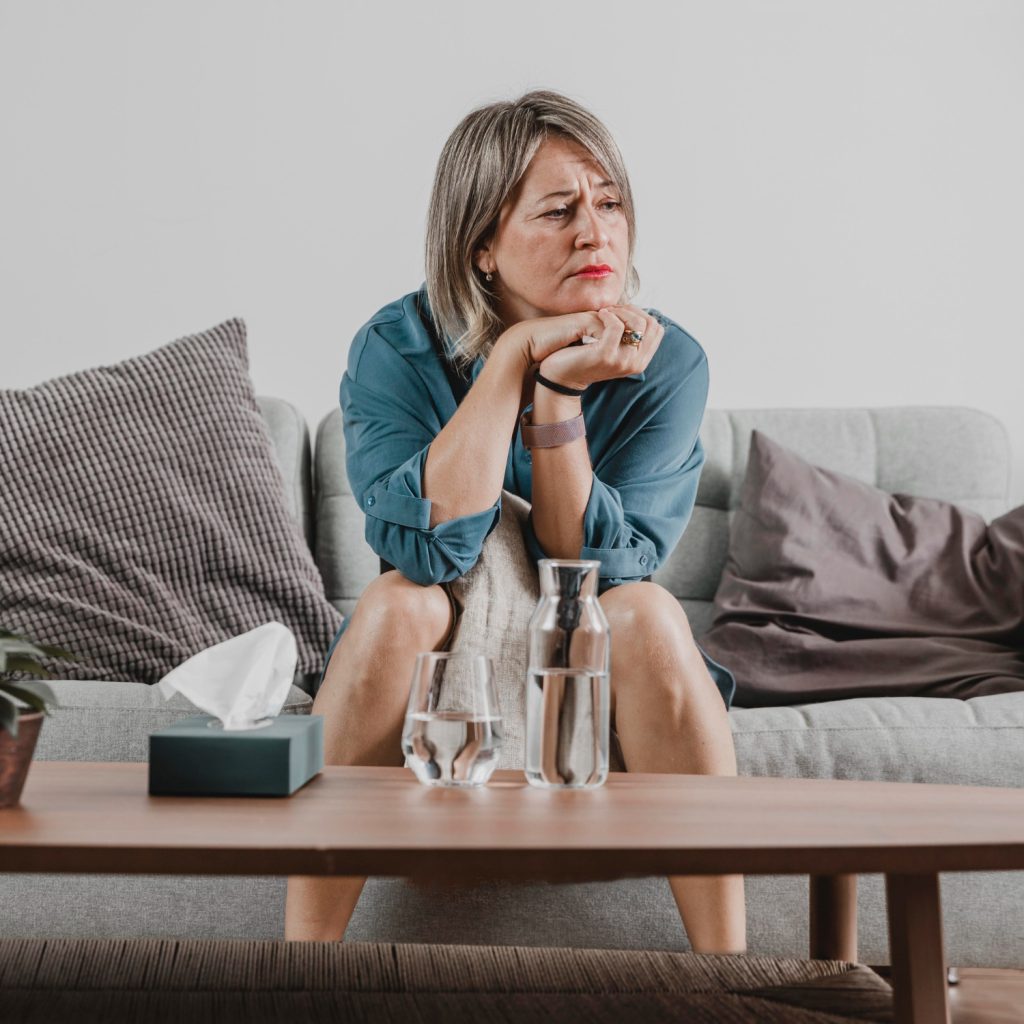
Image Credits: Freepik
Many women start noticing that the desire they once took for granted is quietly dimming. Some days it disappears entirely.
And the first explanation that comes to mind is always the same one: it must be hormones. It must be perimenopause.
Hormones are part of the story, yes.
But over 14 years of working with women at different stages of their health journey, one thing becomes very clear: not every woman going through perimenopause loses her libido.
- Some women sail through this transition with their desire and intimacy intact.
- Others struggle significantly.
- The difference, almost always, comes down to how they’ve been looking after themselves in the years leading up to this point.
So, let’s understand what’s actually happening inside your body, why low libido in women over 40 is more than a hormone problem, and what you can start doing about it today.
What Actually Happens During Perimenopause
Perimenopause is the transition phase leading up to menopause, typically beginning anywhere in a woman’s late 30s to mid-40s and lasting anywhere from 2 to 12 years.
It is not a single event.
It is a gradual hormonal recalibration that your body has to navigate.
What The Research Says:
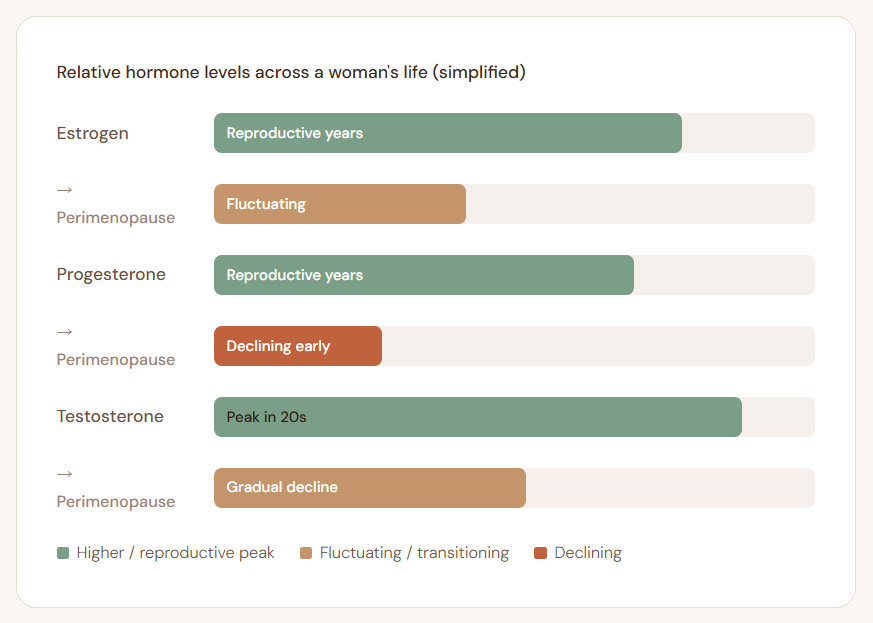
During perimenopause, estrogen levels become unpredictable, rising and falling erratically before eventually declining.
- Progesterone levels drop steadily.
- These hormonal shifts directly affect the brain’s reward and arousal circuits.
Lower estrogen means reduced blood flow to the genitals, thinner vaginal tissue, reduced natural lubrication, and changes in how your brain processes desire and arousal signals.
Research shows that estradiol (the active form of estrogen) is closely linked to both sexual responsiveness and desire.
- Its decline is one of the primary biological drivers of lower libido during the menopausal transition.
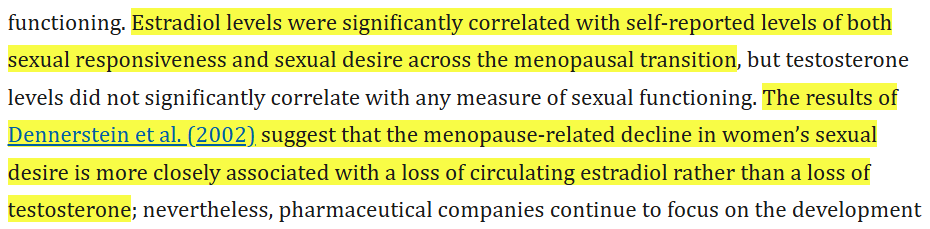
Source: Cappelletti M, Wallen K. Increasing women’s sexual desire: The comparative effectiveness of estrogens and androgens. Horm Behav. 2016 Feb;78:178-93. doi: 10.1016/j.yhbeh.2015.11.003. Epub 2015 Nov 14. PMID: 26589379; PMCID: PMC4720522.
But here’s what makes perimenopause different from menopause: the hormonal fluctuations are irregular and unpredictable.
Studies suggest that over 80% of women notice some change in sexual desire as they age, but not all experience it as distressing.
- For some women, desire even increases during perimenopause.
- As estrogen dips, testosterone’s effects can feel more pronounced, potentially amplifying libido rather than reducing it.
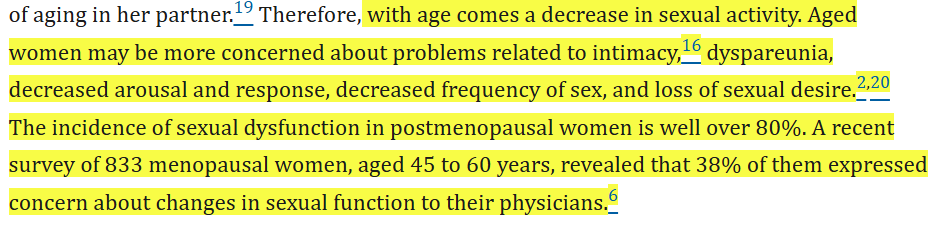
Source: Ambler DR, Bieber EJ, Diamond MP. Sexual function in elderly women: a review of current literature. Rev Obstet Gynecol. 2012;5(1):16-27. PMID: 22582123; PMCID: PMC3349920.
This variability is important. It tells us that hormones create a biological context, but lifestyle, emotional well-being, and relationship health determine how that context plays out.
How the Hormonal Landscape Shifts With Age
Understanding the timeline helps remove the shame and confusion many women feel when their bodies start to change. This isn’t happening to you. It’s happening for you, asking you to pay attention.
| Life Stage | Key Hormonal Shifts | What You May Notice |
| Late 20s–30s | Estrogen & progesterone relatively stable; testosterone begins gradual decline from its peak | Generally stable libido; some fluctuation tied to stress, pregnancy, or postpartum changes |
| Late 30s–40s (early perimenopause) | Progesterone drops first; estrogen starts to fluctuate irregularly; testosterone continues slow decline | Irregular periods; PMS intensifies; some women notice reduced lubrication or lower interest in sex |
| Mid 40s (active perimenopause) | Estrogen becomes erratic, high one month and low the next; FSH rises; testosterone at 50% of peak | Hot flushes, disrupted sleep, mood changes; libido changes become more noticeable; vaginal dryness possible |
| Late 40s–early 50s (late perimenopause) | Estrogen declines steeply; periods become infrequent; cortisol’s impact on libido amplifies | Significant desire shifts for many women; emotional and relational factors become especially influential |
| After menopause | Estrogen and progesterone very low; hormonal levels stabilize at new baseline | Symptoms often stabilize; many women report libido improving once the transition is complete |
What’s Happening Inside Your Body When Desire Fades
Desire is not just a feeling. It’s a complex interplay of brain chemistry, hormones, blood flow, and emotional safety.
When any one of these systems is under stress, the whole chain is affected.
When estrogen drops, the vaginal tissue becomes thinner and less elastic.
- Blood flow to the genitals reduces.
- Arousal takes longer and may feel different.
- The brain’s dopamine pathways, which fuel desire and anticipation, are also affected by estrogen’s decline.
- Meanwhile, cortisol (the stress hormone) and sex hormones operate on a see-saw. When cortisol is chronically elevated from poor sleep, relentless stress, emotional suppression, or overtraining, the body deprioritizes reproductive hormones.
- From an evolutionary standpoint, your body doesn’t want to think about sex when it believes you’re in danger.
Your hormones behave according to how you respect your body, how you treat it in your 30s and your 40s.
If you’ve looked after yourself, trained well, built lean muscle, and slept well, your body is going to age gracefully.
It’s Not Just Hormones: The Six Real Drivers of Low Libido in Women Over 40
Over 14 years of working with women navigating this transition, a clear pattern has emerged: the women who maintain healthy desire tend to share certain lifestyle habits.
Here are the real factors shaping perimenopause libido changes, and each one is within your influence.
Sleep quality
Poor sleep raises cortisol, lowers testosterone, disrupts estrogen regulation, and kills desire. Research confirms a direct link between sleep disorders and sexual dysfunction in women. Deep sleep is where hormonal repair happens.
Lean muscle mass
Muscle tissue produces and sensitizes sex hormones. Women who train consistently and maintain lean muscle have better hormonal profiles through perimenopause. Extreme overtraining, however, suppresses libido by spiking cortisol.
Chronic stress load
Cortisol and sex hormones run on the same raw material: pregnenolone. Under chronic stress, the body diverts this towards making cortisol, leaving less for estrogen and testosterone. Stress is physiologically anti-libido.
Emotional suppression
Women who have spent decades suppressing guilt, grief, resentment, or emotional pain carry that burden in their nervous system. Unprocessed emotion creates low-grade stress and hormonal disruption. The body signals it’s time to release.
Alcohol & smoking
Alcohol disrupts estrogen metabolism and worsens sleep quality. Nicotine accelerates estrogen decline and reduces blood flow to the genitals. Both create a hormonal environment that makes desire harder to access.
Emotional connection
For most women, emotional safety is the most powerful aphrodisiac there is. Feeling unseen, unheard, or unsafe in a relationship has a profound effect on desire, regardless of what hormones are doing.

Image Credits: Freepik
Why Deep Sleep Might Be the Most Underrated Hormone Medicine
Luke says it plainly: “There is nothing that deep sleep cannot fix, especially when it comes to your hormones.” The science backs this up completely.
- During slow-wave (deep) sleep, the body releases growth hormone, repairs tissue, and regulates cortisol.
- When sleep is disrupted, as perimenopause is notorious for doing through night sweats, anxiety, and frequent waking, this repair process breaks down.
Cortisol stays elevated into the evening hours instead of tapering off.
- Testosterone, which in women is linked to desire and vitality, is suppressed by poor sleep.
- Even one night of disrupted sleep measurably affects hormonal regulation.
- For women in perimenopause, this creates a vicious cycle: hormonal fluctuations disturb sleep, and poor sleep worsens hormonal imbalance, which further suppresses libido.
Addressing sleep is not a nice-to-have. It’s foundational.
Does Stress Affect Libido in Women? More Than You Think.
One of the most common things women say is: “I’m just too tired and too stressed to even think about sex.”
That is not a lack of willpower or love. That is biology.
The hypothalamic-pituitary-adrenal (HPA) axis, which governs the stress response, directly inhibits the reproductive hormones when it perceives a threat, whether that is a real emergency or a relentlessly busy schedule.
- In the perimenopause years, many women are simultaneously managing careers at their peak, raising teenagers, caring for aging parents, and processing their own identity shifts.
- The stress load is immense.
- And the body responds accordingly: it shuts down non-essential functions, and from a survival standpoint, sex is non-essential.
This is why stress management is not just about feeling calmer. It is about creating the physiological conditions in which desire can actually exist.
The Emotional Layer Nobody Talks About
There’s a deeply important point that often gets missed in clinical conversations about perimenopause and low libido: emotional suppression has a measurable hormonal cost.
- Many women in their 40s have grown up conditioned to minimize their needs, suppress their emotions, and push through discomfort.
- Decades of swallowed anger, unacknowledged grief, unexpressed needs, and bottled resentment do not just live in the mind.
- They live in the nervous system.
- They maintain a low-grade state of threat in the body. And a body that feels unsafe cannot relax into desire.
Luke puts it directly: “If you’ve reached this age and you are that woman who’s grown up with suppressed emotions, whether that is guilt, negativity, shame, betrayal, hurt, or envy, now is the time your body is telling you to start expressing. The more you suppress emotions, the more hormonal disruption you have.”
This is not a metaphor.
Healing this layer is not optional. It is part of physiology.
Why Intimacy Is Not the Same as Sex, and Why That Matters Now
One of the most freeing realizations women have in this stage of life is this: intimacy is much bigger than sex.
And when sexual desire shifts, it’s often an invitation to redefine what closeness means in a relationship.
- For couples where emotional intimacy was primarily expressed through physical sex, a drop in desire can feel like a crisis.
- But for couples who have built broader intimacy through conversation, vulnerability, and being truly seen by each other, this transition can actually deepen the relationship.
The ability to tell your partner what’s happening without fear, to be honest about what you’re feeling in your body and your emotions, to ask for what you need.
That is intimacy.
It’s also the fertile ground in which physical desire tends to return, in its own time and its own shape.
If you’ve built intimacy, by now you’d realize it’s not just sex. It’s also the ability to talk to your partner, be vulnerable, and explain what’s happening without any fear. That is a big part of intimacy.
What You Can Actually Do: Luke’s Approach to Rebuilding Desire Naturally
These are not quick fixes. They are lifestyle shifts that, when practiced consistently, change the hormonal and emotional environment in which desire lives.
Many women who follow this approach report significant change within a few months, not because desire was artificially stimulated, but because the conditions that suppressed it were removed.
Rebuild emotional intimacy with your partner first.
Before expecting physical desire to return, invest in the conversation.
- Tell your partner what you’re experiencing, not as a complaint, but as an honest sharing.
- Create space for both of you to be vulnerable.
- Physical intimacy tends to follow emotional safety, not the other way around.
This is especially true for women during perimenopause and relationship problems linked to it.
Clean up what you’re eating, no perfection needed.
You don’t need a rigid eating plan.
- Focus on real, whole food. Reduce processed foods, refined sugar, and anything that creates systemic inflammation.
- Eat adequate protein to support lean muscle and hormone production.
- A well-nourished body is a body that can regulate itself.
- Food quality directly affects the raw materials your body uses to make hormones.
Stop or significantly reduce alcohol and smoking.
This is non-negotiable if you’re serious about hormonal health.
- Alcohol impairs estrogen metabolism, disrupts deep sleep, and creates inflammation.
- Smoking accelerates estrogen decline and reduces blood circulation throughout the body, including to the genitals.
- The improvement many women experience after stopping is often faster and more noticeable than they expected.
Prioritize deep, restorative sleep above everything else.
Set a consistent sleep and wake time.
- Create a wind-down routine that begins 60 to 90 minutes before bed.
- Address the specific perimenopause symptoms that disrupt sleep, such as night sweats, anxiety, and frequent waking, with your doctor or a qualified health professional.
- Deep sleep is where hormonal repair happens. Nothing else substitutes for it.
Train wisely, not punishingly.
Exercise is essential for hormonal health in women over 40.
- Resistance training builds lean muscle, which improves insulin sensitivity and supports hormone production.
- But extreme or punishing workouts, such as chronic high-intensity exercise, two-a-days, or exercising through injury or exhaustion, raise cortisol and suppress desire.
- Be gentle with your body.
- Train in a way that energizes you, not one that depletes you.
Start expressing what you’ve been holding in.
Find a way, whether through therapy, journaling, honest conversations, or simply allowing yourself to feel emotions without judgment, to begin releasing what you’ve suppressed.
- This is not soft self-help advice.
- It is physiological medicine.
- The nervous system cannot be in repair mode and threat mode simultaneously.
- Expression is how you move from threat to safety.
You Are Not Broken. Your Body Is Speaking.
Libido changes are not a sign that something is wrong with you, or that your best years are behind you, or that your relationship is failing.
They are a clear signal that your body needs more care, your emotions need more expression, and your relationship may need more honest conversation.
The women who move through this transition with the least disruption are not the ones with the perfect hormone panels.
They are the women who sleep well, train sensibly, eat real food, process their emotions, don’t use alcohol as a coping mechanism, and have built the kind of intimacy with their partner that goes beyond the physical.
That is entirely within your reach. It always has been.
Also Watch This:
Disclaimer: This blog is intended for educational and informational purposes only and should not be used as a substitute for professional medical advice, diagnosis, or treatment. Always seek the guidance of your qualified healthcare provider before making any changes to your medications or lifestyle.
Want to strengthen intimacy or enhance your sexual desire?
We’re here to help YOU find a way.
Set up a one-on-one consultation with our foundational medicine and lifestyle experts or explore our Wellness Programs to optimize your lifestyle goals.
Reach out to us at 1800 102 0253 or write to us at [email protected].