No products in the cart.
Ever felt that a hot, crispy samosa is too small to matter?
That one bite on the way back from work.
The plate of chole bhature you ‘earned’ on a Sunday.
The pizza slice you promised would be the last — until it wasn’t.
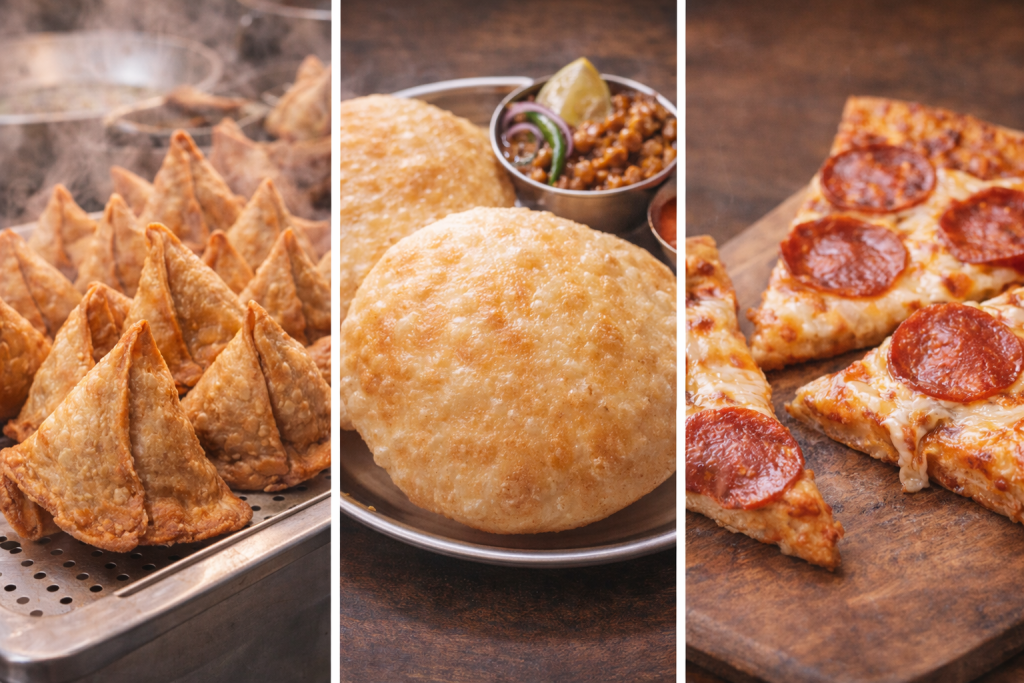
AI-generated image
We get it. Food is emotional. Food is cultural. And food is meant to be enjoyed.
But here’s what often slips past unnoticed:
- Many of our favorite comfort foods are small in size, yet dense in energy.
- The calories in junk food don’t always match how filling or harmless they appear.
- A snack that disappears in five minutes can quietly demand hours of physical activity to counterbalance it.
This is where numbers fail us. Calories feel abstract. Steps don’t. When we translate calories into steps walked, awareness becomes real.
Suddenly, that samosa isn’t just a snack: it’s a movement story.
Not a warning. Not a restriction.
Just the information your body deserves.
In today’s world, we sit more than any generation before us. Desk jobs, screen time, and long commutes, all paired with foods designed to be calorie-dense, hyper-palatable, and easy to overeat. The gap between what we eat and how much we move keeps widening, often without us realising it.
And this isn’t here to scare you, shame you, or tell you to stop enjoying your food. Here, you’ll discover:
- Why the calories in junk food are often underestimated
- How walking burns calories and why steps are a more relatable metric
- The approximate walking cost of popular Indian and global junk foods
- Which junk foods carry the most calories, and which ones are relatively lower
- How to enjoy indulgences without guilt, burnout, or extremes
Because food isn’t the enemy. Disconnection is.
Why We Underestimate Calories in Junk Food
One of the biggest nutrition myths we’ve been sold is this:
If it’s small, it can’t be that calorie-heavy.
This is exactly why the calories in junk food catch most people off guard, not because they’re careless, but because the food environment is designed to mislead our biology.
Let’s break down why this happens.
Portion distortion: when snacks don’t feel like ‘real food’
A samosa isn’t a meal. A handful of fries isn’t lunch. A slice of pizza is just one slice. Or so it feels.
Over time, our brains have learned to label these foods as snacks, not energy sources. Ultra-processed food is easy to chew, quick to eat, and low in fibre; so, we consume it faster, often before the body gets a chance to register fullness.
The result? More calories in, less awareness out.
Your stomach may notice the quantity. Your brain notices volume and time.
Junk food usually delivers neither.
Fried foods and refined oils: maximum calories, minimum satiety
Here’s a fact most people don’t realize:
Fat carries more than double the calories per gram compared to protein or carbohydrates.
Deep-fried foods soak up refined oils that are:
- Extremely calorie-dense
- Low in fiber
- Poor at triggering satiety hormones
Studies highlight that meals high in refined fats don’t stimulate hormones that tell your brain ‘you’ve had enough.’ (Source:PMCID: PMC3727026)
So even after eating something heavy, the body doesn’t feel satisfied, just sluggish.
This is why a plate of fried food can still leave you reaching for something sweet later.
Here’s the science behind junk food and sugar cravings you need to know!
Emotional eating vs energy awareness
Another reason we underestimate calories in junk food has nothing to do with hunger.
Stress. Fatigue. Convenience. Habit.
- Ultra-processed foods are engineered to comfort, not to nourish.
- They activate reward centers in the brain linked to dopamine, temporarily soothing emotions, while quietly bypassing energy awareness.
- You’re not eating because your body needs fuel. You’re eating because your nervous system is seeking relief.
And in that state, calorie perception drops dramatically.
Why junk food doesn’t ‘switch off’ hunger properly
Whole foods slow digestion. They stretch the stomach, activate gut hormones, and create a sense of completion.
Junk food does the opposite.
- Research shows that ultra-processed foods encourage passive overeating, meaning people eat more calories without consciously intending to.
- The brain doesn’t accurately register fullness, even when energy intake is high.
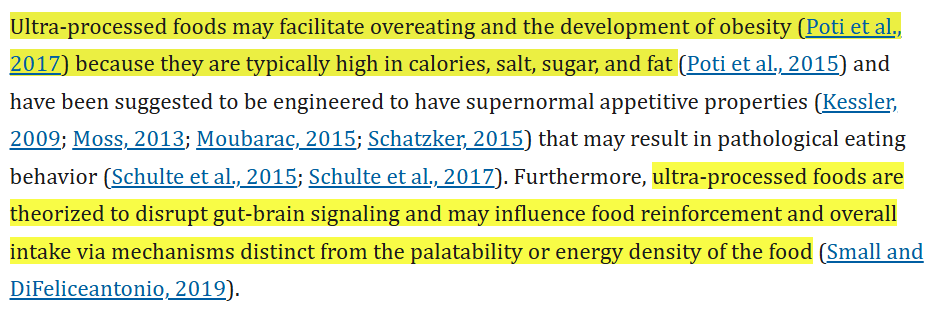
Source: Hall KD, Ayuketah A, et al. Ultra-Processed Diets Cause Excess Calorie Intake and Weight Gain: An Inpatient Randomized Controlled Trial of Ad Libitum Food Intake. Cell Metab. 2019 Jul 2;30(1):67-77.e3. doi: 10.1016/j.cmet.2019.05.008. Epub 2019 May 16. Erratum in: Cell Metab. 2019 Jul 2;30(1):226. doi: 10.1016/j.cmet.2019.05.020. Erratum in: Cell Metab. 2020 Oct 6;32(4):690. doi: 10.1016/j.cmet.2020.08.014. PMID: 31105044; PMCID: PMC7946062.
This explains why:
- You can eat more calories without feeling full
- Stopping feels harder than starting
- The idea of needing to ‘burn it off’ with excessive exercise later feels overwhelming
It’s also why understanding walking burns calories becomes useful, not as punishment, but as perspective.
If you’ve ever wondered, “Why does my body feel out of control around junk food?” here’s the truth:
Your body isn’t weak. It’s responding exactly how biology predicts.
How Walking Burns Calories (And Why Steps Matter More Than You Think)
When most people think of burning calories, they picture sweaty gym sessions, intense cardio, or ‘making up’ for what they ate. Walking rarely makes that list.
And yet, from a biological and metabolic standpoint, walking is one of the most effective ways the human body burns energy; quietly, consistently, and without stress.
This is why understanding how walking burns calories can completely change how you look at movement.
Calories per step: small units, powerful impact
Here’s something most people don’t realize:
There’s no fixed number of calories burned per step, and that’s actually a good thing.
On average, a person burns roughly 0.04–0.06 calories per step, but this number shifts based on your physiology and environment.
What matters more is accumulation.
A few hundred steps barely register.
A few thousand start changing the metabolic picture.
- The body responds better to frequent, low-intensity movement spread across the day than to one isolated burst of exercise.
- This is why translating the calories in junk food into steps makes the cost visible, without turning movement into punishment.

Image Credits: Freepik
What actually influences calorie burn while walking?
Walking isn’t basic; it’s dynamic. Calories burned per step vary based on:
- Body weight: More mass = higher energy cost
- Speed: A faster pace burns more
- Terrain: Inclines and uneven ground recruit more muscles
- Frequency: Short, frequent walks often outperform one long walk
This is why two people walking the same distance can burn very different calories, and why trackers often miss the bigger picture.
Why walking works metabolically
Walking supports metabolism without stressing the body. It:
- Improves insulin sensitivity
- Increases fat usage
- Supports cellular energy systems
- Lowers stress hormones
In simple terms, walking helps your body use energy efficiently, not aggressively.
The gym-only myth
Calories don’t only count in the gym.
- Daily movement: Walking, standing, and post-meal strolls contribute significantly to energy balance. This is why regular walkers often stay metabolically healthier without intense workouts. And, walking builds muscles too!
You don’t need to earn food through exercise. You need daily movement, the way humans were designed to move.
Calories in Popular Indian Junk Foods — And the Steps They Demand
Indian junk food rarely looks excessive. Portions feel familiar. Flavours feel comforting.
Instead of numbers alone, let’s translate this into steps, because the body understands movement better than math.
Note: Approximate values. Actual calorie burn varies by body weight, pace, and terrain.
Popular Indian Junk Foods: Calories vs Steps
| Food Item | Approx Calories | Approx Steps Needed* |
| Samosa (1 piece) | 250–300 kcal | 5,000–6,000 steps |
| Vada Pav | 280–320 kcal | 5,500–6,500 steps |
| Bread Pakora | 300–350 kcal | 6,000–7,000 steps |
| Pav Bhaji (with butter) | 400–450 kcal | 8,000–9,000 steps |
| Kachori (1 piece) | 200–250 kcal | 4,000–5,000 steps |
| Chole Bhature (1 plate) | 700–800 kcal | 14,000–16,000 steps |
| Aloo Tikki (2 pieces) | 300–350 kcal | 6,000–7,000 steps |
| Veg Frankie / Roll | 350–400 kcal | 7,000–8,000 steps |
*Steps estimated assuming ~0.05 kcal burned per step.
What most people don’t realize
- These foods are fried or oil-heavy, making them calorie-dense without being filling
- Refined flour + oil slows satiety signaling
- You can finish them quickly, before fullness hormones catch up
Visual reality check:
One plate of chole bhature ≈ more steps than many people walk in an entire day.
This isn’t about fear. It’s about context, especially in sedentary lifestyles where daily movement is already low.
Global Junk Foods & Their Walking Cost
International junk foods often get a bad reputation, but the real issue isn’t always ingredients.
It’s portion size and ease of overconsumption.
Common Global Junk Foods: Calories vs Steps
| Food Item | Approx Calories | Approx Steps Needed |
| Burger (with cheese & sauces) | 450–550 kcal | 9,000–11,000 steps |
| Fried chicken (2 pieces) | 500–600 kcal | 10,000–12,000 steps |
| Pizza slice (regular crust) | 280–320 kcal | 5,500–6,500 steps |
| Pizza (2–3 slices) | 600–900 kcal | 12,000–18,000 steps |
| Hot dog (with sauces) | 300–350 kcal | 6,000–7,000 steps |
| French fries (medium serving) | 350–400 kcal | 7,000–8,000 steps |
| Soft drink (large serving) | 180–220 kcal | 3,500–4,500 steps |
| Milkshake (regular) | 400–500 kcal | 8,000–10,000 steps |
The hidden traps:
- A ‘slice’ is rarely one slice
- Liquid calories bypass the chewing and fullness signals
- Meals are often bundled: food + drink + sides
International junk foods aren’t always worse. They’re just bigger, faster to consume, and easier to overeat, which silently increases their walking cost.
Junk Foods With the Most vs Least Calories
Not all junk foods are created equal, and not for the reasons most people think.
Calories don’t just come from how much you eat, but how the food is prepared, combined, and engineered.
Let’s break this down.
Junk Foods With the Most Calories (Per Typical Serving)
| Food Type | Approx Calories |
| Chole Bhature | 700–800 kcal |
| Cheese-loaded pizza (2–3 slices) | 700–900 kcal |
| Burger with cheese & sauces | 450–550 kcal |
| Fried chicken (2 pieces) | 500–600 kcal |
| Pav Bhaji with butter | 400–450 kcal |
| Milkshake / thick sweetened beverage | 400–500 kcal |
Why these rank high:
- Deep-frying dramatically increases calorie density
- Cheese + refined flour + oil stack calories quickly
- Sugar + fat combinations delay satiety signals
- Liquids don’t trigger fullness the way solid foods do
Junk Foods With Lower Calories (Still Junk, Just Lighter)
| Food Type | Approx Calories |
| Plain veg sandwich | 200–250 kcal |
| Baked snack (not fried) | 150–200 kcal |
| Single pizza slice (thin crust) | 250–300 kcal |
| Veg roll without sauces | 250–300 kcal |
| Roasted street snacks | 150–200 kcal |
Why are these relatively lower:
- Less oil absorption
- More volume per calorie
- Slower eating pace
- Reduced fat–sugar stacking
But here’s the nuance most people miss…
The ‘health halo’ trap
Some foods sound lighter, baked, veg, thin, or roasted, but still qualify as junk if they’re:
- Low in fibre
- High in refined flour
- Lacking protein or micronutrients
Deep-fried vs baked: the real difference
- Deep-fried foods: High calorie density, low fullness per bite
- Baked versions: Lower oil load, slower energy delivery
Same ingredients. Very different metabolic outcomes.
The Real Lesson: Balance, Not Burnout
If there’s one message we want to leave you with, it’s this:
You don’t need to punish your body for eating.
Food doesn’t require repayment. Movement isn’t a penalty.
When people hear about steps and calorie burn, the instinct is often to compensate, to walk more because they ate more. But biology works very differently. Guilt raises stress hormones, and stressed bodies burn energy poorly. This is why turning movement into punishment often backfires.
Walking works best when it’s supportive, not corrective.
And remember this:
Consistency always beats compensation.
Frequently Asked Questions
How many steps are needed to burn junk food calories?
The steps needed depend on body weight, walking speed, and terrain. On average, burning the calories in junk food may take anywhere from 5,000 to 15,000 steps. Understanding how walking burns calories helps create awareness, not punishment.
How many calories are in a samosa or chole bhature?
A typical samosa contains around 250–300 calories, while one plate of chole bhature can provide 700–800 calories. These foods are calorie-dense due to refined flour and oils, which is why the calories of samosa and chole bhature are often underestimated.
Does walking really help burn calories from junk food?
Yes, but not in a compensatory way. Walking helps improve insulin sensitivity, digestion, and energy utilization. When practiced consistently, walking burns calories while supporting metabolism, making it an effective and sustainable way to manage the impact of occasional junk food.
Which junk food has the most calories?
Junk foods combining refined flour, oil, cheese, and sugar tend to rank highest. Items like chole bhature, cheese-loaded pizza, burgers with sauces, and milkshakes often top the list of junk foods with the most calories, delivering high energy with low satiety.
Is walking after meals effective for weight control?
Yes. A short post-meal walk helps regulate blood sugar and improve digestion, which supports long-term weight control. Rather than ‘burning off’ food, this habit enhances how the body uses energy, showing why walking burns calories and works best when done consistently.
Disclaimer: This blog is for educational and informational purposes only and is not a substitute for professional medical advice, diagnosis, or treatment. Always seek the advice of your physician or qualified healthcare provider with any questions you may have regarding a medical condition.
If your food choices don’t match how much you move, pause; do not panic.
Set up a one-on-one consultation with our team or explore our Wellness Programs to optimize your health goals.
Reach out to us at 1800 102 0253 or write to us at [email protected].