No products in the cart.
Acne. Pigmentation. Rashes. Allergies. Premature ageing.
If you’re dealing with any of these, you’ve probably done what most people are advised to do.
You’ve visited a dermatologist.
Used prescribed medication.
Tried peels, lasers, actives, or invested in elaborate skincare routines.
And yes, treatment matters.
Medical care and dermatological interventions have an important role in managing symptoms and preventing progression.
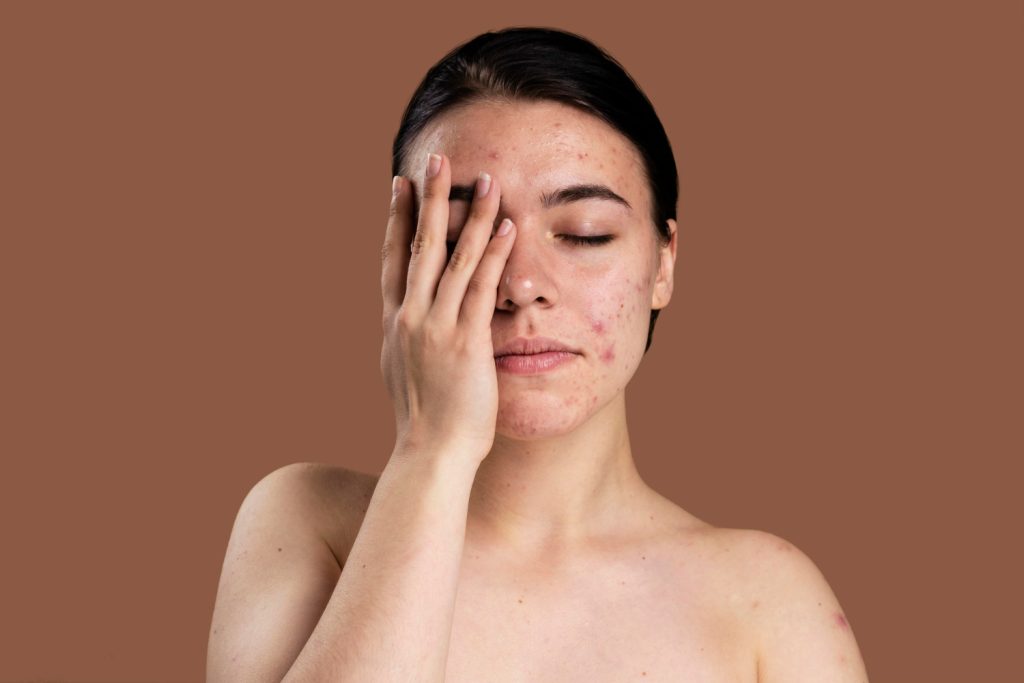
Image Credits: Freepik
But there’s a question we often forget to pause and ask: What foundation is your skin living on?
At Team Luke, we don’t see skin concerns as surface flaws or purely cosmetic issues. We see them as biological signals.
Your skin is not just something you apply products to. It is a metabolically active organ that reflects internal imbalances, so while treatments may mask symptoms, strong foundations decide long-term skin health.
This is where Foundational Medicine comes in.
Rather than asking, “Which product should I use next?”
We ask, “What internal environment is the skin trying to survive in?”
Here, we’ll:
- Explore skin health through a holistic skin care lens, one that integrates foundational medicine, evidence-based skin health tips, and lifestyle biology.
- Connect the dots between skin and gut health, nutrition, stress, and hormonal imbalance
- Address common questions around pigmentation, cure naturally, and the role of natural skin care herbs as supportive tools, not magic fixes.
Because great skin isn’t built in bottles alone. It’s built on strong foundations.
What Is Foundational Medicine for Skin Health?
At Team Luke, when we speak about foundational medicine, we’re not dismissing treatments or dermatological care. Medications, procedures, and topical therapies play an important role in managing skin symptoms—and they should be continued when prescribed.
But foundational medicine asks a deeper question:
Are we only managing what we see, or are we supporting the biology beneath it?
Skin is not cosmetic tissue.
- It is a metabolically active organ, an immune-responsive barrier, and a hormone-sensitive tissue.
- It also acts as a cleansing and eliminatory interface, constantly interacting with what’s happening inside the body and in the external environment.
- This is precisely why the skin is often the first place where internal imbalance shows up.
A breakout, rash, flare-up, pigmentation patch, or early ageing sign is rarely random. Externally visible skin issues are often reflections of internal processes such as:
- Chronic inflammation
- Oxidative stress and glycation (sugar-driven collagen damage)
- Hormonal imbalance and insulin resistance
- Gut dysbiosis and constipation
- Nutrient deficiencies
- Sleep debt and disrupted circadian rhythm
- Chronic psychological stress
- Environmental load, including pollution and excess blue-light exposure
When these factors coexist, and they often do, topical applications and medications alone are not enough. They may calm the skin temporarily, but without correcting the internal terrain, flare-ups tend to recur, healing slows, and results plateau.
This is where holistic skin care, rooted in foundational medicine, becomes essential.
- Foundational medicine for skin health focuses on biological repair, not just symptom suppression.
- It looks at how lifestyle, nutrition, sleep quality, stress regulation, hormonal balance, gut health, hydration, movement, and breath influence skin behavior at a cellular level.
These aren’t “add-ons” or optional wellness trends. They are the basic skin care tips that determine how well your skin can repair, regenerate, and respond to treatment.
When the internal environment improves, the skin becomes more resilient.
Inflammation reduces.
Healing accelerates.
Treatments work better, and often, fewer are needed.
That is the philosophy of foundational medicine:
Treat the symptom, yes, but strengthen the system the skin lives in.
The Foundations of Skin Health
Let’s now break down the key foundations of skin health that truly support long-term repair and resilience.
Foundation 1: Cellular Nutrition (Nutrition and Skin)
At Team Luke, we often say this simply:
Your skin reflects what you eat, digest, absorb, and metabolize.
Cellular nutrition is the first and most critical foundation of skin health because skin repair, collagen formation, barrier strength, and inflammation control all depend on the quality of nutrients your cells receive, and how well your body uses them.
Poor dietary patterns are strongly linked to:
- Chronic inflammation
- Glycation (sugar-driven collagen damage)
- Acne and pigmentation
- Accelerated skin ageing
This is not a theory. Skin outcomes improve when nutrition, sleep, hormones, gut health, and stress biology are addressed alongside treatment.
Deficiencies Show Up on Skin Early
Nutrient deficiencies rarely stay silent.
They often appear on the skin long before blood reports look alarming.
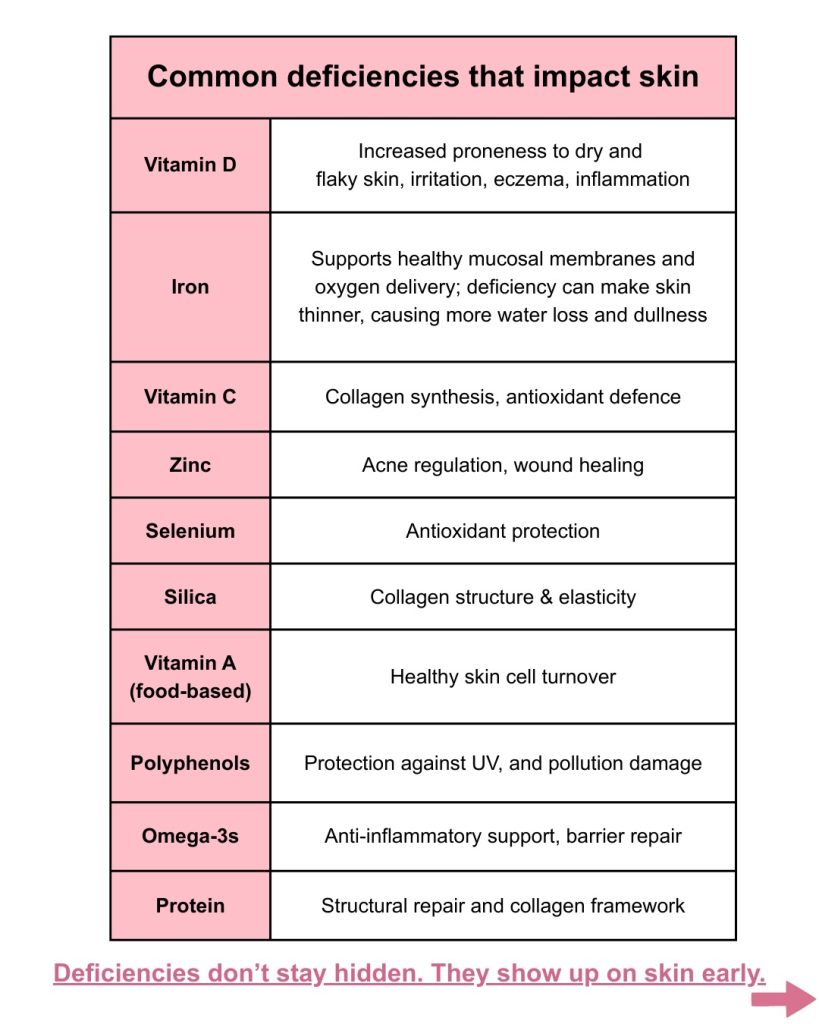
When these nutrients are missing or poorly absorbed, the skin struggles to heal, regulate oil, maintain elasticity, and defend itself.
The Collagen Myth: Why Powders Alone Don’t Work
Collagen is one of the most marketed words in skincare and wellness today. But collagen is not just a powder you consume. It is a biological process.
For collagen synthesis to happen, the body needs:
- Adequate protein intake
- Vitamin C, zinc, and copper
- Deep, restorative sleep
- Low levels of chronic inflammation
- Stable blood sugar
- Hormonal balance
Without this internal environment, collagen production simply doesn’t happen, no matter how expensive the supplement is.
Learn more about collagen in this ultimate guide. Click here.
No environment = no collagen synthesis.
This is why foundational nutrition matters more than chasing trends.
Eating for Skin Health: The INS & OUTS
When nutrition supports repair and resilience, the skin responds.
IN (support skin repair and glow):
- Citrus fruits, berries, amla
- Leafy greens
- Nuts and seeds
- Fatty fish
- Fermented foods
- Turmeric and ginger
- Whole, seasonal, minimally processed foods
OUT (accelerate skin damage):
- Refined sugar and refined flours
- Ultra-processed foods
- Reheated and oxidized oils
- High-glycemic snacks
- Excess dairy in acne-prone individuals
Sugar deserves special mention:Sugar → glycation → collagen damage → premature ageing.
Additionally, identifying and eliminating foods you may be sensitive or allergic to can significantly reduce inflammatory load and improve skin outcomes.
Foundation 2: Gut Health & the Microbiome (Skin and Gut Health)
One of the most underestimated drivers of skin problems sits far away from the face.
The gut.
The gut–skin axis is a well-established biological connection between digestive health, immune regulation, inflammation, and skin behavior.
Your gut is home to trillions of microbes that influence:
- Inflammation levels
- Immune responses
- Hormone metabolism
- Nutrient absorption
- Cleansing pathways
When gut health is compromised, the skin often pays the price.
How Gut Imbalance Shows Up on the Skin
Gut inflammation, dysbiosis (an imbalance in gut bacteria), or chronic constipation are strongly associated with skin conditions such as:
- Acne
- Rosacea
- Eczema
- Psoriasis
- Chronic rashes and unexplained flare-ups
This happens because an inflamed or sluggish gut increases systemic inflammation and allows inflammatory by-products to circulate in the body. The skin, being an immune-responsive organ, often becomes an outlet for this internal stress.
Constipation Is Not a ‘Small’ Problem
Regular bowel movements are a critical, but often ignored, aspect of skin health.
When elimination is compromised:
- Toxins are reabsorbed
- Inflammatory load increases
- Hormone metabolites recirculate
- Skin cleansing pathways become overburdened
The result can be breakouts, dullness, pigmentation, and chronic sensitivity.
Here’s how inflammation and your skin microbiome speed up aging.
Supporting the Gut to Support the Skin
From a foundational medicine perspective, improving skin and gut health involves:
- Reducing inflammatory foods
- Supporting fiber intake
- Including fermented and whole foods
- Addressing food intolerances
- Managing stress, which directly alters gut permeability and microbiome balance
This is why we always say: If your skincare protocol does not address gut health, it is incomplete.
You cannot out-serum an inflamed gut.
Foundation 3: Deep Sleep & Circadian Repair
Deep, restorative sleep is one of the most powerful yet undervalued tools for skin health. When sleep is compromised, the skin immediately reflects it.
Inadequate or poor-quality sleep:
- Raises cortisol levels
- Increases systemic inflammation
- Worsens pigmentation and uneven tone
- Accelerates collagen breakdown and skin ageing
visibly accelerates skin ageing, impairs barrier repair, and delays wound healing.
So yes, beauty sleep is real science, not a wellness cliché.
Melatonin, Cortisol & Skin Repair
Sleep governs two key hormones that deeply influence skin biology:
- Melatonin, which supports antioxidant defense, cellular repair, and DNA protection
- Cortisol, which, when chronically elevated, drives inflammation, breakouts, pigmentation, and glycation
When the circadian rhythm is disrupted, melatonin production drops and cortisol remains elevated, creating an internal environment where the skin struggles to heal.
The Blue Light Problem We Don’t Talk About Enough
An under-talked contributor to skin ageing today is excess blue light exposure, especially at night.
While the skincare industry often fear-markets sunlight, it largely ignores the impact of prolonged screen exposure from phones, laptops, and artificial lighting.
Excess blue light and late-night screen use:
- Suppress melatonin production
- Increase oxidative stress in skin cells
- Disrupt normal skin repair cycles
Your skin follows a circadian rhythm, just like the rest of your body. When that rhythm is disturbed, skin repair becomes inefficient—no matter how good your skincare routine is.
Supporting Sleep as Foundational Skin Medicine
From a foundational medicine perspective, supporting skin health means:
- Prioritizing consistent sleep timing
- Reducing night-time screen exposure
- Allowing adequate duration for deep sleep cycles
- Respecting the body’s natural light–dark rhythm
Without sleep, nutrition doesn’t assimilate well, hormones destabilize, inflammation rises, and collagen synthesis slows.
Foundation 4: Stress, Emotions & Skin Biology (Stress and Skin Problems)
Chronic psychological stress directly alters skin biology. When stress becomes persistent, the body remains in a high-cortisol state, creating a cascade of effects that the skin struggles to buffer.
Chronic stress:
- Raises cortisol levels
- Triggers breakouts and flare-ups
- Worsens pigmentation
- Delays wound healing
- Accelerates glycation, leading to premature ageing
But stress isn’t only about workload or lifestyle. Suppressed emotions, anger, bitterness, guilt, resentment, and envy carry a biological cost when they’re constantly held in.
This is why managing stress and skin problems isn’t about positivity or mindset hacks. It’s about nervous system regulation.
Slow down.
Breathe consciously.
Learn to release, accept, and let go.
Calm is not indulgence, it is foundational medicine for skin repair.
Foundation 5: Hormonal Balance (Hormonal Imbalance Skin)
Skin is often the first organ to signal a hormonal imbalance.
We see this repeatedly in cases of:
- Polycystic ovary syndrome (PCOS)
- Insulin resistance
- Thyroid imbalances
- Perimenopause and hormonal transitions

Image Credits: Freepik
Hormonal shifts directly influence:
- Acne patterns (jawline, chin, cyclical breakouts)
- Pigmentation and uneven tone
- Excess oil production
- Facial hair growth and textural changes
When hormones are dysregulated, no amount of topical care can override the internal signal being sent to the skin.
- Addressing hormonal imbalance skin requires looking beyond symptoms, towards blood sugar stability, gut health, stress regulation, sleep quality, and nutrient sufficiency.
Balance the hormones, and the skin follows.
Foundation 6: Cellular Hydration
Hydration is often misunderstood as what you apply to the skin. Hydration is not just moisturizer.
- Adequate cellular hydration:
- Supports skin barrier integrity
- Improves elasticity and firmness
- Reduces puffiness
- Enhances toxin elimination
- Improves overall skin glow and resilience
When the body is under-hydrated, skin repair slows down. Cleansing pathways become inefficient, inflammation lingers, and the skin appears dull or congested, regardless of how many products are used.
True hydration comes from:
- Sufficient water intake
- Mineral balance
- Supporting gut absorption
- Reducing excessive caffeine, alcohol, and dehydration triggers
If skin feels tight, puffy, or lacks vitality, it’s often a hydration issue at the cellular level, not a product problem.
Hydrate the system, and the skin responds.
Foundation 7: Movement, Circulation & Glow
At Team Luke, we keep this simple:No circulation = no glow.
Movement is essential for skin health because skin cells depend on blood flow to receive oxygen and nutrients, and on lymphatic movement to remove waste.
Regular movement supports:
- Healthy circulation
- Oxygen delivery to skin cells
- Efficient nutrient transport
- Lymphatic drainage
- Cellular cleansing
Sedentary living slows all of this down. When circulation is poor, skin looks dull, congested, puffy, and slow to heal, no matter how advanced the skincare routine is.
Your skin needs blood flow, not just products.
This doesn’t mean intense workouts.
- Walking, stretching, strength training, yoga, and regular movement throughout the day are enough to restore circulation and support a natural glow.
Move the body, and the skin follows.
Foundation 8: Breathwork & Oxygenation
Breathing is automatic, but effective breathing is intentional.
Shallow, stressed breathing reduces oxygen delivery to tissues, including the skin. When skin cells don’t receive adequate oxygen, repair slows, oxidative stress increases, and healing becomes inefficient.
Conscious breathing practices, breathwork, and pranayama:
- Improve oxygenation at a cellular level
- Reduce oxidative stress
- Support eliminatory and cleansing pathways
- Calm the nervous system
Healthy skin is well-oxygenated skin.
You cannot separate breath from biology. When breathing improves, circulation improves, stress reduces, and the skin’s repair mechanisms work better.
Foundation 9: Smoking, Alcohol & Skin Damage
When it comes to skin health, some habits actively work against repair.
Smoking, vaping, and excess alcohol:
- Damage collagen and elastin
- Reduce blood flow to the skin
- Increase oxidative stress
- Accelerate visible ageing
- Delay healing and recovery
From a biological standpoint, there is no skin-safe dose.
Even occasional exposure compromises circulation, depletes antioxidants, and disrupts the skin’s ability to regenerate. Over time, this shows up as dullness, fine lines, uneven tone, and slower repair.
The good news?
Skin biology improves at any age once these habits are reduced or stopped.
Foundation 10: Responsible Skincare (Holistic Skin Care)
Using more products, harsher activities, or complex routines in the name of skincare can actually age the skin faster over time.
More products do not equal better skin.
Popular multi-step routines, like the 7-step Korean skincare system, are not designed for Indian skin, climate, or microbiome. When blindly adopted, they often lead to:
- Barrier damage
- Microbiome disruption
- Increased sensitivity
- Pigmentation and chronic inflammation
Holistic skin care is about less, but intentional.

Image Credits: Freepik
This means:
- Reading labels carefully
- Avoiding hormone disruptors and unnecessary chemicals
- Limiting harsh actives and over-exfoliation
- Choosing products that protect the barrier rather than strip it
Skincare should work with your skin, not constantly provoke it.
The Last Word
You can want glass skin, glowing skin, or flawless skin.
But great skin isn’t built in bottles alone.
It’s built on strong foundations.
Treatments and skincare manage symptoms, and they matter. But long-term skin health depends on the internal environment your skin lives in.
So ask yourself:
Am I only treating my skin… or building the conditions it needs to repair and regenerate?
This is lifestyle as foundational medicine, where nutrition, gut health, sleep, stress regulation, hormones, hydration, movement, breath, and responsible skincare work together.
When the foundations are strong, skin becomes less reactive, heals better, and responds more effectively to treatment.
Be educated, not influenced.
Disclaimer: Foundational Medicine is an approach that works alongside medical care. It does NOT replace medications, surgeries, or medical treatments prescribed by your doctor. Any changes to medication, treatment plans, or medical protocols should always be made in consultation with your healthcare provider. Individual responses to lifestyle and foundational changes may vary based on health status, medical history, genetics, and current treatments. What works for one person may not work the same way for another.
Want to make the foundations right?
Start with our Wellness Program, designed to strengthen the core foundations your body relies on.
You can also schedule a one-on-one consultation with our team, and let us create a tailored plan that aligns with your unique needs.
Call us at 1800 102 0253 or write to us at [email protected].