No products in the cart.
This statistic might make women nod quietly, and men pause for a moment:
The Journal of Sex Research found that nearly 45–85% of women have faked an orgasm at some point during sexual activity with a partner.
Not because women are dishonest.
Not because something is ‘wrong.’
But because pleasure quietly became a performance, not an experience.

Image Credits: Freepik
At some point, many women have asked themselves:
Why don’t I feel what I’m supposed to feel?
Why does sex feel stressful instead of pleasurable?
Is something wrong with me?
Most of us were taught the science of sex, but never the art of pleasure. We learned anatomy, reproduction, and outcomes, but not how female pleasure actually works.
Here’s what no one told us:
Pleasure is not performance
Orgasms are not a success metric
Sex is not defined by penetration
Here, we gently explore female sexual wellness without pressure, judgment, or unrealistic expectations.
This isn’t about technique, tips, or ticking boxes. It’s about unlearning pressure and relearning connection.
Because female pleasure was never broken, it was simply never explained properly.
Pleasure, Arousal & Orgasm: Three Very Different Things
Before you overthink your response, your relationship, or your body, let’s get one thing clear:
Pleasure, arousal, and orgasm are not the same thing.
They can overlap. But they don’t have to. And believing they must is one of the biggest myths about female pleasure.
Most of us were taught to treat them as one single experience. Science says otherwise.
Pleasure: How It Feels
Pleasure is both physical and psychological. It’s how something feels in your body and your mind, comfort, closeness, warmth, relaxation, excitement, or emotional safety.
- You can feel pleasure without arousal.
- You can feel pleasure without a female orgasm.
- And that pleasure is still real and valid.
Arousal: How the Body Responds
Arousal is a biological response, not a conscious choice.
It may show up as wetness, increased sensitivity, warmth, or changes in breathing. Genital arousal and desire don’t always match.
Which means:
- Wetness ≠ wanting
- Wetness ≠ consent
- Wetness ≠ sexual thoughts
It’s physiology, not intention.
Orgasm: One Possible Peak
A female orgasm is a neurological and muscular response involving rhythmic contractions and nervous system activity. It is one possible outcome, not the goalpost for intimacy.
Science consistently shows that:
- Most women do not orgasm through penetration alone
- Orgasms can happen in many ways, or sometimes not at all
And none of these define the quality of intimacy.
This means:
- You can feel pleasure without orgasm.
- You can be aroused without sexual thoughts.
- You can orgasm without penetration.
And understanding this isn’t just empowering, it’s foundational for female sexual wellness.
The Clitoris: The Most Ignored Organ in Female Pleasure
If female pleasure had a PR problem, this would be it.
For decades, sex has been defined almost entirely around penetration, as if that’s where pleasure is supposed to happen. But science (and honestly, women’s lived experience) has been quietly saying something else all along.
First, let’s clear the anatomy confusion (because this matters)
A lot of myths around female pleasure exist simply because basic anatomy is misunderstood.
- Vulva: The external genital area, which you can see
- Vagina: The internal canal (primarily designed for childbirth and menstruation)
- Clitoris: The primary pleasure organ
- G-spot: Not a separate organ, but part of the internal clitoral network interacting with surrounding tissue
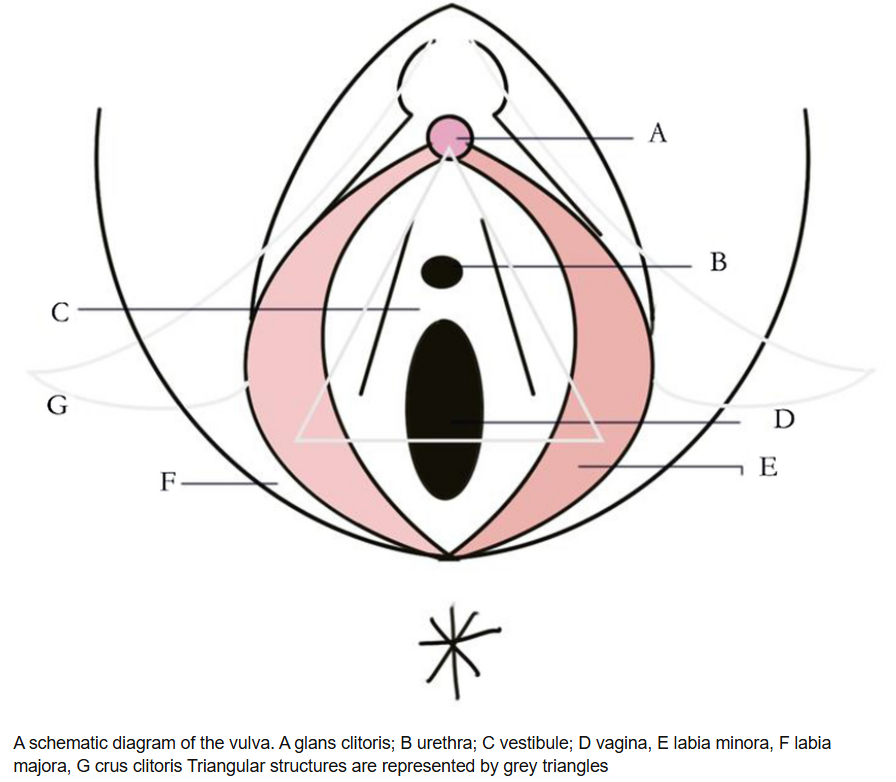
Source: Wei, Letian & Jiang, Hui & Jiang, Tao. (2023). The relationship between clitourethrovaginal complex and female orgasm. Archives of gynecology and obstetrics. 308. 10.1007/s00404-023-06977-y.
Why Penetration-Centric Sex Doesn’t Work for Most Women
Research consistently shows that most women do not experience orgasm through vaginal penetration alone.
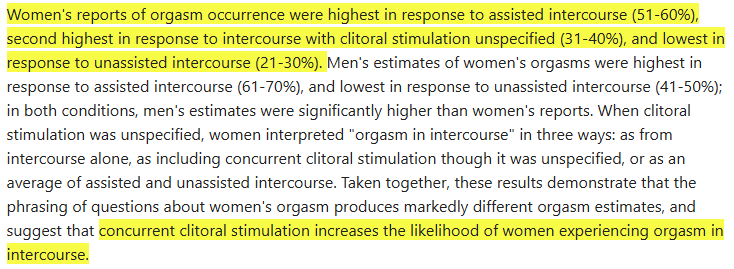
Source: Shirazi T, Renfro KJ, Lloyd E, Wallen K. Women’s Experience of Orgasm During Intercourse: Question Semantics Affect Women’s Reports and Men’s Estimates of Orgasm Occurrence. Arch Sex Behav. 2018 Apr;47(3):605-613. doi: 10.1007/s10508-017-1102-6. Epub 2017 Oct 27. Erratum in: Arch Sex Behav. 2018 Apr;47(3):615. doi: 10.1007/s10508-017-1114-2. PMID: 29079939.
Why? Because the vagina is not the primary female pleasure organ.
The clitoris is.
And this is where one of the biggest gaps in female sexual wellness begins.
- The clitoris isn’t a tiny external structure; it’s a complex organ with thousands of nerve endings and internal extensions that surround the vaginal canal.
- Its sole biological function is pleasure.
No reproduction. No multitasking. Just pleasure.
Which means expecting penetration alone to deliver consistent pleasure for women is like expecting eye contact to replace conversation; it misses the point.
What Science Says About the Clitoris and Pleasure Pathways
The stimulation of the clitoris activates powerful pleasure pathways in the brain. This is why:
- Many women experience stronger, more reliable orgasms through clitoral stimulation
- Penetration may feel intimate, but not always orgasmic
- Female orgasm patterns vary widely, even within the same person
Ancient Wisdom Knew This Before Modern Culture Forgot
What’s interesting is that this isn’t new knowledge.
Ancient texts like the Kama Sutra clearly acknowledged that:
- Men and women experience arousal differently
- Women often take longer to reach peak pleasure
- Non-penetrative stimulation plays a central role in female pleasure
Moreover, Seema Anand, the renowned sexual wellness expert, also backed this ancient wisdom in our podcast.
- Some traditions even suggested bringing a woman to orgasm before penetration, not as a rule, but as an understanding of how female arousal builds.
- Somewhere between ancient wisdom and modern pop culture, this understanding was lost, replaced by performance, pressure, and unrealistic expectations.
- These traditions never assumed sameness between male and female pleasure. “The counterpart to the penis is not the vagina.”
Watch the full podcast episode with Seema Anand here:
The clitoris isn’t ‘extra.’
It isn’t optional.
And it certainly isn’t secondary.
It’s central to female pleasure and fundamental to female sexual wellness.
The Biggest Myth We Inherited: Penetration = Pleasure
Somewhere along the way, sex was reduced to a single act.
If penetration happened, pleasure was assumed.
If an orgasm didn’t follow, someone had ‘failed.’
This belief didn’t come from women’s bodies; it came from conditioning. And it’s one of the most persistent myths about female pleasure we still carry today.
How This Myth Was Manufactured
Modern sex education focused heavily on reproduction, not pleasure. Add to that early psychological theories, most notably Sigmund Freud’s (renowned Austrian neurologist and the founder of psychoanalysis) claim that penetrative orgasm was the only ‘mature’ form of female pleasure, and a dangerous idea took root.
Anything else was dismissed.
Anything different was labelled abnormal.
The result? Generations of women questioning their bodies, and generations of men feeling responsible for outcomes biology never promised.
Reframing Sex (Without Taking Anything Away)
Here’s the shift that changes everything: Penetration is one part of sex, not its definition.
Sex is also:
- Touch
- Presence
- Safety
- Curiosity
- Emotional connection
When we let go of the penetrative orgasm myth, sex stops being about doing it right and starts being about feeling connected.
And that’s when pleasure becomes possible, for women and men. Because this myth didn’t just fail women. It failed intimacy itself.
Why So Many Women Feel “Broken” (When They’re Not)
If there’s one silent thought many women carry after intimacy, it’s this:
“Why can’t I just climax normally?”
That thought alone has made countless women believe their bodies are defective, when in reality, they’re responding exactly as they’re wired to.
The Guilt No One Talks About
Many women carry guilt around:
- Not climaxing “often enough”
- Taking “too long”
- Needing something different
- Wanting to reassure their partner that everything is fine
So they smile.
They nod.
They fake orgasms, not to deceive, but to keep peace.
Remember that statistic at the start that might have made you pause, nod, or even laugh uncomfortably?
So, a significant number of women report faking orgasms to:
- Protect a partner’s feelings
- End an interaction without conflict
- Avoid awkward explanations
This isn’t manipulation. It’s emotional labor.
When Porn Becomes Sex Education
Add porn into the mix, fast, penetrative, visually driven, and almost always orgasm-focused, and expectations become even more unrealistic.
What porn rarely shows:
- The time female arousal actually takes
- The role of emotional safety in pleasure
- The wide range of normal female responses
Not many people know that performance-based expectations increase anxiety and reduce arousal, especially for women.
If porn is hurting your relationship, you must read this:
https://www.lukecoutinho.com/blogs/miscellaneous/the-sad-truth-about-porn/
“Did You Come?” How Pressure Kills Pleasure
That one question, often asked casually, sometimes anxiously, has quietly turned intimacy into a performance review.
From a female sexual wellness lens, this is where things start to unravel.
Not every intimate moment is meant to end in an orgasm. Some days are pleasure days. Some are orgasm days. And many are simply connection days, where comfort, closeness, and safety matter more than any physical outcome.
When intimacy becomes achievement-based, the nervous system doesn’t feel invited; it feels evaluated. And pressure is one of the fastest ways to shut down female arousal.
Science backs this up:
- Stress activates the sympathetic nervous system (fight-or-flight), which inhibits arousal pathways.
- Relaxation, emotional safety, and a sense of choice activate the parasympathetic system, the very state in which pleasure can arise.
- In simple terms: when the body feels safe, it opens. When it feels watched or rushed, it protects.
This is why intimacy without pressure isn’t ‘lowering standards,’ it’s actually how desire sustains itself.
Coming vs Orgasming: What No One Explained Clearly
This is where confusion and unnecessary shame often creep in.
Let’s simplify.
- ‘Coming’ is a term people use loosely. It can refer to physical arousal, a sense of release, or heightened sensation.
- An orgasm, on the other hand, is a specific physiological event, involving rhythmic muscular contractions, pelvic floor engagement, and a coordinated neurological response in the brain.
They are related, but they are not the same thing.
Female Desire Is Contextual, Not Constant
One of the most damaging myths around female pleasure is the idea that desire should be automatic, ever-present, and effortless, like flipping a switch.
That’s not biology. That’s bad storytelling.
Female desire is deeply contextual. It doesn’t live in isolation, it responds to environment, emotions, safety, and self-perception.
Key influences on female arousal include:
- Emotional safety and trust
- Stress levels and mental load
- Body image and self-consciousness
- Relationship dynamics and unresolved resentment
- Feeling seen, chosen, and respected
This is why many women experience responsive desire, not spontaneous desire.
Why context matters more than chemistry
If the mind is preoccupied with:
- Unfinished work
- Family responsibilities
- Fear of judgment
- Feeling emotionally unseen
…the body doesn’t switch into pleasure mode. It switches into management mode.
The cultural layer we don’t talk about enough (especially in India)
In many Indian households, particularly in rural and semi-urban cultures, intimacy has historically been framed around:
- Duty, not desire
- Silence, not curiosity
- Control, not consent
Female pleasure was rarely named, let alone encouraged.
If you feel you have low desire, watch this:
Why Desire Often Improves with Age (Yes, Really)
Here’s the part that surprises many women.
Studies and clinical observations show that female pleasure often improves in the mid-30s and beyond, not declines.

Source: Rao TS, Nagaraj AK. Female sexuality. Indian J Psychiatry. 2015 Jul;57(Suppl 2):S296-302. doi: 10.4103/0019-5545.161496. PMID: 26330647; PMCID: PMC4539874.
Why?
- Better self-awareness
- Less people-pleasing
- Greater comfort with one’s body
- More ability to voice needs and limits
- A clearer sense of ‘what feels good for me’
As self-trust grows, the body relaxes. And relaxed bodies are more receptive to pleasure.
How Female Desire & Pleasure Change Across Life Stages
Here’s what science and lived experience tell us:
| Adolescence & Early 20s |
|
| Mid-20s to Early 30s |
|
| Pregnancy & Postpartum |
|
| Perimenopause & Menopause |
|
If your desire fluctuates, responds to context, or shows up only when you feel emotionally safe, that is not a flaw.
That is female biology working exactly as designed.
Self-Awareness: The Missing Link in Sexual Wellness
When it comes to female sexual wellness, self-awareness isn’t abstract or philosophical; it’s physiological.
Many challenges with female arousal and pleasure stem not from lack of desire, but from lack of body literacy. In simple terms, many women were never taught how to recognize what their bodies are communicating.
- Female pleasure develops through a feedback loop between the nervous system and the brain.
- This loop strengthens when women learn to notice and interpret bodily signals without judgment.
What self-awareness actually looks like (practically)
It starts with observation, not action.
1. Noticing bodily responses
- When does your body feel relaxed versus guarded?
- Does touch feel neutral, comforting, irritating, or pleasurable?
- How does stress, fatigue, or emotional load change sensation?
Identifying subtle sensations (rather than chasing intensity) improves arousal regulation and reduces performance anxiety.
2. Separating sensation from expectation
Many women override their body’s cues because they’re focused on outcomes. Learning to ask:
- “Do I feel present right now?”
- “Is my body responding, even mildly?”
…helps recalibrate the pleasure response without pressure.
This distinction is strongly linked to healthier experiences of female pleasure, regardless of orgasm frequency.
3. Exploring touch as information, not achievement
Medical literature often frames masturbation as sensory learning, understanding pressure, pace, and comfort, not as a goal-oriented act.
This builds familiarity and reduces confusion during partnered intimacy.
Importantly:
- Exploration is private, optional, and value-neutral
- There is no ‘right’ response the body must give
4. Recognizing what doesn’t feel good
Knowing boundaries is as important as knowing pleasure. Women who can identify discomfort early report better communication and less sexual distress over time.
When women learn how their bodies signals comfort, readiness, and pleasure, intimacy becomes clearer, not heavier.
Know more about female masturbation:
https://www.lukecoutinho.com/blogs/miscellaneous/female-masturbation/
Communication Without Awkwardness or Blame
In real life, communication around sex doesn’t fail because people don’t care.
It fails because no one wants to:
- Hurt feelings
- Sound ‘difficult’
- Or admit they don’t know what they like yet
So instead, couples default to guessing. And guessing is exhausting.
Misunderstandings around female pleasure are one of the most common sources of silent dissatisfaction in long-term relationships: not lack of attraction, not lack of love.
Real-life moments women recognize instantly:
- Feeling aroused but not close to orgasm, and pretending anyway
- Wanting to slow down but not knowing how to say it without killing the mood
- Feeling pressure when asked, “Did you come?”
- Worrying that honesty will bruise a partner’s ego
None of these is rare. They are common and unspoken.
How communication breaks (and how to fix it)
| What Often Happens | Why It Creates Tension | What Helps Instead |
| “Did you come?” | Turns pleasure into a performance check | “How did that feel for you?” |
| Silence to avoid awkwardness | Builds assumptions, not intimacy | Naming comfort levels early |
| Faking pleasure | Short-term peace, long-term disconnect | Saying “I’m still figuring this out” |
| Giving instructions mid-act | Feels corrective or critical | Sharing preferences outside the moment |
Discussing pleasure outside sexual moments significantly improves satisfaction and reduces anxiety around female orgasm.
A Note for Men (Because This Is Where Things Often Get Lost)
Let’s be honest, most men were taught that good sex = making her orgasm. That sounds caring, but it quietly creates pressure on both sides.
And here’s the part men rarely hear: You don’t need to lead every moment.
Sometimes, pausing and asking is the most attractive thing you can do.
Helpful shifts for men:
- Replace “Was it good?” with “What do you enjoy most?”
- Don’t assume the same thing works every time
- Understand that stress, hormones, and emotional load affect female sexual wellness
- Know that learning together builds trust faster than trying to be perfect
When men respond with curiosity rather than defensiveness, women report higher comfort, clearer communication, and more consistent pleasure over time.
Also important: Her pleasure is not a verdict on your masculinity.

Image Credits: Freepik
Redefining Sex: From Performance to Presence
Let’s call it out.
Most people aren’t having bad sex because they lack chemistry. They’re having stressful sex because they’re trying to do it ‘right.’
Real-life sex today looks like this:
- Mentally tracking time (“Is this taking too long?”)
- Worrying about outcomes (“Will she orgasm?”/“Should I fake it?”)
- Comparing reality with porn-edited expectations
- Treating sex like a responsibility instead of an experience
That’s not intimacy. That’s pressure with clothes off.
What presence actually looks like (in real life)
Presence is not candles and slow music. Presence is practical.
It looks like:
- Pausing when something doesn’t feel good instead of pushing through
- Changing pace without apologizing
- Being okay with sex that doesn’t ‘end’ anywhere
- Letting one partner enjoy while the other simply holds space
Many couples report that their most connected sexual moments didn’t involve female orgasm at all, but involved laughter, closeness, or feeling deeply wanted.
That’s still sex. And for many women, that’s deeply pleasurable.
Female Pleasure in Real Life: How Context Shapes Experience
If you’re mentally overloaded:
- What you might notice: Difficulty switching off, slower arousal
- Why it’s happening: Stress affects pleasure pathways
- What supports pleasure: Presence over performance, communication in intimacy
If you’re carrying caregiving responsibilities:
- What you might notice: Touch fatigue, low desire
- Why it’s happening: Nervous system burnout
- What supports pleasure: Intimacy without pressure, rest, emotional safety
If pleasure feels inconsistent:
- What you might notice: Some days feel good, others flat
- Why it’s happening: Hormonal shifts, stress, context changes
- What supports pleasure: Normalizing fluctuation, removing orgasm goals
If you’re rediscovering yourself after change:
- What you might notice: Curiosity mixed with hesitation
- Why it’s happening: Body-image and emotional recalibration
- What supports pleasure: Self-awareness, slow exploration, compassion
If you value depth over intensity:
- What you might notice: Less interest in performance-driven sex
- Why it’s happening: Greater clarity around needs
- What supports pleasure: Presence, communication, pleasure on your terms
The Last Word
Female pleasure was never meant to be confusing, stressful, or something to prove.
When we replace pressure with curiosity, shame with education, and silence with communication in intimacy, sex becomes what it was always meant to be, a space of connection, comfort, and choice.
Female sexual wellness is not about doing more.
It’s about listening better to your body, your needs, and your lived reality.
Disclaimer: This blog is intended for educational and informational purposes only and should not be used as a substitute for professional medical advice, diagnosis, or treatment. Always seek the guidance of your qualified healthcare provider before making any changes to your medications or lifestyle.
Want to strengthen intimacy and build healthier connections in your relationship?
We’re here to help YOU find a way.
Set up a one-on-one consultation with our foundational medicine and lifestyle experts or explore our Wellness Programs to optimize your lifestyle goals.
Reach out to us at 1800 102 0253 or write to us at [email protected].