No products in the cart.
I want to talk about fat loss—again. Why? Because after questions on cancer, diabetes, and autoimmune conditions, this is the most frequently asked topic I hear about every single day.
And honestly, I get it. There’s just too much information out there.
One diet says carbs are the enemy.
Another suggests eating six meals a day.
Some swear by high-intensity workouts.
Others tell you to fast for 20 hours.
Image Source: Freepik
So, how to burn fat?
There’s no shortcut to fat loss. No magic pill. No secret workout plan.
What it comes down to is something so simple and fundamental that most people overlook it completely.
And here’s the truth that no one tells you:
The best way to burn fat doesn’t start in the gym—it starts with understanding your body’s rhythm.
So, here, I’m not going to ask you to count every calorie or punish yourself with food restrictions.
Instead, I’ll share how to burn fat by working with your body—not against it.
We’ll cover:
- The real science behind fat-burning tips that actually work
- Why a calorie deficit matters (and how you can achieve it without starving)
- The link between your circadian rhythm and fat loss
- Simple lifestyle changes that flip the fat-burning switch—naturally
Let’s break it down together.
The Science of Fat Burning: More Than Just Workouts
Let me clear the confusion once and for all.
Fat burning = energy deficit.
That means you burn fat when your body uses more energy than it takes in. It’s really that simple.
You could be spending hours in the gym. You could be sipping on green juices, taking fancy fat-burning supplements, or meditating in silence, but if you’re eating more than your body needs, fat loss just won’t happen. Period.
The number one fundamental rule for fat loss is a calorie deficit.
Now here’s the catch most people miss:
You don’t need a gym or a personal trainer to create an energy deficit. You just need awareness.
Small changes create big shifts. This isn’t about punishment—it’s about precision.
And to prove this, here’s a real example:
A man ate McDonald’s for an entire month—breakfast, lunch, and dinner—but stuck to 2000 calories a day (his requirement was 2800). He lost a massive amount of weight, his cholesterol and triglycerides improved, and all he changed was energy balance.
Am I telling you to go eat junk food to lose weight? Of course not.
Fast food is still loaded with trans fats, preservatives, and low-nutrient carbs. But the point is this:
Even with poor food choices, fat loss happens in a calorie deficit.
Why Calorie Deficit Is Still the Best Way to Burn Fat
Here’s what most people get wrong…most people assume a calorie deficit means you:
- Skip meals
- Eat bland food
- Constantly feel hungry
Here’s how you make it simple and sustainable:
- Cut portions mindfully: One tablespoon less rice. Half a potato instead of a whole one. That adds up.
- Watch sneaky calories: Sauces, dressings, salad oils, sugary drinks—those are silent culprits.
- Satisfy your cravings—just smarter: Want dessert? Have a smaller portion. Eat around it. Balance it.
In fact, just reducing a tablespoon of food per meal helped one of our clients shed significant weight over a month.
“All I did, Luke, was reduce one tablespoon. That was it.”
He showed me the transformation at a yoga event—and it was real.
Now, you must be wondering, what about fat loss drugs like Ozempic and Mounjaro? They only work because they suppress your appetite, pushing you into a calorie deficit. The moment people stop taking them and go back to overeating? The weight comes back.
You have that same power—without the drug.
And science backs this up:
Mindful eating is more effective for sustainable fat loss than extreme dieting or exercise plans alone.
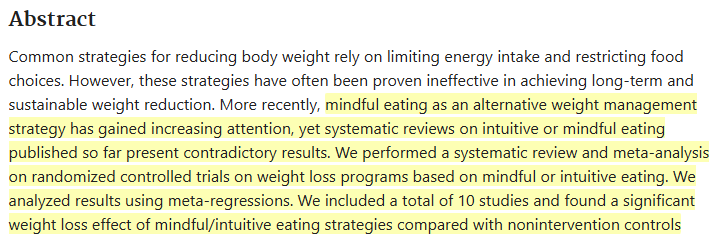
Image Source: Fuentes Artiles R, Staub K, Aldakak L, Eppenberger P, Rühli F, Bender N. Mindful eating and common diet programs lower body weight similarly: Systematic review and meta-analysis. Obes Rev. 2019 Nov;20(11):1619-1627. doi: 10.1111/obr.12918. Epub 2019 Aug 1. PMID: 31368631.
So if you’re serious about learning how to burn fat, focus on:
- Eating a little less
- Moving a little more
- Being consistent—not perfect—with your habits
And remember: your metabolism and fat burning aren’t just switched on by exercise.
They’re triggered by your day-to-day choices—from how much you eat to when you eat (which we’ll get into shortly with circadian rhythm and fat loss).
Stop overcomplicating things.
Start small. Start aware. Fat-burning tips don’t need to be extreme—they need to be sustainable.
The Power of Circadian Rhythm in Fat Loss
Let’s talk about a game-changer that most fat loss plans ignore — your circadian rhythm.
This isn’t some trendy biohacking term. Your circadian rhythm is your body’s built-in 24-hour clock. It regulates everything from your metabolism, digestion, and hormone release to your sleep-wake cycle. And yes, it plays a huge role in fat loss.
People come to me saying: “Luke, I’m eating clean, working out regularly, but I still can’t lose weight.”
And I always ask them: “What time are you eating? What time are you sleeping?”
Because here’s the truth: when you eat is just as important as what you eat.
If you’re eating heavy meals late at night, your digestion slows down, your insulin response weakens, and your body starts storing fat instead of burning it. Poor sleep? That raises cortisol and insulin — two hormones that directly promote belly fat.
- Eating meals aligned with your circadian rhythm — especially consuming more calories earlier in the day — improves fat loss outcomes and enhances fat-burning metabolism. (Source: Boege HL, Bhatti MZ, St-Onge MP. Circadian rhythms and meal timing: impact on energy balance and body weight. Curr Opin Biotechnol. 2021 Aug;70:1-6. doi: 10.1016/j.copbio.2020.08.009. Epub 2020 Sep 29. PMID: 32998085; PMCID: PMC7997809.)
Align with Your Body’s Rhythm
If there’s one simple rule I’d give anyone trying to burn fat, it’s this:
“Eat a little less, in sync with your rhythm—without starving or obsessing.”
That’s it. That’s the golden rule for sustainable fat loss.
I’m not asking you to follow fad diets, skip meals, or cut carbs to zero. I’m talking about eating in alignment with your body’s needs and timings. When you follow your rhythm, everything starts to flow: digestion, energy levels, mood, and yes, fat loss.
Here’s what aligning with your body looks like:
- Eat your biggest meal at lunchtime — that’s when your digestion is at its peak.
- Cut back slightly on portions (especially carbs) in the evening.
- Don’t skip protein, fiber, or healthy fats — they keep you full and support metabolism.
- Sleep on time — your fat-burning hormones (like leptin and growth hormone) need rest to function well.
And don’t underestimate the power of small, consistent changes:
- One tablespoon less at each meal = 300–500 fewer calories a day
- Swap your sugar-loaded coffee for a black coffee
- Make one meal oil-free, steamed, or grilled
These tiny tweaks may seem small, but over time, they create a sustainable calorie deficit without starvation. That’s natural, long-term fat loss—the way nature intended.
Remember: fat loss isn’t just about working harder; it’s about working smarter. And syncing with your circadian rhythm is one of the smartest things you can do.
Take it from Rahul, one of our clients — he went from 103 kgs to 86.7 kgs in just 90 days. No extreme diets, no punishing workouts. Just simple, sustainable lifestyle changes aligned with his body’s natural rhythm.
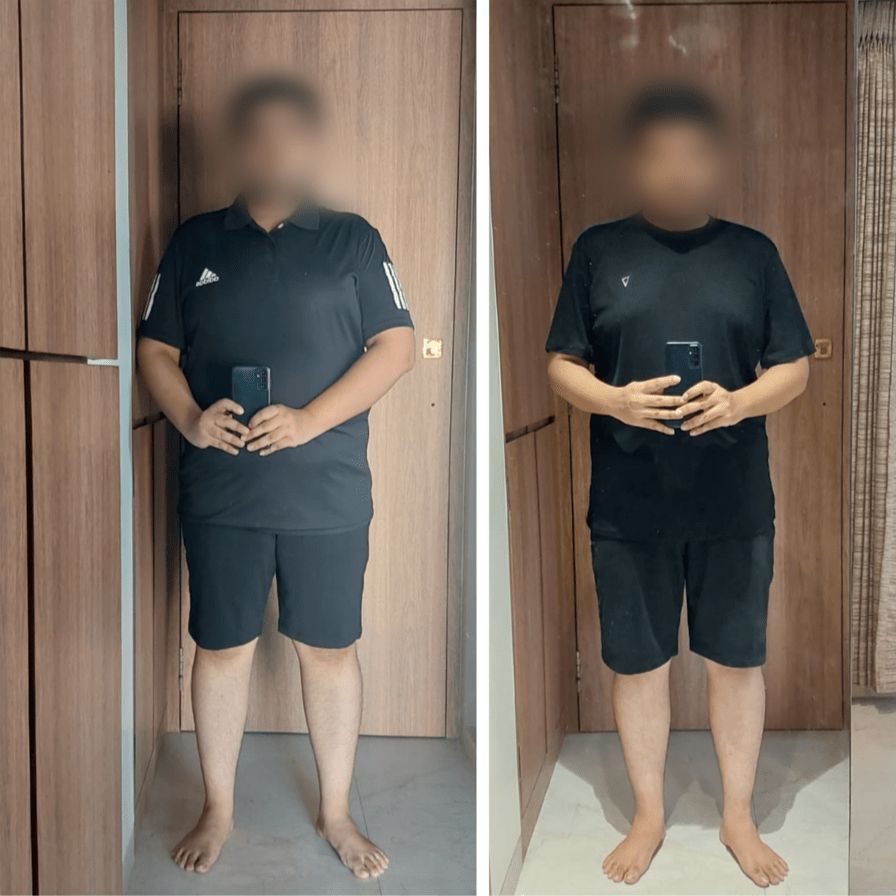
The ultimate fat loss triumph
Read about his story, here.
Eating Habits That Support Metabolism and Fat Burning
You can’t out-train a bad diet. And you don’t need to starve to lose fat.
What you eat, how much you eat, and when you eat—it all impacts your metabolism. In my years of working with people across the globe, I’ve seen this again and again: fat burning starts in the kitchen, not the gym.
Here’s what I recommend:
- Balance your plate: Make it rich in protein, fiber, vegetables, and good fats. This combination keeps your blood sugar stable, keeps you full, and reduces cravings.
- Watch the sneaky calories: That salad may look healthy, but the dressing could be loaded with sugar and fat. Sauces, oils, smoothies, even protein bars—they often carry hidden calories that sabotage fat loss.
- Hydrate smartly: Water helps transport fat-soluble toxins and supports metabolism. A dehydrated body won’t burn fat efficiently.
- Portion mindfully, especially carbs: You don’t need to eliminate them—just reduce where needed. One less roti or one spoon less rice per meal adds up.
- Homemade > packaged: Store-bought ‘low-fat’ or ‘diet’ products are often filled with sugar or chemicals. A simple lemon-olive oil dressing at home is far better.
And the best part? This approach is sustainable.
It works if you have diabetes, thyroid, polycystic ovary syndrome (PCOS), or high blood pressure—you don’t need to follow a fancy plan. You just need common sense, awareness, and consistency.
Want to explore how your metabolism affects weight, energy, and fat burning?
Want to understand fat loss and metabolism in depth?
👉 Enroll in our online educational course: Metabolic Health 101

Image Source: Freepik
Fat-Burning Tips That Work Even Without Exercise
I’m not saying skip movement—but let’s be real: there are days when you’re sick, injured, traveling, or swamped with work. So here’s the good news:
You can still burn fat without exercise.
Fat loss isn’t only about calories out—it’s also about hormonal balance, timing, digestion, and rest. These little shifts work in your favor:
- Sleep by 9-10 PM: Your body resets, heals, and activates fat-burning hormones like leptin and human growth hormone (HGH) when you sleep well.
- Wake up with natural sunlight: It sets your circadian rhythm and enhances metabolism first thing in the morning.
- Make lunch your heaviest meal: Digestion is strongest in the afternoon, not at night. Flip your portions—lighter dinners support fat loss.
- No eating 2–3 hours before bed: Late-night eating spikes insulin and slows fat burning.
- Replace one heavy meal with a steamed or oil-free meal: It could save you 300–400 calories and still nourish your body.
- Eat half your dessert, not the whole thing: It’s not about deprivation—it’s about control. Sometimes, let your mind win over your craving.
- Mindful swaps: Choose black coffee over sugary frappes. Choose fruit over sweets. Small changes = big differences over time.
I always say, “Your body is intelligent. When you treat it right—even without exercise—it still finds a way to burn fat.”
Mistakes to Avoid When Trying to Burn Fat
Over the years, I’ve seen people unknowingly sabotage their progress by following trendy advice, extreme diets, or overtraining.
Here are some of the most common fat-loss mistakes I help my clients avoid—because when you correct these, your body starts responding better.
| Mistake | Why It Backfires |
| Starving or skipping meals | Extreme calorie restriction slows metabolism, increases cravings, and makes fat loss unsustainable. Your body goes into survival mode. |
| Overtraining without recovery | Working out too much without rest spikes cortisol and breaks down muscle, which lowers metabolism. Recovery is when your body burns fat. |
| Obsessing over the weighing scale | Fat loss isn’t always linear. Hormones, inflammation, and muscle gain can affect weight. Focus on fat loss, not just weight loss. |
| Eating too late at night | Late-night meals disrupt fat-burning hormones and digestion. Fat tends to store easily when the body is preparing for rest. |
| Mindless snacking | Even “healthy” snacks can add hundreds of extra calories when eaten without portion control or out of boredom. |
| Ignoring sleep | Poor sleep affects hormones like insulin, ghrelin, and leptin—leading to more cravings, lower energy, and stubborn fat. |
| Not checking labels | Hidden sugars, oils, and preservatives in ‘diet’ or ‘healthy’ foods can stall fat loss. Always read the ingredient list, not just the front label. |
| Following generic diets | What works for someone else may not work for you. Fat loss must be personalized—your body, your lifestyle, your bio-individuality. |
The Last Word
Real, sustainable weight loss doesn’t come from punishment. It comes from awareness.
It comes from making small, consistent shifts that honour your body’s circadian rhythm, support your metabolism, and bring you back into balance.
This is not a 30-day challenge or a quick fix.
It’s a lifestyle—rooted in science, nature, and common sense.
And when you live that lifestyle, fat burning becomes easy…effortless…and most importantly, sustainable.
Ready to apply these fat-loss principles in a personalised, sustainable way?
👉 Join our Wellness Program for holistic lifestyle support
Frequently Asked Questions
What is the best way to burn fat without intense workouts?
The best way to burn fat isn’t just exercise—it’s aligning with your body’s natural rhythm. Prioritize sleep, eat your biggest meal at lunch, and avoid late-night snacking. Supporting your circadian rhythm and fat loss cycle helps your body burn more efficiently—even on days you don’t work out.
How to burn fat without starving or crash dieting?
The key is nourishment, not deprivation. Balance your meals with protein, fiber, and complex carbs. Hydrate well, eat mindfully, and avoid processed foods. These sustainable fat-burning tips enhance metabolism and fat burning naturally—without stressing your body or creating rebound weight gain.
Can your metabolism and fat burning improve with lifestyle changes?
Absolutely. Consistent sleep, mindful eating, hydration, and stress management all support metabolism and fat burning. Even small changes like walking after meals or eating at the right times can trigger lasting results without extreme diets.
What role does circadian rhythm play in fat loss?
Your circadian rhythm and fat loss are deeply connected. Sleeping on time, eating meals earlier in the day, and aligning with light-dark cycles optimizes fat-burning hormones. Syncing your lifestyle with your biological clock is a powerful but overlooked way to burn fat.
What are the most effective fat-burning tips?
The most effective habits are sleeping by 9-10 PM, eating your main meal at lunch, avoiding packaged foods, and drinking enough water. These fat-burning tips work even without workouts, because fat loss isn’t just about effort, but about rhythm, nourishment, and smart lifestyle choices.
Disclaimer: The information provided in this blog is for informational purposes only and is not a substitute for professional medical advice. Always consult with a qualified healthcare provider or physician before making any changes to your diet, fat-loss regimen, or health practices.
For more information, watch this:
Looking for holistic and integrative guidance for fat loss the right way?
We help you find a way.
Know more about our Wellness Program here.
Set up a one-on-one consultation with our integrative team by reaching out to us at 1800 102 0253 or writing to us at [email protected].