No products in the cart.
A simple, no-jargon guide to understanding what your blood is quietly telling you
If you have ever stared at a CBC report, seen a row of unfamiliar abbreviations and numbers with little arrows next to them, and felt a small spike of worry, you are not alone. Most people get this test done once a year, glance at it for thirty seconds, and either feel relieved because everything is in the green or anxious because one number is slightly out of range with no idea what that actually means.
Here is the truth I want you to walk away with today. Your CBC, or Complete Blood Count, is not just a test. It is one of the most honest, real-time conversations your body can have with you. It reflects what you are eating, how you are sleeping, how your body is handling stress, whether you are fighting something quietly, and how well your gut, liver, and bone marrow are working together behind the scenes.
My intention with this guide is to help you read that conversation. Not to diagnose anything, not to replace your doctor, but to help you feel a little less lost and a little more empowered the next time you open that report. Knowledge, when used with awareness and not anxiety, is one of the most powerful tools for healing.
What Exactly Is a CBC Test?
A Complete Blood Count (CBC) is a routine blood test that looks at the different cells floating in your bloodstream. Think of your blood as a busy highway. On this highway, you have three main types of vehicles.
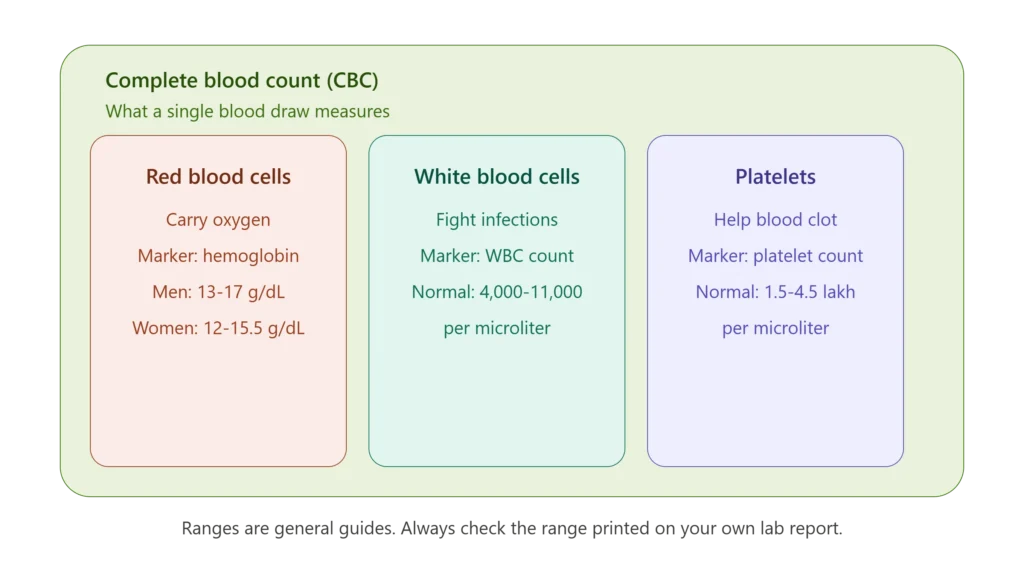
- Red blood cells, which carry oxygen from your lungs to every cell in your body
- White blood cells, which form your immune army and protect you from infections
- Platelets, which rush to the scene whenever there is an injury and help your blood clot
A CBC measures the number, size, and sometimes the shape of these cells. When your doctor orders this test, they are essentially asking your blood, are you carrying oxygen efficiently, is your immune system calm or activated, and is your clotting system working the way it should.
The Key Markers, Decoded
Let’s go through the markers you will most commonly see on your report. I want to be clear about something important before we begin. Reference ranges can vary slightly from lab to lab, and what is normal for you can depend on your age, sex, altitude, and even whether you are pregnant. Use the table below as a general orientation, not a fixed rulebook, and always read your numbers alongside the range printed on your own report.
| Marker | Men | Women | What It Roughly Tells You |
| Hemoglobin (Hb) | 13 to 17 g/dL | 12 to 15.5 g/dL | The protein in red blood cells that carries oxygen. Low levels are often linked to fatigue, low iron, or B12 and folate gaps. |
| Red Blood Cell Count (RBC) | 4.5 to 5.9 million/mcL | 4.1 to 5.1 million/mcL | The total number of oxygen-carrying cells. Helps confirm whether low hemoglobin is due to fewer cells or smaller cells. |
| Hematocrit (PCV) | 40 to 50 percent | 36 to 46 percent | The percentage of your blood that is made up of red cells. Often moves in the same direction as hemoglobin. |
| MCV (Mean Corpuscular Volume) | 80 to 100 fL | 80 to 100 fL | The average size of your red blood cells. Smaller cells often point toward iron deficiency, while larger cells can point toward B12 or folate gaps. |
| White Blood Cell Count (WBC) | 4,000 to 11,000 cells/mcL | 4,000 to 11,000 cells/mcL | Your immune system’s army size. Can rise temporarily with infections, stress, or inflammation and can dip with viral infections or certain nutrient gaps. |
| Platelet Count | 1.5 to 4.5 lakh cells/mcL | 1.5 to 4.5 lakh cells/mcL | The cells responsible for clotting. Reflects your body’s ability to stop bleeding and heal wounds. |
You may also see MCH and MCHC on your report. These simply describe how much hemoglobin is packed into each red blood cell and how concentrated it is. They usually move together with MCV and are mostly used by your doctor to understand the pattern of any anemia, rather than being numbers to focus on in isolation.
A quick word for my Indian readers. The ranges above are aligned with WHO guidance and are the targets most doctors aim for. You may sometimes notice that large population studies done in India show lower average hemoglobin, especially in women, often closer to 10 to 14 g/dL. This does not mean lower is healthier. It largely reflects how widespread mild iron deficiency still is across the country. Think of the table above as where you want to be, not where the average person currently sits.
What Influences These Numbers? The Lifestyle Lens
This is the part that I find most exciting, because it is where you actually have power. Your CBC is not a fixed report card. It is a snapshot that shifts based on the choices you make every single day. Let us look at some of the biggest lifestyle influences on these markers.
1. What You Eat, Every Single Day
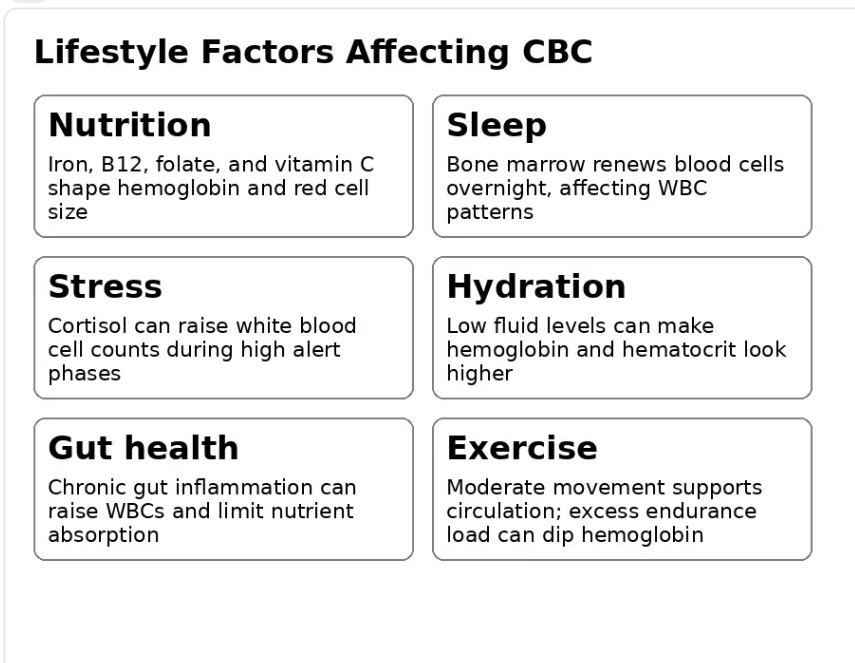
Iron, vitamin B12, folate, vitamin C, copper, and protein are the raw materials your bone marrow uses to manufacture healthy red blood cells. A diet that is consistently low in leafy greens, legumes, nuts, seeds, eggs, fish, or meat, depending on your dietary preference, can slowly show up as lower hemoglobin, smaller red cells, or a higher MCV over time.
Vitamin C is often the forgotten hero here. It dramatically improves how much iron your body absorbs from plant sources. So pairing your dal or spinach with a squeeze of lemon, or having amla, citrus fruits, or guava through the day, is a small habit with a real impact on your hemoglobin over a few months.
2. Sleep and the Body’s Repair Window
Your bone marrow does a large part of its repair and renewal work while you sleep. Chronic poor sleep, whether it is late nights, broken sleep, or simply not enough hours, can quietly affect how efficiently new blood cells are produced and how your immune system regulates white blood cell activity. People who are sleep deprived often show a mildly elevated white blood cell count, simply because the body is in a low grade stress state.
3. Stress, Cortisol, and Your White Blood Cells
When you are under chronic stress, your body produces more cortisol. In the short term, cortisol can actually push white blood cell numbers up, because your body thinks it needs to be on high alert. Over the long term, chronic stress can do the opposite and suppress certain parts of your immune system. This is one of the biggest reasons I keep coming back to breathwork, nature time, and emotional processing in my work. These are not soft, optional extras. They show up in your blood work.
4. Hydration and Blood Volume
Hematocrit and hemoglobin are both percentages or concentrations within your blood. If you are dehydrated, your blood plasma volume drops, which can make these numbers look slightly higher than they truly are, almost like a more concentrated cup of tea. On the other hand, being well hydrated keeps these readings more accurate and supports smoother circulation overall.
5. Inflammation and Gut Health
A gut that is dealing with chronic low-grade inflammation, whether from food sensitivities, an imbalanced microbiome, or poor digestion, can quietly raise white blood cell counts and sometimes affect how well you absorb iron and B12 in the first place. This is why I always say you cannot separate your blood report from your gut health. They are deeply connected.
6. Movement and Exercise Patterns
Regular moderate movement supports healthy circulation and can mildly improve red blood cell efficiency over time. However, extremely intense or excessive endurance training without adequate recovery and nutrition can sometimes lower hemoglobin slightly, a pattern often called sports anemia. As with most things, the dose matters.
Patterns Worth Paying Attention To
Rather than panicking over a single number that is slightly outside the range, I encourage you to look for patterns and trends over time. A few things that are genuinely worth discussing with your doctor include:
- Hemoglobin or hematocrit that is consistently low across two or more reports
- White blood cell counts that remain elevated even when you are not currently unwell
- Platelet counts that are significantly above or below the normal range
- Any marker accompanied by symptoms such as ongoing fatigue, breathlessness, unexplained bruising, or frequent infections
One slightly high or low number on one occasion is often just your body responding to a late night, a recent cold, dehydration on the day of the test, or even the time of day the blood was drawn. The trend over multiple reports tells a far more honest story than a single snapshot.
Bringing It All Together
Your body is always communicating with you. A CBC report is simply one of the languages it uses.
When you look at your CBC report next time, I want you to pause for a moment before you scan for red marks. Ask yourself how you have been sleeping, eating, moving, and managing stress over the last few months. More often than not, you will find that your lifestyle and your lab values are telling the same story, just in different languages.
This is not about obsessing over numbers or trying to optimize every marker to perfection. It is about using this information as a gentle, honest checkpoint, a chance to course correct with simple, sustainable habits like eating a more colorful plate, sleeping a little earlier, drinking enough water, and giving your nervous system permission to rest.
Your blood report is not a verdict. It is feedback. And feedback, approached with curiosity instead of fear, is one of the kindest gifts you can give yourself on your health journey.
What Your CBC Report Reveals Is Only Part of the Story
A CBC can offer valuable clues about inflammation, immunity, nutrient deficiencies, infection, recovery, and overall health. But numbers on a report are most meaningful when interpreted in the context of your lifestyle, symptoms, medical history, nutrition, sleep, stress levels, and daily habits.
At Team Luke, our Wellness Program takes a foundational medicine approach to help you understand what your body may be trying to communicate through your blood work and how nutrition, movement, sleep, emotional wellness, and lifestyle can support better health outcomes.
Need personalized guidance?
Book a one-on-one consultation with our senior wellness team to understand your health markers and build a sustainable plan tailored to your needs. Explore our Wellness Program and take the next step toward better health.
📞 Call us: 1800 102 0253
📧 Write to us: [email protected]
Disclaimer:
This article is meant purely for educational purposes, to help you understand the language of your CBC report a little better. It is not intended to diagnose any condition, replace a consultation with your doctor, or be used as a basis for changing any medication or treatment. Reference ranges can vary by lab and individual circumstances. Always discuss your specific results with a qualified healthcare professional who knows your full health history.