No products in the cart.
Somewhere between your first ultrasound and the moment your mother-in-law tells you to eat ghee for an easier delivery, you’ve probably realized something.
Everyone has an opinion on pregnancy nutrition. Almost no one is explaining the actual reasoning behind it.
Your doctor has maybe ten minutes with you at each visit. That’s barely enough time to check your weight and blood pressure, let alone explain why your iron needs jump in the second trimester, why that ice cream craving might mean something, or why you really don’t need to “eat for two.” So you end up Googling at midnight, or following whatever your aunty insists worked for her three pregnancies.

Image Credits: Magnific
This guide is our attempt to fill that gap.
We’re walking you through what your body needs in each trimester, why it needs it, and how to actually get it from your plate rather than just a pill bottle. No scare tactics, no impossible meal plans, just clear, practical pregnancy nutrition you can use starting today.
Why This Actually Matters More Than You Think
Here’s a concept worth sitting with: the period from conception until your child turns two is sometimes called the “first 1,000 days.”
Researchers consider this window the single most important stretch for a person’s lifelong health, more influential than almost anything that happens later. The nutrition your baby receives during these days, largely through you, shapes their immune system, brain development, and even their risk of chronic disease decades down the line.
That’s not meant to add pressure. If anything, it should feel empowering.
Every well-balanced plate you eat this week is doing real, measurable work, even if you can’t see it on an ultrasound.
Maternal nutrition is one of the few areas of pregnancy where small, consistent choices genuinely move the needle, for your own health and your baby’s.
- Iron deficiency alone is linked to a meaningful share of maternal deaths worldwide, and conditions like anemia make complications like postpartum hemorrhage far more dangerous than they need to be.
- On the other end, babies born small for their gestational age face a higher lifetime risk of stunted growth and non-communicable diseases as adults.
None of this is to frighten you. It’s simply why we’re about to spend the next several minutes on something as ordinary as what’s on your plate.
Before You Even Conceive: Setting the Foundation
If you’re reading this while planning a pregnancy rather than already in one, you have a small head start, and it matters.
Your baby’s neural tube (the structure that becomes the brain and spinal cord) starts forming and closing within the first few weeks after conception, often before you even know you’re pregnant.
This is exactly why folic acid supplementation is recommended starting before conception, not after your first missed period.
If you’re already pregnant and reading this, don’t panic. Just start your folic acid now and keep going. We’ll cover dosing in detail below.
Please note: Supplement dosages mentioned are general guidance. Please consult your doctor before starting any supplement, especially while planning a pregnancy or managing an existing health condition.
First Trimester Nutrition (Weeks 1 to 12)
This is the trimester where everyone tells you to “eat for two,” and it’s also the trimester where that advice is least true.
The calorie reality: across the whole of pregnancy, your extra energy needs work out to roughly 350 extra calories a day, the equivalent of one additional small meal or two nutritious snacks.
But in the first trimester specifically, your calorie needs barely shift at all.
What changes dramatically in these first twelve weeks isn’t how much you eat, it’s the precision of what you eat, since this is when your baby’s organs, brain, and spine are forming at lightning speed.
What Your Body Needs Right Now
Nutrient | Why It Matters Right Now | Where to Get It |
| Folic acid | Continues neural tube development through week 12 | Dark green leafy vegetables, nuts, organ meats, fortified cereals |
| Iron | Your blood volume is starting to expand | Dark leafy greens, jaggery, lentils, soybean, meat and poultry if non-vegetarian |
| Protein | Building blocks for early organ development | Dal, eggs, paneer, milk, soy, lentils, lean meat |
| Vitamin B6 | Often eases nausea (though not formally recommended as a routine supplement) | Bananas, milk, legumes, oranges |
Dealing With Nausea and Pregnancy Fatigue
If you’re exhausted and nauseous right now, that’s not weakness, it’s your body redirecting enormous energy toward building a placenta and a baby’s foundational structures.
A few things genuinely help:
- Eat small, frequent meals instead of three large ones. An empty stomach tends to worsen nausea.
- Keep dry crackers or toast by your bed for first thing in the morning, before you even sit up.
- Ginger, in tea or simply chewed raw, has real evidence behind it for nausea relief.
- For fatigue specifically, don’t fight it with caffeine. Prioritize iron rich foods (low iron worsens fatigue dramatically) and don’t skip meals, since blood sugar dips make tiredness worse.
- A short walk often helps more than a nap does, even though it feels counterintuitive.
Your First Trimester Checklist
- Start or continue folic acid (400 mcg daily) if you haven’t already
- Get your weight, height, and BMI recorded at your first prenatal visit
- Ask for your baseline blood tests, including hemoglobin, blood sugar, and thyroid function
- Don’t worry about extra calories yet. Focus on nutrient quality instead
Want personalized support through every stage of this journey? Click here: 👇
Second Trimester Pregnancy Nutrition (Weeks 13 to 27)
Welcome to what most women describe as the easiest trimester. The nausea usually fades, your energy returns, and this is also when your nutritional needs genuinely start climbing.
The Numbers That Matter Now
| Requirement | Non-Pregnant Baseline | During Pregnancy |
| Energy | Varies by activity level | +350 kcal/day overall (this is where most of the increase kicks in) |
| Protein | 55 g/day | +23 g/day |
| Calcium | 600 mg/day | 1,200 mg/day (doubles) |
| Fat | 20 to 30 g/day | +30 g/day |
Calcium supplementation officially begins now.
- From the second trimester onward, daily supplementation of 1 gram of calcium is recommended, on top of dietary sources like milk, curd, cheese, ragi, and green leafy vegetables.
This isn’t just for your baby’s bones. Adequate calcium also helps lower your own risk of pregnancy related high blood pressure.
Iron and Folic Acid Supplementation: The Details Nobody Explains
From the second trimester, daily supplementation with 60 mg iron and 500 mcg folic acid is recommended for 180 days, continuing even after delivery. Here’s what actually helps it work:
- Take it at bedtime, ideally with a small amount of lemon water
- Never take it alongside milk, tea, or coffee. These block iron absorption significantly
- Pair iron rich meals with vitamin C (a wedge of lemon, amla, citrus fruit) to improve absorption
- Don’t take your iron and calcium tablets at the same time. Calcium competes with iron for absorption, so space them apart by several hours
- If you’re mildly to moderately anemic, your doctor may double this dose until your hemoglobin normalizes. If anemia is severe, iron may need to be given through an IV rather than tablets, since your body needs to catch up faster than tablets alone allow
Watching Your Weight Gain
Somewhere around now, your doctor starts tracking how much weight you’re gaining month to month, not just whether you’re gaining. As a general guide:
- Gaining less than 1 kg a month or more than 3 kg a month is considered worth a closer look
- If your weight gain seems off track, it’s worth reviewing your actual meals and activity level with a nutritionist rather than guessing
This is also typically when your doctor screens for gestational diabetes through an oral glucose tolerance test (more on managing this below if it applies to you).
Your Second Trimester Checklist
- Begin iron-folic acid and calcium supplementation as prescribed
- Take your single dose deworming tablet
- Track your weight gain monthly, not just at appointments
- Aim to add at least five different nutrient rich food groups to your plate daily, beyond your staple rice or roti
Supplement dosages and timing should always be confirmed with your doctor, since individual requirements vary based on your bloodwork and health history.
Third Trimester Nutrition (Weeks 28 to Birth)
Your baby’s brain growth accelerates dramatically in these final weeks, and your own body is preparing for delivery and, soon after, breastfeeding.
What to Prioritize Now
| Nutrient | Why It’s Critical Now | Good Sources |
| Omega-3 fatty acids (DHA) | Rapid fetal brain and eye development | Oily fish like salmon and mackerel, egg yolk, walnuts, flaxseed |
| Iron and folic acid | Building blood reserves for delivery | Continue your supplement as prescribed |
| Calcium | Final stretch of fetal bone mineralization | Continue 1g supplementation, plus dairy and leafy greens |
| Fiber | Constipation tends to peak now | Whole grains, fruits, vegetables, flaxseed, oats |
| Water | Forms a significant share of your total pregnancy weight gain | Aim for steady intake throughout the day, not just when thirsty |
Continue your iron-folic acid and calcium supplements exactly as prescribed through this trimester.
- Light to moderate exercise (walking, prenatal yoga) is generally encouraged unless your doctor advises otherwise, and it can genuinely help with sleep, mood, and managing pregnancy fatigue in these final, heavier weeks.
- If your earlier glucose test came back positive for gestational diabetes, your care team will likely repeat testing now if your first screening was inconclusive, around the 24 to 28 week mark.
Getting Ready to Breastfeed
Your third trimester is also the right time to start thinking about breastfeeding, ideally within the first hour after birth, and avoiding pre-lacteal feeds (anything given to the baby before breastfeeding starts) unless medically necessary.
If you want a full breakdown of breastfeeding nutrition, latching, and common challenges, read our complete guide to breastfeeding here.
10 Easy Tips for Breastfeeding
Your Third Trimester Checklist
- Increase your intake of omega-3 rich foods for your baby’s brain development
- Don’t let supplement fatigue set in. Keep taking iron, folic acid, and calcium as prescribed
- Stay physically active within your comfort level
- Start preparing mentally and practically for breastfeeding

Image Credits: Magnific
Your Pregnancy Nutrient Cheat Sheet
This is the section to bookmark. Here’s nearly everything your body needs during pregnancy and lactation, in one place.
Nutrient | Daily Need (Pregnancy) | Daily Need (Breastfeeding) | Best Sources |
| Protein | +23 g above baseline | +19 g (first 6 months), +13 g (6 to 12 months) | Dal, lentils, soy, tofu, nuts, seeds, milk, eggs, fish, lean meat |
| Iron | 35 mg/day total | Returns to non-pregnant level (21 mg) | Meat, poultry, fish, dark leafy greens, soybean, jaggery |
| Calcium | 1,200 mg/day | 1,200 mg/day, continued | Milk, curd, cheese, ragi, leafy greens, sesame seeds |
| Folic acid | 500 mcg/day | 300 mcg/day | Organ meats, leafy greens, nuts, fortified cereals |
| Vitamin A | 800 mcg/day | 950 mcg/day | Carrots, pumpkin, mango (beta-carotene); eggs, milk, organ meats (retinol) |
| Vitamin C | 60 mg/day | 80 mg/day | Amla, citrus fruits, guava, green chilies |
| Iodine | 0.247 mg/day | Same | Iodized salt (15 ppm) |
| Fat | +30 g above baseline | +30 g, continued | Cooking oils, nuts, oily fish, egg yolk |
| Fiber | 25 g per 1,000 kcal consumed | Same principle applies | Whole wheat, oats, vegetables, fruits, legumes |
| Magnesium | No fixed extra target given, but important throughout | Same | Nuts, whole grains, dark leafy greens |
| Zinc | Important throughout | Same | Red meat, seafood, whole grains, legumes |
Disclaimer: The values shared are general daily recommendations and may not apply to multiple pregnancies, underlying health conditions, or diagnosed deficiencies. Please consult your doctor or a nutritionist for guidance tailored to you.
A note on supplements you may have heard about but probably don’t need:
- Vitamin B6, C, D, and E supplements are not routinely recommended unless you have a diagnosed deficiency.
- Vitamin D supplementation is specifically reserved for women with confirmed deficiency, since most needs are met through sunlight exposure and diet.
- The same goes for vitamin A, which is only supplemented in areas where deficiency is a known public health concern. More pills aren’t automatically better. Targeted ones are.
Protein Sources for Vegetarians, Specifically
Since animal foods provide the most complete protein, vegetarians need to be a little more intentional. Combine cereals or millets with pulses in every meal (think dal-rice or roti-chana) to improve protein quality, and lean on these specifically:
- Soybean and tofu
- Beans, lentils, and other pulses
- Nuts and seeds, especially sunflower and sesame
- Whole grains like oats, bajra, and ragi
- Milk and milk based products
What a Balanced Pregnancy Plate Actually Looks Like
Forget complicated meal plans. Here’s roughly what a full day of eating should include during pregnancy and breastfeeding.
| Food Group | Daily Servings (Pregnancy) | Daily Servings (Breastfeeding) | One Serving Looks Like |
| Cereals and millets | 9 servings | 10 servings | 1 cup cooked rice, 2 chapatis, or 2 slices of bread |
| Vegetables | 3.5 servings | 3.5 servings | Half a cup of vegetable curry |
| Fruits | 2 servings | 2 servings | 1 medium seasonal fruit |
| Milk and dairy | 5 servings | 5 servings | 1 cup milk, 2 slices cheese, or half a cup curd |
| Pulses | 1 to 2 servings | 3 to 5 servings | Half a cup of cooked dal |
| Fats and oils | 6 servings | 6 servings | 1 teaspoon |
| Sugars | 4 servings | 4 servings | 1 teaspoon |
Portion sizes and servings mentioned are general guidance and may need adjustment based on your individual health status, allergies, or medical conditions.
If “9 servings of cereals” sounds like a lot, remember each serving is small (just 30 grams). Spread across three meals and two snacks, it adds up naturally without you needing to count obsessively.
The Five-Group Rule for Diet Diversity
Here’s a simpler way to think about variety without tracking grams: nutritionists recommend eating from at least five of these ten food groups every single day.
- Grains, roots, and tubers (your staple starches)
- Pulses (beans, peas, lentils)
- Nuts and seeds
- Dairy products
- Meat, poultry, and fish
- Eggs
- Dark green leafy vegetables
- Other vitamin A rich fruits and vegetables (think mango, papaya, pumpkin)
- Other vegetables
- Other fruits
If your typical day is rice, dal, and one vegetable, you’re already hitting three or four groups. Adding a glass of milk and a piece of fruit gets you to five with almost no extra effort.
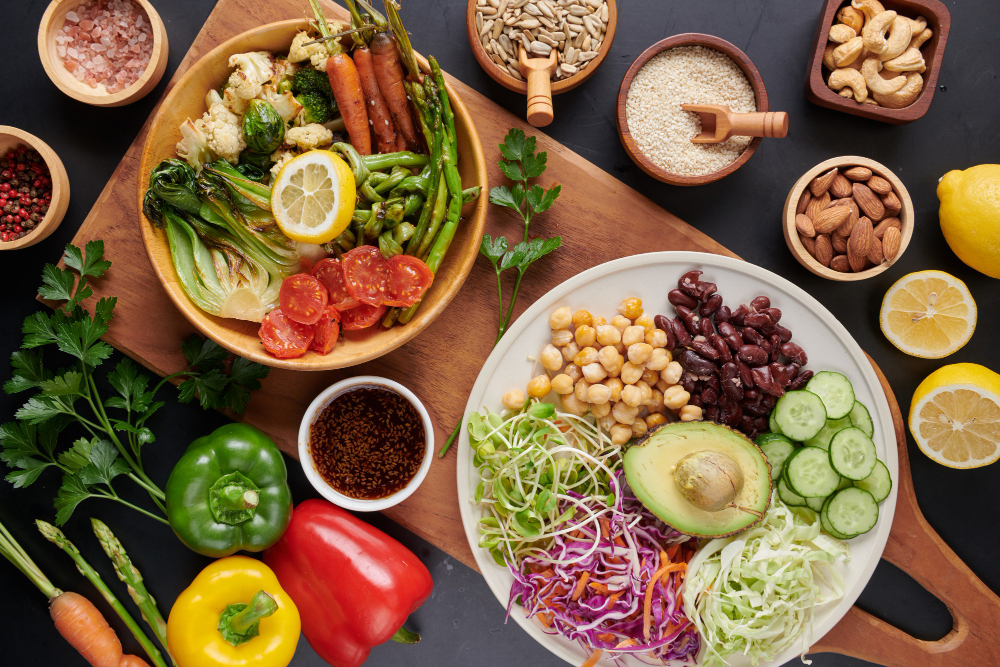
Image Credits: Magnific
Choosing Carbs Wisely: The GI Factor
Not all carbohydrates affect your blood sugar the same way. Foods with a high glycemic index (GI) spike your blood sugar quickly, while low GI foods release glucose slowly and steadily, which matters a lot if you’re managing gestational diabetes or simply want to avoid energy crashes.
Lower GI Choices (Steadier Energy) | Higher GI Choices (Eat Mindfully) |
| Soybean | Cornflakes |
Lentils | Instant oat porridge |
Apple | Boiled potato |
Carrot (boiled) | Whole wheat bread |
Orange | Boiled white rice |
| Banana | Boiled brown rice |
Sweet corn | Popcorn |
| Pineapple | Wheat roti |
This doesn’t mean you need to avoid higher GI foods entirely. Pairing them with protein or fiber (like having your roti with dal and a vegetable, rather than alone) slows down how quickly they hit your bloodstream.
Let’s Talk About Pregnancy Cravings
That sudden 11pm need for pickles, or the inexplicable pull toward ice cream, isn’t random.
- Salt cravings during pregnancy are sometimes your body’s way of signaling a need for additional minerals.
- Sweet cravings, particularly for something like ice cream, are often tied to comfort and the temporary serotonin lift sugar provides, the same “feel good” chemical response many people seek out under stress.
There’s no need to fight every craving into submission. The goal isn’t perfection, it’s balance.
If you’re craving something sweet, having a small portion alongside a protein source (like fruit with a handful of nuts) tends to satisfy the craving without the blood sugar crash that follows pure sugar.
Pregnancy Food Myths vs. Facts
Let’s clear up some of the most common things you’ve probably already heard from at least three different relatives.
| Myth | Fact |
| You need to eat for two | Your actual extra need is about 350 calories a day, roughly one additional small meal. Eating double portions usually just leads to excess weight gain |
| Craving pickles or ice cream means something is wrong | Cravings are normal and not universal. Salty cravings may reflect mineral needs, while sweet cravings are often about comfort |
| Eating fish should be avoided entirely | Most fish are excellent sources of omega-3s for your baby’s brain. Only a few high-mercury fish, like shark, swordfish, and king mackerel, should be limited |
| Coffee and tea are totally fine since they’re not alcohol | High caffeine intake has been linked to a higher risk of pregnancy loss and low birth weight. Most guidance suggests keeping it moderate, around 200 to 300 mg a day, roughly two cups of coffee |
| Ghee should be completely avoided since it’s pure fat | A moderate amount of ghee actually helps your body absorb fat-soluble vitamins, and it’s a traditional source of comfort. The key word is moderate, since it is still a saturated fat |
| Drinking coconut water after the seventh month makes the baby’s head as big as a coconut | There’s no connection whatsoever. Coconut water is simply a good source of potassium, fine in moderate amounts |
| Eating papaya causes miscarriage | Unripe or raw papaya contains a compound that may trigger contractions, so it’s best avoided. Ripe papaya, however, is safe and nutritious |
| Spicy food can cause abortion | Spicy food in moderation doesn’t harm your baby. It may worsen heartburn or acid reflux, which is already common in pregnancy, but that’s the extent of it |
| Eating saffron (kesar) gives you a fair-skinned baby | Skin tone is determined entirely by genetics from both parents, not by anything you eat |
When Pregnancy Needs Extra Care
Most pregnancies follow the general guidance above without complication. But a few situations call for more individualized attention.
If You’re Starting Pregnancy at a Higher Weight
If your pre-pregnancy BMI falls in the overweight range (23 to 24.9), a total weight gain of roughly 7 to 11.5 kg across the pregnancy is generally recommended. If your BMI is 25 or above, the recommended range drops to roughly 5 to 9 kg. These numbers exist because excess weight gain on top of a higher starting BMI raises the risk of complications like gestational diabetes, so the goal isn’t restriction, it’s staying within a range that protects both you and your baby. All women in this category should also be screened for gestational diabetes regardless of symptoms.
If You’re Diagnosed With Gestational Diabetes (GDM)
A GDM diagnosis often feels alarming, but it’s highly manageable through nutrition alone in most cases. The general approach (called Medical Nutrition Therapy) focuses on:
- Choosing lower GI carbohydrates and spreading them across the day. Think two to three carb portions at main meals and one to two at snacks, rather than one large carb-heavy meal
- Keeping saturated fats (ghee, butter, coconut oil, red meat, full cream milk) under 10 percent of your total daily calories
- Prioritizing soluble fiber sources like flaxseed, oats, legumes, and apples, which slow down how quickly sugar enters your bloodstream
- Never skipping meals or going long stretches without eating, which can backfire and spike blood sugar later
- Including lean protein options like eggs, well-cooked fish, or chicken if you eat non-vegetarian
If nutrition alone doesn’t bring your blood sugar into range, your doctor may add insulin. This isn’t a failure on your part. It simply means your body needs a bit more support to manage this temporary condition.
If You Develop High Blood Pressure in Pregnancy
Calcium supplementation is currently the main nutrition-based strategy for reducing the risk of pregnancy related hypertension.
- Most guidance recommends 1 gram of calcium daily, split into two 500 mg doses taken with breakfast and lunch, and kept separate from your iron supplement so the two don’t interfere with each other’s absorption.
- Strict salt restriction isn’t generally recommended, though moderating your overall salt intake is still a reasonable habit.
Signs Your Doctor Might Flag for Extra Nutritional Support
Your care team may recommend closer monitoring or a referral to a nutritionist if any of the following apply:
- You’re under 20 years old
- Your height is under 145 cm
- Your weight is under 45 kg, or your BMI is under 18.5 or 25 and above
- Your mid-upper arm circumference (measured with a simple tape, a quick screening tool for malnutrition) is under 23 cm
- Your monthly weight gain is consistently under 1 kg or over 3 kg from the second trimester onward
- Your hemoglobin is below 10 g/dL
- You’re showing visible signs of night blindness or other deficiency symptoms
None of these are meant to alarm you. They’re simply checkpoints your care team uses to catch issues early, when they’re far easier to correct.

Image Credits: Magnific
Breastfeeding and Postpartum Recovery Nutrition
Your nutritional needs don’t end at delivery. In some ways, they intensify, since your body is now recovering from childbirth while also producing milk.
- Energy needs increase further during the first six months of breastfeeding compared to pregnancy itself, with a smaller (though still meaningful) increase from six to twelve months.
- Protein needs rise by about 19 grams a day in the first six months, easing slightly to 13 grams from six to twelve months.
- Vitamin A needs climb to 950 mcg a day, your highest requirement across this entire journey, while vitamin C needs double to 80 mg a day.
- Calcium needs hold steady at 1,200 mg daily, and your iron requirement actually drops back to non-pregnant levels, since you’re no longer building blood volume for a growing baby.
Continue your iron-folic acid and calcium supplements through this period too. Current guidance recommends continuing both for a full 180 days postpartum, not stopping the moment you deliver.
For a full breakdown of breastfeeding positions, supply concerns, and common early challenges, read our complete breastfeeding guide here.
On Postpartum Recovery and Your Emotional Wellbeing
Postpartum recovery isn’t only physical. The hormonal shifts after delivery, combined with sleep deprivation and the sheer intensity of caring for a newborn, can affect your mood far more than most people prepare you for.
If you’ve been feeling persistently low, anxious, or disconnected in the weeks after delivery, that deserves real attention, not dismissal as “just being tired.”
Read our blog on postpartum depression to understand what’s normal, what’s worth flagging to your doctor, and how to get support without guilt.
Feeding the Next Generation
The first 1,000 days we mentioned earlier don’t end at birth, they continue through your child’s second birthday.
Everything you’ve built nutritionally during pregnancy and breastfeeding sets the stage for how your baby transitions to solid foods and beyond.
If you’re curious about what comes next, read our guide to nutrition from newborn to toddler for a complete roadmap.
Frequently Asked Questions
What should I eat during the first trimester?
Focus on folic acid rich foods (leafy greens, nuts), iron sources, and protein, rather than extra calories, since your calorie needs barely change in these first twelve weeks. Small, frequent meals also help manage nausea.
What are the best supplements during pregnancy?
Folic acid (ideally starting before conception), iron and folic acid combined from the second trimester, and calcium from the second trimester onward are the core, evidence-backed supplements. Vitamin B6, C, D, and E supplements aren’t routinely recommended unless you have a diagnosed deficiency.
How do I manage pregnancy fatigue?
Check your iron intake first, since low iron is one of the biggest drivers of pregnancy fatigue. Avoid skipping meals, since blood sugar dips worsen tiredness, and try short walks instead of caffeine for an energy lift.
What foods should I avoid during pregnancy?
Unripe or raw papaya, high-mercury fish like shark and swordfish, excessive caffeine, raw or undercooked meat, fish, and eggs, and unpasteurized dairy products are the main categories worth avoiding.
How should I prepare for postpartum recovery?
Continue your iron-folic acid and calcium supplements for a full 180 days after delivery, not just through pregnancy. Prioritize protein for tissue repair, stay aware of your emotional wellbeing, and don’t hesitate to seek support if your mood feels persistently off in the weeks after delivery.
How much weight should I actually gain during pregnancy?
This depends heavily on your starting BMI. Women starting at a higher weight are generally advised to gain less (roughly 5 to 11.5 kg total), while underweight or normal weight women are typically advised to gain more. Your doctor can give you a specific target based on your individual starting point.
The Last Word
Pregnancy nutrition doesn’t need to be complicated, and it definitely doesn’t need to involve eating for two, swearing off coconut water, or memorizing every gram of every nutrient.
If you take one healthy pregnancy tip away from this entire guide, let it be this: small, consistent choices on your plate are doing far more work than any single “superfood” or supplement ever could.
Disclaimer: This blog is for educational and informational purposes only and is not a substitute for professional medical advice, diagnosis, or treatment. Always seek the advice of your physician or qualified healthcare provider with any questions you may have regarding a medical condition.
Looking for holistic guidance for pregnancy or fertility health?
We help you find a way.
Set up a one-on-one consultation with our foundational medicine team or explore our Pregnancy Care Program to optimize your lifestyle goals.
Reach out to us at 1800 102 0253 or write to us at [email protected].