No products in the cart.
Millions of working women across India are pushing through exhaustion, brain fog, and emotional depletion and blaming their schedules. The real culprit is often running silently in the background.
She wakes up before her alarm, already cataloguing everything she did not finish yesterday. By the time she sits down to work, she is already spent. Her colleagues call her a powerhouse. She calls herself lazy.

At her last check-up, the doctor said everything looked normal. Thyroid levels were fine. Iron was borderline. She was told to get more sleep and reduce stress. She went home, took a melatonin, and set an earlier alarm. Nothing changed.

Because nothing was wrong with her schedule. Something was wrong with her hormones. And nobody had looked there yet. This is not one woman's story. It is the story of millions. If you can relate to it, then it’s time to pause and read more.
The Problem Nobody Is Naming
Work fatigue and hormonal burnout share the same face. Both leave you exhausted. Both make you irritable, unfocused, and emotionally thin. The difference is this: work fatigue responds to rest. Hormonal burnout does not.
When a woman is hormonally depleted, cortisol dysregulated, estrogen fluctuating, progesterone crashes, thyroid underperforms, no amount of vacation days will fix it. She returns from a week off feeling exactly the same. She sleeps nine hours and still drags herself out of bed.
She removes a stressor and finds three more have taken its place, internally. This is hormonal burnout. And it does not show up on a standard blood panel.
This is the trap so many working women fall into: optimizing the externals – better planners, fewer commitments, more calendar blocks, while their internal hormonal ecosystem quietly unravels. And because the symptoms overlap so completely with modern-life stress, neither they nor their doctors investigate further.
The Four Hormones at the Heart of It
Understanding which hormones are most commonly disrupted in working women gives you a map, not a diagnosis, but a direction to look.
Hormone | What It Does | What Burnout Looks Like |
Cortisol | Regulates stress response, energy, inflammation | Wired but tired, afternoon crashes, unable to wind down, belly fat gain |
| Progesterone | Calming hormone, supports sleep and mood | Anxiety before periods, poor sleep, PMS that feels like depression |
Estrogen | Energy, cognition, bone health, mood | Brain fog, low libido, joint pain, emotional flatness |
| Thyroid (T3/T4) | Metabolic rate, temperature, energy production | Weight gain despite eating well, hair thinning, profound fatigue |
These hormones do not operate in silos. When cortisol stays chronically elevated, it actively suppresses progesterone. Progesterone’s decline worsens sleep. Poor sleep spikes cortisol further. The cycle tightens until the whole system becomes dysregulated. This is not a weakness. This is biology responding to an impossible demand.
What Actually Causes Hormonal Imbalance and Why Women Keep Missing It
| THE MOST COMMON MISCONCEPTIONS “I’m just stressed.” |
These are the three sentences that delay diagnosis by years. Stress and PMS are real, but they are symptoms of something deeper, not explanations in themselves. When a woman says “I am just stressed,” she is describing an experience. She is not describing a cause. The causes live further upstream, and they are specific, identifiable, and in many cases, reversible.
Here is what is actually driving hormonal imbalance in women today, not vaguely, but precisely.
#1 Chronic, unresolved stress, not occasional stress:
Short-term stress is fine. The body handles it and recovers. It is the low-grade, never-ending stress of deadlines, responsibilities, financial pressure, and emotional labor that keeps cortisol elevated 24/7. Over time, the adrenal glands begin to fatigue. This is called HPA axis (Hypothalamic–pituitary–adrenal axis) dysregulation and it cascades into every other hormonal system.
#2 Chronic sleep deprivation and disrupted sleep
Sleep is not rest. It is an active hormonal repair. Progesterone, growth hormone, and melatonin are primarily secreted during deep sleep. Women who sleep less than 7 hours consistently or at inconsistent times disrupt their entire hormonal repair cycle. Poor sleep is not just a result of hormonal imbalance. It is often the cause of it.
#3 Blood sugar chaos from the way we eat
Skipping breakfast. Eating carbohydrates alone. Drinking coffee before food. Having lunch at 3 PM. These habits send blood sugar crashing and spiking all day. Every spike triggers a cortisol release. A woman doing this daily is keeping her stress hormones activated from morning to night through food choices alone.
#4 Daily exposure to endocrine-disrupting chemicals
The plastics our food is stored in. The non-stick pans we cook with. The fragrances in skincare and cleaning products. These contain phthalates, BPA, and parabens that mimic estrogen in the body. Over years, they accumulate and alter how hormones are produced, received, and cleared. This is established endocrinology.
#5 Over-exercising or exercising at the wrong time
High-intensity training done excessively, especially by women who are already under-eating and under-sleeping, dramatically raises cortisol. Women who push through intense evening workouts while running on caffeine and four hours of sleep are compounding their hormonal debt, not paying it off.
#6 Under-eating, especially protein and healthy fats
Hormones are made from cholesterol and amino acids. When women chronically under-eat or follow very low-fat diets, they starve the raw materials needed to produce estrogen, progesterone, and cortisol. The body deprioritizes hormone production when it perceives scarcity. Undereating in the name of health is one of the most hormonally disruptive things a woman can do.
#7 Fighting your cycle instead of working with it
Expecting the same energy, output, and emotional bandwidth every single day of a 28-day hormonal cycle is a physiological impossibility. The constant self-judgment when a woman cannot perform consistently compounds the stress load. The luteal phase naturally demands more rest. Overriding this repeatedly is hormonal damage.
#8 Long-term use of certain medications without nutritional support
Oral contraceptives can deplete B6, B12, folate, zinc, and magnesium — all critical for hormone production and mood. Long-term antacid use disrupts nutrient absorption. None of this means these medications should be avoided — but their hormonal and nutritional side effects deserve active management, not just acceptance.
#9 The invisible load – the weight no blood test can measure
In India, working women carry the mental and emotional management of home, children, family relationships, and caregiving responsibilities on top of a full career. This dual load is a documented physiological stressor. The mental load triggers the same cortisol response as a physical threat. When it never switches off, neither does the hormonal disruption it causes.
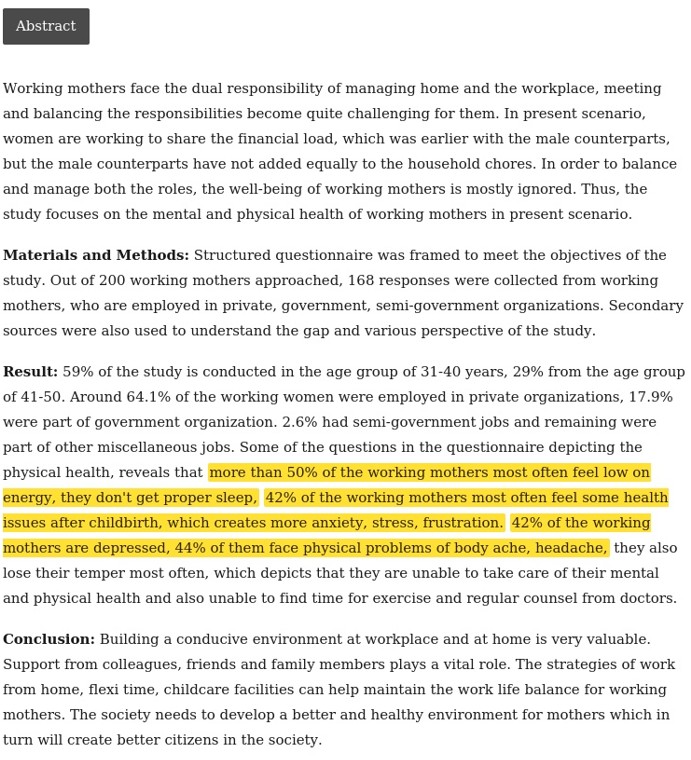
Reference: Gupta A, Sharma R. Dual role of working mothers in India: a critical analysis of physical and mental health. PNR J. 2022;13(S10):173. doi:10.47750/pnr.2022.13.S10.173
None of these causes are about weakness. They are about a woman living in a world that was not designed around her biology and then being told to simply manage better when her body starts to give way.
Signs It Is Hormonal, Not Just a Busy Season
Work fatigue lifts. Hormonal burnout does not. If you recognize four or more of the following, your body may be asking for more than a reset week.
| ● Exhausted after 8 or more hours of sleep | ● Energy crashes between 2 and 4 PM daily |
| ● Anxious for no identifiable reason | ● Brain fog mid-sentence or mid-task |
| ● Weight gain especially around the midsection | ● PMS symptoms worsening over time |
| ● Intense cravings for sugar or salt | ● Hair thinning or falling more than usual |
| ● Mood shifts that feel disproportionate | ● Wired at night, foggy in the morning |
| ● Libido has significantly declined | ● Feel better on vacation but crash when home |
The women carrying these patterns are not weak. They are extraordinary people running at 60% capacity because their hormonal foundation has been silently eroding for years. The answer is not to push harder. It is to rebuild from the ground up with patience, precision, and deep respect for what the body is telling you.
How to Combat Hormonal Burnout?
These are not suggestions. These are interventions, each one backed by physiology, each one something you can begin today. Start with one. Do it consistently for three weeks. Then add the next.
1: Get the right lab work – not just the standard panel
Most routine blood tests will not catch hormonal burnout. You need to specifically ask for these markers. This is your starting point, you cannot fix what you have not measured.
What to ask your doctor for:
- Cortisol
- Free T3, Free T4, and TSH – the full thyroid picture, not TSH alone
- Progesterone and estradiol – tested on Day 21 of your cycle for most meaningful results
- DHEA-S and fasting insulin – key markers for adrenal and metabolic stress
- Vitamin D, B12, and ferritin – deficiencies that amplify every hormonal symptom
2. Protect your first 60 minutes after waking
Cortisol naturally peaks 30–45 minutes after you wake up. This is called the Cortisol Awakening Response (CAR). Checking news or emails during this time can disrupt this natural rhythm before your day even begins.
What to do instead:
- No phone for the first 30 minutes. None. This is non-negotiable for recovery.
- Get 5 to 10 minutes of natural light on your face, regulates your cortisol rhythm and improves sleep quality at night
- Move gently – a slow walk, stretching, or 10 minutes of yoga tells your nervous system it is safe
- Try to drink 2 glasses of water before caffeine, replenishes electrolytes depleted by cortisol overnight. Please consult your doctor, if there are any water restrictions due to health conditions.
3: Eat before you caffeinate – every single morning
Coffee on an empty stomach spikes cortisol by up to 30%. For a woman already in hormonal burnout, this is like throwing fuel on an already stressed adrenal system, every single morning.
What to eat and when:
- Eat within 30 minutes of waking, even something small like 2 soaked almonds counts
- Combine protein (good quality eggs, paneer, Greek yogurt, nuts) with a healthy fat (A2 ghee, avocado, coconut) to anchor blood sugar
- Add your coffee 20 to 30 minutes after eating, same caffeine, dramatically different hormonal impact
- Limit coffee to two cups before noon. Caffeine after 2 PM disrupts cortisol’s natural evening decline
4: Stabilize blood sugar at every meal
Every blood sugar spike triggers a cortisol spike. Every crash triggers another. For a working woman eating on the run, this cycle plays out three to four times a day, keeping stress hormones activated without a single external stressor.
Simple rules for every plate:
- Never eat carbohydrates alone always pair with protein, fat, or fiber to slow glucose absorption
- Do not skip lunch. It is the most hormonally costly habit of working women
- Eat every 3 to 4 hours during recovery, do not add intermittent fasting stress on top of adrenal stress
- Sugar cravings are almost always blood sugar dysregulation, not a willpower failure address the root, not the craving
5: Rebuild sleep quality, not just sleep quantity
Progesterone and growth hormone are primarily replenished during deep sleep. Late nights, inconsistent bedtimes, and screen use before sleep all suppress these hormones. Seven hours of shallow sleep is not the same as seven hours of deep, restorative sleep.
What actually moves the needle:
- Be in bed by 10 to 10:30 PM. Timing matters as much as duration, the hormone repair window peaks between 10 PM and 2 AM
- No screens after 9:30 PM, blue light suppresses melatonin and raises evening cortisol
- Keep the room cool (18 to 20 degrees Celsius) and fully dark two of the most evidence-backed sleep interventions available
- Try magnesium glycinate (200 to 400 mg, 30 minutes before bed), consult your doctor first before taking any supplementation
- Set the same wake time every day including weekends, your cortisol rhythm trains itself to the clock
6: Change how and when you exercise
Exercise is medicine. But high-intensity training when you are already cortisol-dominant adds hormonal load, not relief. The prescription changes when you are in burnout.
The hormonal burnout exercise prescription:
- Replace evening HIIT with morning or midday movement intensity belongs earlier in the day when cortisol is naturally higher
- Walk 30 to 45 minutes daily – one of the most powerful cortisol-lowering interventions available, and consistently underestimated
- Add Yoga Nidra or restorative yoga flows 3 times a week – proven to downregulate the HPA axis within weeks
- Limit strength training to 2 to 3 sessions per week with full rest days in between
- If you are in severe burnout: rest is the prescription. This is not laziness. It is the smartest strategy available.
7: Reduce your toxic load, start in your own kitchen
Endocrine-disrupting chemicals accumulate silently over years. Small daily swaps compound into significant hormonal relief over months.
Simple swaps with real impact:
- Switch plastic food storage to glass or stainless steel — especially for hot food and liquids
- Replace Teflon non-stick pans with cast iron or stainless steel
- Swap refined seed oils for cold-pressed coconut oil, ghee, or extra-virgin olive oil
- Reduce ultra-processed foods, they burden the liver, which is your primary hormone clearance organ
- Filter your drinking water if possible – chlorine and fluoride have documented thyroid-disrupting effects at accumulated doses
8: Build real boundaries between work and your nervous system
Your nervous system cannot distinguish between a physical threat and a late-night work notification. Every ping after hours adds to your cortisol load. Boundaries are not a lifestyle preference. They are a biological necessity.
What actually creates separation:
- Set a hard work cut-off time. Write it down. Communicate it. Hold it.
- Create a transition ritual between work and home, even 10 minutes of walking, journaling, or silence tells your body the threat is over
- Turn off work notifications on weekends entirely, not on silent, fully off
- Protect at least one full day per week as a digital half-day. Your adrenals need one window of genuine low-stimulation recovery weekly.
9: Work with your cycle, not against it
Your hormonal landscape shifts across a 28-day cycle. Expecting identical output every day — and self-judging when you cannot deliver it — is one of the most quietly damaging things women do to their own hormonal health.
Cycle-smart living, phase by phase:
- Follicular (Days 1 to 14): Energy rises. Schedule demanding work, creative projects, important conversations here
- Ovulation (around Day 14): Peak energy and communication. Best time for presentations, negotiations, high-stakes meetings
- Luteal (Days 15 to 28): Protect this phase. Reduce intensity, increase rest, do not interpret lower energy as failure
10: Seek integrative support, not just a diagnosis
A diagnosis names the problem. Integrative support solves it by addressing nutrition, sleep, stress load, toxin exposure, emotional health, and lab values together as one interconnected system.
What to look for in a practitioner:
- A practitioner who asks about your lifestyle, not just your symptoms
- Someone who runs a comprehensive hormonal panel, not just TSH and CBC
- A team approach – nutritionist, lifestyle coach, and physician/hormone health expert working together
- If you are told everything is normal while you feel anything but, get a second opinion. Always.
There is no shortcut. There is only the work, done consistently, with compassion for a body that has been holding everything together for far longer than it should have had to.
You are not lazy. You are not dramatic. You are not “just stressed.” You are a woman whose biology deserves to be heard and whose healing is entirely possible.
Disclaimer: This blog is intended for educational and informational purposes only and should not be used as a substitute for professional medical advice, diagnosis, or treatment. Always seek the guidance of your qualified healthcare provider before making any changes to your medications or lifestyle.
Looking for holistic, foundational support for menstrual health or hormonal imbalances?
We’re here to help you find what works for your body.
Start with a one-on-one consultation with our foundational team, or explore our Hormonal Care Program designed to support and optimise your lifestyle.
📞 Call us at 1800 102 0253
📧 Write to us at [email protected]