No products in the cart.
Table of Contents
There’s a slow, quiet change that happens in most homes after a parent crosses 50.
They sit a little longer. They get up a little slower. The morning walk that was once a habit? It stopped. No one noticed right away. And no one said anything because it didn’t look alarming, it just looked like rest.
But here’s what most people don’t realize: the less your parents move through the day, the faster the body declines. Not because of age alone, but because of stillness.
This is not about getting fit. It’s about staying functional.
And the difference between the two matters more than most people think.
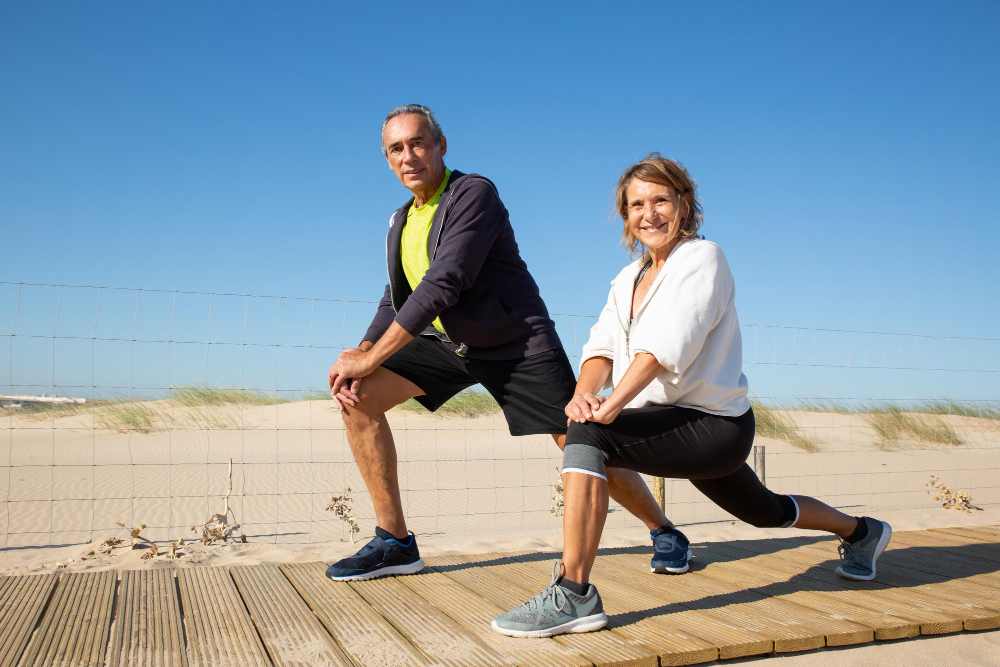
Image Credits: Magnific
Why Movement After 40 and 50 Is Non-Negotiable for Healthy Aging
After 40, the body starts losing muscle mass at a rate of about 3 to 5 percent per decade. After 60, this accelerates further. What follows isn’t just weakness; it affects balance, bone density, circulation, joint health, and even mood.
But here’s the part that tends to get overlooked.
It’s not just formal exercise that protects the body. It’s the accumulated movement throughout the day, the small, repeated actions that keep joints lubricated, muscles engaged, and blood flowing. When those disappear, the body doesn’t just weaken slowly. It decelerates faster than expected.
These are what we call foundational movements, and they’re at the heart of foundational medicine.
5 Foundational Movements Your Parents Should Be Doing Every Day
None of these require a gym, a trainer, or special equipment. They require only intention, and a gentle reminder from you.
Sit to Stand
Getting up from a chair or, if possible, from the floor without using hands for support. Aim for 8 to 10 repetitions.
- This is perhaps the most important movement of all. It builds lower body strength, improves balance, and directly reduces the risk of falls.
Here’s something remarkable: research found that middle-aged and older people who can perform the sit-to-rise test without support are significantly less likely to die, especially of cardiovascular disease, within the following decade.

Sitting-rising test (SRT). Source: Araújo CGS, de Souza E Silva CG, et al. Sitting-rising test scores predict natural and cardiovascular causes of deaths in middle-aged and older men and women. Eur J Prev Cardiol. 2025 Jun 18:zwaf325. doi: 10.1093/eurjpc/zwaf325. Epub ahead of print. PMID: 40569873.
Those who scored in the lowest range of the test had up to 6 times greater risk of dying within 11 years compared to those with the highest scores.
A simple chair movement. A profound indicator of longevity.
How to do it: Sit in a sturdy chair with feet flat on the floor. Stand up without pushing off with your hands, then sit back down slowly. Repeat 8 to 10 times. If this feels too difficult, start with support and gradually reduce it over time.
Heel Raises
Standing and lifting both heels off the ground, then lowering them back. Repeat 10 to 15 times.
- This is a simple strength exercise for seniors that targets the calves and lower legs, muscles that act like a pump for circulation.
- When these muscles are weak or inactive, blood pools in the lower limbs, leading to swelling, fatigue, and sluggish circulation.
Heel raises also support ankle stability, which plays a significant role in fall prevention for seniors.
How to do it: Stand near a wall or counter for light support. Lift both heels slowly, hold for a second at the top, then lower. Keep the movement controlled. Not rushed.
Chest Opener (Hands Clasped Behind the Back)
Clasp both hands behind the back and gently lift the arms while keeping the chest open and the chin slightly tucked. Hold for 10 to 15 seconds.
Most elders spend hours hunched over, whether over a phone, a book, or a plate of food. This rounded posture compresses the lungs, reduces breathing capacity, and strains the neck and upper back.
- This posture exercise counteracts that pattern. It opens the chest, gently stretches the front of the shoulders, and encourages deeper, fuller breaths.
Over time, better posture improves oxygenation, reduces upper back pain, and even supports better digestion and mood.
How to do it: Stand or sit tall. Clasp fingers behind the back. Gently squeeze the shoulder blades together and lift the arms slightly. Breathe in deeply. Hold. Release. Repeat 3 to 5 times.
Gentle Spinal Twists
Sitting or standing, turning the upper body slowly from side to side. 5 to 8 rotations per side.
The spine is designed to rotate, bend, and flex. But when a person sits in the same position for hours without moving, the spine stiffens, the discs lose hydration, and movement becomes uncomfortable or painful.
- These gentle spinal mobility exercises keep the vertebrae mobile, maintain the health of intervertebral discs, and prevent the kind of stiffness that eventually limits daily life.
How to do it: Sit in a chair with feet flat on the floor. Place hands on knees or thighs. Slowly rotate the upper body to the right, hold for 2 to 3 seconds, return to center, then rotate to the left. Keep the movement slow and pain-free. Never force a twist.
One to Two Minutes of Movement Every Hour
This is not a specific exercise. It’s a habit.
- Do not allow your parents to sit still for more than an hour at a stretch.
- A short walk to the kitchen, a few steps to the window, some gentle stretching in place.
- Even 60 to 120 seconds of movement per hour makes a measurable difference.
Research shows that prolonged sitting significantly increases cardiovascular disease risk, and breaking up sitting time every 30 to 60 minutes helps maintain better functional capacity over time.
Set a timer if needed. Make it a ritual, not a chore.
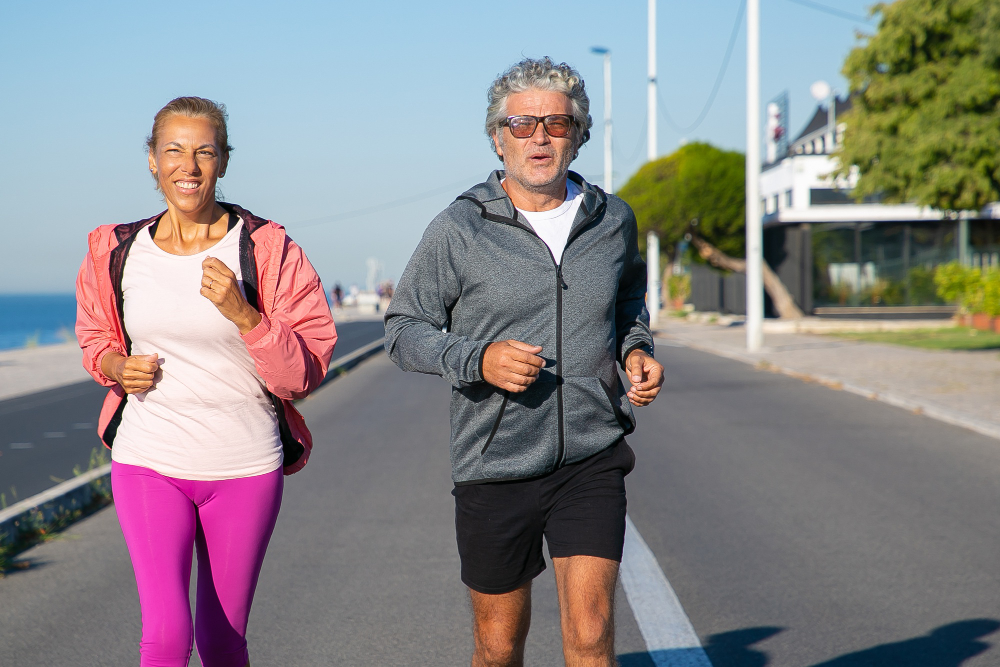
Image Credits: Magnific
Beyond the Movements: What Else Quietly Affects Aging
The five movements above are foundational. But aging is shaped by the entire rhythm of a day, not just the moments of exercise.
Here are some deeper anchors worth paying attention to:
Lifestyle Factor | Why It Matters |
| Daily rhythm (consistent wake, meal, sleep times) | Regulates hormones that influence muscle repair and energy levels |
| Morning light exposure | Supports circadian rhythm, bone metabolism, and mood |
| Hydration | Most elders are chronically underhydrated; dehydration affects joint lubrication, blood flow, and fatigue |
| Protein intake | Adequate protein is essential for muscle preservation; deficiency accelerates decline |
| Cognitive engagement | Simple coordination tasks keep the brain-body connection sharp |
| Breath awareness | Shallow breathing patterns cause stiffness and reduce oxygenation; conscious breathing helps both |
None of these require a prescription or a clinic visit. They require consistency and attention.
The Hidden Issue: Fear of Movement
Here’s something that often goes unspoken.
Many older adults don’t stop moving because they’re lazy. They stop because they’re afraid. Afraid of falling. Afraid of pain. Afraid of doing something wrong.
But here’s the irony: the fear of falling often creates more inactivity, and inactivity actually increases the risk of falls. Weak legs, poor balance, and stiff joints are far more dangerous than the act of moving carefully.
Loss of movement confidence tends to come before actual weakness. And once that confidence is gone, it takes deliberate effort to rebuild it.
This is why how you encourage your parents matters as much as what you encourage them to do. Gentle consistency beats dramatic intervention every time.
A Word of Caution Before You Begin
These movements are safe and beneficial for most older adults. However, individual conditions always matter.
Please consult a healthcare professional before starting any movement routine if your parent has:
- Osteoporosis or low bone density
- Arthritis (especially in the knees, hips, or spine)
- Vertigo or balance disorders
- Cardiac conditions
- Recent surgery or injury
Avoid pushing through pain. Modify movements as needed. There is no one-size-fits-all approach in foundational medicine.
The Last Word
Your parents don’t need a gym membership or a complicated fitness plan to age well.
They need five foundational movements, done consistently through the day. They need a regular daily rhythm, adequate hydration, enough protein, and a reason to keep moving.
Sometimes they won’t prioritize it. That’s where you come in.
A gentle nudge. A reminder. A walk together.
That’s foundational medicine, and it’s more powerful than most people realize.
Disclaimer: This blog is intended for educational and informational purposes only and should not be used as a substitute for professional medical advice, diagnosis, or treatment. Always seek the guidance of your qualified healthcare provider before making any changes to your medications or lifestyle.
Looking for foundational guidance for your health?
We help you find a way.
Set up a one-on-one consultation with our foundational medicine team or explore our Wellness Programs to optimize your lifestyle goals.
Reach out to us at 1800 102 0253 or write to us at [email protected].