No products in the cart.
What if picking up a paintbrush could calm your mind?
Or doodling on a page could help you feel lighter inside?
Art isn’t just about making something pretty. It’s about moving your hands, noticing your feelings, and letting your mind breathe.
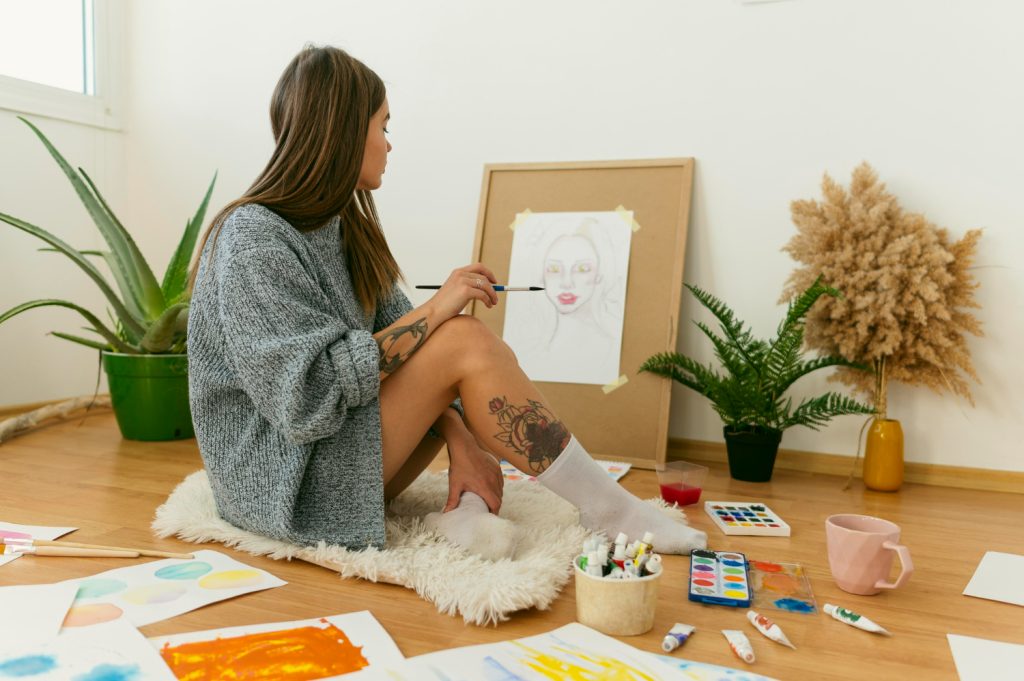
Image Credits: Freepik
Even Luke tried it recently.
No rules. No judgment. Just play. And it felt surprisingly freeing.
Small creative acts, such as painting, sketching, doodling, or coloring, can help with stress, anxious thoughts, or even just a busy, noisy mind. They’re tiny moments of calm you give yourself.
Here, we’ll explore how art and emotional health go hand in hand.
You’ll see how simple, playful art activities for mental health can bring calm, clarity, and a bit of joy, at any age.
The Science Behind Art and the Brain
Ever wondered what actually happens in your brain when you pick up a paintbrush or start doodling?
It’s not just about making something pretty.
Your brain is quietly doing a lot of work, processing emotions, regulating stress, and even changing how different parts of it connect.
Let’s break it down in a way that’s simple to understand.
Your Brain “Lights Up” When You Create
When you make art, multiple areas of your brain are active at the same time:
- Prefrontal cortex: Helps with planning, decision-making, and regulating emotions.
- Amygdala: Processes emotions like fear, stress, or excitement.
- Hippocampus: Plays a role in memory and emotional context.
The cool thing? Art activates both the thinking and feeling parts of your brain at once.
It’s like your brain is doing a gentle workout, but for your emotions.
Research backs this up:
A study found that engaging in art activates networks linked to emotion regulation and self-expression. Creative tasks increase brain connectivity in areas involved in emotional awareness.
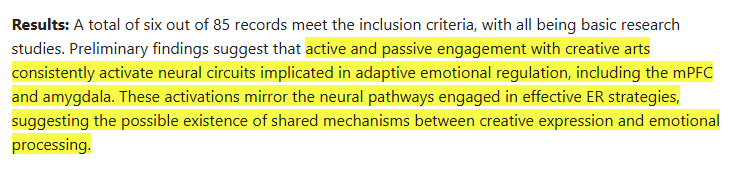
Source: Barnett KS, Vasiu F. How the arts heal: a review of the neural mechanisms behind the therapeutic effects of creative arts on mental and physical health. Front Behav Neurosci. 2024 Oct 2;18:1422361. doi: 10.3389/fnbeh.2024.1422361. PMID: 39416439; PMCID: PMC11480958.
Art Naturally Activates Mindfulness
Mindfulness simply means being fully present in the moment.
When you start drawing, painting, or coloring, your attention automatically moves to simple sensory experiences:
- The movement of your hand
- The texture of paper or clay
- The blending of colors
- The rhythm of repetitive strokes
Instead of worrying about tomorrow or replaying yesterday, your brain begins focusing on what is happening right now.
This is why many therapists use mindfulness and creativity together. The act of creating something with your hands naturally pulls your mind into the present moment, similar to meditation.
Many people even describe this state as “losing track of time” while creating art.
Art Helps the Brain Process Emotions Safely
Stress often builds up because emotions stay trapped inside the body. You may feel:
- Anxiety you cannot explain
- Anger you cannot express
- Sadness you cannot put into words
Art offers a non-verbal outlet for these emotions. Instead of forcing yourself to explain feelings, you can:
- Sketch chaotic lines
- Paint intense colors
- Shape clay aggressively
- Fill a page with repetitive patterns
This process helps the nervous system release emotional tension gradually. Over time, people begin to feel lighter, calmer, and more emotionally balanced.
Research Shows Art Reduces Stress Hormones
Scientific research strongly supports the stress-reducing effects of creative expression.
A well-known study examined what happens when adults spend time making art. Participants were given simple materials like markers, clay, and collage tools and allowed to create freely for 45 minutes.
Researchers measured their cortisol levels, a hormone associated with stress. The results were striking:
- 75% of participants showed reduced cortisol levels after making art
- Participants described the experience as relaxing, enjoyable, and freeing
- Prior art experience did not matter; beginners benefited just as much as artists

Source: Kaimal G, Ray K, Muniz J. Reduction of Cortisol Levels and Participants’ Responses Following Art Making. Art Ther (Alex). 2016 Apr 2;33(2):74-80. doi: 10.1080/07421656.2016.1166832. Epub 2016 May 23. PMID: 27695158; PMCID: PMC5004743.
The study concluded that even short creative sessions can significantly lower stress markers in the body.
Creative Expression Improves Focus and Mental Clarity
Stress scatters attention. When your mind jumps from one thought to another, concentration becomes difficult.
Art helps rebuild focus because it engages multiple brain regions at once:
- Motor skills (hand movement)
- Visual processing (shapes, patterns, colors)
- Emotional centers (feeling and expression)
- Attention networks (sustained concentration)
This whole-brain engagement creates a state psychologists often call “flow.”
- In flow states, mental chatter reduces, attention becomes steady, and the mind feels calmer and clearer.
That is why creative activities are often recommended for burnout, anxiety, and chronic stress.
Art Can Improve Sleep and Emotional Regulation
Stress doesn’t just affect mood; it also affects sleep.
When the brain stays in constant alert mode, it becomes difficult to relax at night. Creative expression helps the nervous system transition into a calmer state.
Many therapists recommend evening art practices like:
- Coloring mandalas
- Doodling freely
- Sketch journaling
- Painting with calming colors
These gentle activities signal the brain that it is safe to slow down, making it easier to unwind before bedtime.
Over time, this supports better emotional self-regulation, the ability to notice emotions without becoming overwhelmed by them.
Creativity Builds a Sense of Control
Stress often comes with a feeling of losing control over situations.
Art reverses this experience. When you create something, you make choices:
- Which colors to use
- Which shapes to draw
- How the artwork evolves
This restores a subtle but powerful feeling of agency, the sense that you can shape something with your own hands.
Psychologists believe this is one reason why creative activities can improve confidence, emotional resilience, and mental well-being.
What Art Therapy Looks Like in Real Life: Two Research Cases
Research papers often talk about brain networks and stress hormones. But sometimes the most powerful proof comes from real stories inside therapy rooms.
Here are two examples documented in clinical literature.
Case Study 1: A Teen Expressing Fear Before Surgery
In one art therapy session documented in clinical research, a 15-year-old girl preparing for pelvic surgery was given simple materials, paper, scissors, and cardboard.
- She began cutting shapes casually, which gradually formed a “monster.”
- As she placed the figure on paper and added details, the artwork became a symbol of her fears about the illness and upcoming surgery.
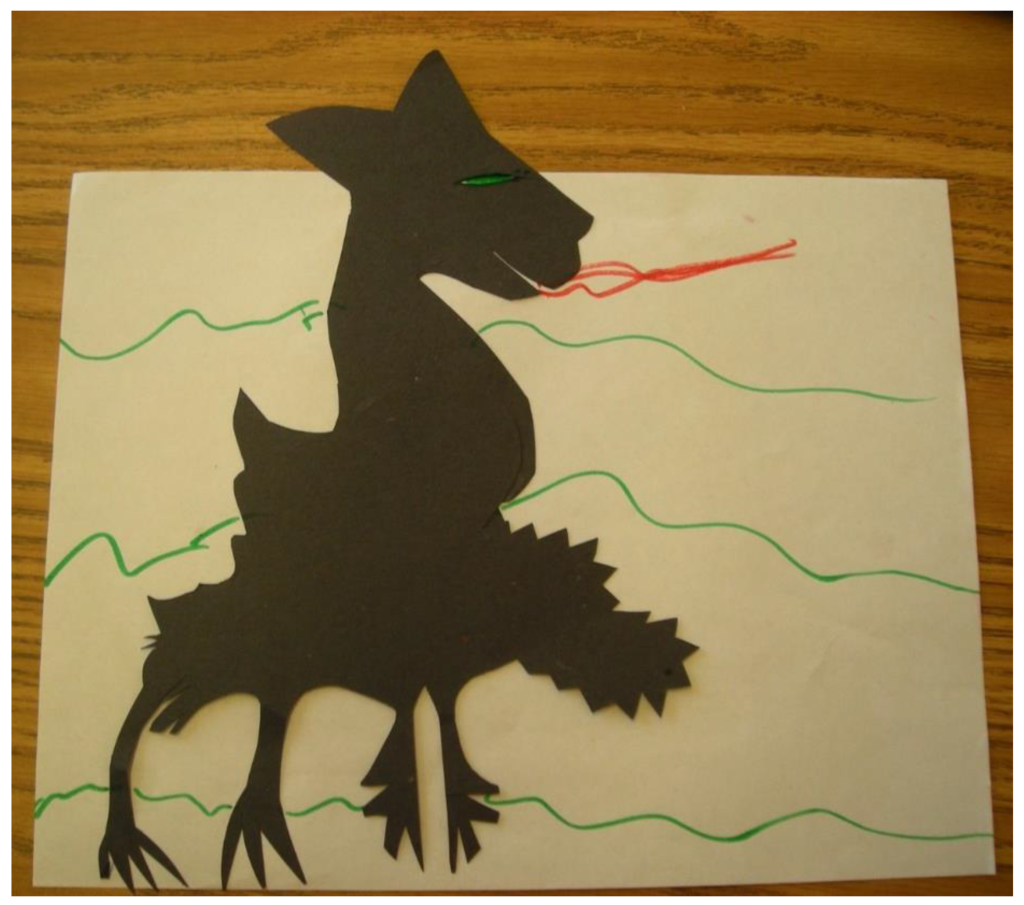
A 15-year-old child’s cut paper monster emerges before her surgery. (Source: Metzl ES. Art Is Fun, Art Is Serious Business, and Everything in between: Learning from Art Therapy Research and Practice with Children and Teens. Children. 2022; 9(9):1320. https://doi.org/10.3390/children9091320)
The process allowed her to move from silent anxiety to visual expression. Instead of struggling to explain her feelings verbally, the artwork helped her communicate them clearly and process her emotions with the therapist.
Case Study 2: A Mother–Daughter Therapy Session
In another documented session, a mother and her 12-year-old daughter used drawing to explore tensions in their relationship.
The mother created an image reflecting her hopes and fears for her daughter.
- While discussing the artwork, she realized that the daughter in the drawing appeared younger than her real age.
- This helped her recognize that some of her expectations were shaped by her own experiences growing up.
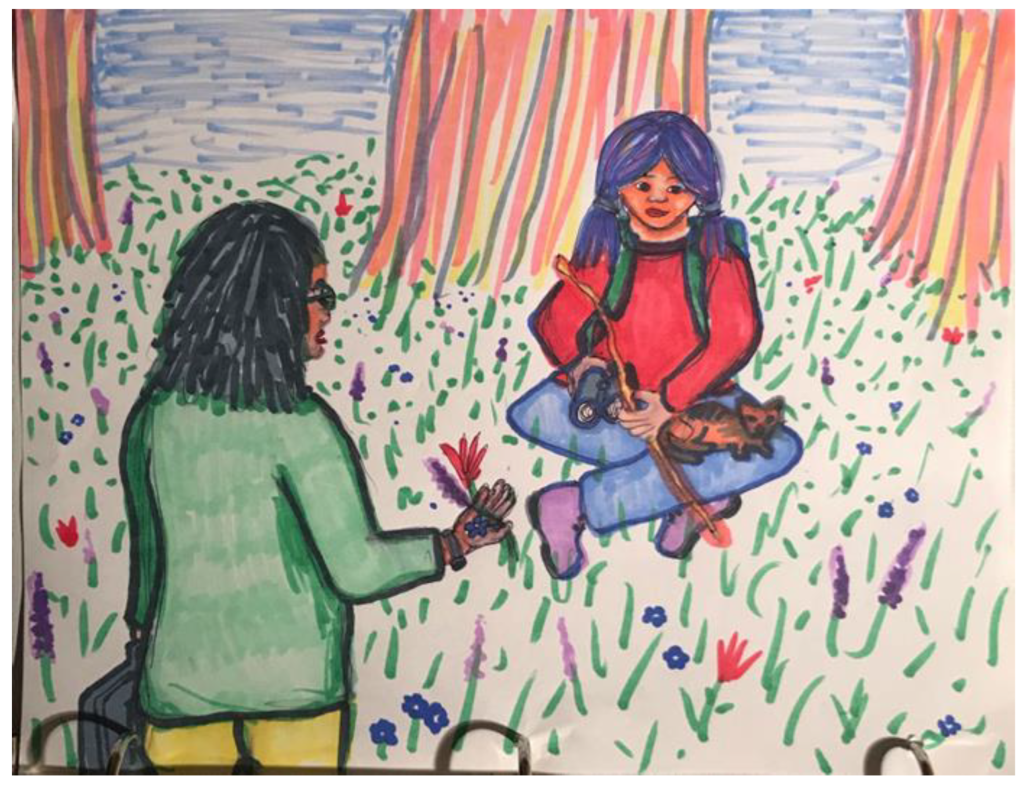
A mother-daughter dyad explore identities through art. (Source: Metzl ES. Art Is Fun, Art Is Serious Business, and Everything in between: Learning from Art Therapy Research and Practice with Children and Teens. Children. 2022; 9(9):1320. https://doi.org/10.3390/children9091320)
Through the artwork and conversation that followed, both began to understand each other better, and the drawing was later recreated to reflect their evolving relationship and improved empathy.
Art Therapy in Practice: Activities That Work
You don’t need to be an artist to experience the benefits of creative expression.
You don’t need expensive materials either.
In fact, some of the most effective therapeutic art activities are the simplest ones: a blank page, a pen, a few colors, or even a lump of clay.
The goal isn’t perfection; it’s expression.
Art therapy works because it gives the mind a safe space to release emotions, slow down thoughts, and reconnect with the present moment. These art activities for mental health allow people to process feelings without needing the “right words.”
Here are a few simple practices that therapists often recommend.
Doodling: Let the Mind Wander
Doodling might seem random, but it can be surprisingly calming.
When your hand moves freely across paper, your brain shifts away from overthinking. The repetitive motion helps quiet mental noise.
Many therapists use doodling as an entry point for people who feel intimidated by “art.”
Try this:
- Take a blank sheet of paper
- Start drawing simple shapes, circles, lines, and waves
- Let your pen move without planning
- Fill the page slowly
There is no right or wrong way to doodle. The process itself becomes therapy.
Sketching Your Feelings
Sometimes emotions are difficult to describe. Sketching allows you to visualize what you’re feeling instead of explaining it.
You don’t need artistic skill. Stick figures and rough drawings are enough.
Try this exercise:
- Sit quietly for a minute and notice how you feel
- Pick a color that matches that feeling
- Draw a shape or image that represents it
- Add lines, textures, or colors around it
You might be surprised by how much clarity appears once emotions are placed on paper.
Painting With Color and Movement
Colors often carry emotional energy. Bright colors can feel uplifting. Darker tones can help release heavier emotions.
Painting allows people to express this without needing structure or rules.
Simple exercise:
- Choose 3–4 colors that attract you
- Paint freely on paper or canvas
- Focus on movement rather than creating a picture
- Let your hand follow the rhythm of your breath
This kind of open painting can be deeply grounding.
Clay Work: Engaging the Hands
Working with clay adds another dimension to art activities for mental health. It involves touch, pressure, and movement, which can help regulate the nervous system.
The tactile experience can be especially helpful for people dealing with anxiety or restlessness.
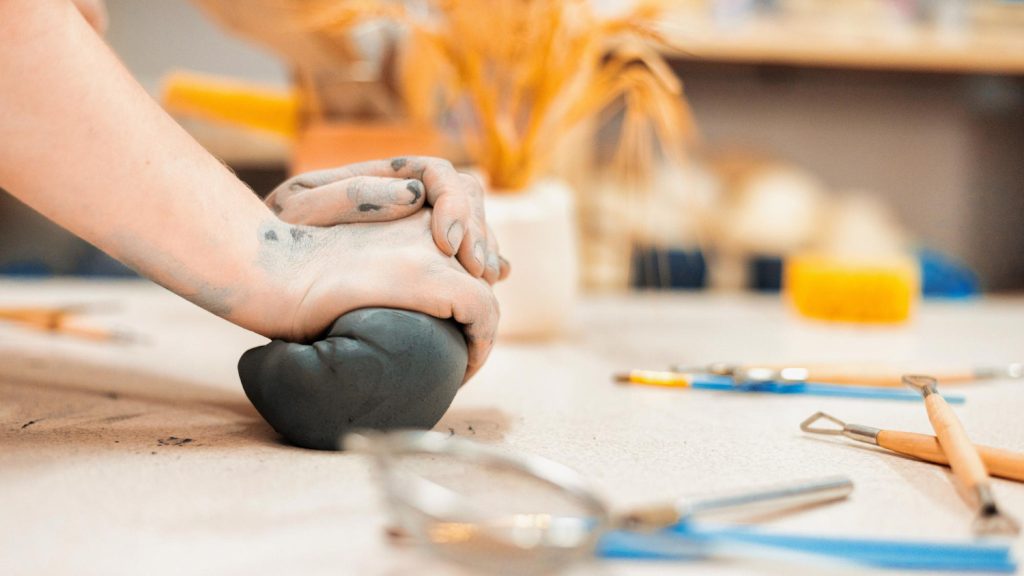
Image Credits: Freepik
Try this:
- Take a small piece of clay or play-dough
- Roll it, flatten it, or shape it freely
- Notice the texture and pressure in your hands
- Focus on the sensation rather than the final shape
The act of shaping something physically can mirror emotional release.
Coloring Mandalas
Coloring may sound simple, but structured patterns like mandalas can create a meditative experience. The repetition and symmetry help focus attention and calm the mind.
How to try it:
- Print or draw a mandala pattern
- Choose colors slowly
- Fill the shapes one section at a time
- Let the rhythm of coloring slow your breathing
Many people report feeling noticeably calmer after just 15–20 minutes.
Luke’s Experience With Art Therapy
Luke explored an art therapy session himself, something he had never expected to try.
Like many people, he had never enjoyed art in school.
Not because he didn’t like creativity, but because art was often judged and graded. Drawings were scored from 1 to 10 instead of simply being appreciated.
This experience changed that perspective completely.
During the session, the therapist offered several options:
- Drawing
- Crayons
- Painting
- Coloring
- Craft work
But Luke chose something simpler. He wanted to play with color and rhythm.
The therapist put on a piano playlist, placed colors in front of him, and allowed him to explore freely.
No instructions. No judgement. No pressure to “create something good.”
Just movement, color, and music.
The experience turned out to be surprisingly liberating.
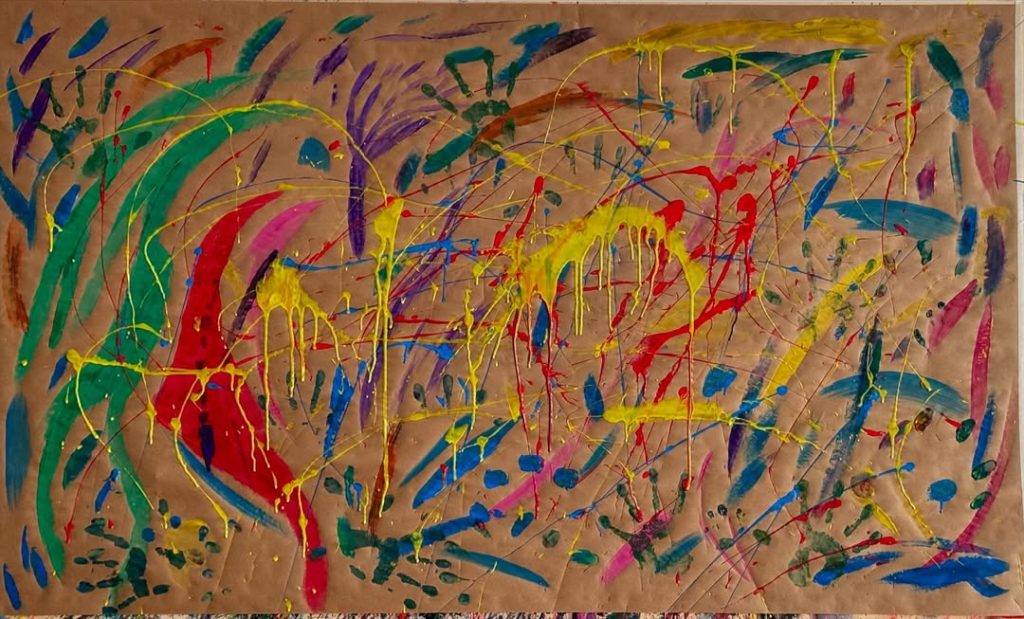
Luke’s art therapy session.
It became clear how powerful this process can be, especially for people dealing with burnout, emotional stress, addictions, or simply looking for new ways to express themselves.
Sometimes the most healing part of art therapy is exactly this: being allowed to create without evaluation.
Why These Activities Work
Across different forms, most therapeutic art activities share a few common elements:
- They engage the senses
- They slow down mental chatter
- They allow emotions to surface safely
- They shift attention from problems to expression
And most importantly, they remind us that creativity is not reserved for artists. It is a natural human ability.
One that can support emotional balance, stress relief, and mental well-being.
Creativity Across Life Stages
Creativity is not limited to artists or a particular age group.
From early childhood to older adulthood, creative expression supports emotional and psychological well-being in different ways. Whether it is a child drawing feelings, an adult processing stress through painting, or an elderly person engaging in creative hobbies, art becomes a powerful tool for emotional regulation, connection, and cognitive health.
Below is a simple breakdown of how art and emotional health intersect across different stages of life.
| Life Stage | How Creativity Supports Mental Health |
| Children |
|
| Adults |
|
| Elderly |
|
Why You Should Try Art Today
You don’t need to be an artist to experience the benefits of creative expression.
You don’t need training.
You don’t need perfect lines.
You don’t even need to know what you’re creating.
All you need is a moment of curiosity.
And the best part? There is no right or wrong way to do it.
You could start with something as simple as:
- Doodling in a notebook while listening to music
- Coloring a mandala for 10 minutes before bed
- Playing with watercolor and seeing where the colors flow
- Sketching something from your surroundings
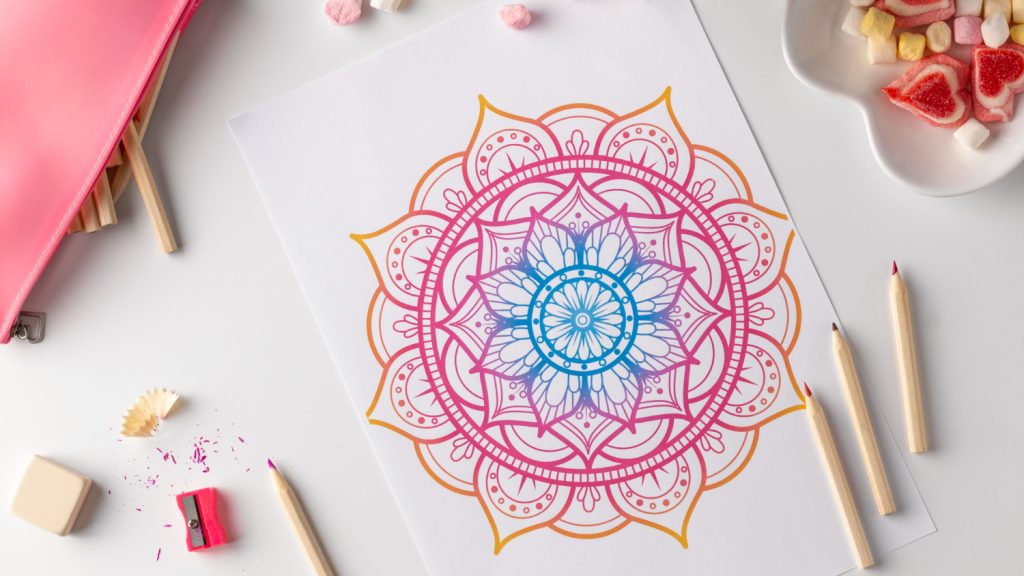
Image Credits: Freepik
So here’s a small invitation from us.
Pick up a brush, doodle, or color today; your mind will thank you.
And if you try it, we would love to hear from you.
Create something, anything, and tell us how it felt.
Did it calm you?
Did it surprise you?
Did it make you smile?
You can share your experience with us. Sometimes, a simple creative moment can open the door to a deeper sense of well-being.
Disclaimer: The content provided in this blog is for educational purposes only and should not be considered as a substitute for professional medical or psychological advice. Always seek the advice of your physician or qualified healthcare provider with any questions you may have regarding any mental health concerns or conditions.
If you’re ready to strengthen the foundations of your emotional well-being, then don’t wait.
Set up a one-on-one consultation with our emotional wellness counsellors or life coaches, or explore our Wellness Programs to optimize your health goals.
Reach out to us at 1800 102 0253 or write to us at [email protected].