No products in the cart.
Reaching for an antacid the moment your chest starts to burn feels like second nature.
It is fast, needs no prescription, and the burning fades within minutes.
But almost nobody asks: Did the acidity actually go away, or did it just go quiet?
This is the real starting point for acidity treatment. Acidity, in most cases, is not random. It is lifestyle driven, shaped by what you eat, how you eat, sleep, move, and handle stress.
Antacids can calm the fire for a while, but understanding the actual acidity causes is what puts it out for good.
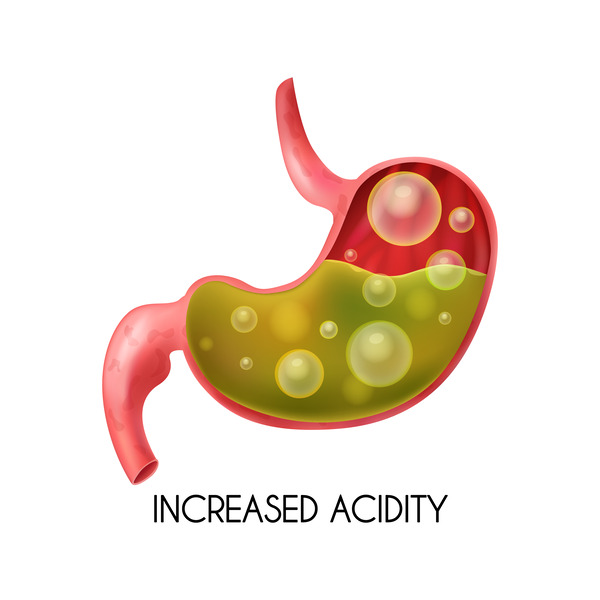
Image Credits: Magnific
Why We Have Normalized Acidity
Acidity has quietly become one of the most normalized complaints around. Three reasons usually explain why.
- Relief is instant. Most antacids work within minutes.
- They are available over the counter, no prescription needed.
- Symptoms disappear, so it feels like the problem is solved.
Symptom suppression is not healing.
- It pushes the real issue deeper, like silencing a fire alarm while the fire inside keeps burning. The noise stops. The fire does not.
- An antacid used once in a while, as an urgent SOS, is reasonable.
The trouble starts when suppression becomes a daily habit instead of an occasional rescue.
What Stomach Acid Is Actually Doing for You
Stomach acid is not the enemy here. It has a long list of jobs that go unnoticed until something goes wrong. Stomach acid is responsible for:
- Breaking down protein so your body can absorb it
- Helping you absorb vitamin B12 and iron
- Supporting calcium and magnesium uptake
- Killing off harmful bacteria, including H. pylori
- Helping produce nitric oxide, a molecule that supports healthy blood vessels
That last one is worth pausing on. Nitrates from vegetables like spinach and beets are converted into nitrites in the mouth, and gastric acid helps turn those nitrites into nitric oxide.
Without enough stomach acid, this pathway slows down.
Quick fact:
Your stomach lining renews itself every few days, proof of how aggressive this environment is, and how well your body is built to handle it when the rest of the system works in sync.
Too Much or Too Little? Low Stomach Acid Symptoms Most People Miss
Here is where most people get confused.
Burning in the chest is automatically blamed on too much acid. In reality, low stomach acid, known as hypochlorhydria, can produce nearly identical symptoms.
| Symptom | High stomach acid | Low stomach acid |
Burning in the chest | Yes | Yes |
Bloating after meals | Sometimes | Yes |
Undigested food in stool | Rarely | Yes |
| Frequent burping | Sometimes | Yes |
Because the symptoms overlap so closely, low stomach acid often gets misdiagnosed as high stomach acid, and the treatment for one can worsen the other.
A correct diagnosis, not a guess, has to be the starting point of any real treatment plan.

Image Credits: Magnific
When Long-Term Antacid Use Backfires
Long-term antacid use, without addressing why the imbalance started, can eventually lead to:
- Lower stomach acid over time
- Gastroesophageal Reflux Disease (GERD) symptoms
- Gastritis
- Barrett’s esophagus, a long-term risk
- Chronic gut inflammation
- Nutrient malabsorption
Some lesser-known antacid side effects show up slowly, over months or years.
- Vitamin B12 deficiency, iron deficiency, magnesium depletion, and poor calcium absorption are commonly linked to prolonged use.
None of this means antacids are bad. It means they were never designed to be a permanent solution on their own.
Here’s a simple story that may change the way you think about antacids and acidity.
Before You Pop Another Antacid, Read Mahesh’s Story
When Antacids Are Actually the Right Call
Foundational medicine does not reject medication. There are situations where antacids are important, when prescribed responsibly:
- Severe acidity or active ulcers
- During chemotherapy or other intensive treatments
- Alongside essential medications that irritate the stomach lining
In these cases, it is often safer to use antacids than to let untreated acidity damage the gut.
The goal is not to remove medication, but to prevent lifelong dependency by correcting the physiology underneath.
How to Reduce Acidity Naturally: 13 Foundations That Work Together
So what needs to be built alongside medication, or instead of long-term suppression? Here are the natural remedies for acidity we see make the real difference.
| Foundation | What It Means | Quick Fix |
| 1. Food quality | Refined sugar, fried food, and ultra-processed snacks irritate the stomach lining | Choose whole foods most of the time |
| 2. Food sensitivities | Dairy, wheat, or fermented foods affect people differently | Keep a food log to spot triggers |
| 3. Eating behavior | Eating fast or distracted overworks your stomach | Chew slowly, skip the screens |
| 4. Meal timing | Irregular or late-night eating confuses your digestive clock | Eat at consistent times daily |
| 5. Hydration | Too much water with meals dilutes acid, too little thickens secretions | Sip water between meals, not during |
| 6. Irritants | Caffeine or alcohol on an empty stomach is the worst combination | Eat something light first |
| 7. Fasting | Helps some people, worsens acidity in others | Match the method to your body |
| 8. Movement | Sitting or lying down right after eating slows digestion | Take a gentle walk after meals |
| 9. Emotional health | Chronic worry and suppressed stress raise cortisol and acid | Build in a daily stress release |
| 10. Sleep | Poor sleep and late meals are among the strongest triggers | Keep a consistent sleep schedule |
| 11. Correct diagnosis | Low stomach acid often mimics high stomach acid | Get tested before assuming the cause |
| 12. Nutrient levels | Long-term use can deplete B12, iron, magnesium, calcium | Monitor nutrients if on prolonged antacids |
| 13. Yoga and breathwork | Sheetali and Chandra Bhedana calm acid overproduction | Add a few minutes of breathwork after meals |
These are not 13 rules to memorize overnight. They work together as one connected system, and not every foundation applies equally to every person.
Your body type, digestion pattern, food responses, sleep cycle, and stress triggers are unique to you.
This is bio-individuality, the foundation underneath all the foundations.
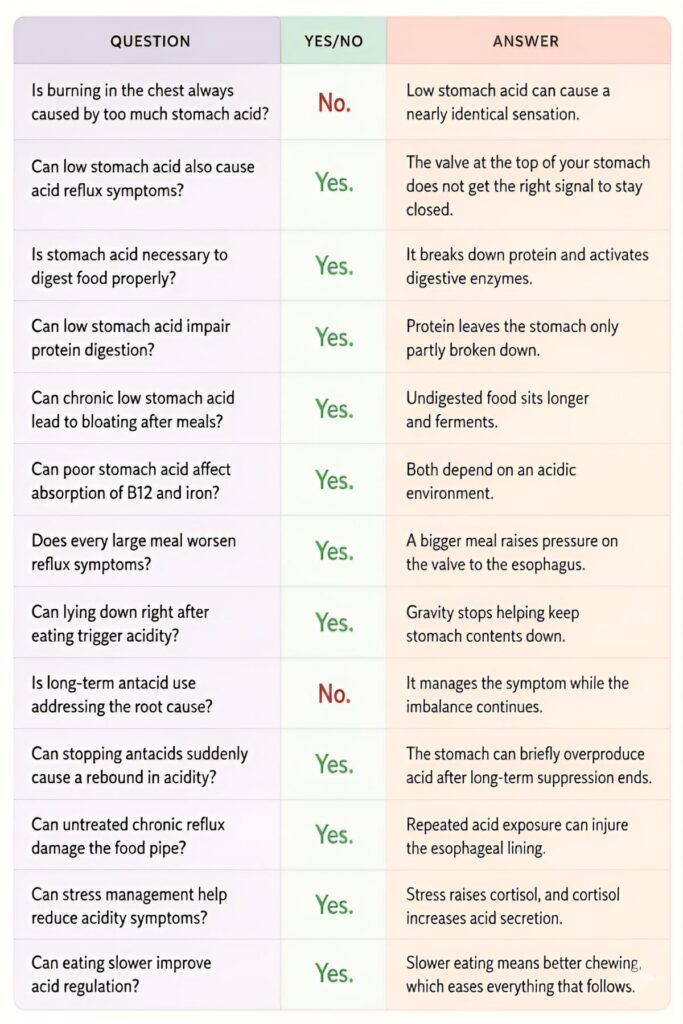
Quick-Fire Q&A: 13 Things People Always Ask About Acidity
Please note: This is educational content, not medical advice. Individual needs vary, so check for allergies, intolerances, existing gut conditions, and pregnancy considerations, and consult a qualified professional before making changes. Never stop a prescribed medication abruptly.
If you want a complete, step by step plan that takes you from foundation to recovery, explore our in-depth online educational course:
The Gut Foundation Formula for Chronic Acidity and Constipation
The Last Word
Acidity, in most cases, is lifestyle driven, not random. That means a lot of it is within your control, far more than most people realize. Many patients who once depended on antacids daily have, under proper medical supervision, gradually been weaned off by their own doctors once their foundations were corrected.
These foundations are not opinions. They reflect how the human body is designed to function and how stomach acid balance gets restored over time, not overnight.
Take medication when it is genuinely needed, but build your foundations alongside it.
Be educated, not influenced.
Disclaimer: This blog is for informational purposes only and is not a substitute for medical advice, diagnosis, or treatment. Always consult with your doctor, healthcare practitioner, or a certified nutrition expert before making changes to your nutrition, lifestyle, or supplement routine, especially if you have a medical condition or are on medication.
Struggling with acidity, bloating, or any other digestive issues?
We’re here to support YOU every step of the way.
Set up a one-on-one consultation with our foundational medicine team or enroll in our specialized Gut Care Program for personalized solutions.
Reach out to us at 1800 102 0253 or write to us at [email protected].